Three Books

Daily writing prompt
List three books that have had an impact on you. Why?

There are probably more than three books that have had an impact on me, but the prompt tells me to pick only three, so I will. These books are very different from each other (and I’m cheating on one of them).

Photo by Pixabay on Pexels.com

The first book, which I read in eighth grade, was The Dark is Rising, by Susan Cooper. This book, the second in a series of five, is a fantasy novel set in contemporary Britain in the 70s. It’s definitely juvenile fantasy, of which there was not much during that time period. The depth of the fantasy totally captured me, with its Arthurian and fae undertones set at Christmastime. I totally escaped through that book. I read the series again last Winter, and it read just as well to a 60-year-old adult.

The second book, which I read probably 20 years ago, was The Four Agreements by Don Miguel Ruiz. Although I worry this book is considered New Age pap marketed to those of us who grooved on Carlos Castaneda, those four agreements pack a psychological punch. The agreements are: “Be impeccable with your word”, “Do not take anything personally”, “Do not make assumptions”, and “Always do your best” (Wikipedia, 2025). These could fit comfortably into cognitive journaling (and do make for good contradictions to cognitive distortions). I live by these now, and they offer me a different way of living.

The third book fits the prompt, even though it’s one that I wrote, because it impacted my life. That was the first book I wrote, The Kringle Conspiracy. That book was impactful because I didn’t think I could write a book until I wrote it, and I didn’t think I could publish a book until I published it. I came up with the story when I was in high school, and published it in my fifties.

There are my three books. I would highly recommend all of them.

Fear of Driving

Daily writing prompt
What fears have you overcome and how?

I do not have some of the typical fears — flying, public speaking, spiders. I have a fear of heights, but I consider that perfectly reasonable, like fearing something that’s about to tear your head off. The big fear that I harbored for many years was a fear of driving a car.

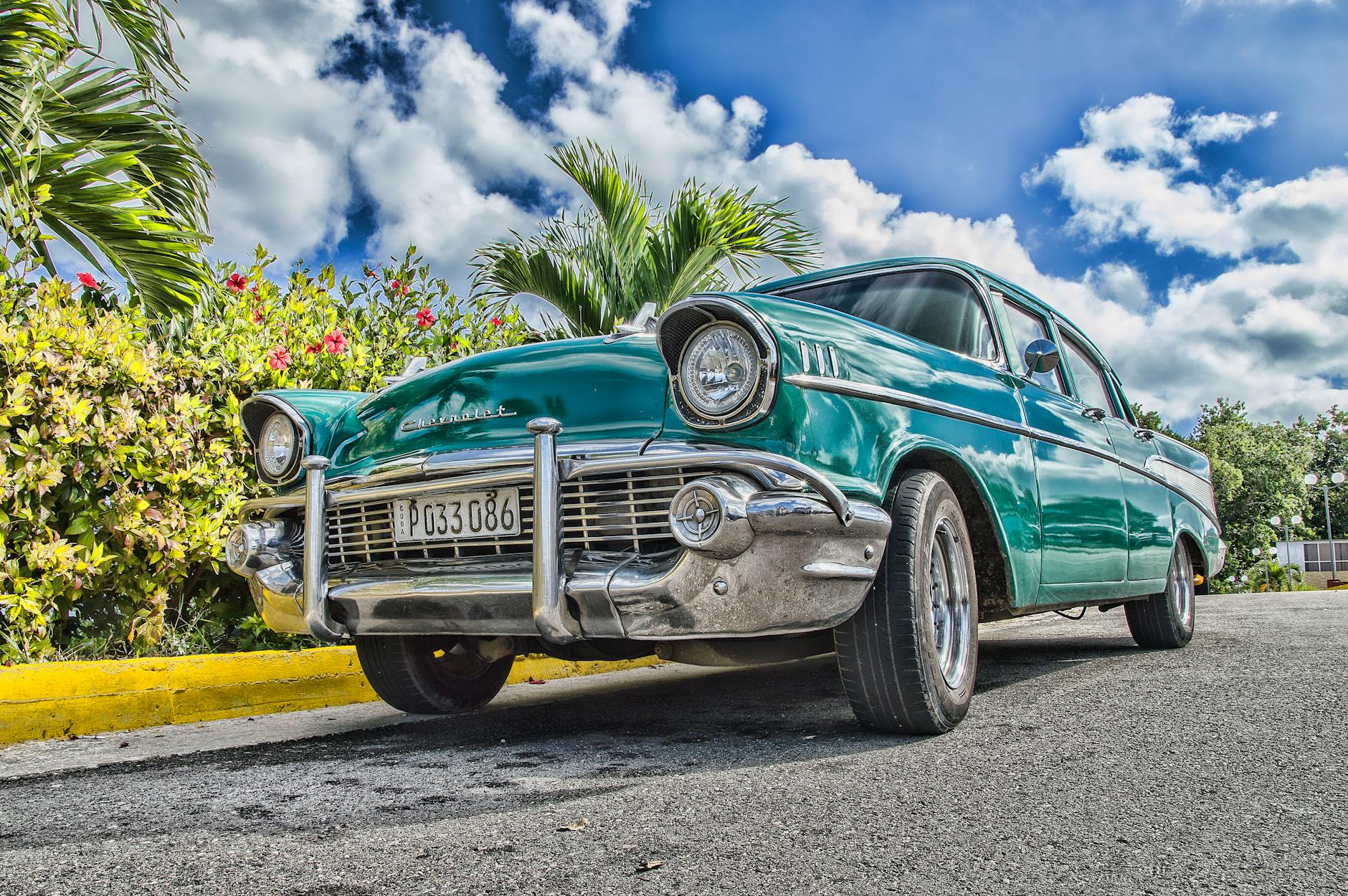
Photo by neil kelly on Pexels.com

Cars are big and you can kill people with them. That was what was on my mind when I was sixteen and in driver’s ed. When I had to get behind the wheel of the car, I was a disaster. I could barely accelerate, oversteered the car, and hit the brakes too hard. Worse, I couldn’t figure out in what order I was supposed to do things, so I failed driver’s ed by stopping the car in the middle of the railroad tracks to check for trains. So I didn’t only fear being behind the wheel, I had a reason to. After a second time going through driver’s ed, I took my driver’s license test and barely passed. And then I never drove.

When I was 29, I got hit by a car, which didn’t help the fear any. All it did was break my leg, but it pretty much pulverized an inch of bone near the ankle. I now have a metal bar in that leg from knee to ankle.

A few years later, I lived in an area with a vibrant arts scene, except that the scene was spread over several towns. So one had to be able to drive to Franklin and West Kortright and maybe even Albany. I had just broken up with my husband, and the social engagement sounded nice to me. So I decided I needed to learn how to drive.

I took driver’s ed again, this time with a driver’s ed teacher who figured out the problem and helped me get over it. He made me check with him out loud anything I was about to do while driving. I talked myself through it. Then when I didn’t need to say it aloud anymore, I took my driver’s test and passed.

I got myself a car, and I was not a good driver at first. I got into a couple fender-benders, one with a rental car I had gotten while my car was in the shop. Some of the fender-benders weren’t my fault. I was suspended for 60 days for one of the accidents that wasn’t my fault. But I kept on driving.

I am still scared of driving sometimes. I am scared of driving in cities, especially with complicated splits in them. I am scared on crowded interstates. I keep seeing accidents in my head and they keep me from driving solo a lot of times. I don’t like it, but at least I can drive locally without fear.

Thanking the Universe

Daily writing prompt
Describe one simple thing you do that brings joy to your life.

I have a lot of quiet joy in my life. Largely because of gratitude. I feel grateful that I am living a calm life without the ravages of unmedicated bipolar disorder. I feel grateful that I live comfortably. I feel grateful that I have survived all the stupid things I have done in my life. I feel grateful that I have the husband I have instead of ending up with all the unsuitable people I dated.

Photo by u0158aj Vaishnaw on Pexels.com

Every day, when I think about it, I send a ‘thank you’ to the universe for the things I’m grateful for. Research in positive psychology shows that practicing gratitude is one way in which someone can increase their happiness. I find it works, but not so much when I practice gratitude journals (the recommended way). Practicing gratitude works best for me when I can do it spontaneously, make it a regular practice in life.

Time to Unplug

Daily writing prompt
How do you know when it’s time to unplug? What do you do to make it happen?

I have two levels of “need to unplug”. The first is the normal level. I can tell I need to unplug because my brain shuts down. I literally become unable to think. It’s a feeling like my brain has become too full. In that case I rest my mind by lounging in my chair and reading something fluffy but informative like Quora or looking at memes of cats. Definitely cats. Sometimes I close my eyes and lay back, but this usually results in my sleeping.

Photo by Arina Krasnikova on Pexels.com

Then there is a level beyond that, when my body and mind are weary and I can’t cope anymore. I get weepy when that happens. At that point, l lounge in that chair and do absolutely nothing. I’m more likely to fall asleep because by then, I need sleep.

My body lets me know when it’s time to relax. I listen to it.

I Wish I Could Talk to You

Daily writing prompt
Who would you like to talk to soon?

I’m a pretty self-contained person. I really don’t feel the need to talk to anyone, except my friend and mentor Les, who died some years ago at age 95.

Photo by Pixabay on Pexels.com

I talked to him the other day in a dream. I ran into him on a stair landing and gave him a hug. He told me he was in a hurry because he needed to meet his other family, and we parted ways. That was the most real dream I’ve ever had; maybe I really did talk to him.

If I were to talk to him again, I would tell him how my life has changed since my bipolar diagnosis, how I didn’t feel like crying for hours anymore, how my crushes didn’t control me. I would tell him I had more trouble feeling in touch with the spiritual world and how that worried me. I would tell him how my ordinary day reflected quiet joy, and how a lot of that had to do with my husband. He would know I was in a good place.

I would thank him again for all the times he listened to me, above and beyond the line of duty. How I don’t think I would have gotten through life without that. And I would apologize for all those times, because if I had been in my right mind I wouldn’t have needed so much support.

We talked about all this before, a few years before he died, so it’s not unfinished business between us. But I would talk to him again about it, because I am so bewildered about what it means to be become sane after fifty years of crying jags. Who was I and who am I now? He might have known better than I did.

No Religion

I wouldn’t call what I practice religion. For example, I’m a Friend (Quaker) who hasn’t gone to Meeting in years, because there’s not one close enough. I believe in Quaker doctrine such as the peace testimony and the Light within. I don’t know if I believe Jesus is divine because I don’t connect to him. I don’t believe in being saved. I don’t believe in the God of the Bible (have you read the Old Testament?), but I believe in the Inner Light of the Quakers. I pray in a running dialogue to Him. Or her. I know She answers prayers by making me more able to face situations, not by fixing things for me.

Photo by Kennst du schon die “Umkreisel” App? Die gu00fcnstigsten Spritpreise, Campingplu00e4tze, Stellplu00e4tze, WCs, u00f6ffentliche WLANs, Aussichtspunkte, Unterku00fcnfte, Essens- oder Einkaufsmu00f6glichkeiten und vieles mehr – alles in einer App. on Pexels.com

I don’t pretend this makes any sense. It’s like I believe in something, but not the God I was brought up with. I want God to be something I experience, not just pay lip service to. I want a relationship, not abject worship. I want a God of love, not the insecurity of the Christian God, who throws people into Hell for not identifying with Him (always Him).

God was so much easier to access before I was treated for bipolar. This concerns me, because it makes me think God was a figment of my over-amped imagination. I miss the God who talked to me. Perhaps that’s why I struggle with religion.

Life Before the Internet

I’m 62, so I’ve lived life before the Internet. It was a time before information flowed readily and before we had the world at our fingertips (literally).

Photo by Pixabay on Pexels.com

I remember researching before the Internet, which required reading through periodical indices and card catalogs. A lot of reading, and a lot of taking notes, and for someone like me who was not organized as I should be, a lot of frustration.

I could not write novels before the Internet. I wanted accurate detail in my books. For example, I had my idea for what became Whose Hearts are Mountains in graduate school, but I couldn’t pack up and live in the desert for a year to find out about desert life. It would have been hard for me to pick a spot in the desert and determine the flora and fauna, the temperature, and the layout. What I knew back then was that deserts were hot and deserted.

Now, facts flow almost as fast as I can type. I have written several novels, because I can do research while writing. I can access publication databases online from my home. I can answer random questions or look up childhood experiences to reminisce. I don’t know how I would do without the Internet, and I hope I never have to find out.

Having it All

I have it all, all I really need. Let me explain.

I see ‘having it all’ as a matter of contentment. Is one satisfied with what one has? Typically, no. A bit of research shows that Americans want 10% more income on average no matter what their income is. A vague discontent seems to be the lot of the US.

I don’t think of ‘having it all’ as a material-laden destination other than having one’s needs and a reasonable number of their wants met. How that looks depends on the individual. In the US, that means a house; other countries (I’ve heard) differ in that. I see ‘having it all’ as a matter of satisfaction with lifestyle, which is more than just possessions. It’s friends, family, the safety of where one lives, rewarding pastimes and the like.

Photo by Victor Koonoo on Pexels.com

I am satisfied with my life. I have a solid marriage with someone who I can be myself with. We own a house and our cars are in reasonable shape.

I have a good job that challenges me. My hobby (writing) gives me plenty of flow activity. I have some health challenges, but they’re under control (except for the arthritic knees). I could use more friends, but as I don’t get out much, I don’t know what we’d be doing.

In my eyes, I have it all.

The Curio Cabinet

I have too much stuff. I have wearied of a materialistic lifestyle, although I don’t know what I’d do without the gadgets I have amassed over the years (sarcasm). I have some collectibles, and a collection of coffee pots (which I do use occasionally). I have one possession that I treasure more than any, however, and that is a curio cabinet that my dad made for me.

It is in the form of a primitive pie safe, with no carving and no curves. Where there is punched tin in a pie safe, my dad put panes of glass. The cabinet is made from wood scavenged from a packing crate, and the glass was scavenged from the old windows that had been replaced in the house I grew up in. It’s stained in antique oak stain.

The only thing it’s lacking is my dad’s signature. My dad died several years ago, and I would have loved that reminder of him. But I have my dad’s work, and it is my most treasured possession.

Legacy

Daily writing prompt
What is the legacy you want to leave behind?

When I was younger, I didn’t think much about legacies. I needed all my energy to go from day to day. At the same time, I wanted to do something big to be known by. I didn’t know what that would be, but I was going to do it. Oh, to be young and bipolar!

Photo by Andre Moura on Pexels.com

In my 50s, I wanted my stories to be my legacy. I still do, but very few people have read them, and they’re not picking up very much traction. So the messages in my stories remain unread, and that will not be my legacy.

I never thought much about my students being my legacy, mostly because I am not a popular teacher. I’m not by any means a bad professor, but since being prescribed meds, I am not the high-energy, zany professor I was before. (I’m also not the depressed professor I was before.) But maybe this is short-changing my abilities and my relationship with my students.

I am now convinced I will never know what my legacy is. Perhaps it will be simply being a kind person. Part of being bipolar and being medicated has been realizing how ordinary a person I am.