My Biggest Challenge

Daily writing prompt
What are your biggest challenges?

My biggest challenge is my bipolar disorder. Right now, I’m on an even keel and have been for a long while. No rages, no glitches in judgment, no loss of conscientiousness, no desire to sleep all day, no weepiness. None of this despite a change in medication. But I feel like I’m overdue. Maybe it’s just superstition.

Hypomania scares me more than depression; I have gone to work despite deep depressions in the past. I can work through hypomania, but I’m more likely to do something I find embarrassing. One time I CC’ed an email when I should have BCC’ed, which sounds minor, but I broadcasted the mailing list for an anonymous survey. And I did it again to apologize; the apology itself bordered on emotional meltdown. The reverberations went all the way up to the Board of Regents and I had to go through a disciplinary action (some training and a “Don’t Do This Again”.)

My bipolar could be so much worse. As a Type 2, I don’t have the level of mania that truly disrupts life, but I have all the depression. That’s bad enough. The hypomania is bad enough. It’s the biggest challenge in my life.

So Far So Good

I have Bipolar 2. Some people call it Bipolar Light, but to be truthful, the lows are just as devastating as they are in Bipolar 1. The highs are less extreme but can still be damaging as high moods lead to irritibility, impulsivity, and dysfunction.

The idea behind treatment is to even out the moods — cut the highs and the lows. Some of the medication I take targets lows, some highs, some both. Most people with bipolar take a fine-tuned cocktail of meds to optimally target their mood swings.

Photo by Pille Kirsi on Pexels.com

About two weeks ago, the doctor had to take me off the mainstay (lithium, the gold standard) because of damage to my kidneys. They’re weaning me off it, and I honestly don’t know how stable I will remain. They’ve upped another of my meds to see if it takes care of the problem. I know that if I start having trouble with my moods, I’ll be able to call my doctor and see if my meds need more tinkering.

This is scary to me, because active bipolar makes it harder to function. Depression is horrible; hypomania is fun until I’m not getting any sleep and overwhelmed with projects.

So far, so good.

All is Bright Again

Today feels more like spring (at 42 degrees) than did the weather in the 60s a couple of weeks ago. It could be the quality of the sunshine, or yellow forsythia flowers chilling on the bush. Or the mobs of robins on the lawn and in the trees.

I have gotten through the winter without depression dogging my steps. I donโ€™t know how I did it, other than luck. Definitely luck. I feel a bit tired right now, but not depressed. Not crying, not dreading work, not denigrating myself.

Iโ€™m still keeping watch. I am in the middle of the 12th anniversary of the most stressful time of my life. My best friend died, then my department disbanded, and I was hospitalized with suicidal ideations and a medicine-related problem. I spent the summer overmedicated and yanked off of supervising internships. I am always afraid this will happen to me again.

Photo by Hilary Halliwell on Pexels.com

But in the meantime, itโ€™s Spring. I watch the birds to see what might surprise me today. I write, feeling the words become part of me. I look for crocuses, for daffodils, for a reminder that all is bright again.

The Grey Time

We’re moving into the grey time, where the holiday red and green and tinsel are a memory, the white snow is muddied, and the new year is weeks old. The sun hasn’t shown itself in weeks and the days are still too short. Now is the time I want to hibernate until I start smelling the grass begin to perk up.

In an agrarian world, everyone would be resting this time ofโ€‚year, storing up for the busy three seasons (I think. I am not an anthropologist.) But this is not my world. I go to work and teach my classes, then (as in today) go to the brightly-lit Starbucks and work on writing.

Photo by Pixabay on Pexels.com

Coffee helps my mood, as does accomplishment. And I give myself credit for every little accomplishment to boost myself. “Yay! I got up! Hurrah! I wrote 300 words! Yippee! I cleaned the toilet!”

I will persevere. If I get too depressed, I know to talk to my doctor. But: “Yay! I’m going to class!”

The Big Lie

I am just coming out of a depression. I don’t remember going into it, instead easing into it as if it were just a change of season.

I reminded myself that I was not feeling depressed. There was no self-flagellation, no remorse, no desolation. That was the big lie โ€” that my reclusive behavior, my flat affect, and my resignation to being (in my eyes) a failure wasn’t depression.

Photo by Kat Smith on Pexels.com

Telling my colleagues that I was fine if they asked me if anything was wrong (and they asked me at least three times) was another lie. I am known in my workplace as being bipolar, and thus I feel I have to be on my best behavior lest they think I was going to the hospital again. I told my colleagues again and again that I was doing great, and maybe I even believed it because the temporary bubble of positive attention (that I felt I didn’t deserve) buoyed me. But then I fell back into the grey of my life this last winter.

It’s only now that my mood has risen with the Spring that I discovered how low I had fallen. I have depressive tendencies in Winter, but I didn’t expect to have fallen to the place I was this winter. The scale said Iโ€™d gained weight; I didn’t pay attention to my looks. I did very little. Too many times, I accepted negative self-talk as the truth about myself.

What could I have done differently? First, I could have caught the mood change sooner. I need to find some signs of the doldrums before they become depression. Second, I could have been more honest with myself and others, and maybe I would have accepted a medication change. Third, I could have been better to myself, but only after the first two were in place.

Bipolar Disorder is a weird disease, seeking balance in a body that wants to go to extremes. In fact, I am watching now to make sure I don’t tip in the other direction toward hypomania with its endless elation and debilitating restlessness. This is my life, and it’s not that bad. Maybe the biggest lie is the stigma I surround myself with that isolates me.

Exciting and Positive

I want something exciting and positive to happen today. The word ‘positive’ is important here, because I know people who would welcome a disaster as ‘exciting’. I may be involved in emergency and disaster management, but I don’t like that kind of excitement. So, I’m specifying exciting and positive.

I see excitement as something that will come into my life by an external happening. One thing I’ve noticed is that, at age 60 (almost), excitement doesn’t come from hard work. Hard work yields … more work to do. I imagine this revelation at a game show, where the emcee says, “And for your hard work you get … more hard work!” I don’t mind doing hard work, but it’s certainly not adding up to exciting. Or positive1.

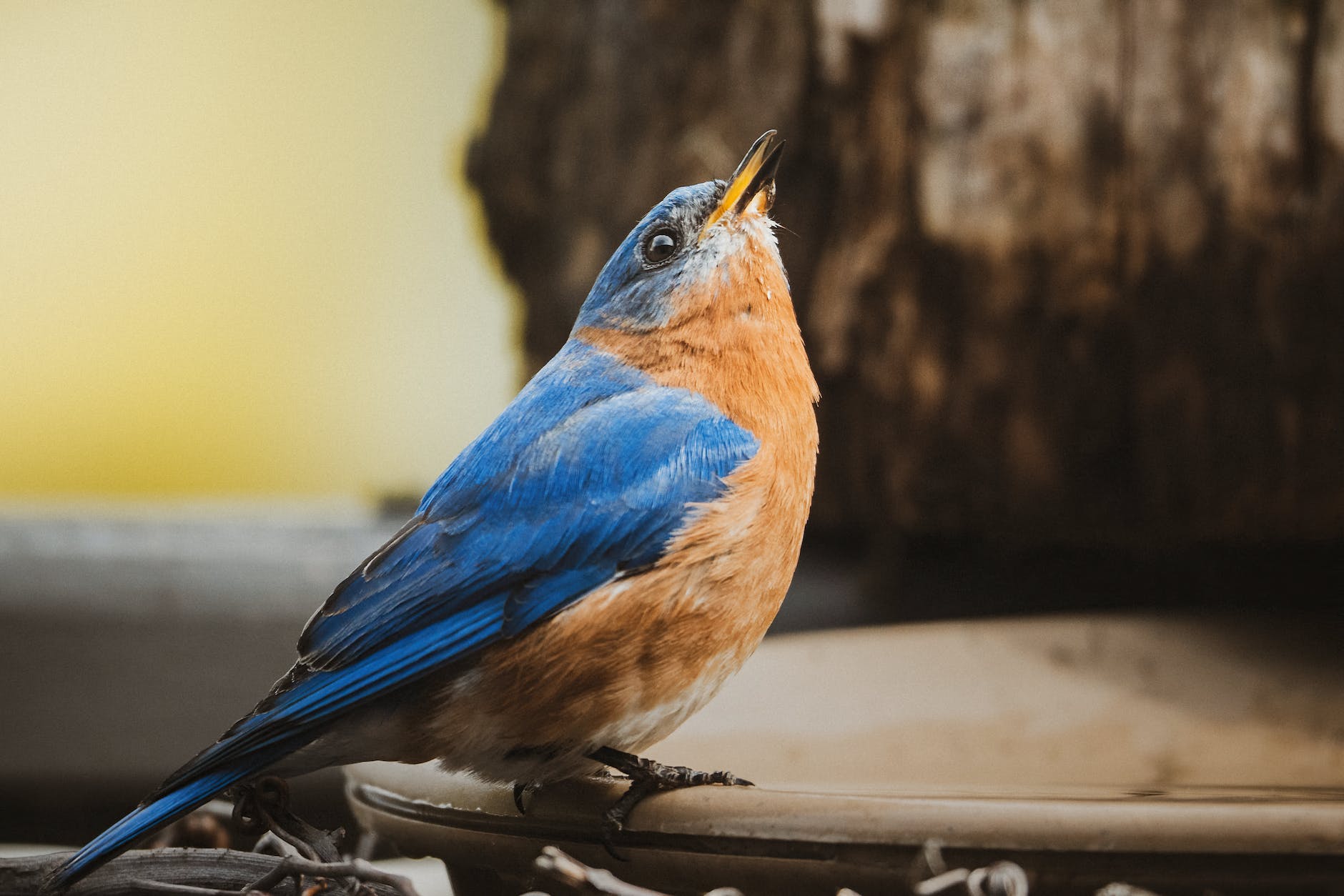
I guess I’m looking for an opportunity. Or the Bluebird of Happiness dropping something good in my lap. Something to break the monotony and turn my emotions into something happier instead of ennui.

Photo by Tina Nord on Pexels.com

  1. Moulage gives me positivity.

How to Talk About Not Being Okay

How do we talk about not being okay?

Photo by Du01b0u01a1ng Nhu00e2n on Pexels.com

Being vulnerable is that scary, that human. It’s scary to risk rejection because we have been a sloppy mess in front of someone. It’s scary for society to witness the breakdown.

The alternative, however, is that we stuff our feelings until we explode. Or we manipulate others so we don’t have to feel. Or we try to control everything until we cannot function anymore. None of these are good ways to deal with feeling like a mess, but ironically, those methods can seem more functional in the short run. They give an illusion of power โ€” power over oneself, power over other people, power over situations.

I have very raw moments in my life. Although it’s kept well under control, I have a mental disorder. I have breakthrough times in February and October. During those times, I have sleep disturbances that keep me exhausted, severe anxiety, and a general feeling of being overwhelmed. I have to talk about it because it’s an overwhelming bad feeling and, at the time I have it, I feel like it’s always been there and will always be.

I’ve come up with some rules for myself on how to talk about not being okay:

  • Choose wisely who you will talk to and how much to disclose.
    • Mere acquaintances might rate an “I’m under the weather right now.”
    • Coworkers might rate very simple situational statements, like “My father died.”
    • Good friends, if they can handle things, might rate a description of what’s going on with some frankness, like “I have seasonal affective disorder right now and I’m doing pretty poorly.” This list is to protect you from the people who might reject you or the message.
    • The best thing, though, is to approach people who are supportive toward you.
  • Don’t use your friends as therapists.
    • Don’t rehearse negative scenarios on them and expect them to argue endlessly against you.
    • Also, don’t unleash your worst behavior on them. Treat them like friends and honor their feelings.
  • Apologize if you have behaved badly, just as you would when you’re not overwhelmed.
  • Do not expect your friends to keep dangerous secrets, like suicidal or homicidal ideations, for you.

If you are dealing with depression, anxiety, bipolar, schizophrenia, or other mental health issues, your best support system is not a substitute for therapy, whether that be psychotropic prescriptions, talk therapy, cognitive-behavioral therapy, or others. Reach out to your health care providers or get yourself some providers on your side.

I hope this has been helpful. I feel like I’ve clarified some things for me, and I hope that I’ve helped others think about this, because all of us have heavy times.

The Dreary Months

We’re officially past Christmas and New Year’s, and I’m officially done with the first draft of my next October release, and the skies are relentlessly gray. For someone with bipolar (II) disorder who uses the holiday season to hide from the darkening days, I am officially in the dreary months, or those months where I’m at risk for depression.

I’m tired all the time right now, and I’m weepy. I feel bogged down by a pretty normal workload. The answer to the question “What am I looking forward to?” is “A nap”, but there seems to be no time for that. I might nap on Wednesday. I have meetings all afternoon this week. On Friday I have an appointment in large letters: “NATHAN”. I do not remember who Nathan is or why I’m meeting with him. Since it’s in all caps, it must be important.

Photo by eberhard grossgasteiger on Pexels.com

What I need to do is get some strategies in place to help boost my mood:

  • A sun lamp. I don’t know if these really work, but they give me a sense of control
  • Naps when I can, even if this means while sitting under the sun lamp drinking coffee.
  • Things to celebrate. (I need help making this list)
  • Cat therapy
  • Possibly a phone call to the doctor

More coffee and booze are not on this list, as these will make my mood worse.

I’ll keep you posted.

Hello! I’m Back! (and a little about depression)

How long have I been gone?

According to my log of posts, I have been gone exactly a month from writing. It feels like longer. I need to write again.

Why have I been gone so long?

I could say “things got busy”, but that’s not the whole truth. I had free time, but I slept much of it. Writing my novels fell by the wayside, although I proofed a couple novels using ProWritingAid, because it was easy and didn’t take too much thought on my part. I dealt okay with routine things, but did nothing truly creative.

Photo by Keenan Constance on Pexels.com

I have to break out of the cocoon that depression wraps around a person, the lassitude, the negativity, the self-loathing. I’m working with my doc to remedy the depression on the medication front. The rest is up to me.

I was depressed.

I’m still depressed, but I realize that I have to reach out again to break out of my solitude, just in case someone responds. I have to put myself in the stream of humanity, so it reminds me I am part of it.

I have to go back to writing, to find my soul within the flow of words.

Hello again! Expect my usual content soon.

A Mess of Impostor Syndrome

Negative self-talk all day

Part of the reason I think I’m getting depressed is because I have non-stop negative self-talk in my head: I don’t know why I think I can get traditionally published. My writing isn’t good enough because it’s not like other people’s. I have the wrong kind of book covers. I like the wrong kind of book covers. I’m awful at marketing. I don’t have sex or nudity or grittiness in my romances. The dialog never ends.

The best I can do

It’s hard staying positive with a barrage like this. The best I can do is keep my head above water with cognitive therapy — “You don’t know this, you can’t predict the future, that’s black and white thinking, don’t call yourself names.” And I believe in cognitive-based therapy.

Cognitive-based therapy, at least in the version I use, utilizes picking out cognitive distortions (“I’m not a good writer”) and assigns to it one or more cognitive distortion labels (such as black-and-white thinking) and asks the person to write contradictions for their statements. This really does work, but when getting a barrage, it’s hard to eradicate all of the negative. This is why I wonder if I’m going into depression, because usually these are not so constant.

Question

What do you do when you have the blues? Drop me a line in the comments.