An Excerpt from Kringle Through the Snow:

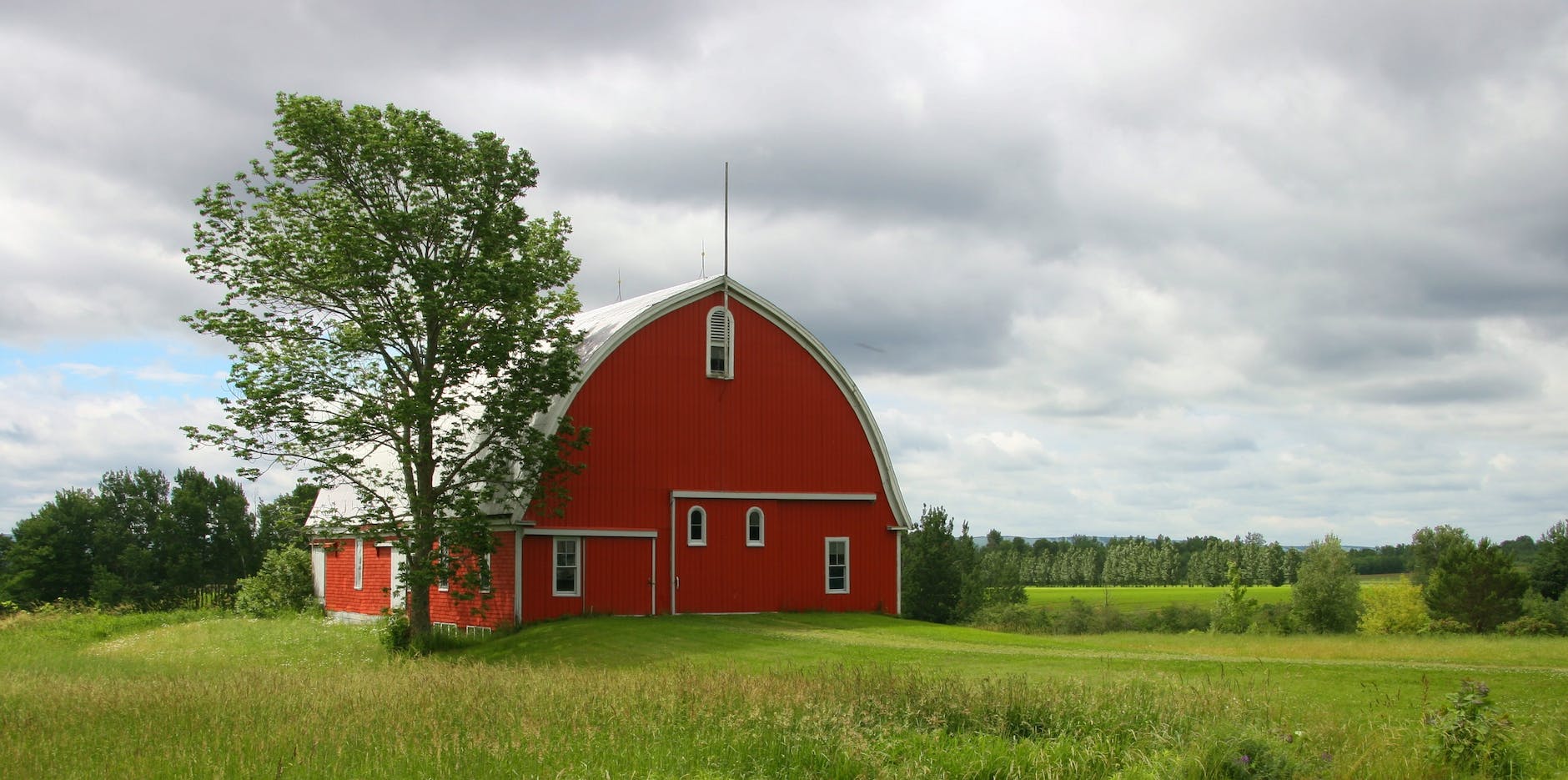
Photo by Kristin Vogt on Pexels.com

Wade Nelson stretched his 6‘4“ frame over the back of the chair, feeling the tension of a workday subside. He straightened up, realizing he’d made a spectacle of himself. He shrugged and peered at the laptop in front of him.

Wade wanted to type the notes down so he could keep this scenario with the others he had written over the years. To write a dungeon, he had to juggle the abilities of the players’ characters with the statistics of monsters, magic users, and weapon-wielders. The idea was to create a challenge, not annihilation. Sometimes the party got annihilated anyhow. Foremost, in his opinion, he had to come up with a story.

He looked up, remembered he was in the café. He had lost track of time and place. Looking up at the big clock, he realized he had little time before he had to go home to feed his dog. He still had plenty of time before Saturday, when he would try out this new campaign on his players.

He walked up to the counter, where Geena with her red braids stood at the counter. “I’d like another café au lait,” he said.

“Have you ever considered a London Fog?” Geena suggested, wielding a large coffee mug.

“What’s a London Fog?”

“Earl Gray tea, steamed milk, and vanilla syrup.” Geena smiled. “It’s your new favorite drink.”

“I’ll have that.” He rummaged for his billfold.

“You have a smudge on your nose. Looks like a big pencil smudge -”

“It is kinda like a big pencil smudge.” When his work at the battery factory brought him to the bays, sometimes he was in contact with tons of the graphite mixture that went into the cores of the batteries. He excused himself and went into the men’s room to wash the smudge, which turned out to be considerable, off his nose.

He saw medium light hair, very short, and a beard, closely trimmed. He looked, to his eyes, like an engineer. Which he was, a well-polished geek.

When he returned to the counter, his London Fog was ready, and he liked the smell. Maybe the London Fog would be his favorite drink.

He sat back at his computer and flipped through the pages of the book. “Is it time for the Aspect of Tiamat? I think it’s time for that, right in the next room with lots of tempting treasure. And some minions…” He saw the Chromatic Dragon in all its multi-headed glory and grinned. Hopefully, the party would survive.

He figured his players played Dungeons and Dragons for the strategy or for leveling up. To him, though, the game would always be about the role-playing. About the story-telling.

Satisfied with his progress, he packed away his laptop and books and stood up to leave when a woman in a kelly green suit halted him. “You’re Wade Nelson, right? I remember you from the Grinch auditions.”

“Yes. How did you know I was going to be here?”

“Kris Kringle — I mean Kriegel — at the toy shop. He told me you were a regular here on Thursdays. Can I talk to you?”

“Uh, sure.” They sat back down. Wade wondered how Kris Kringle — Kriegel — knew him.

“I’m Sally Perkins from Rolling Hills Improvement Committee. I wanted to tell you that you’re our Grinch.”

“Great, I think. I’m not sure what a Grinch is supposed to do. I was at the interviews because my boss picked me to represent the factory, so maybe you can help me. How do I grinch?”

“Well,” Sally paused. “Well, you are going to attend several community functions. Like the December Chamber banquet and Thanksgiving at BesMart, the parade, and the Charity Holiday Gala. In a Grinch costume.”

“I think you’re going to have to make me a new Grinch costume, then.”

“Why is that?” Wade hadn’t even noticed the clipboard on which Sally took notes, but there it was.

“I’m 6‘4″, a size 2xl, and I’m betting your Grinch costume won’t fit me.”

“Oh,” Sally said, writing. “I hadn’t thought of that. Let me get on that. I’ll see you later,” and with that, Sally had left as abruptly as she had arrived, and Wade had become the Grinch.

Now all he needed to know was what Rolling Hills expected of their latest Grinch.

Excerpt from Kringle Through the Snow

This is an excerpt from the latest Kringle romance, which will be published October 1, 2024:

Surprised by the visitor, Sierra DuBois stood up from her desk at the Venue Barn, where she worked as general manager and event planner. Sierra looked neat, from her shiny brown bob to her crisp white blouse and slacks, against the room strewn with fabric samples, receipts, and white tulle. The red-headed woman at her door wore an emerald-green suit and carried a clipboard.

“Sierra DuBois?” she asked. “I’m Sally Perkins, head of the Chamber of Commerce and vice-president of the Rolling Hills Improvement Committee.”

“Yes, please, come in.” Sierra noted Sally had already started walking into the office.

The two sat, and before Sierra could speak, Sally introduced her topic. “You know the city wants to start a fun little initiative with the community for the Christmas season. A Grinch initiative?”

“As in, green guy who doesn’t want the neighbors to celebrate?” Sierra had watched the animated TV special about the Grinch since she was Cindy Lou Who-sized.

“Yes. He’s a favorite among kids and adults alike. Quite the thing.” Sally looked down at her clipboard. “We would like to incorporate him into holiday events. He’ll already be riding the fire truck in the Christmas parade, and -”

“What happened to Santa Claus?”

“They’re on the truck together.”

Sierra couldn’t imagine they could both fit in the truck’s basket, given that Santa’s belly was quite jolly. “What can I help you with?”

Sally took a deep breath, and Sierra felt a bit of apprehension. “We would like it if you could incorporate The Grinch into your gala.”

“Oh.” Sierra said. “The charity gala. You know the gala is an elegant event that raises hundreds of dollars for community philanthropies.”

“Yes, I know. The Chamber donates to the setup every year. As I recall, Ray’s Liquors donates 75 bottles of bubbly every year.”

Seventy-five bottles of Cordon Negro wasn’t Dom Perignon, but it was still a hefty donation. And when someone receives that big a donation, one gives back. “Sally, let’s work together on this. How can we incorporate the Grinch into this gala without losing the panache?”

“That’s your job.” Sally stood. “I would hate to get in your way.” And with that, just as abruptly, she left.

An Excerpt from the Work in Progress

A week later, Brock and Leah sat in the livestock barn, hiding from the rain, which had broken out as they finished trimming the hooves of the Welsh Mountain sheep. The two sat on old folding chairs swiped from the Commons building.

Photo by Pixabay on Pexels.com


“Leah, are you okay?” Baird asked as the rain hammered the metal roof.


“You keep asking me that!” Leah stood up and peered out the door at the rain. “I’m okay.” She didn’t want to talk about it — the feeling of foreboding that settled in her bones like a chill she couldn’t shake.


“No, you’re not,” Baird observed. “If you were okay, then you’d be able to laugh at me being so clueless.”


“I’m okay!” Leah turned away from Baird.


“Leah!”


“What’s the matter with you, Baird?” Leah turned to him, hands on her hips. “Why are you getting into my business?”


“I’m not getting into your business,” Baird shouted, standing up. He sat just as quickly, burying his head in his hands.


“Baird, what’s wrong with you?” Leah asked, standing and striding over to Baird.

Baird raised his head. “I’m not used to snapping at you. I’m not used to snapping at anyone. But it’s part of my nature, this anger. And I’ve learned to ride herd on it, to become a person instead of the soldier they tried to make me. I’m not the calm, meditative person you think I am.” He paused. “Or I am, but it takes work. Like right now. I know there’s something wrong — you look pale and wiped out. But you won’t talk.”


Leah sat back down, pulled her chair closer to Baird. “I’ve been feeling like something bad is going to happen for days. I’ve not talked about it with you because I’ve not talked about it with anyone. I don’t want anyone to think I’m crazy.”


“You think anyone here would think you’re crazy? We have Trees that give talents, and if I heard correctly, Josh foresaw the Apocalypse, didn’t he?”


“But that’s just it.” Leah fidgeted with her hair, taking it out of its hair scrunchie and pulling it back again. “Josh’s vision quickly made sense because the Triumvirate announced they’d attack us and kill Lilith. But we have nothing to tie my vision or my foreboding to. The vision looks nothing to do with Barn Swallows’ Dance if it means anything at all.”


“You need to tell someone. What if it means something?” Baird reached for her shoulder, then pulled his hand back.


“You don’t understand.” Leah raised her hands in resignation. “My parents grow increasingly uncomfortable about this place. They’re not comfortable with their talents, or with the presence of the Nephilim —“


“You’re telling me.” Baird snorted. “Oh, sorry — go on.”


“I’m afraid —“ Leah paused, staring down at her hands.


“Afraid of what?” Baird prompted.


“I’m afraid they’re going to disown me. For being what they’re afraid of.” The words came out in a rush; their weight lingered.


“They wouldn’t disown you, would they?” Baird asked to break the long pause.


“If they thought I willfully walked away from God, they might,” Leah fretted. “I don’t even know if I believe in their God anymore.” Leah fell silent, waiting for their God to strike her down. Nothing happened.


“Who is your parents’ God?” Baird asked, clasping his hands.


“Well, God.” Leah snorted. “Ok, the Christian God.”


“Do humans believe in other gods?” Baird leaned back in his chair, ready to learn more about humans, a thing he pursued with enthusiasm.


“Well, Aasha Kaur’s Sikh, and she calls her deity Ek-Ongkar. The Hindu have a pantheon of Gods and Goddesses, and Jeanne and Josh believe in nature spirits. But I can’t —”
“You can’t believe in another God?” Baird guessed.


“Because our God is — “ Leah sighed. “It was comforting to grow up and feel we had the lock on salvation because we’d been born to the right God. It’s not so easy now, living at Barn Swallows’ Dance with so many beliefs.” Leah turned to Baird. “What do you believe?”


“Many of the Nephilim believe as the Archetypes do — in a creator we call the Maker.”


“Well, that’s original. But then again, we call our God ‘God’”.


“Anyhow,” Baird raised his eyebrows at her, “We don’t worship so much as acknowledge the Maker, who we believe constructed your world with its geography, its climate and weather and seasons, its ecosystems, and the Archetypes, held apart from humans by their immortality and their task to hold humans’ cultural underpinnings safe. And then They left to create another world.”


“So no sitting in judgment?” Leah asked. “That must be nice.”


“No. They’re pretty hands-off.” Baird cocked his head and listened — for the rain? Or for Leah’s father?


“They? I thought there was only one Maker,” Leah groused.


“The Maker has no gender. Or both genders. Nobody really knows.” Baird shrugged. “We haven’t heard from Them in thousands of years. Many thousands of years. We observe no rituals, we don’t pray. We are not the people of a deity.”


“That must be a relief.” Leah put her hands on her hips. “Beats being disowned by your parents for something you have no control over.”


“You need to tell someone. Besides me, that is — “


“I can’t tell Luke. Luke is — well, he looks at me like he knows something he’s not telling. I feel judged by him. It would be as bad as telling my parents.”


“Is there anyone else you can tell?”


“No. It would get back to my parents.” Leah grimaced. It would be so easy to let go her burden were it not for that.


“Okay,” Baird said. “Back to trying to make sense of the vision. Have you seen any visions since the one?”


“No, just the one. I feel like everything’s about to go wrong, however.”


“Back to the vision. What exactly did you see again?”


Leah shifted in her chair and closed her eyes, recalling to herself the vision. “I saw two lines of people facing each other, some in light armor, some with weapons. No guns, and as far as I could tell, no bombs. Just swords, and maces, like this was going to be a big man-to-man fight. They stood there, glaring at each other.”


“Did you recognize anyone in these lines?”


“No, but now I remember a man who commanded one line, pacing along the line, galvanizing them. He stood tall, and he taunted the men and women in line. Let me see — he said, ‘Do you want to be worthless? Do you want to be diminished as — he said some four-digit number — was? Do you want to be walking dead, trying to slit your own throats? We can stop this!’”


“That’s further than we’ve gotten before. What were they wearing?”


“To be honest, they looked like they dressed for a street fight. Or a gladiator ring. Both, kinda. Like I said.” Leah felt the dread like a miasma again. “Can we not talk about it?”


“I don’t know if we have that luxury, Leah.”


Leah tried to read Baird’s face, came up with concern and something she thought was puzzlement. “I just need to quit talking about it now.”


“Ok,” Baird said. “I’ll let it drop for now.” He looked out the door; Leah’s eyes followed his, and she noted the rain had stopped. “Let’s see if we’re needed in the food forest to pick fruit.”
They left the barn and walked silently toward the food forest, through browning grass sloppy with rain.

Excerpt from my work in progress

After work, I strode down the hill on the curved path which led from campus to the street that I called home. The trees on either side of the path cast cooling shade. I felt the air — slightly damp, perfect on my skin —


I filled up on the sights and sounds of June in my small town, a place built in a valley and up the hills that surrounded it. I lived at the bottom of a hill in a Victorian one-story cottage, whitewashed, with delicate gingerbread edging the roof. Surrounded by Victorian and Italianate houses, it stood out, not the least because it was surrounded by a riotous cottage garden I carefully tended myself. An idyllic setting in an idyllic town, a Sleepy Hollow in reality.


I reached my house and walked through the driveway to the back door and unlocked the door to be greeted by my long-haired ginger cat, Montrose. He stropped my ankles, then stood on his hind legs and waved his fluffy front paws in the air. I didn’t blame him for wanting to be fed; I myself was hungry as it was 5:30 PM. I opened a can of his favorite cat food, dumping it into the bowl. He pranced around the bowl, then tucked into it while I replaced his water with fresh.


My life followed the patterns of my days and weeks, the cycles of the year. Early mornings with Montrose and breakfast, followed by a day at work at the library as a cataloger, then an evening watching reading while NPR was playing on the stereo, and hearing the students walk down the hill toward the bars and back again when the weekend arrived. Sometimes I could hear them singing Top 40 tunes at the tops of their lungs as they made their way past my house. It didn’t bother me; it was just another sound like the spring frogs and late summer cicadas and the sound of snow plows in the winter.


In the summer, I spent as much of my time out in my yard as I could. I have built myself a refuge in my yard, and maybe that is odd. My yard, an old English garden which I researched before developing it, surrounds me with a riot of flowers. It takes a lot of tending the garden not to have it revert to grass and weeds. It surrounds my house like a gaily colored blanket, and the birds and butterflies visit it in riotous numbers.


It was just the sort of afternoon, I decided, to enjoy my backyard. I had a small brick patio just big enough to hold two chairs and a table that looked like they had come from an ice cream parlor. The garden wrapped in a circle around the back of the patio and to the brush line at the edge of my small yard.


A glass of wine, I thought, would be lovely, and I brought a bottle of Reisling and a glass to the table and sat down. I could hear the ever-present birds and my wind chimes, and a car in the distance meandered down my street in no particular hurry. I sipped the wine alone.
And that was the problem, wasn’t it? I thought. Alone.


I took another sip of wine. I would have to get that vintage again, made by one of my favorite wineries in the Finger Lakes. I wished I had some cheese, maybe a wheel of Brie, and some crackers, because the wine left me a little light-headed. What, I asked myself, was the problem with that? I had nothing to do in the evening.


And then I looked across the yard, to where the back of the border created a wall against the treeline. The birds fell silent, as if they held their breath. The afternoon light shone through the trees and illuminated a patch where hollyhocks stood in red and pink and black, and blue catnip and fuzzy rose campion bloomed in front of them.


I saw a flash of alabaster touched with gold, a glimpse of a bare torso, then a shimmer of air.
Then, as I stared, nothing.

An excerpt from The Kringle Conspiracy

 This is an excerpt from The Kringle Conspiracy, debuting on Kindle November 1st:

*****

Santa Claus sat at the back of the café, drinking what appeared to be a large latte. Intrigued and amused, Marcia Wendt stepped into the coffee shop. Yes, she noted, that is indeed a Santa, and he is indeed drinking a large latte. The whimsy of the moment reminded her of why she chose to spend the last of her four-month sabbatical in the Denver metropolitan area.

As she glanced around, Marcia realized that the café served a dual purpose. An admixture of dusty tomes, glossy language and travel guides, and garishly lettered graphic novels jockeyed with each other for space on rustic pine planks. Coffee mugs hung from hooks over the squat, modern espresso machine, while footed glasses filled shelves behind the counter. Stairs led up the back of the café, presumably to bigger rooms and more books. The tables displayed an eclectic collection of clienteles – two young women smartly dressed in skirts and designer boots chatted with each other over steaming mugs, and a slight young man in faded brown flannel gazed out the window past her. And, of course, there was Santa Claus.

Marcia stepped into line behind a teen sporting a bleached-blond mohawk with burgundy tips. He looked rather like an exotic parrot to Marcia. The woman behind the counter, pleasantly plump with black curly hair and granny glasses, said in an unmistakably Brooklynese accent, “What’ll ya have?”

Marcia, pleased by the further absurdity of a Brooklyn accent in Denver, stifled a giggle. “Double cappuccino, skim milk, decaf espresso, for here.” 

“Ok, a double-nothin’ for here,” the woman yelled to a buzzed-bald, gangly youngster with nerd glasses whose t-shirt proclaimed him a barista. She turned back to Marcia and smirked, “So, why bother if there’s no caffeine and no fat?”

“Because I’m over forty, I’ve had too much coffee already today, and I’ve got a great imagination – I can imagine that it’s the real thing,” Marcia mourned. 

“Well, can’t argue with that,” Ms. Brooklyn nodded as she handed Marcia the double-nothing, topped with a cloud of whipped cream. “While you’re at it, pretend there’s no calories in the whipped cream, ok?”

Marcia snorted. “Gotcha. Actually, I figure I can live a little dangerously.” She fumbled in her pockets for a five, grabbed the “double-nothing” and the change, and strode right to Santa’s table, daring herself to trust. “May I sit here?” Santa’s snowy beard and eyebrows were definitely the real thing, she noted with approval. 

“Be my guest,” Santa said in a low, but pleasant voice. Out of the corner of her eye, Marcia saw the man in flannel glance up briefly, then quickly bury himself back in his book.

“So, what brings Santa to a coffeehouse?” 

“Well, I’m afraid it’s really prosaic. We had a meet-and-greet for some kids here that ended a half-hour ago. Not quite Thanksgiving yet, but the holiday calls get earlier and earlier every year, and Book Nook’s no exception.” Despite the “prosaic” mission, this Santa, whose snowy beard was real and whose blue eyes twinkled behind silver half-glasses, met with Marcia’s approval. He could have been the jolly old man himself.

“You’re surprisingly chipper for a Santa,” she ventured. “Or is it too early to get burnout?”

“Santa burnout?” Santa was taken aback, his eyebrows raised. “Never heard of that before. Those must not be real Santas you’re seeing, then.” 

At this, the flannel man in the corner gave the Santa his own pointed, raised-eyebrow look, one that could have said, “You’re laying it on awful thick, aren’t you?” Santa merely grinned and winked back. Marcia caught the whole exchange and committed it to memory for the great story it would later make for her students. 

“But the secret to being a Santa is …”

“What?” Marcia asked, breathlessly, after the pause stretched far into dramatic effect territory. She had fallen into a sort of hypnosis, she thought, but felt too comfortable to break free.

“The secret to being a Santa is to listen with a loving and non-judgmental heart.”

“Wow,” Marcia sighed after a long moment of thought. 

The Santa took a sip of his nearly forgotten latte. “So, do you want to ask Santa for something for Christmas?” 

It was a pure, simple question. How could she answer such a question? 

 “With the truth,” a small voice inside her responded. Marcia took a deep breath, and spoke. “I want the right man to come into my life.”

The Santa did not laugh. Instead, he leaned forward, patted her hand, and said softly, “A worthy wish. But I want you to do something for me.”

“What?”

“You must trust. Simply that.”

“Thank you.” Marcia stood up, bent forward, and threw her arms around the old man’s neck in a hug, then kissed his cheek. Smiling through sudden tears, she grabbed her coat and hastily left the shop, her “double-nothing” forgotten.

A few minutes later, she heard her inner dialogue chiding her for trusting a stranger.

An excerpt from Whose Hearts are Mountains (Literary work)

I decided to sleep for the night in a rest stop just outside of Adair, in the former state of Iowa; a place where a giant white monolith stood outside the entrance to an old rest stop. I could see very little; my headlights didn’t cut through the deep night enough.  

I should have known someone else would find the rest stop as a shelter. I spied two such individuals at the Adair rest stop, revealed by the flicker of my headlights — a dark man with long greying hair and a wizard’s beard, and a paler man with hair tucked back in a rasta cap. The two sat on the ground in front of the door. Behind them, I noted the expansive blond brick building with its glass panels in the front, and a dull glow in a back room. I didn’t doubt that the windows would be revealed to be damaged and dusty in the morning.

I considered that, in the post-wars era, the men sitting by the entrance were not truly homeless. They landed on their feet, founded a camp, and called it home.

I pulled up to where they sat and rolled down the window. “May I stay here for the night? I can sleep in my truck.”

“Sure, ma’am. Martha should be back shortly, so you don’t feel scared with just us two men.” I didn’t expect such a considerate offer on the road.

“No, that’s okay, I’ll pull my truck over here — “

“You ain’t sleeping in that truck, are you?” The unkempt white man, who wore socks as gloves on his hands, shook his fist at me. He spoke in an oddly flat voice, and he struggled with eye contact.

“Well, actually, yes, I was going to.” I could recline the seat back and stretch out a little — 

“No, we got a nice warm building. You’re staying,” the black man decided. “Martha will be back soon to be your chaperone. Would be nice if you gave us something to help with supper. ”

I didn’t trust him. I couldn’t. Was this another trap? I searched my mind for something to forestall my spending the night with them. Would they rob me? Assault me? “I have nothing to trade — “

The black man chuckled. “You got stories. Might as well get to know you better,” he said, extending his hand. “I’m George.”

“And I’m Pagan,” the other man said, not offering his hand.

I looked them over in the headlights’ glow. They looked harmless. Famous last words, I realized. On the other hand, I would probably have a good chance against them with my gold-filled backpack, which probably weighed 20 or 30 pounds.  And I was very hungry.


Teasing you on Apocalypse

Adam settled himself in his corner of InterSpace, wondering whether it was truly his corner or whether it was the recycled molecules of someone else’s materialization. He pulled the black crystalline walls closely inward, with the only furniture a futon he had materialized. He lay on it, looking at the fathomless ceiling, and reached out with his mind to another Archetype, one who he knew well.

I have taught Laurel how to transport. It did not take much teaching, Adam spoke, feeling the granite and heath of the Archetype he addressed.
 
What does she remember? The other asked.

She doesn’t remember much. She mindspeaks, but she doesn’t remember that she has known my signature before. She transports, but she doesn’t remember where she has transported before. She doesn’t remember me. 
 
She doesn’t remember you, the other repeated. She will not remember us, either. We need to awaken her, but there’s the chance that we damage her if we awaken her too quickly. We can’t afford that. The mindvoice spoke tersely, but Adam understood the carefully concealed swirl of emotions behind it. Emotions could be dangerous if not banked; one of the realizations of the renegade Archetype.

I want her to remember,
Adam admitted. I want her to remember me.

You’re asking for a lot. She doesn’t even remember the last ten years, and you want her to remember her origins. She will, eventually, remember when we bring her back into the fold. But first, she needs to remember her exile, if not the reasons for it.

I know, Adam sighed. It just hasn’t been the same without her.

Take care of her. Adam felt the rugged edge of the Archetype’s warning fade behind his words.

Adam lay on his futon for a while longer, listening to the wooden flute he favored. He paid attention to his breathing, feeling each inhalation and exhalation, turning his attention away from the roiling thoughts.

He had learned the meditation a long time before, as a refugee from InterSpace, hiding from his heritage in a Buddhist temple in the south of China. There he learned to draw upon the unemotionality that was his heritage as an Archetype, to hide the human turmoil that represented the special circumstances of his creation.

Breathe in, breathe out. Let go of the longing, the impatience. Let go of the very human frustration. Let go  …

Six thousand years of existence, bouncing between the monastic cell of InterSpace and the Buddhist temple, and the civil service in a beautifully cultured Luoyang, and the days set laboring on the railroad that eventually stretched across the States. Hiding in plain sight despite his unearthly beauty and his freakish strength. 

Six thousand years of existence, and his mind still wandered back to one day, the day he was created, his first glimpse Earthside. A verdant landscape, with a riot of flowers, an oasis in a dry land.
The only time in his life — moments, it seemed — he felt accepted for himself.

After a long time, Adam awoke from his reverie, and he thought about Laurel.

Laurel looked like she hadn’t aged a day. Of course she did, Adam countered; Archetypes didn’t age unless they committed evil against their charges. She had stayed pure despite her exile, despite the centuries she had spent, as he had, Earthside.

He had kept track of her when he could, staying out of her sight. He realized there was a word for his behavior in the modern day — stalker. He could not help it, however; he had been charged with her safety. And the safest thing for her those millennia was to not remember him.

She had done a fine job of taking care of herself. She had remade herself many times, as he had: as a hedgewitch, as a cloistered nun, as a nanny, a shopkeeper, a manual laborer. She had studied human cultures, much as he had, trying to find a home and never quite finding one. She had never found a partner, just as he never had, because she knew instinctively that sex would result in half-human Nephilim, a taboo for their people.

But he had been instructed to bring her back to herself gently, for reasons he didn’t understand. He felt the ambivalence rise in him, wondering if she should be left alone, wondering if she would remember him and what she would say if she did.

Day 1 Camp Nano April 2019: The beginning of Gods’ Seeds:

 I’m trying to motivate for April Camp Nanowrimo and a new book. Here’s an excerpt from the first chapter:
 *****

A group of beings — human-like, but with a venerable air for all their apparent youth —  sat in a room whose black crystal-crusted walls shone with reflected light from the molten white floor, from the white and silver table, and seemingly from the participants themselves. The paucity of light did not lessen the sterility of the surroundings. 

“The Apocalypse proved that we, the Archetypes, no longer take our protection of the human patterns seriously,” Luke Dunstan said earnestly, his hands tented in thought. His visage, weathered in contrast to the unlined faces of the other immortals around him, announced that he had become worldly and, unlike most Archetypes, had committed evil — in his case, for the sake of good. Unlike most Archetypes, he had also repented, which gave him a perspective that could be called almost human. 


“But they still embrace evil,” the Baraka Archetype, short and spare like his people, countered. “They fight wars. They envy each other and they commit crimes out of greed.”


“Or out of want, or madness, or jealousy or a dozen other things,” Luke stated, the grimace on his face reflecting a view of reality he knew had wavered from the neutrality of an Archetype. Su, his consort and the Oldest of the Oldest, watched impassively, her tightly curled hair ruddy in the sparse light. She knew how to play the game, Luke noted sourly, something he had lost in his long association with humankind.


“If we give them the full impact of their cultural histories — not just the facts, but the emotions — the fear, the hatred, the xenophobia — “ The Bering Strait Archetype trailed off.


“How do you know it will make them worse? They already have the stories of their peoples’ pasts, and those seem to inspire xenophobia, it’s true. But what if they remember the full impact of the losses of war and weigh it against their hatred — would they decide to fight more? Or would they lay their weapons down?”  Luke paused to take a breath, to calm himself down, to wear the gravitas of the Archetype instead of the passion of humans. “The point is that, if they kill each other, millions of them will not die with each death. If we keep holding the patterns of the humans — “ 


“One of our deaths will kill millions of humans,” Su interjected. “Which is why the Maker created us nearly immortal. Yet Lilith, who held the patterns of all women, was nearly killed by our kind. Can we guarantee this won’t happen again?”


All of a sudden the residents of the room stopped speaking. Luke felt as if a wind had cut through his immortal bones and chilled them for just a moment. Then he felt the weight, a weight of the history of countless descendents of the people of the seax, the knife that gave its name to the Saxons. And then his burdens vanished, and he felt a hollowness inside. The gasps from the others at the table echoed his.


“What — what was that?” The Ibero-Maurasian snapped, breaking the silence..


“I think — Su, did you notice anything?” Luke asked, knowing that Su had not carried humans’ patterns, their cultural DNA, for millennia as all her people, the Denisovans, had long since become extinct.


“Nothing,” Su answered, “except that all of you around me froze for a moment, and slumped forward. As if something had been taken away from you.”


“As it has,” the Bering Strait Archetype murmured. “I think — I think we have lost our patterns, and if we have, the Maker has taken them from us.” He sounded bewildered, as if something more than the weight of patterns had been taken from him.


“I must see — “ the Ibero-Maurasian said, then paused, and Luke knew that she mindspoke another Archetype. “No,” she finally said, speaking slowly as if weighing each word. “I think we are the only ones whose patterns have been taken.”


“But what does this mean?”  the Baraka demanded.


The Arnhem Archetype, theretofore silent, spoke. “I think this means that the Maker has decided for us — He will take our patterns from us whether we are ready to relinquish them or not. And we’re the harbingers of this big change.”

Something to show you

I wish I had something new to show you — a rough draft of a scene, a short story — but I have been exiting and polishing for so long that I haven’t written anything new …

Wait! I could show you an edited, polished scene! This is the beginning of Prodigies, the book I currently have out in queries:

       I peered out the window of the train as we sped toward the Krakow train station, and I understood why the Polish government chose Krakow as the site for the Prodigy Assembly. I noticed more history in the town than I saw in all of the United States. Old-looking churches with intricate, weathered facades nestled against modern buildings with brutally straight concrete lines barely softened by budding street trees. I felt the city as a breeze, but with a hint of sharp edges. Just like chamber music — light and delicate until the cellos muscled in.
I held onto the architecture as something real because nothing else about this trip seemed to be. How likely was it that a high schooler would be offered an all-expenses trip to Poland to showcase her (and others’) talents? If I thought about it hard, I would begin to doubt this adventure, so I turned myself back to sightseeing.
I worried on the train because of something my mentor Dr. DeWinter told me, that there were far fewer black people in Poland than in the US. The train bore this out — as the only black person in my car, I noted a few curious stares. The train eased into the station; the sullen teen who had ignored me the whole trip started to stir, murmuring something in Polish as he tried to glance around me at the window.
“Tov Krakóv Goovneh?” he muttered in my direction, glancing over his sunglasses. I could barely figure out what the boy meant, so I reassured him that we arrived at Krakow Głowny. He wrinkled his nose at my answer but headed toward the train exit after shouldering his battered army backpack and his skateboard. Just another skater boi, posing as a jaded man past his teens.
I grabbed my suitcase and viola and followed him out of the train. Outside the station, I stared at the taxi line hoping to find a cabbie with just enough English to tell me how to get to my destination. As I dithered, I felt a breeze slip by as the skater blew past me and murmured, “Good luck” in English. Shithead.
A cab stopped before me, with a dark-haired, pale man behind the wheel.
“Palac Pugetow,” I said as he jumped out and helped me load my luggage in the trunk.
The cabbie corrected me with an amused smile. “Palace Pugetov?”
“That’s the one,” I shrugged.
We climbed in the taxi.
“Do you know how to say ‘hello’ in Polski?” the cab driver asked.
“Isn’t that ‘dezien dobry?'” I ventured. That was how I’d pronounce ‘Dzien dobry’, anyhow.
“Close,” he chuckled as we climbed into the car. His pronounciation sounded closer to ‘jean dobry,’ but not quite.
A whirlwind taxi ride later, the driver dropped me off at the offices of Palac Pugetow.  I realized that it wasn’t so much a palace as a massive building of French Renaissance style like I’d learned about in history class. It stood tall and white with grey accents like a avant-garde wedding cake, surrounded by tall straight poplars marching in a row. I walked up the stairs into the main entrance, and spied a sign on one room labeled “Biuro Zarzadu”. I grabbed my cell phone and plugged the words into my translation app and came up with “Management Office”. Out of curiosity, I pressed the icon for the pronounciation in Polish, and it sounded like “byuro zarzandu” as pronounced by someone with marbles in his mouth. I knew I couldn’t pronounce it that way, marbles or no marbles. So much for that goal of learning Polish.
I walked into Biuro Zarzadu without knocking. My mistake — every person in the office stared at me from grey metal desks. I hoped they stared because I had done something gauche rather than the fact that I sported a brown complexion.
“Shim mocha sludgewich?” a middle-aged woman with incredibly pale skin and blonde hair smiled as she stepped up to the old wooden counter. I shook my head and glanced at the door.
“Oh, yes. American?” she asked, still smiling. “May I help you?”
“Oh, yes, thank you! My name is Grace Silverstein, and I’m looking for the prodigies  — “
Again, the four people in the office — three women and one man — stared at me again. “Prodigies?” the helpful woman asked.
“The Minister of Culture invited me here?” I breathed.
A beat, then another, and then “Oh, yes, I’m pretty sure you’ll find them at the Second World offices, down the hall, third door to the right.”
As I thanked them and walked out, I felt a prickle at the back of my neck.
Luckily, I found the Second World offices, behind an austere door on which a polished bronze sign read “Druga Swiatowy Renasans” with a masterful male hand holding up a globe. When I looked closely, I saw a star-shaped cufflink at the wrist. Shades of Soviet Realism, I thought, remembering a lecture on Russian history sprinkled with art. My translate app yielded a translation of “Second World Renaissance”, which meant I arrived at the right place. This time I knocked on the door —
A frazzled woman with curly black hair, dark eyes, and a black dress that flattered her white skin answered my knock. “Oh,” she gushed in accented English, “you must be Grace Silverstein, yes? I am Dominika Vojchik, and — Nastka, not right now, I’m busy talking to the young lady!” A dark-haired child of about nine who tugged on her mother’s arm ran into the other room, and Dominika led me there, to a small waiting room.
If these were the prodigies, there weren’t too many of them. As I glanced around an opulent sitting room, all dark antiques and dark red upholstery and Oriental rugs, I saw the aforementioned Nastka with her long, coal-black hair and a dress like Dominika’s; a worn-looking blonde woman with curly-headed twins who sat in their chairs wide-eyed; and an Asian woman sitting next to a black-haired young boy who tapped at a smartphone. I assumed she watched over her son..
Dominika stood in the middle of the room and raised her voice, speaking in English. “Hello, I am Dominika Vojchik, and I am the coordinator of the Prodigy Project, where we wish to develop friendship between our countries through cultural exchanges. We have a — uh, small program right now, as you can see, but we thought that we would expand it if our initial forays succeeded.” She punctuated her speech with sharp hand gestures; the blonde woman whispered to her children, presumably to translate.
I waited for introductions —
“So, I would like to show you around the place, which has an amazing amount of history … “
We stood and stretched and followed Dominika out of the room. I looked at the mother of the two blonde children. Her eyes darted around at the sitting room, the rest of us, and particularly at Dominika.
“The Puget family originally came from France, hence the name Puget — ” which Dominika pronounced in the French manner as she walked us down interminable halls with carpets, dark wainscoting against pale cream walls, and doors, many doors. “In the 1800’s, Benedict Joseph de Puget became a member of the Polish nobility and the family settled down in Poland to do business. The Palace was designed by Joseph Kwiatowski for Baron Konstanty de Puget and built in 1874-5 in the Parisian Neo-Renaissance style.” I suspected that Dominika read off the plaque next to her to get the history, but I couldn’t read the Polish on the plaque.
The Asian boy jostled up next to me and whispered, “The current name of this place is the ‘Donimirksi Palace Pugetov Business Center’. Less impressive.” Just as quickly, he slipped away to stand by his — mother? Chaperone?
“I will now show you to your rooms –You will stay in private suites in this building on the next floor. We assigned each of you and your families a suite; your luggage has been placed there. I will pick you up at 1700 to discuss the assembly tomorrow night.”
Thankfully, I located the elevators.
I sat on the bed in my airy white-on-white rooms, staring through the bedroom door to a sitting room that looked just like the photo on the brochure I had received.
At least the room fulfilled my expectations. Not so the shaky appearance of this assembly I had been invited to.

Nobody had met me at the airport. I myself figured out, with help from a conductor, which train I needed to take. The black-haired woman with the staccato hand gestures appeared to be our lone host. And we hadn’t been allowed to introduce ourselves. I had never seen such a disorganized event in my life, and I hoped that our orientation fared better.
Then I heard a knock on the door. I freaked out — I don’t know why, just the strangeness of the situation. I decided to ignore the messenger until they gave their name and purpose — and then they did exactly that: “Please, I’d like to talk with you. It’s Luitgard Krause.”
I opened the door to the blonde woman and her two cherubic tots. I let them in to the sitting room, where the mother — Luitgard — sat in the overstuffed chair and her children, who were no more than seven, sat on the floor next to her. “This is Erwin, my son, and Mitzi, my daughter.” Erwin eyed me up and down sternly, then relaxed. Mitzi nodded at her mother, and walked up to me. “What’s your name? You have pretty hair.”
 “Why thank you, Mitzi. My name is Grace Silverstein.”
“Are you one of them?” asked Erwin from his perch in the chair
; Luitgard bent over to shush him.
“One of whom?” I asked him just as I heard another knock on the door. Erwin shook his head, suddenly pale.
“May I come in?” I recognized Dominika’s voice and accent. Then she let herself in to my locked room.
My spine prickled and I felt lightheaded. Dominika had access to my room? Why? I spied a chair I could move in front of the door at night.
I couldn’t shake the feeling of wrongness.

From Prodigies:

“Sadness, I think. People say I’m happy all the time, and I guess I am. It’s a lot simpler that way. So I’ll challenge you to make me feel sad …”
I knew the song, then. An old spiritual, “Nobody Knows the Trouble I’ve Seen,” a little lower-pitched than Marian Anderson’s version and less jazzy than Lena Horne’s, to suit my contralto voice. “… nobody knows my sorrow …” I sang, pulling out all the sadness wrapped around my bones like sinew and muscle. I sang to the G-d I didn’t know if I believed in anymore, the one I gave up on when my parents, the last of my family, died.
When I finished, I faced silence. I looked back at the tall, slender Ichirou supporting the shorter, stockier Weissrogue, who slumped with his head bowed. I heard a sniff from the other side of the counter — Ayana and Greg stood there, with Greg’s face streaked with tears and Ayana’s hand in his.
“I haven’t had a cry that good since I was seven,” Weissrogue said shakily. “How long before this wears off?” He wandered, dazed, back into the secluded booth; we all followed him.