There are probably more than three books that have had an impact on me, but the prompt tells me to pick only three, so I will. These books are very different from each other (and I’m cheating on one of them).
The first book, which I read in eighth grade, was The Dark is Rising, by Susan Cooper. This book, the second in a series of five, is a fantasy novel set in contemporary Britain in the 70s. It’s definitely juvenile fantasy, of which there was not much during that time period. The depth of the fantasy totally captured me, with its Arthurian and fae undertones set at Christmastime. I totally escaped through that book. I read the series again last Winter, and it read just as well to a 60-year-old adult.
The second book, which I read probably 20 years ago, was The Four Agreements by Don Miguel Ruiz. Although I worry this book is considered New Age pap marketed to those of us who grooved on Carlos Castaneda, those four agreements pack a psychological punch. The agreements are: “Be impeccable with your word”, “Do not take anything personally”, “Do not make assumptions”, and “Always do your best” (Wikipedia, 2025). These could fit comfortably into cognitive journaling (and do make for good contradictions to cognitive distortions). I live by these now, and they offer me a different way of living.
The third book fits the prompt, even though it’s one that I wrote, because it impacted my life. That was the first book I wrote, The Kringle Conspiracy. That book was impactful because I didn’t think I could write a book until I wrote it, and I didn’t think I could publish a book until I published it. I came up with the story when I was in high school, and published it in my fifties.
There are my three books. I would highly recommend all of them.
I’ve concluded that my writing is not commercially feasible (traditional publishing) because it’s too short for fantasy. At 70,000 words on average, it’s not long enough for agents to be interested in it. It would be short enough for romance, but my writing is really fantasy (or to be more accurate, magical realism is more likely) which is not written short. However, I write tightly and don’t need all those words.
If I’m not selling in indie (self-published) markets, it’s because I can’t get enough traction with marketing. I have tried several things, and none of them seem to work. I feel like, if I wrote romantasy (heavy on traditional romance, lots of spice) I’d have a better chance, but I don’t feel moved to write about those things. I have a niche, but I can’t seem to get introduced to those people.
The saying “Do what you love, the rest will follow”? It does not seem true in my personal situation. I write because I’m possessed with ideas, and what possesses me is shorter novels. People have told me I’m a good writer. I think I’m a good writer.
I’m just trying to convince myself to keep writing, even though I don’t have a readership. It’s a hard sell, because I don’t do things just for myself; rather, I look at what they produce and whether they’re useful. Right now I am starting a garden; I don’t grow the seedlings for their own sakes. I grow them because they’ll give me food someday. My books will never give me food, and I have to figure out whether that’s okay.
The other day, I figured out that the genre I’m writing is magical realism. It had never occurred to me that writing about a theoretically real place (Barn Swallows’ Dance, an ecocollective) with preternatural guests and a resident demi-god would be magical realism. Especially as the stories feature allegories for all-too-human situations.
I thought my works were just some very subdued contemporary fantasy, some bastard children that would never sell because they’re just not … enough. I wrote the books because of something within me that said they had to be written.
I’ve always wanted to write magical realism. Maybe knowing this will entice me to write.
I want to remind my readers that I write books. I don’t mention that much.
I write romantic fantasy and fantasy romance. The difference between those is the emphasis; fantasy romance is mainly romance and romantic fantasy mainly fantasy.
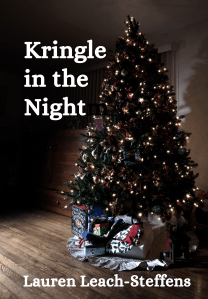
The fantasy romance novels concern the Kringle Society, a secret society of Santas that infiltrate towns with good deeds. Quirky people fall in love and become involved in the community. You will find Santa scholars, Renaissance re-enactors, toymakers, college professors, and the occasional accountant among the people featured. These are sweet romances; ‘closed door’ in romance parlance.
The romantic fantasy novels feature an agricultural collective, what some might call a commune. The residents are hard workers; they are pacifists, back-to-nature sorts, and people who seek community. Add to the mix immortals, the earth-soul Gaia, and the possible demise of humanity, and you have a people with life-changing secrets hidden in plain sight.
I am almost done with Kringle Through the Snow, which is the Kringle (Christmas romance) book I almost didn’t write. I thought I was done with the Kringle series (this makes six of them) until one of my Facebook friends told me I needed to write more. It took little arm-twisting, but I always wonder if the current book is the last.
I never thought I’d write romance. And, in fact, my romance is clean (only implied sex) and funny. It’s much more relationship based, although it promotes the Instalove trope, which means people getting attached quickly; I think because that’s always been my personal experience. There’s also several friends-to-lovers, enemies-to-lovers, and one age gap. (Two if you count the 100,000-year-old Su and the 6000-year-old Luke.)
Is romance realistic? It’s not supposed to be. It’s grounded in its society (whether that society be modern American, fantasy, science-fiction, etc) and fantastical in its romance elements. Some of the things that happen in romance would not or should not happen in real life (borderline stalkerish behavior, grooming, teacher-student romances) and some only happen in very defined and conscientious contexts in real life (S&M). Some things that happen in romance are just unrealistic. But romance is a type of fantasy — define the rules of the world and you can dream freely on the other parts.
I shy away from writing about dark subjects in my blog. It’s strange because I’ve had several dark times in my life. I don’t want people to think I’m pandering for attention, even though the reason writers post their works in the first place is to get attention.
I won’t write dark for dark’s sake, nor will I use gratuitous trauma as a shortcut to character development. Yes, someone’s past will contribute to their character. But I won’t use trauma as the only character trait or even the main one, and only if it’s pertinent to the story. (See also the “fridging” phenomenon—killing a girlfriend character to motivate the main male character.)
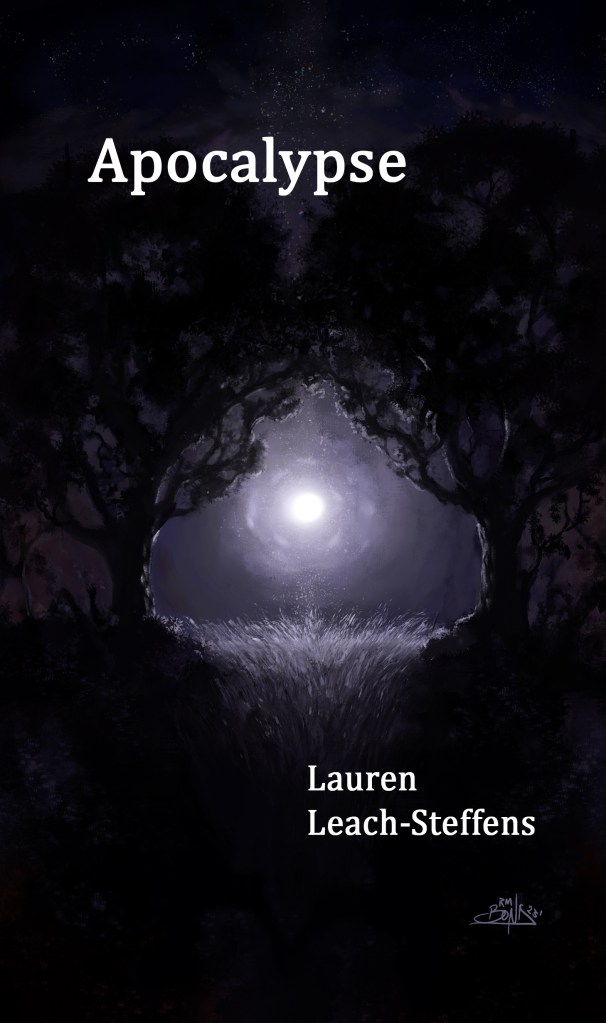
Writing about dark topics in my stories is something I must work my way up to every time. For example, the body count in Apocalypse. I had trouble killing anyone, but a developmental editor told me that the last battle had to look hopeless, so I killed eight characters. I also, ironically, edited that book for gratuitous darkness because I had tried the cheap way to make it darker.
Sometimes an entire book is dark. Carrying Light, one of the two I’m currently writing, is a dark novel, being that it’s written at the cusp of the collapse of the United States. Apocalypse is dark, because the fate of humanity hangs in the balance. But it was hard to write these dark enough at first.
In the end, I think darkness needs to balance light. That’s just me; I know there are people who write dark all the time, with lots of death, depersonalization, and alienation. I can’t write there, because all my writing adopts a quote from ee cummings: “The single secret will still be man.”
I write fantasy romances and romantic fantasies. Obviously, fantasy is part of what I write. But does fantasy mean unrealistic?
Not really. Fantasies have their own internal rules so that they don’t stretch realism past incredulity. For example, any magic user will not be invincible — that will make the story unrealistic. The character has to have magic for a reason, which the writer can reveal as simply as “he’s a magic-user” to a long, descriptive back story.
There has to be internal consistency to the magic system. Readers will balk at inconsistencies, especially convenient inconsistencies that favor the hero or villain. If you defy gravity, do so consistently.
I write contemporary fantasy, which means a lot of realism as modern culture, geography, physics and the like. So there’s a lot of reality around the fantasy, but I still have to make sure there’s some internal consistency in the structure. Nephilim fly, Archetypes teleport. Humans don’t get more than one gift from the trees. Archetypes can’t teleport split-second and everyone’s gifts have practical limits. Gaia’s presence does not pass beyond the borders of the Garden.
World-building accomplishes a lot of these rules and boundaries. I do a lot of world-building in conversations with my husband in conversations like: “Do you think Forrest can knit wool if he can knit bones together?” (We decided yes.)
Fantasy is more fantastic when there’s a point of reference, when there are winners and losers (even with the possibility to change in the story), and no power goes completely unchecked.
I used to have a mystique. Honestly. Back in college, I hung out with a rather fanciful group of people who were into alternative spiritual paths and science fiction, and they painted me in equally fanciful terms. Now, mind you, I was about as overweight then as I am now, so my persona wasn’t beautiful. But being a little older than most of them, they regarded me as a wise woman. (I was not that wise either.) I definitely had a mystique: Where did all that knowledge come from?
Now that I’m about 30 years older and finally wiser, I no longer have this persona, a self that conceals as well as reveals. A cloak of otherness is not something I possess. Instead, I am a rather plain, overweight college professor who doesn’t even have the mystique of a college professor. I appear as a woman in her late 50s who either smiles too much or not enough depending on where you encountered me. Often, I say “wow” and get excited about what people are talking about. It’s the anti-mystique: This is who I am.
I mention this because this would be a great time to have a persona, especially one with a certain mystique. I’m a writer, and I think people expect this from their writers. Writers are not like the rest of us, the reasoning goes. They are creative. They are Something Else. A fantasy writer like myself should have one foot firmly in the fantasy realm, teasingly inscrutable. Instead, I’m like a seven-year-old in a candy shop.
Ok, maybe that’s a persona, but a writer’s persona? A fantasy writer’s persona? The seven-year-old in the candy shop is probably closer to how I see my writing as anything. Look at the miracle that just happened! See the storms on the horizon! How are they going to get out of this?
This past week was everything a finals week could be: Students missing finals because I told them the wrong time, students sleeping in, potential academic dishonesty (it wasn’t), a good annual review, a lovely lunch with my colleagues, plants coming into the mail to remind me that there will be gardens … a great finals week.
Now for the existential crisis
I can’t postpone my confrontation with my writing any longer. I make excuses: I have to make a batch of bokashi to raise my compost game. After the semester, I should take a break.
No, it’s going to happen now. I’m going to confront my feelings about writing right here and now.
This is the first issue for me as a writer: who I am. I write fantasy with some relationship elements. I write fantasy romance.
Most of what I have let out to the public, however (as opposed to most of what I’ve written) is the fantasy romance Kringle Chronicles. Those books are fun, relaxing, and put me in the holiday mood.
The problem is that I am not a romance writer. I have hung out with romance writers, and they talk about (in harmony) things I do not at all want to read or write: alpha males, shape-shifters, explicit sex scenes (I’m not anti-sex, I’m anti-unrealistic-sex), BDSM, and just everything over the top.
It’s about fantasies. And I can fantasize a lot about things, to where I’ve had my writing considered very original, but I want my relationships to be reasonably, well, healthy. I want my readers to think about the possible.
And this is where the crisis starts
We writers are told to write from the heart. My heart, whether in fantasy or romance, wants the people to be real and complex. In my fantasies, we have realistic characters thrown into fantastic situations. In my romance, same thing, except that the developing relationship is the primary plot point.
And I’m not sure what I’m doing sells. People apparently want alpha werewolves who are deadly but just and protective toward their mate, who until they showed up was the bullied and rejected waif (this is the synopsis of about 14 novels advertised to me on Facebook).
The crisis is that I can’t write this.
I write with the attitude that the alpha werewolf and the beleaguered waif don’t need a story. They’ve had a story for millennia. If I’m going to write Cinderella, I’m going to write it in a way that someone hasn’t done before — Cinderella is a librarian who has nothing but hard work and her garden, until a mysterious neighbor named Dane Prince sweeps her off her feet — but then she has to save him from the land of Faerie. (Actually, I am writing that story — it’s one story I’ve taken a break from).
But that’s the lingering feeling. I don’t know if the world needs my stories. I don’t know if I care about that, if my stories are good. If I found out that my stories nourished people, but the stories that sold were popcorn stories, I would want to keep writing nourishing stories.
But I don’t even know if my stories are nourishing, because I’ve had trouble selling them.
Which brings me to the other thing: marketing
I don’t sell books because I am terrible at marketing. I am terrible at bringing myself to carry out the strategies of marketing and pretty bad at the strategies themselves. Post on Twitter 12x/day? Write an interesting newsletter? An eye-catching visual on Instagram? Heaven forbid, a video on Tik tok?
Again, I write what my heart tells me to, and I’m afraid it’s boring.
What it boils down to
I know what this boils down to: I think too much, and more than anything, I think I’m boring. If anyone has a solution to that, let me know.
I am a writer of fantasy and romance novels, which I’ve talked about in these pages. As a way of developing my marketing presence, I have developed a newsletter for my once and future readers, called Hidden in Plain Sight. It can be found here.
Also, for all of my social media collections, I can be found at: Beacons







 Words Like Me