Big Audacious Goal #2

I have another Big Audacious Goal I hadn’t counted on, and that is to lose some weight. I am way too plump for my doctor’s liking, and now I have to do something about it. My weight is starting to affect my health.

Photo by Annushka Ahuja on Pexels.com

This is going to be a neverending goal, and that is a bit daunting for me. I have a sugar addiction (and I mean this in the most literal way possible). I have always had disordered eating in the form of sweet foods. My doctor said, “I mean you can have those things occasionally,” but given our game plan, I don’t know how.

The goal is to eat around 120 grams of carbs a day. That is not a SMART goal, so I need to work on it. I will set a goal of 127 grams of carbs, 48 grams of fat, and at least 60 grams of protein a day (give or take a few). This is based on a 1500 calorie a day intake. I will choose complex carbs like fruits and vegetables and whole grains. I will track my food intake daily to see if I meet those goals. I will weigh myself once a week. I will wean myself onto Ozempic according to my doctor’s instructions.

Notice I focused on my actions instead of the results. If I had said “I will lose 2 pounds a week”, I might have run into problems, as this doesn’t take into account my 62-year-old metabolism. Focusing on my actions makes more sense, because that’s what I can do something about. I made my goals realistic (I can do this!) and specific and measurable. The only thing is it isn’t time bound because it’s open-ended. I should be eating this way for the rest of my life, I suspect.

There are things this BAG needs. Like “how often can one diverge from this meal plan to have occasional ‘bad things’?” (I don’t care what dieticians say, there are ‘bad foods’ when an ice cream concrete leads to a sugar binge). A goal of how much weight to lose (at the moment, that’s 50 pounds. I have more than 50 pounds to lose, to be honest, but we’re being realistic).

So far, after two weeks of following this protocol, so good. I haven’t had a bad eating day and I have lost 3 pounds. Knowing my past attempts at losing weight, this stage is not the problem. The problem is keeping it off, especially when faced with desserts. Wish me luck.

My Broken Leg

Daily writing prompt
Have you ever broken a bone?
Photo by Pixabay on Pexels.com

When I was in graduate school, I got hit by a car. I was a pedestrian crossing a street with a friend, and the car merged into traffic — or, rather, merged into me. I had stepped forward when I saw her coming toward me, and I stepped back, but not in time. I rolled over the hood of the car and ended up in a sitting position on the pavement.

“Is your hip okay?” my friend screeched.

“My hip is fine. My leg is broken.” I exuded an eerie sense of calm.

“How do you know?”

“Because when I lift my leg, my foot feels like it’s not going anywhere.”

The woman who hit me had a cell phone (an amazing thing in 1991) and called the ambulance. When they arrived, they bundled me onto a stretcher. “Which hospital do you want to go to?”

“Well, let’s see. Which one does my insurance take?”

“She’s paying for your hospital bills.”

“Ok. Which one has the better cafeteria food?”

“You’re going to Carle. It’s the trauma hospital.”

“Ok.”

I didn’t feel much pain as they loaded me into the ambulance. I felt the bumps. I was pretty sure the only place I was hurt was the leg.

By the time I got out of head-to-toe x-rays, five of my friends were there to see me. They warned me that my parents were on their way from about two hours’ north. I was hurting, and finally a nurse gave me morphine. (I’ve been told that I’m pretty funny on morphine.)

All I had was a broken leg, but about an inch of bone was shattered. I understood they were going to take me to my room and then wait for surgery. As I was being pushed through the ward by a burly red-headed nurse, he grabbed the phone, held it out for me, and said, “You know who this is.” I got an earful from my mother, who was absolutely sure I got hit by the car to stress her out. Then he wheeled me past my room (“there’s your room”) and then to the operating room.

Over the next couple of days, I had many visitors. My friends took it upon themselves to run interference with my mom, who thought they were all very nice people. I was on a morphine drip and utterly hilarious.

I spent the next 8 weeks on mostly bedrest, and I didn’t know why they wouldn’t let me go back to my regular activities until I fell a couple times the first week. Then I spent 6 months on crutches, another surgery to put a bone graft and metal bar in, and three months using a cane. I limped for a good few years; now, I have bad arthritis in my knee from the long-ago injury.

It could have been worse. It could have been so much worse. It was probably worse than I thought it was, to be honest. But I survived and made my way through grad school on crutches. And now, other than having to be pat down every time I’m in an airport, I’m doing fine.

My Career Choices as a Child

Daily writing prompt
When you were five, what did you want to be when you grew up?

When I was five, I wanted to be a doctor. I think that’s because doctors seemed so different than anyone else I had encountered at that age. They had their own offices, they wore white coats, and they talked to little kids instead of over their heads.

When I was eight, I aspired to be a poet. My third-grade teacher taught an ambitious unit on poetry where we actually wrote in different forms (my diamante was less than desirable, but my limerick was pretty good). She had posted my Groundhog Day poem (free-form) on the door of the classroom. I told my mother I wanted to be a poet and she asked, “Do you like to eat? Poets don’t make enough money to eat.” That was the end of my vocational aspiration, because I did like to eat. I went back to wanting to be a doctor.

Photo by Jonathan Borba on Pexels.com

When I was ten, I saw a lot of doctors for a stubborn malady. At that point, I had had enough of doctors, and that cured me of wanting to be one. My career aspirations were on hold until I hit high school. When I was sixteen, I wanted to be a dietitian because I had lost a significant amount of weight. I was what they would call nowadays an orthorexic, someone who followed a strict diet and lost more weight than advisable. I held that aspiration until my sophomore year of college, when I started gaining the weight back and feared the organic chemistry classes I would need to take. I changed to Foods in Business, a corporate foods career.

By the end of my sophomore year, I wanted to be a professor. I didn’t know what I wanted to be a professor of, but I had a friend whose father was a professor and I wanted a lifestyle that would keep me in academia. It took me till my first semester senior year to find the answer. I took a family economics class as an elective, and I fell in love with the class. We talked a lot about why women earned less than men, and I found the discussion intriguing. After class one day, I asked the professor if grad school was a possibility. She escorted me down the hall to the department office and introduced me to the department chair. Thus, I got into graduate school in Family and Consumption Economics pretty easily.

Once I got my PhD, my jobs have been only slight detours in my field. I teach a few psychology classes, due to my many hours in Psychology along the way. I teach human services classes, which in my case are akin to what I trained in. At one point, I wanted to be a winemaker when I retired, but I now think that would be too much physical labor. Now, I want to be a writer when I retire.

If I didn’t need sleep …

Daily writing prompt
If you didn’t need sleep, what would you do with all the extra time?

I can hardly imagine not needing sleep. Sleep feels like a blessed release from the mental demands of the day, and I enjoy going to sleep as if it were a chosen activity rather than a necessity. I have (because of my bipolar) had episodes where I couldn’t sleep, and it’s an aggravating feeling. For the sake of this exercise, however, I will imagine not needing sleep without consequences to my body or psyche.

Photo by Pixabay on Pexels.com

The first thing I would do more of is read. Not the internet, but real books, because I would have time to get into them. I would find a comfortable spot to read and l would relax. My bed could be used for a place to relax because I would not be sleeping there.

I would look at the night sky more. All the interesting astronomical bits such as meteor showers and auroras happen late at night, when I am sleeping.

I would write. I wonder if inspiration would be easier at night when all was quiet?

I would meditate. As I would miss sleeping, it would be good to have that time when I can shut off my mind.

All of this is predicated on the belief that others would be asleep, and I would have the peace and quiet to pull off my plans. If nobody slept, this time wouldn’t be free. Bosses would expect more overtime and household chores would overtake us. Then I would certainly prefer sleeping.

If I Were a Carpenter …

Daily writing prompt
What skill would you like to learn?

I have always wanted to learn carpentry. I think it would be a satisfying skill to have because it’s very useful. Building furniture and boxes so I didn’t have to buy them? I would love that.

Assorted work tools on wood

My dad made me a cabinet from a packing crate and scavenged glass from old windows. It’s beautiful. I’d love to make something like that.

What’s keeping me from becoming a carpenter? Very poor proprioception. What does that mean? It means that I have very little sense of where my body is at in space. I sometimes sit down and miss the chair. I have been known to smack myself in the face. Life with poor proprioception is a bit challenging. Carpentry with poor proprioception? Tragic, because carpentry is fraught with very sharp objects, some of which whirl at high speeds.

In addition, I have poor hand-eye coordination. There’s no guarantee that saw is going to end up where I intend it to go. I’m likely to run it over the hand I don’t know where it is (see above).

Therefore, my choice not to learn carpentry is an exercise in self-preservation. I like my limbs where they are, thank you.

Not Brands, but Reference Groups

Daily writing prompt
What brands do you associate with?

I don’t associate with any commercial brands, but I do associate with what this question is getting at.

I don’t believe people associate directly with brands, except perhaps with trucks — there are “Chevy people” and “Ford people” in the US, and a few deranged “Tesla bros”. People associate with reference groups, which they use to identify themselves as a part of. This is something I learned in a consumer behavior class many, MANY years ago.

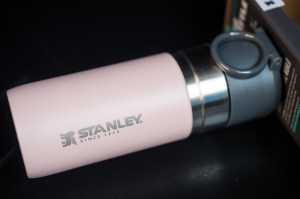
Bangkok, Thailand – April 16, 2022 : Stanley of pink stainless steel thermos travel mug to keep the drink warm or cold. Stanley Go Vacuum Bottle 12.5 OZ

Reference groups can be associative — “I am a member of this group”. For example, one of my reference groups is “college professor”, which makes me prone to buying gas-efficient vehicles and Starbucks coffee. Reference groups can be dissociative — “I would not be caught dead being a member of this group”. I am vehemently not a member of the reference group that listens to Kid Rock and drinks Budweiser beer. Last, they can be aspirational — “I would like to be a member of that group.” I would like to be a member of the upscale ecologically conscious consumer who has a home composter and a butterfly garden landscaped by someone else.

We buy brands because of their association with reference groups, because we want to be a member of that reference group. We refuse to buy certain things from our dissociative reference groups. We don’t so much say “I’m a Ford person” — unless we’re talking about trucks, and even then, we buy them largely based on our perceptions of who’s in that group. I will excuse myself to drink my home-roasted coffee, which marks me as part of the aspirational group “coffee snobs” now.

Keeping my Health and Well-being

Daily writing prompt
What strategies do you use to maintain your health and well-being?

As I have bipolar disorder, I have to work carefully to maintain my emotional balance. I don’t want to become either hypomanic (a state of elation, grandiosity, irritability, and overwork) or depressed. This means I employ a variety of strategies to not only keep in balance, but provide a sense of well-being.

One strategy I rely on is a regular, adequate sleep cycle. I go to bed at the same time every night and wake up at the same time every morning. I do not take afternoon naps, and if I find myself sleeping more than 9 hours a night, I check in with my doctor. Lately, I’ve had daytime sleepiness, and I’m going to have a sleep study done to make sure there are no problems there.

Another strategy is to manage my emotions by cognitive journaling. In cognitive journaling, one confronts cognitive distortions, which are illogical ways we use to explain our emotions. For example, when we’re nervous about a test, saying “I know I’m going to fail the test” (a cognitive distortion known as fortune-telling). Or when we attribute a bad date to “nobody’s ever going to love me” (black-and-white thinking). Cognitive journaling helps us recognize that the response is illogical and helps replace that thought with a more logical one.

I want my balance to be a happy one, so I have a couple strategies that have been scientifically tested to work in increasing one’s well-being. I meditate (although lately, I have been falling asleep during meditation; see my sleep issues above). Meditation is an active brain state that has been shown to increase well-being.

I participate in flow activities (more on flow here). My favorite flow activity is writing. I can lose hours in writing, which is a sign of flow.

I practice gratitude, which in my case means spontaneous thanks to the universe for the things that have helped me in life. A great place to begin with that is with a journaling practice called “Three Good Things”. Here, you write three good things that happened during the day and explain why they happened in your life. This gives you not only gratitude, but a sense of efficacy — “I did something that helped put this into place.”

MSN today brought me an article on self-care activities (some of which are listed above) that will help provide a sense of balance. I could put a couple more of these in my routine; there’s always room for more tools in my toolbox.

I would highly recommend a routine of activities meant to balance one’s life. Work expectations often push us off-balance; family demands and news headlines pull us off our balance. Balance comes from within.

A Reminder of COVID

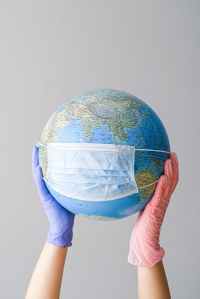
In my office today, I found a yellow mailing envelope. Inside I found two masks, cloth with clear plastic windows in the front so people could read my lips. This was a reminder of COVID from almost four years ago, when we spent the semester sending our live lectures over the Internet, disinfecting surfaces, wearing masks, and spacing our students six feet apart in a classroom. All challenges we survived as faculty, although I’m not sure to this day if anyone learned anything.

Photo by Anna Shvets on Pexels.com

I wanted these masks because I figured that if I couldn’t hear (I have a noticeable hearing loss and need hearing aids), my students couldn’t. I ended up not liking the masks because they weren’t flexible enough and I couldn’t wear lipstick with them. It took me a while to not wear lipstick while wearing masks, because the habit was so ingrained and I wanted to feel normal.

There was nothing normal about that time. I forget about it for months at a time, and then something reminds me, like a news article, or an old blog, or a mask, or the test kits we still keep around in case the cold feels more severe than others. I remember crying frantically in the kitchen because there was too much to deal with, or becoming obsessed with sourdough bread and catching my own starter, and not going anywhere for a long time. It never completely goes away, and when I sit at Starbucks writing, sometimes I remember when I couldn’t.

Less than Invincible

The first thing I thought about when contemplating writing this is “What would Lil BUB do?” And I realize that Lil BUB would write this somewhat personal post that makes me look less than invincible. So, I will write it.

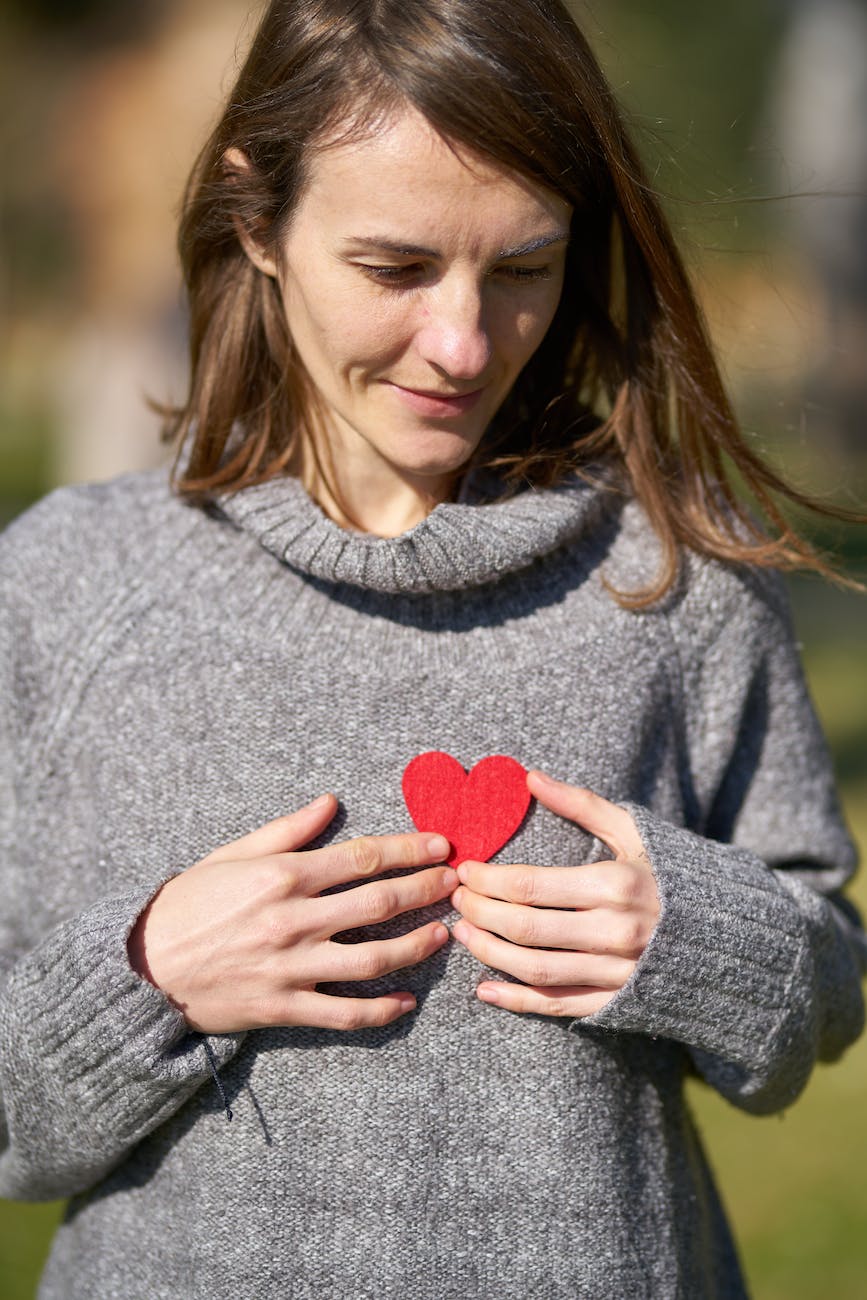
Photo by Engin Akyurt on Pexels.com

A cardiologist has recently diagnosed me with hypertrophic cardiomyopathy. This means that my heart muscle has stiffened up and my blood flow has some backsplash. I have obvious heart murmurs. I have likely had it for at least two years, because there’s evidence of it in a stress cardiogram two years ago when the doctor had apparently missed it. It means that I get winded easier (but that could also be because I am big and out of shape). I’m being treated with a simple higher dose of blood pressure medication; it is irreversible, but we can keep it from getting worse.

Mayo Clinic, on their website, says that I will have almost as long a life as if I didn’t have it. Almost. That’s a sobering word, and it hints at an eventual demise not as pleasant as I had been hoping for. I’m 60, however, at the age when things like this develop. Other sources discuss other treatments for it in case it gets worse. Many of these are invasive.

I can’t quite grasp what I’m reading. Some sources (such as Mayo and my cardiologist, make it sound like it is not a big deal, while others make it sound dire. Mayo says most cases are familial, but my cardiologist says I would have lots of people dying young in my family if mine were so.

 I’m not used to not knowing. I will talk to my primary care physician when I can get in, and maybe then I will understand. In the meantime, I will lose weight and take my hypertension medicine. But I feel fragile now, older, less certain of life.

But what would Lil BUB do? She would go on living her life with a joyous, silly smile.

Thirty Pounds to Celebrate About

Me before the weight loss
Me now, thirty pounds lighter

I didn’t get any likes from any agents in #sffpit yesterday, but I celebrate myself for thirty pounds lost. To make my doctor happy, I have to lose thirty more pounds. Please understand that I will still be overweight by American standards, because it would take putting myself in danger in losing any more weight than that. But my doctor will be happy, I’ll be healthier, and I’ll get to wear cuter clothes.