Coming on Two Years of COVID

Two years ago next week

Two years ago, it was late February and we in the United States had just started hearing of a virus called SARS-CoV-2 that was spreading through China, then Europe. As I read the Internet accounts, part of me dreaded the inevitable pandemic; another part of me became convinced that it would stay across the ocean and peter out, as other SARS infections had. Then, when it reached the coasts of the US, I still monitored the news while assuring myself it was a big city infection that would not reach the rolling hills of Northwest Missouri.

During my spring break (I teach at a university), I watched my emails to see how the university would react to the looming threat, all the while panicking at the virus creeping ever closer, a quickly advancing threat which left in its wake so many people making inexorable slides toward death, kept alive on ventilators until their bodies gave out.

Then, halfway through Spring Break, while universities hustled to continue education online as a brave new experiment, my university sent emails warning us we might follow in their footsteps. Then, a day later, we were told we had a week and a half to move all our instruction online, and that students would not come back to campus from break.

Isolation

The state’s shelter in place order fell into place, and I panicked. I hyperventilated while trying to clean our chaotic kitchen, and I worried I was having a relapse of my bipolar from all the stress. I called my psychiatrist’s nurse, and she told me many people were having the same symptoms.

So many changes bombarded us: the working from home (which didn’t affect me as I was already working from home), the precautions of shopping, the prohibition on social activities. My life shrunk to the walls and window of my living room. My husband masked up and braved the grocery stores with their six-foot distancing.
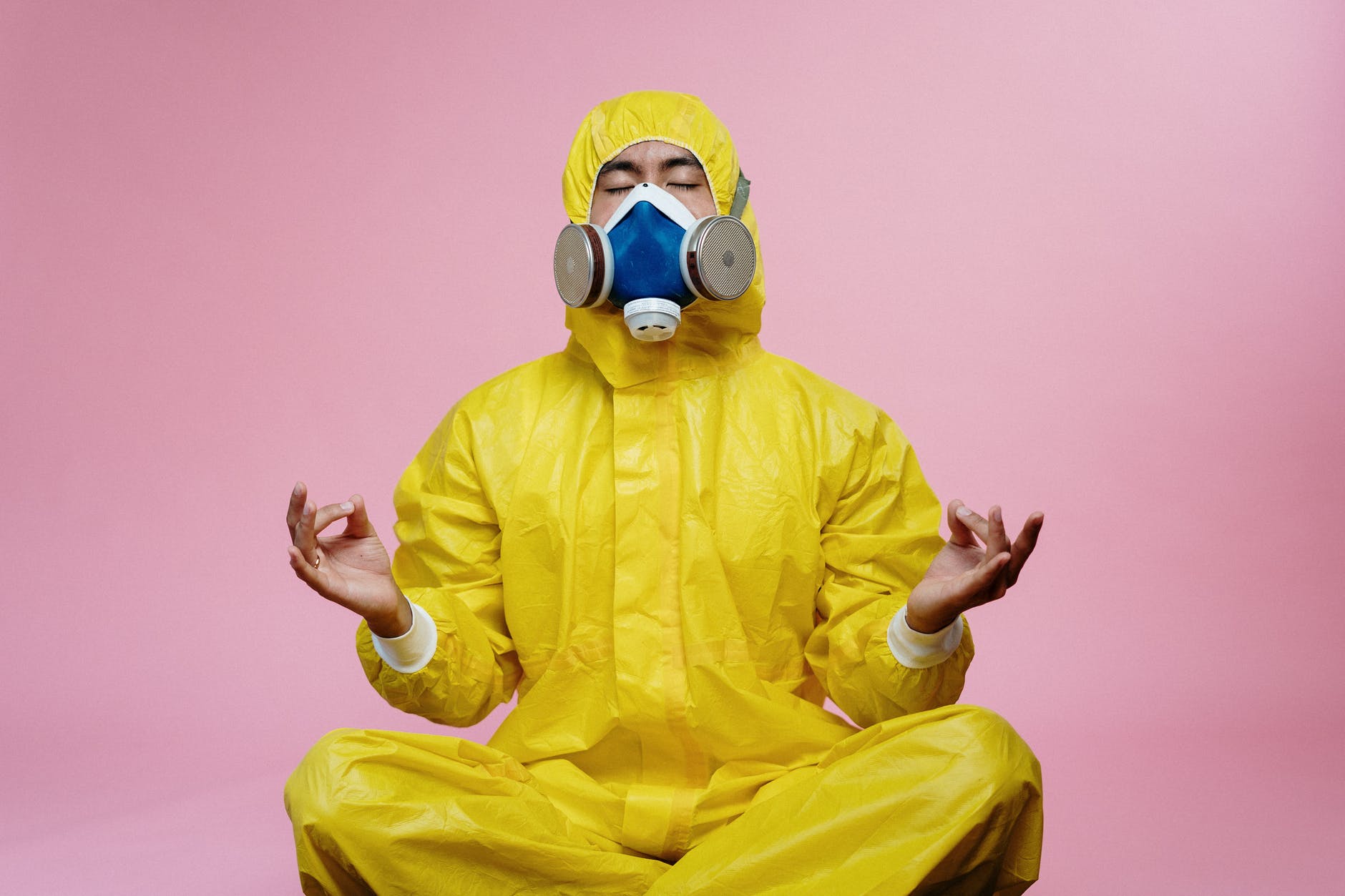
Photo by cottonbro on Pexels.com

I decided that, instead of spending all my time in a panic, I would learn to make sourdough bread with a starter I captured myself. The starter made a fine whole-wheat sourdough, and I bought 50 lbs of white whole-wheat flour because the stores were out of it.

We picked up our restaurant meals curbside, and it was not quite the same eating a steak out of styrofoam go containers.

Closer to normalcy

After a while, the shelter-in-place orders expired and my college started meeting again (with distancing guidelines). The restaurants opened up, and the stores started getting more food in stock. The mask ordinances evaporated, although my university required them and most of my colleagues and friends continued to wear them in public, as I did. Slowly, even these restrictions faded. Until this week my university has made mask-wearing suggested rather than required.

I don’t know if I’m ready to go maskless yet, given that I have been masking for so long. But when I’m free of a mask, there will be things I can do, like wear makeup and be heard in class without yelling.

A life post-COVID

I don’t know what a life post-COVID looks like. I know that, over the past couple of years, we in the US hadn’t suffered as much as other countries with crowding, with less advanced medical systems, with fewer preventative measures. But we suffered, if mostly in our day-to-day routines. And we are not done with the pandemics — another round of COVID may be in our future, or another microorganism we didn’t count on. It’s inevitable with access to other countries and terrains, where we don’t have natural immunity. Maybe I will never lose my mask, or only have it off for short periods of time. Maybe we’ll have another shelter-in-place. But what I don’t think we’ll have is a post-COVID celebration, because we’ve lived with it so long that it seems normal.
Same of a Sameness

The problem with acting wisely during COVID is that every day seems the same. All the classes run into each other; all the meetings are on Zoom, restaurants are unsafe; social gatherings are too risky. It’s better than the alternative, of course, which is getting COVID and risking one’s health or life.

I’m old enough and fat enough that I risk my health with exposure, so it’s not just a matter of “catch COVID and get it over with.” My husband is high risk because of a preexisting condition, and I really don’t want to give it to him. I don’t want to give it to everyone else, either. 

Some things help. Good coffee, music on the stereo, candles, paying attention to the weather outside, our faux fireplace. A comfortable work station in the living room. Scented candles. 

I will make the best of this.

**********

Another bald self-promotional opportunity here — The Kringle Conspiracy is live in paperback; if you want Kindle versions you can pre-order.

Toymaker Kris Kriegel has fallen for professor Marcia Wendt, but he’s afraid of getting too close because he has a secret. Marcia thinks she’s found the one, but Kris’s secret has left her mistrustful. The two must work through trust issues and honesty and through this, they will discover The Kringle Conspiracy.


How are you doing?


I have readers all over the world, and I’m curious. How are you doing in this pandemic?

  • Are you isolating? 
  • Are you wearing a mask when you go out in public? 
  • Is your country doing well in fighting back the outbreak? 
  • Are you safe? 
  • Do you have your job? 
  • Are you hanging on? 
  • Are you fighting depression?
I’m doing okay. I’m fighting a bit of something because life lately has been depressing, what with isolation and all. I’m safe at home. I still have my job as a professor, where I have been doing my work online. Just hanging on.


Day 45 Reflection: Loneliness

Society treats loneliness like a character flaw: “You’re lonely? What are you doing sitting around? Go out and meet people.” As if a birding club will remedy the ache in one’s heart.

Ironically, loneliness is inevitable in today’s society. Our jobs take us far from our families, and often cause us to move before we’ve settled us into a place. Unless we buy a home, and often we can’t afford buying a home, we live in apartments where our neighbors move in and out. We spend our free time online, where we measure our friendships by “likes” and seldom have deep conversations. We meet our potential partners by swiping right, judging them by a picture and a blurb.

We spend our quiet times nursing the ache in our hearts.

In our solitude, we attribute our loneliness to personal flaws. We come up with erroneous reasons for our loneliness, isolating us further: We are too much this, not enough that. We are strange. We are not worthy. Our isolation increases. 

We can ease our loneliness, perhaps even with the facile “go out and meet people” that society offers, but it will be hard work because we are swimming against the isolating currents of our society:

Sit in public places, even if you sit alone.  Turn your attention outward, again and again. Say hi to people who notice you. Ask to pet people’s dogs.

When the sting of loneliness eases a bit, find reasons to be around people. Volunteer. Find a group that’s exploring something you’re interested in. You will not like everyone you meet in these opportunities, and that’s okay.  The object is not to find one person who will keep you from being lonely, but to help you see that you are part of humanity. Friendship will come later as you find yourself in proximity with people you click with.

We were meant to be with people, even if our society makes that harder, even if our beliefs about ourselves and our loneliness make that harder.