Every three months, I submit my books in what is known as PitMad, hoping to get an agent interested in them. PitMad is a “pitching” event, where authors tweet a blurb on Twitter hoping for agents to “like” it. A like means a request for at least a few chapters.
I don’t have luck with PitMad. I think it’s because of my writing philosophy. I write for geek girls of all ages who want their fantasies romantic and their romances fantastic. Which doesn’t sit as well as I would like to the common market. Still, I persevere, because at heart I am an optimist. Otherwise, why would I do the same thing over and over again, hoping for different results?
Not a lot of trouble with TweetDeck
It’s not a lot of trouble to do PitMad. You don’t even have to manually submit your blurbs once every three hours or so, as long as you have the website Tweetdeck, which allows you to automate tweets. It’s also free! You write them up ahead of time, program them for the right time of day, and the program takes care of tweeting them at the designated time. You can even do them days in advance (I had mine ready a week ago).
Time to sit and wait.
I have three tweets from each of my three novels that I haven’t self-published (oh, I misspoke. I have another novel that I tend to discount when these events come around.) That pretty much involves me all day. Although in reality, all I will be doing is checking every now and then in the middle of my other work.
I used to be a lucky person — you know, the person who wins random (small contests, not the lottery) and could be in the right place in the right time. Not that I never had setbacks or rejections, but that occasionally something delightfully unexpected would happen.
For the past few years, I feel like all my luck has gone, especially in the area of writing. Getting published is, to some extent, a matter of luck — having the right materials in the right place in the right time. This has so far, not happened to me. And I think it’s because I gave away my luck.
I did it for the purest of reasons, or the most obsessive of reasons. I was trying to be a good Christian and sacrifice myself for the good of others. There are ways of doing this that are helpful for the world, but I didn’t choose one of those. I instead decided I was unworthy of luck, given my privileged status, and so I gave up my luck. I said, “God, I don’t deserve my luck, please take it away from me.”
I brainwashed myself into believing that I didn’t deserve luck, and that other people deserved to have my luck. I believed that luck was a scarce commodity.
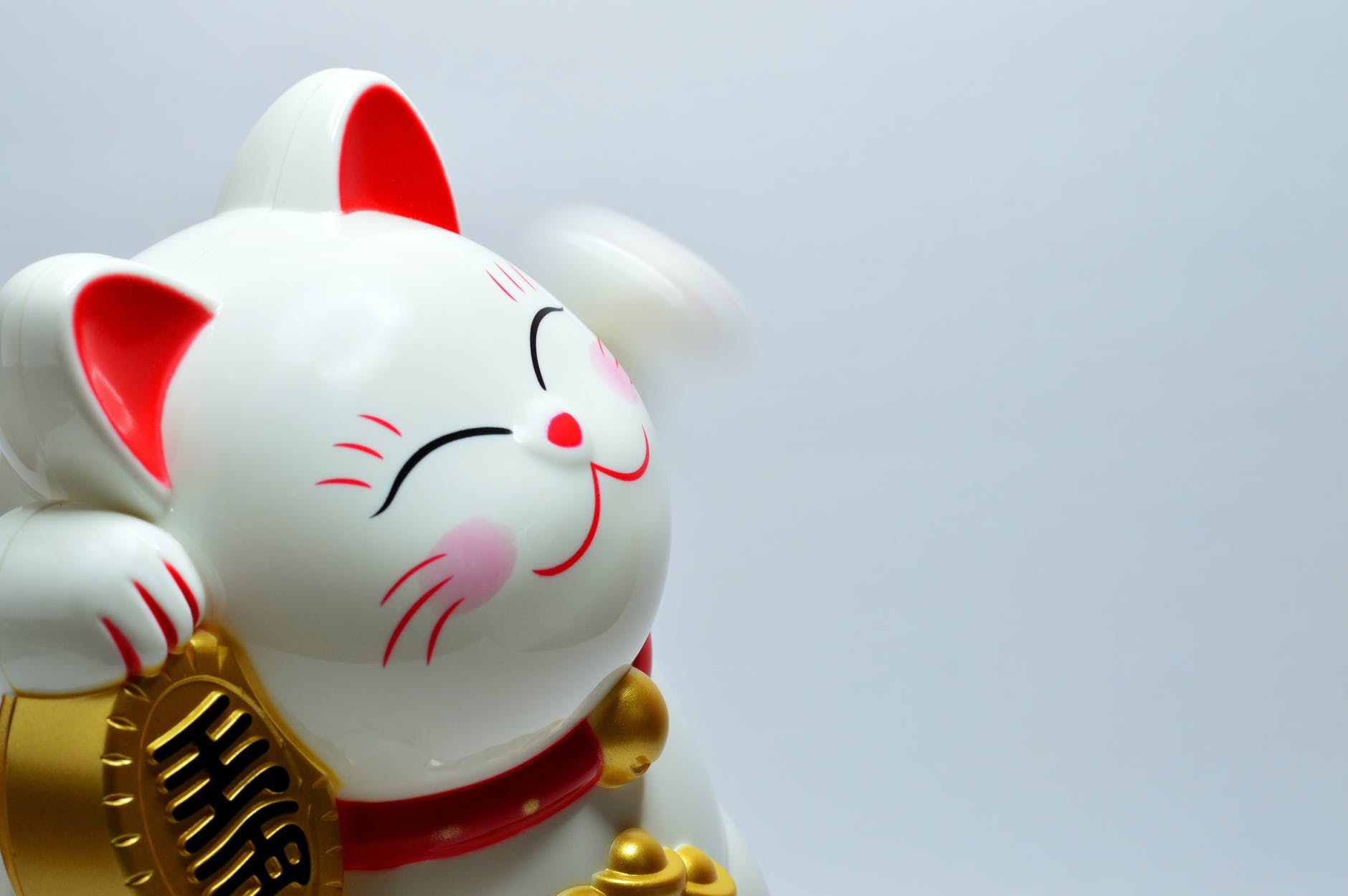
Photo by Miguel u00c1. Padriu00f1u00e1n on Pexels.com
A Fanciful and Superstitious — and Conflicted Person
Writing this down in pixels, it all sounds very stupid, I admit. I am, however, a fanciful and superstitious person. I don’t believe in The Secret (a book about the “law of attraction”) because it’s very materialistic and I don’t believe the universe could or should shower that type of abundance on individuals.
I do believe, however, that my negative attitude may keep me from seeing the good side of things and might blind me — ok, fine, I believe that giving up my luck is refusing to see what the divine could be calling me to find. As I said, I’m hopelessly superstitious. I honestly believe that I had luck, I rejected luck, and I am now less lucky than I used to be. Or at least, I believe myself less lucky than I used to be. I don’t know what I believe.
I am a fanciful and superstitious and rational and really conflicted person right now.
A Ritual Would Be Nice Right Now
I am not a witch or a Wiccan or any sort of pagan, but I still see the value of ritual. How do I divorce ritual from religion? The same way millions of people across the world do. People who wear lucky socks are performing a ritual. Traditions are ritual. Going out to a prime rib dinner the night the COVID vaccination takes hold is a ritual (one I did the other night). So what do I have to lose?
Luck, if one thinks about it, is a type of optimism. It’s an optimism that the unexpected good thing can happen, that one does not have to exert infinite effort for something good to happen. Not like effort isn’t necessary, but that there comes a point where effort doesn’t work any longer, and that’s a great place for luck to intervene.
A luck ritual, in my opinion, would:
Reattach me to my optimism that good things can happen without my control
Tell me it’s okay to have good things happen to me
Emphasize that optimism is self-care
What Does This Ritual Look Like?
Again, this is a psychological ritual (like lucky socks and Christmas china) rather than a pagan ritual, so I’m not calling up any spirits as much as I’m trying to make a break with old thought patterns. What I plan to do is:
Take a bath in milk and honey bubble bath
Write some journaling on luck using my favorite fountain pen
Eat some bread with butter and honey (the milk and honey symbolism is deliberate symbolism)
Find one of my four-leaf clovers in a book (or better, find one in the yard. We have some.)
What Do I Expect This to Do?
What I expect is that this will help me stop declaring myself unlucky, I will likely suffer less from griping about my bad luck this way. That itself would be an improvement. I hope that my better attitude will help me to see opportunities and make me resilient to adversity. I will believe that I am deserving of good things. And maybe, just maybe, I will be (or believe I am) luckier.
I seem to be writing slow, but at least I’m writing under the current method. The method is to free write, then transcribe with editing to tighten the writing.
I feel overwhelmed by words, though, and wonder if the meaning is there. I’m really stymied by writing lately; I surely didn’t go through this self-guessing the first time I wrote this novel. To be honest, I didn’t go through self-guessing at all, which is why I’ve edited and re-edited this book over the past five years.
This book is a beast, and there’s no reason it should be, except now it’s a romance novel in addition to a fantasy, and I don’t know what I’m doing there. I need all the wishes for good luck I can manage.
How do I feel about rewriting the entirety of Gaia’s Hands? Daunted. Relieved. Hopeful. The story deserves better than its current treatment. The characters deserve better. But 80,000 hew words? Wow. Exhausting. Wish me luck.
After editing my many-times-edited first novel, I have submitted it to a digital imprint of a respectable American publishing house (for those curious, HarperLegend). I’m a little reluctant to do digital-only, but they do handle some of the marketing and sometimes bump someone up for paperback.
One of my difficulties in getting published, I think, is that I write a different sort of fantasy than people expect (at least I hope that’s it and not that I can’t write.)
Are there gods/goddesses/mythical creatures? Check.
Are there talents and abilities not found among the human population? Check.
Are there epic battles? Yes. But the good guys are pacifists and trying not to kill anyone. HUH????
What’s the main conflict of Reclaiming the Balance? Civil rights for half-human beings with superior strength. (And falling in love with an intersexed half-human being is the B plot)
Any epic gods? Well, Lilith (remember her?) forgot her identity for many years and became a psychology professor. Oh, yeah, the Garden of Eden was staged for legend’s sake.
And Lilith ran off with Adam. (OMG, that Adam?) Yes and he’s an incorrigible flirt.
You get the picture. Wish me luck — and drop me a comment!



 Words Like Me