How to Talk About Not Being Okay

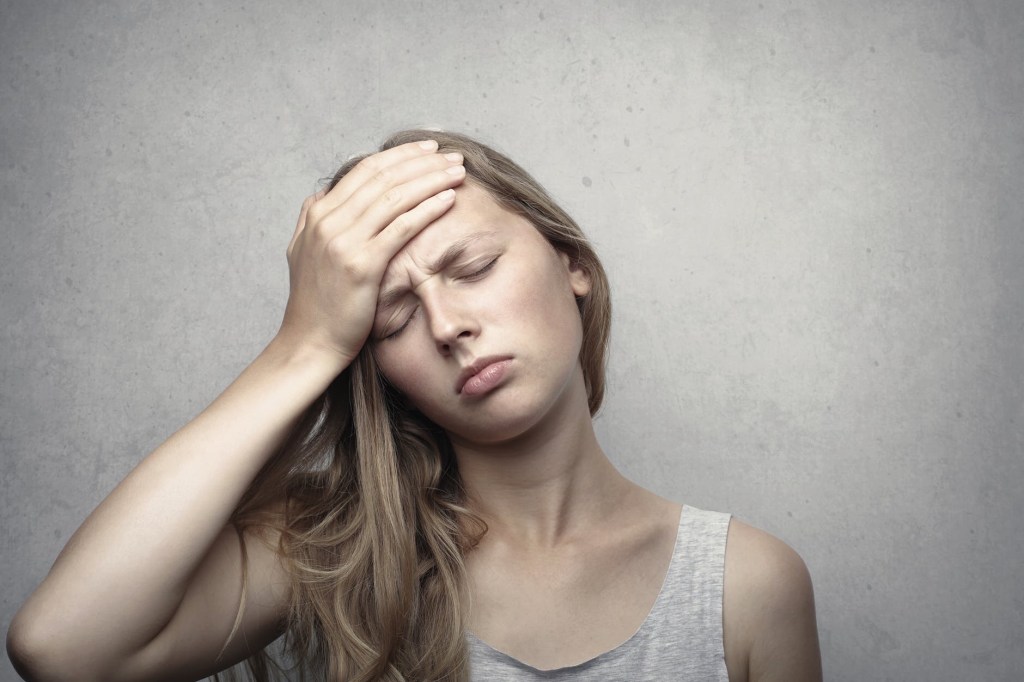
How do we talk about not being okay?
Photo by Du01b0u01a1ng Nhu00e2n on Pexels.com

Being vulnerable is that scary, that human. It’s scary to risk rejection because we have been a sloppy mess in front of someone. It’s scary for society to witness the breakdown.

The alternative, however, is that we stuff our feelings until we explode. Or we manipulate others so we don’t have to feel. Or we try to control everything until we cannot function anymore. None of these are good ways to deal with feeling like a mess, but ironically, those methods can seem more functional in the short run. They give an illusion of power — power over oneself, power over other people, power over situations.

I have very raw moments in my life. Although it’s kept well under control, I have a mental disorder. I have breakthrough times in February and October. During those times, I have sleep disturbances that keep me exhausted, severe anxiety, and a general feeling of being overwhelmed. I have to talk about it because it’s an overwhelming bad feeling and, at the time I have it, I feel like it’s always been there and will always be.

I’ve come up with some rules for myself on how to talk about not being okay:

  • Choose wisely who you will talk to and how much to disclose.
    • Mere acquaintances might rate an “I’m under the weather right now.”
    • Coworkers might rate very simple situational statements, like “My father died.”
    • Good friends, if they can handle things, might rate a description of what’s going on with some frankness, like “I have seasonal affective disorder right now and I’m doing pretty poorly.” This list is to protect you from the people who might reject you or the message.
    • The best thing, though, is to approach people who are supportive toward you.
  • Don’t use your friends as therapists.
    • Don’t rehearse negative scenarios on them and expect them to argue endlessly against you.
    • Also, don’t unleash your worst behavior on them. Treat them like friends and honor their feelings.
  • Apologize if you have behaved badly, just as you would when you’re not overwhelmed.
  • Do not expect your friends to keep dangerous secrets, like suicidal or homicidal ideations, for you.

If you are dealing with depression, anxiety, bipolar, schizophrenia, or other mental health issues, your best support system is not a substitute for therapy, whether that be psychotropic prescriptions, talk therapy, cognitive-behavioral therapy, or others. Reach out to your health care providers or get yourself some providers on your side.

I hope this has been helpful. I feel like I’ve clarified some things for me, and I hope that I’ve helped others think about this, because all of us have heavy times.

All dopey on pain meds

I’m going on my second week of pain meds after more brutal dental work. The meds don’t affect me much except for:

Photo by JESHOOTS.com on Pexels.com
  • emotional lability — I feel weepy right now, and I’m sure I will be giggly later
  • sleepiness — I’m staring at my screen with my eyes half-closed
  • inability to type (or tipe or twpe as I’ve had to try three times to type that word)
  • babbling. Lots of babbling. So much babbling I wonder if I’m making sense.
  • decreased social filter — goes with the babbling. I try so hard to seem other than scatterbrained because I’m A Professional, but when taking pain meds I’m all “golly gosh shit shit shit” and I love it
  • shakiness

So definitely not ready for primetime. Good thing I’m working at home today. Hope you enjoyed this vicarious glimpse into my life while I’m still babbling.

Looking at the Clouds (when there’s nothing else I can do)

I am still on pain medications because I’m still in pain. I cannot be trusted to operate machinery — cars, forklifts, and maybe even this computer. Is typing under the influence a misdemeanor or a felony?

I would like to do magnificent things today with writing — continue revising Reclaiming the Balance (fantasy romance with a female and non-binary main character), contemplate what I should send out for querying, play with the short stories that have been sitting in a metaphorical drawer. But my thought processes look like this today:

Photo by Ruvim on Pexels.com

Today, I would like … this music is putting me to sleep … oh, look, that song is called Northern Town … I haven’t heard “Life in a Northern Town” in ages. Let’s play it … what was I doing again? I was typing … Why was I typing? Oh, my blog? I don’t know if I want to write this blog today … Let’s listen to some Bread …

It’s like the world is too big and I want it to be tiny right now, a blanket fort with warm milk and familiar music. Writing is part of that big world outside that I feel ill-equipped to deal with. This is not me, not really. If I have any free time, I want to write.

Right now I just want to curl up under my blanket and follow my thoughts into the clouds.

Day 44 Reflection: Pain

Pain has a way of blinding us to everything else. It screams at us to stop everything and tend to us. As it should; pain exists to alert us to damage. The damage can be physical, such as torn muscle or damaged cartilage or advanced cancer, or it can be emotional such as the death of a loved one or the predations of an abuser.

Sometimes pain lasts beyond the original insult.  Chronic physical pain such as arthritis lasts beyond the wear and tear that caused it. Chronic emotional pain in the form of post-traumatic stress disorder lasts far beyond the instigating factors. The time elapsed doesn’t lessen the pain in these instances.

We are taught to be stoic about our pain. We are told nobody wants to hear about our problems. We are told to tough it out, that no pain equals no gain. We ignore that very valuable alarm until we’ve lost sleep, damaged our bodies, break down, find ourselves with a gun in our hands pointed at ourselves.  

Pain is an alarm. We must heed it for our own survival.

Day 30 Reflection: Suffering

Suffering exists because someone’s basic needs aren’t being met. Food and water, health, safety and security — without enough of these people suffer. Suffering causes distress — fear, anguish, pain. 

Society holds onto a narrative that paints suffering as ennobling. We admire the hungry villagers, the mentally tortured artist, the once-vibrant person dying of cancer. 

We should admire people’s resilience in the face of suffering, but we should not dismiss their suffering as ennobling. We should instead do the humane thing — see what we can do to help reduce their suffering. It may be that we can provide simple help like food and drink. Maybe we work to dismantle unjust structures that cause people to suffer, like reducing racial bias in policing. Even companionship, understanding, and acceptance may be enough to ease suffering.

Suffering is not noble, but weathering it together may be.


Personality and a Mood Disorder: Questions in my Mind

The musing below is something that might eventually get edited for the creative/nonfiction book about living with bipolar. I feel I always take a chance writing about being bipolar in this blog –I don’t want to be considered a lesser being just because the jilted fairy godmother showed up at my christening and said, “Just for not inviting me, this little girl is going to have MOODS!”

Thank you for reading.
*******

When I first got my diagnosis in 2012, I was devastated in a way I hadn’t been when I was earlier diagnosed with simple depression.

There’s a certain degree of difference between being diagnosed with depression and being diagnosed with bipolar disorder. In the former, the disorder can be separated from one’s personality easily. People talk about being followed by the “black dog” when they’re depressed. The “black dog” is described as outside, not inside oneself.

In the case of bipolar disorder, however, both the ups and downs are exaggerated by the disorder. People tend to view their positive moments as their genuine self, even saying “I am genuinely happy right now.” If one’s highs are held suspect, the natural reaction seems to be “Who am I? Who would I be without this lifelong disease?”

I estimate my bipolar became active when I was in high school, if not sooner. My mother described me as “an exhausting child”, and I wonder if that was my bipolar ratcheting up back then. My bipolar has had plenty of time to affect my personality:

People describe me as extroverted, outgoing, and a bit eccentric. However, the things I love to do most are more introverted — writing, puttering around in my grow room, and having one-on-one conversations with people. I think the “bigger than life” me — the one who teaches classes, the one who participated in theatre in high school — came from my feelings and experiences while hypomanic. I’m pretty sure my hand and facial gestures come from there as well.

I say what’s on my mind, even when most people would stay quiet. If I don’t, I feel a pressure — figuratively, not literally — in my brain demanding to let the thought out. Is this why we call it “venting”? 

I’ve developed an internal censor and some tact over the years, because when I first came back to the Midwest after five years teaching in New York state, I scared my students. (For the Americans in this readership, think “Consumer Economics by Gordon Ramsey”. Isn’t it “Dave Ramsay”? Not when I taught it.)  I still deal with that pressure, and that mindset that if we would just drag things out in the open, we’ll all feel better.

I get crushes because beauty strikes me like a stab to the heart. Richard finds my crushes amusing because he trusts me not to pursue anything past friendship. He’s right to trust me. I used to tell people I had crushes on them and that I didn’t want to do anything about it. (Yes, they were flattered. Yes, they thought I was strange. No, they never had a crush on me back.) Some of my poetry is an attempt to relieve the pressure.  I’m pretty sure that crushes are not hypomania themselves, but a high I learned from hypomania. When I become hypomanic they become extremely painful rather than amusing.

Depression has not really shaped my personality, because as it is for other people, depression is not me. Depression descends upon me and separates me from all I love with a black shroud. But I’m sure my unleashed imagination, my curiosity, my optimism, my straightforwardness, and my occasional flamboyance (and bold choice in lipstick) were gifts — yes, gifts from hypomania.