Looking at Disasters

Maryville, MO is not part of Tornado Alley, but you would never guess that with the weather we’ve been having for the past couple weeks.

Last week, we were in the basement waiting out tornado warnings two days in a row. Tonight, we’ll be in an enhanced risk area with the possibility of being in the basement one more time. Makes me wish we had a fully finished basement, preferably with a wet bar. Not that I drink, but it sounds cool.

I’ve been prepping for a class called Disaster Psychology, which I will teach this fall. The first module is all about defining disasters as opposed to smaller-scale emergencies. Disasters involve large to mass-scale injuries and often deaths. They overwhelm a locality’s emergency services, and often require state and federal response. The media responds with on-the-scene missives, often lamenting about the lack of response when the emergency response is actually robust. On the individual level, people’s lives are upended and touched with tragedy.
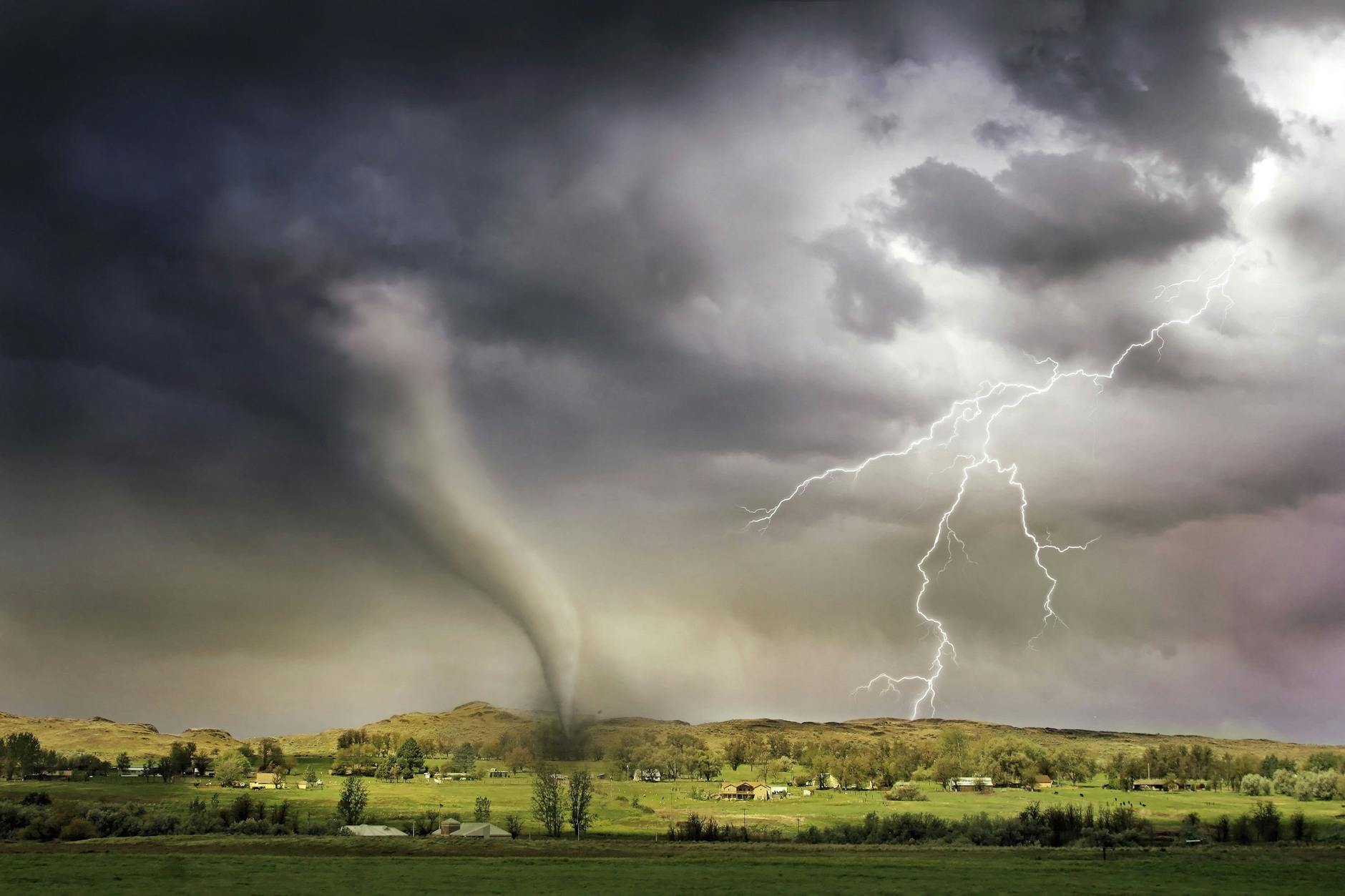
Photo by Ralph W. lambrecht on Pexels.com

Knowing this makes it a little harder to feel reassured going into that basement. Knowing the strength of emergency response makes it easier. As a CERT-trained individual, I may be part of that response. Most likely, I would be a Red Cross volunteer in sheltering (I have a certification) or a disaster case manager (I have a certification there as well, at least in another county that offered them).

Most of our tornado damage here, however, has been slight, and I hope for our sakes it stays that way.
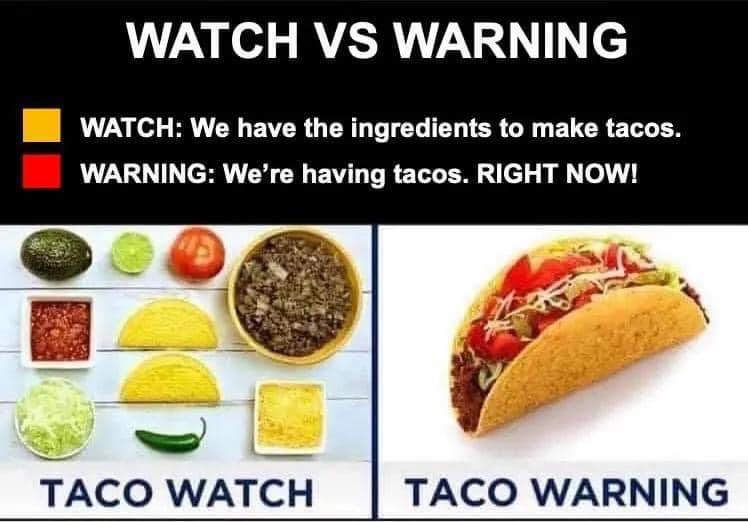

The Taco Truck’s in Town! (Severe Weather)

We in the far northwest corner of Missouri have spent two consecutive days down in our basements (about two hours total) because of tornadic activity. We didn’t fare too bad — the tornado at Maryville did not touch down but wasn’t that far from campus, although some neighboring areas saw some damage. Northwest of us — Omaha and Lincoln — got some bad damage, as did parts of Oklahoma on day 2.

I wrote the other day about how today’s weather warnings are so much more sophisticated. The FEMA app (my favorite for severe weather) informed us throughout the afternoon and evening. This app distinguishes between “Your neighbors should be in the basement” and “YOU should be in the basement” when setting alarm noises; the latter noise is more alarming than the city’s ominous siren. What struck me was that, despite the neighborhood destruction in Omaha and Lincoln from an EF3 tornado, there were no fatalities and only non-life-threatening injuries. This speaks to me of a robust warning system and better awareness of the danger of a tornado.

The graphic at the top of this page is perhaps one of the most ingenious tools of the current emergency mitigation response. It’s a non-threatening way to describe the threat levels in a tornado. It’s funny enough to go viral. And on those severe weather days when we’re waiting for the sirens, we’re looking for taco trucks. Only we want to avoid them.

In Those Glorious Days of Civil Defense Tornado Warnings

For the next couple of days, my city (town?) is in a severe weather zone. The Weather Channel says, “There is a likely risk of severe weather today. Wind, tornadoes and hail are possible. Look out for large hail and powerful tornadoes. Have a plan and be prepared.”. This risk continues through tomorrow; the National Weather Service has given a Hazardous Weather Outlook (pre-Watches and Warnings) to our area.

Our house has weather radio and our phones have weather programs with warnings. Our basement has bottled water and emergency kits. We remember the tornadoes in Utica, IL and Joplin, MO (home town-adjacent areas for each of us) and take severe weather seriously.

Weather awareness has changed significantly since I was young, and I was in one of the few areas with any form of local weather response. When I was young, most people got their television through antennas, and so network TV carried tornado watches and warnings. I don’t believe stations posted severe thunderstorm watches or warnings back then. Our middle-of-nowhere town was in the Chicago market, yet 90 miles away, so we watched warnings in which we may have been obliquely mentioned. However, because there was no way we could receive TV waves in a river valley, we had cable TV in LaSalle County, IL, which was novel 55 years ago. This was important to the current discussion because we had our own emergency warnings.

At the time, FEMA didn’t exist; the national civil defense organization was named Civil Defense. Our Civil Defense person was Bill Bailey, who I believe was the Sheriff. And he delighted in Civil Defense. When a tornado watch or warning occurred, he cut into our regularly scheduled programming with emergency tones. He then droned on about the warning of the moment. Originally, the screen would go back, but I think later interruptions had this symbol:

We would all go to our basements like good little Midwesterners. Ok, I kid. I would go to the basement, as would my mother. My sister and dad went out to the front porch to watch for tornadoes. I was scared to death of tornadoes back then (and many other things as well, but not spiders or snakes or bees or wasps).

Nowadays, we have a much better warning system. We have warnings about weather days in advance from the National Weather Service. We have FEMA with not only warnings, but sophisticated operations in the aftermath of severe weather. But I remember when all we had in LaSalle County, IL, was Bill Bailey.

Thunderstorms

It’s six-fifteen in the morning and it still looks like night. We are in the midst of thunderstorms, although I think we’re between fronts right now. 
 
I grew up listening to thunderstorms at night, convinced it was my duty to wake up the family if the house got hit by lightning. I love thunderstorms despite a childhood short of sleep; they became my confidante late at night. 

Today I wait for the rumbles of thunder as the glowering clouds travel closer, the swishing of the trees, the gouts of rain. I fancy myself a witch of the storm, holding my arms skyward, drenched by an onslaught of rain. In reality, I’m afraid enough of lightning that I would not do something that foolish. 

North of us, the roads are still flooded by a freakish mix of melting snow from the Dakotas and hard rain. South and east of us, there’s a chance of severe weather, which includes hail, high winds, and tornadoes. Lightning strikes kill people every year. 

Thunderstorms command respect. Even as I enjoy them, I keep them at a distance.