It’s a SMART Goal Now

According to my past posts, I have set a Big Audacious Goal twice already for this year. The first one was to edit and query Apocalypse; the other was the one I came up with yesterday to double my social media presence. I’ve gone with the latter, because it confronts all my lingering reluctance to promote myself:

Photo by Pixabay on Pexels.com
  • My writing isn’t good enough
  • Nobody wants to hear from me
  • I don’t need a media presence
  • Nobody loves me! (Does this sound familiar?)

I’m working on 1) creating the SMART goal and 2) having fun with it.

First, the SMART goal. I will:

  • Post using Loomly twice a week
  • Post to Facebook and Twitter (I already post my blogs there)
  • Only post book news once a week
  • Use as many Loomly suggestions as possible to improve my social media posts

As for having fun, that’s just a natural part of who I am. Funny pictures, word play, bad puns — all come easily to me.

There’s a cynical part of me that says that this will not make any difference in engagement, but I have to take something on faith. Wish me luck.

First SMART Goal: Writing

One of my goals for the New Year is to get back into a steady writing discipline. I began three books and finished none in 2022. I have been backing off on writing because I have not felt inspired. Yet writing is a way to open the mind to creativity, and to allow new thoughts to pass through. I have, therefore, dealt with a vicious cycle, where I don’t write because I don’t feel creative and I don’t feel creative because I am not writing.

I need to get the discipline and enjoyment of writing back. To make the goal SMART — specific, measurable, achievable, relevant, and time-bound — I may have to set my daily word goal for less than I do when I’m writing for NaNoWriMo. During NaNo, I write 2000 words a day; that may be too much when I need to take baby steps toward the goal. So my goal, as SMART as possible, is:

I will write 1000 words a day on some sort of fiction work either early morning or in the afternoon after work starting January 3 2023.

  • Is the goal specific? Yes. I know what, when, and how much.
  • Is it measurable? Yes. If I don’t write 1000 words by evening, I haven’t done it.
  • Is it achievable? I think so. 1000 words is a suitable compromise between zero and 2000. (To give you an idea of what 1000 words look like, the bulleted section you are now reading is 82 words.)
  • Is it relevant? To a writer, it is.
  • Is it action oriented? Yes, it focuses on writing.

Notice I set the date for today, so I’m going to have to write soon. I will write on the Christmas Kringle book unless one of the other two books — Avatar of the Maker or Walk Through Green Fire — tempts me away from that book.

Goals for the New Year

 I don’t make resolutions for the New Year because resolutions are flimsy. They are usually worded vaguely. They’re often worded in results (which may not be realistic), and they’re not worded in a way that suggests the actions that need to be taken.

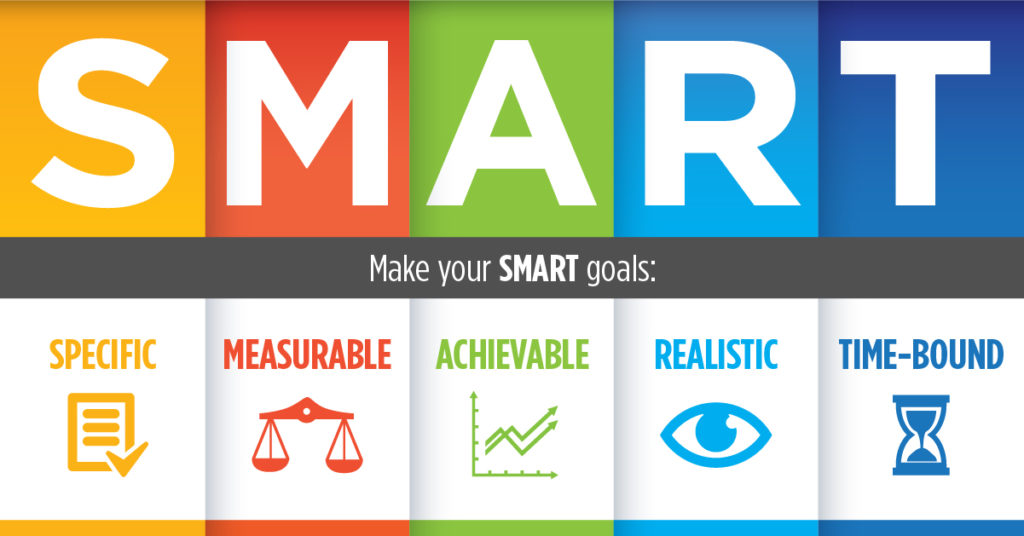
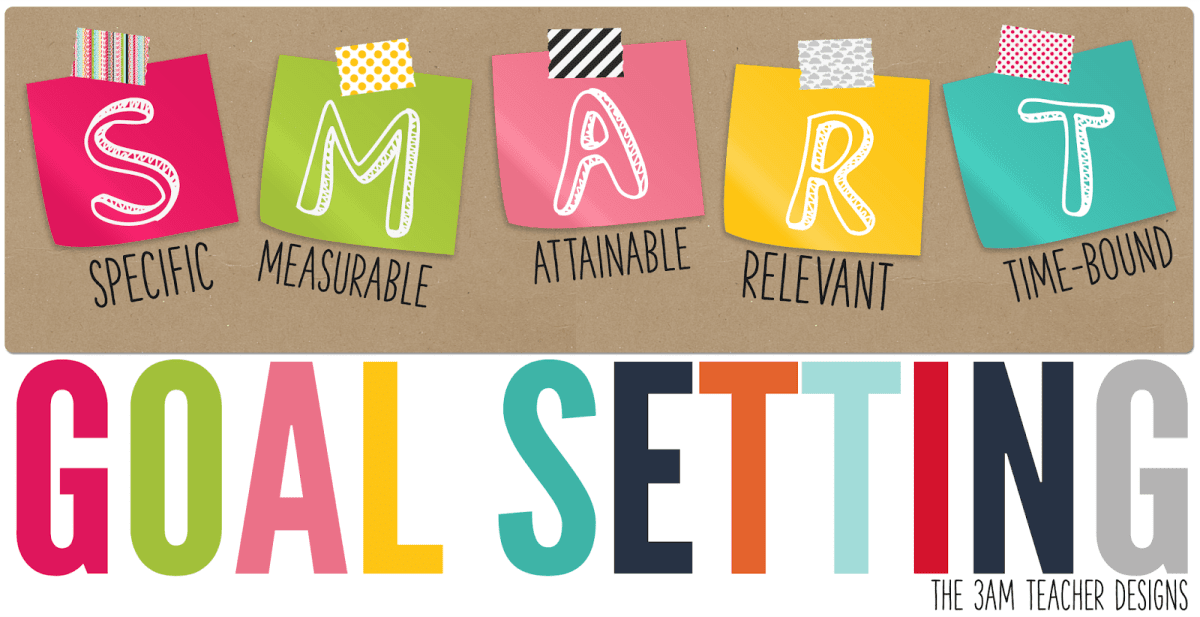
So once again (I think I’ve written about this before), I reach out for SMART goals. SMART stands for:

  • Specific
  • Measurable
  • Attainable
  • Relevant
  • Time-bound.
So let’s take one common resolution (and one of mine, actually): To lose weight in 2016. What’s wrong with it?
There are so many things wrong with it. How many pounds a week? What is the process by which one will do it? What’s the time parameters? Why is this focused on the result (weight loss) and not the action (Changed habits)? Is it realistic? With no real parameters it can set someone up for failure.

We can change the goal to action-oriented: I will eat healthy and exercise. 

Now, it’s not specific enough; let’s change it — I will eat two fruits and two vegetables a day and walk every day, working my time up to half an hour daily by increasing my walk five minutes a week.

 But there’s no time parameters. so let’s add them.: Starting January 1, I will eat two fruits and two vegetables a day and walk every day, working my time up to half an hour daily by increasing my walk five minutes a week for the rest of the year, to be evaluated monthly.

This is a SMART goal. It’s easily followable, easy to see if it’s not working and needs adjusted. 

So my goals for the year (not resolutions): 

  • Starting January 1, I will eat two fruits and two vegetables a day
  • Starting January 1, I will walk every day, working my time up to half an hour daily by increasing my walk five minutes a week, for the rest of the year, to be evaluated monthly.
These are typical resolution goals, but then there’s my writing goals broken down:
  • By March 31, I will send 50 queries out for Apocalypse to science fiction/fantasy agents from Query Tracker. 
  • By October 31, I will send 50 queries out for Prodigies to science fiction/fantasy agents from Query Tracker.
  • By March 1, I will finish the rough draft for Gaia’s Hands.
  • By June 1, I will revise the rough draft of Kringle in the Night
  • By August 1, I will put the final touches on Kringle in the Night
  • By September 30, I will prepare Kringle in the Night for publication — formatting, copyright, and cover production; To be published by November 1.
  • By December 1, I will have three short stories written.
It’s good to have all this written out, because it will be easier to accomplish. Now to get the vision board built, because I will need it by January 1. 

Now What?

I’ve accomplished everything I wanted to accomplish and experienced everything I needed to experience by self-publishing the book. 

I wanted to have a “book-signing” party. I wanted a listing on Amazon. I wanted to sign books, even if it was just among my friends. These are all shallow goals vs making big sales, but I’m pretty sure that Amazon is so glutted that making sales is a pipe dream anyhow.

If I’d have known it was this easy to settle that howling need, I’d have done this sooner.

What are my stretch goals? I don’t know right now. I’ve been too busy with writing for NaNo and grading to think about it. It’s going to be something about advertising, though. I need to make that into a SMART (specific, measurable, attainable, relevant, time-bound) goal.


2323232323232323232323232323232348eu4444444444e (I’m leaving the above typo here, as my kitten Chloe had something to say).


Goals, Not Resolutions


I don’t do resolutions, I do goals.

Resolutions come from a position of weakness: I’m not doing good enough, I need to fix something. Goals come from a position of strength: I want to make something new happen.

Resolutions aren’t backed by planning. Goals are — and in making the parameters of the goal SMART (specific, measurable, appropriate, relevant, time-constrained). The plan follows, and the plan increases the chances of success.

Here are my revised writing goals for the New Year:

Short-term: 

  • ·       Develop a platform plan by March 1, 2020
  • ·       Write/submit 5 short stories/poems/flash fiction by December 31, 2020
  • ·       Revise via developmental edit by March 1, 2020
  • ·       Send 50 queries for Gaia’s Hands by February 1, 2020
  • ·       Send 50 queries for Whose Hearts are Mountains  by October 1, 2020

 Long-Term:  

  • ·       Get an agent
  • ·       Publish my first book
  • ·       Discuss with agent further books
  • ·      Develop personal sales presence
  • ·      Develop idea for next novel

Notice that my long-term goals are not SMART, largely because they depend on things beyond my control. I put them in as motivational, as a way to envision where I’d like to be. As that trajectory becomes clearer, I will be able to make them SMART.

I have other SMART goals for the year — one is to lose 30 pounds by December 31, 2020 through eating a well-balanced 1500 calorie a day diet and exercising (the development of getting physically fit is in another goal). I will evaluate my goal every month or so and adjust accordingly if I’m not losing 2.5 pounds a month. (If I’m losing more, that’s fine!)

Well-laid plans will beat resolutions every time. Unless they gang aft agley, I guess.

Dreams vs goals

I’ve been pretty mellow lately about my writing, getting my enjoyment from editors telling me how to improve. This is my most noble self, but my sanguinity even in the face of rejections doesn’t motivate me to push myself — for example, I haven’t sent queries lately. I haven’t finished editing Whose Hearts are Mountains (although that may need a developmental editor). 


I still daydream about getting a novel published, even though I understand how hard it is, and I know I’m not a literary writer but a genre writer, and my stuff seems like it needs an endless amount of improvement …


I need to set some goals again. I’ll make them SMART goals — specific, measurable, attainable, relevant, time-bound.

  • Write/submit 5 short stories/poems/flash fiction by December 31, 2020
  • Get Whose Hearts are Mountains into developmental edit by March 1, 2020
  • Send 50 queries for Gaia’s Hands by February 1, 2020
  • Send 50 queries for Apocalypse by August 1, 2020
Note that my goals are in terms of what I will do (submit) rather than what might happen (publication). It’s not realistic for me to determine someone else’s actions. 

I suspect I will be successful in fulfilling these goals — in general I’m very goal oriented. What I don’t know is if they’ll yield dreams come true.

Quick post — Big Audacious Goals

Every now and then, it’s good to have a Big Audacious Goal, but only if you have a Big Audacious Plan to go with it. Goals without plans are called … wishes. And I’d rather fail at a goal and learn from the failure than wish about it for the rest of my life.

Goals should be SMART, according to the planning experts. That stands for Specific, Manageable, Action-oriented, Reasonable, and Time-bound.  Writing plans can be as elaborate as an outline that includes every chapter of every scene, or as simple as “I will spend two hours in the morning typing whatever comes out.” Either works, because in their own ways, they’re Specific, Manageable, Action-Oriented, Reasonable, and Time-Based.
Big Audacious Goals have those parameters as well, but also stretch our definition of Reasonable. NaNoWriMo, for example, sets a Big Audacious Goal of 50,000 words in a month. That’s reasonable at 1,667 words a day, or approximately 2-3 hours a day, but it’s more than a new participant has likely ever written in a day, which makes it a BAG. 
My Big Audacious Goal for this weekend will be to write 4000-word days today and tomorrow. The amount is very specific, and I’ll know when I reach it. It’s manageable on a weekend for someone like me who hasn’t gotten anything else planned and whose husband will be putting on a big pot of 13-bean-soup on the stove. The goal is action-oriented — write and write and write. Although that’s a lot of words, I have written 3000 words/day for the last three despite having to go to work, so it’s a reasonable stretch goal. And it’s time-based — 4000 words today, 4000 words tomorrow.
I might not make it. It won’t be the end of the world if I do. But I’m motivated by the way this 30-year-old idea is turning out, and an 8000-word weekend will get me 1/3 of the way toward the goal in 5 days! 
Wish me luck!