Valentine’s Day

I remember being single. It was a few years back, but I was single for much of my adult life. Valentine’s Day was rough back then, because it was just a reminder that I did not have a romantic relationship.

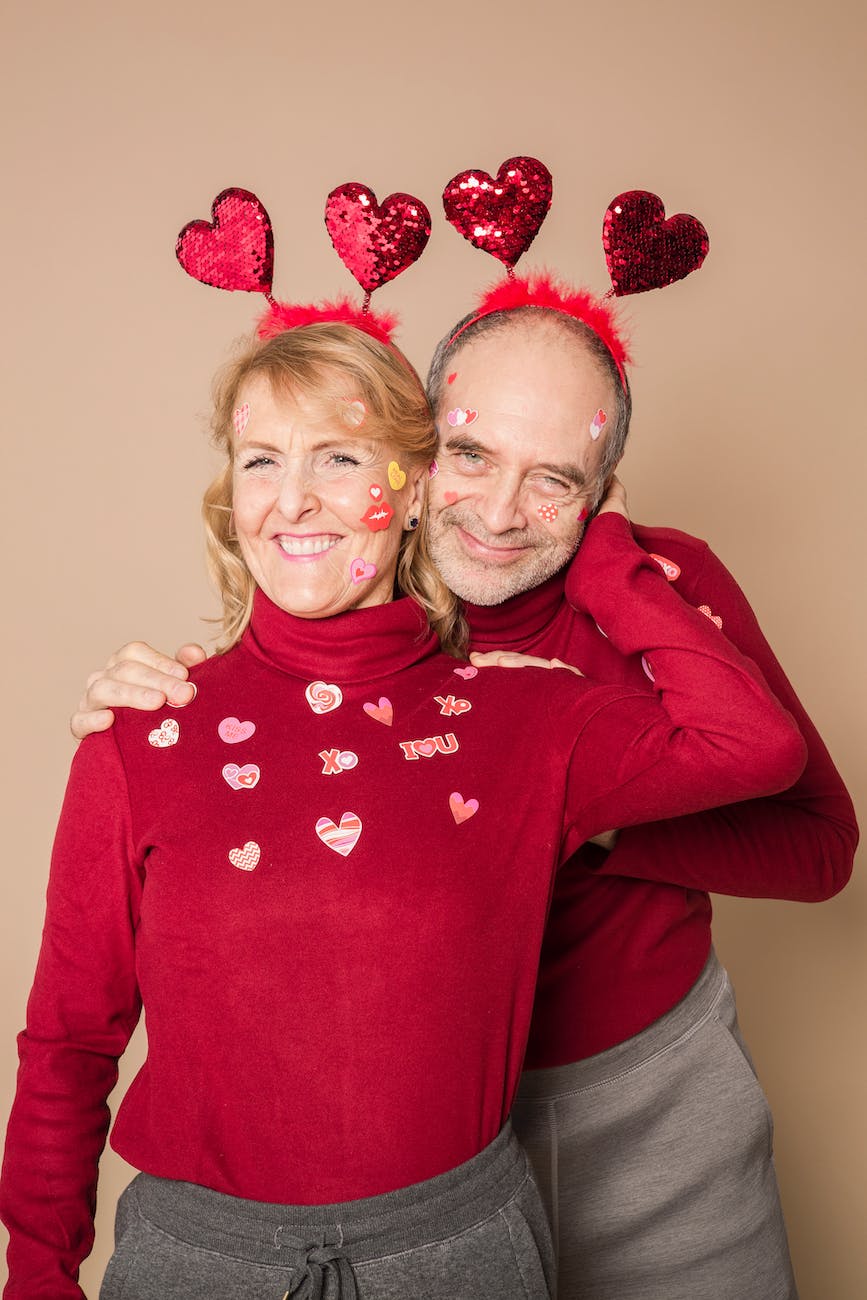
Photo by Magdaline Nicole on Pexels.com

I have been in a bad marriage. Valentine’s Day was a reminder that other people were in a better situation than I was.

I don’t like Valentine’s Day. It seems to exist so that women in relationships can show off what they received as presents, while men spend money on these gifts. At the same time, I enjoy getting the flowers and going out to eat with my husband. I’m a hypocrite in this regard.

I feel for the people who are looking for someone and failing. I feel for the ones who don’t feel secure in their relationships. And I admire the hell out of those people who make the holiday their own — valentines to friends, Galentine’s Day, random sticky notes with hearts across campus. I have nothing against spreading the love.

Valentine’s Day Cute

I have mixed feelings about Valentine’s Day.

On one hand, I think it’s cute. I like hearts, and pink and red. I like seeing my friends get mushy. It’s enough to give me an “aww” attack!

On the other hand, the day and its sentiments are so indoctrinated into the population. Starting with children, whose valentines signify a popularity contest that leaves many children hurt. Then growing up, they as adults experience that loneliness again if they’re single. And, if they’re in a relationship, they face the ever-building barrage of messages of what they should be giving their sweethearts for the day.

I suspect we can’t have the cute without the indoctrination; we all have to use the holiday imagery to feel like we’re part of something. So I’ll go back to the cute.

Note: This is not me or my husband.

Note: This is not me or my husband. It’s just cute.

A Whole Lotta Love (redux)

The problem with Valentine’s Day is that it only celebrates only one type of the seven types of love that the ancient Greeks celebrated.

So, those types of love:

  • Agape – love of humanity.
  • Storge – love of family
  • Philia — love of friends
  • Pragma – love which endures.
  • Philautia – self love
  • Ludus – flirtatious/playful love
  • Eros – romantic and erotic love.
Valentine’s Day only seems to celebrate eros, and it does so in a big, splashy, commercialized way. 
 
I want people to reclaim the other types of love for Valentine’s Day and go out and celebrate them. Galentine’s Day is a good start, for those female friends who want to celebrate each other. But we should be celebrating our families, our friends, our flirtations, the world. Wouldn’t the world be better for that?
 
If you liked this blog post, please follow me and let me know you’re there! I need a little love!

Valentine’s Day — a whole lotta love (Personal)

Yesterday, I taught my personal adjustment students about love. No, not the deeper, profound experience of love. But I taught them that Valentine’s Day celebrates only one type of the seven types of love that the ancient Greeks celebrated.

So, those types of love:

  • Agape – love of humanity.
  • Storge – love of family
  • Philia — love of friends
  • Pragma – love which endures.
  • Philautia – self love
  • Ludus – flirtatious/playful love
  • Eros – romantic and erotic love.
Valentine’s Day only seems to celebrate eros, and it does so in a big, splashy, commercialized way. 
 
I want people to reclaim the other types of love for Valentine’s Day and go out and celebrate them. Galentine’s Day is a good start, for those female friends who want to celebrate each other. But we should be celebrating our families, our friends, our flirtations, the world. Wouldn’t the world be better for that?
 
If you liked this blog post, please drop me a note at lleachie@gmail.com or @lleachsteffens on Twitter.

Valentine’s Day according to economics

When I’m not writing, I am a family economist/behavioral economist. The philosophy behind both of those is that I study the use of time, money, and other resources — in household units and in a manner that accounts for psychology.

Running Valentine’s Day through the economics filter yields interesting results.

Take, for example, Valentine’s Day as a method of conspicuous consumption, and the role of social media in creating the conspicuous part. Today, people will post pictures of flowers, restaurant meals, and possibly engagement rings or jewelry. The gifts may be given from the heart; the need to post pictures on Facebook and Instagram comes from a desire for the world to know the value of the item. 

Or for that matter, Valentine’s Day as an exploration of assortative mating. This is an economic concept borrowed from sociology that posits that people get sorted into couples based on complementary resources and similarity of levels of resources. Thus the stereotype that the rich man gets the trophy wife — there’s a little truth to the stereotype, according to the assortative mating theory. So, in effect, we don’t marry someone out of our league — we marry someone that complements us. And we marry as much for their resources combined with ours as we do love and romance.

And let’s not even mention that chocolate in a heart-shaped box costs much more coming up to Valentine’s Day than it does the day after. That’s pure supply and demand. 

I take advantage of this last economic fact by celebrating Half Price Chocolate Day tomorrow.


PS: My Valentine to You

Happy Valentine’s Day everyone! This includes the Russian Bot, the Portuguese mystery, my daily visitor from Ukraine, the one person my sister knows from Germany, the one person I know from Canada, India and Hong Kong, and the charming girl from Poland who might also be Portugal. Oh, yes, and Peru. How could I forget Peru?

And Happy Valentines Day from my fans in the US, which sometimes even let me know who they are.

In a perfect world, this would be my valentine:

We would all go out to coffee together and meet each other, some of us for the first time. Hugs would be optional, but I would work hard to feel the hugs in the spirit of how they were meant. I would introduce all of you to each other. We would talk about what your favorite coffeeshop beverage was, but because this is Valentine’s Day and not Heaven, I would not be able to indulge you in herb tea or samovar or Turkish coffee. That’s okay, because we are all friends. I would tell you what you mean to me. That would be my valentine.

Isn’t fantasy wonderful?

Valentine’s from the Outside

This will likely not go into Whose Hearts are Mountains, but I wanted a writing exercise on alternatives to Valentine’s Day, mostly to understand the collective members (Archetypes)
****************

We sat around the Trees, of course, in the deep night. Through the dome, we could see stars; our only other illumination the faint glow of lights that ringed the edges of the dome’s spacious lawn. I looked around at the collective members: Estella with her dusky skin and musical voice; Davis, with his tight curls and stocky build; Summer’s impish face in shadow; Daniel, his tall lanky bulk next to me …

Mari, as always the apex point of the semicircle, sat with her back to the Trees. “Kirsten and Derek” — the pale twins with almost white hair who looked unworldly — “informed me that we hadn’t celebrated Valentine’s Day.”

“Oh, no!” Jude chuckled from a hidden perch in the tree. “Whatever shall we do?”

“You might recall,” Mari said repressively, “we …” She paused to think, and that in and of itself suggested secrets. “We have placed importance on rituals to celebrate and cement our heritage.”

A long silence ensued, the type where people turn to each other and silently ask, “What do you think?” and nobody has anything to say.

I decided to break the silence: “Valentine’s Day is a problematic holiday.”

“Why?” Estella wondered aloud.

Another mystery — why did this group regard Valentine’s Day as a mystery? In the years before the Battles, the media was full of Valentine’s Day ads exhorting consumers to remember their loved one with increasingly expensive items. Could they have missed that? Were they refugees from a monastery?

“The trouble is that,” I explained as if my audience had never heard of Valentine’s Day except in name only, “the holiday celebrates romantic love, love between two bonded partners. It had become a competition over the last century, with the price of the presents representing how much you ‘love’ a partner, and disdain toward people who didn’t have a partner.” Having never had a partner, I’d noticed that last point keenly. “I’m not sure that’s what you want to introduce to the collective. It fosters jealousy and inequality.”

A long silence ensued. “Why did — who would invent that kind of holiday where your happiness was at the expense of others?”

“That’s easy,” I shrugged. “People selling items meant to be romantic. To create a market where people will spend more.” Not for the first time, I wondered if the economic collapse of North America had its advantages.

“We don’t buy and sell,” Summer said, braiding a strand of her hair in silhouette. “Nor do we buy partners, really. I mean, Lilly and Adam are partners, but they don’t own each other …” Daniel nodded his head, and I wondered about Lilly and Adam’s story.

“Ok,” I jumped in. This was folklore. This was what I was good at. “What is your notion of love?”

“Love?” Jude inquired, hanging from a branch.

“Love?” a less-familiar voice at the other end of the semi-circle echoed. “Hmm … I guess love is when you set down your wants to take care of another’s needs.”

“Love is training your eyes outside yourself to the people around you,” Estella intoned.

“Love is allowing the other into the pattern of your life,” Daniel rumbled beside me.

The answers were what I would have expected from a communal society — had these folks always been communal? Were their parents communal? How could that happen without anthropologists like me discovering them and writing about them?

“Ok,” Mari — the premiere Native American anthropologist and my mother’s mentor — called out. “How do we show love?”

As the residents around me fell silent, I took out my notebook, waiting for the answers this unique group had to offer.

Valentines Day is coming soon. Oh, no!

Valentine’s Day is coming up in the US, and never was there a more problematic holiday. A holiday originally devoted to sending a sweet note to one’s significant other, it has devolved into a sense of pecuniary* duty to one’s partner and, in some cases, a nuclear arms race of materialism.

For example, a sign in Maryville’s downtown: If you really loved her, you’d get her a limo ride. To “love” her, then, you have to 1) spend money 2) on luxury goods. Facebook at about this time consists largely of women posting what their significant others got them for Valentine’s Day, and the competition makes me sad.

My news correspondent from China, Yunhao, points out that this dynamic exists in China, perhaps even in a more amped-up version, because of the relative shortage of females there. Women can expect more because there are fewer of them. Nobel Prize-winning economist Gary Becker referred to the matching of partners through skills, resources, and shortages “the marriage market”. Perhaps we can call the Valentine’s Day dynamic “the reassurance market”.

Perhaps Valentine’s Day is roughest to single people. After all, the day is marketed to lovers, spouses, partners and the like. I’ve been single most of my life, because in assortative mating (Becker’s marriage market) I have too many of the wrong skills — the presumably male skills of high education, intelligence, and a career — and not enough of the right skills — the presumably female skills of a stunning body and long hair. Valentine’s Day felt like a candy store that others were allowed into but I was not. The best Valentine’s Day I had as a single was in grad school when a couple of my friends got into the spirit and gave me a white rose (Dave, thanks!) and a mylar balloon (sorry I don’t remember who that was!) True to the use of Valentine’s Day tokens as visible proof that one was “taken”, my fellow grad students wanted to know who my boyfriend was.

I would love to see Valentine’s Day change. Instead of being a marketing ploy for everything from chocolate to diamonds, I would like to see it become a holiday of generosity to friends and family — and partners. Of course, if this developed, it would have to happen the day after Valentine’s Day —

National Half-Price Chocolate Day
*************

* pecuniary — having to do with money. One of my favorite words.

Proposal: A Real February Holiday

We need a holiday in February.

In the US, we have Thanksgiving in November, Christmas a month later, and New Year’s Day a week after that.  So we greet the darkness of midwinter with a vision of a glowing fireplace and wassail and Santa in the Coca-cola red garb and the reality of stolen moments of togetherness in-between the Christmas crowds and the ugly sweater office parties. But fantasized versions of Christmas are good; our movies reflect the family Christmas we need, and instruct us to make our own families and love the people we have.

Then there’s the time from after New Year’s until spring, the hardest part of the winter. Ice and slush smeared with cinder and mud, with no red ribbon or colorful lights breaking the monotony.

What about Valentine’s Day? you ask.  Valentine’s Day,  as long as I have lived, has been a show of lording privilege over others. In grade school, the children all decorate boxes for others who stuff valentines in. If the teacher doesn’t require kids have valentines for everyone, then the popular children get valentines and the unpopular ones do not. If the teacher requires that children give everyone valentines, then the unpopular children get ugly, uncomplimentary, and sometimes literally snotty valentines. As adults, the haves display their Valentine’s booty on social media, and the have-nots — don’t.

Maybe we should make Valentine’s Day a real holiday, where we show love by giving? Gather our friends and have a good lunch before we put red bows on the dogs at the humane society and walk them; give manicures and pedicures to the women at the senior home; clean out our cupboards for the soup kitchen and give our old dishes to the women’s shelter.

And those flowers? Give them to someone who would not get a flower otherwise.  A friend of mine gave me a white rose in my office one year, in a time when I hadn’t dated for years. The best February ever.