Big Audacious Goal 2023

Photo by Angelo Duranti on Pexels.com

In 2022, I did not have any Big Audacious Goals. Big Audacious Goals (BAG) are exactly what they sound like — big goals that are above and beyond the goals that one traditionally sets for oneself. My goals for 2022 were all prosaic and not tied to big dreams. (I published Gaia’s Hands on January 1 2022, but all the work for that happened in 2021, so I count that as a 2021 Big Audacious Goal.)

Having no Big Audacious Goals last year set a tone for my year that does not fit with who I am. I am the sort of person who likes to accomplish things that push me beyond where I was before. I’m the sort of person who likes to celebrate accomplishments. It feels like I spent last year hiding in the living room watching TV or something (I did not; it’s a metaphor). I had goals; just not Big Audacious ones.

This morning, I set a BAG. The goal is to re-edit Apocalypse, create a query bundle, and send it out to agents by the end of March. I will make it a SMART goal soon (Specific, Measurable, Achievable, Relevant, Time Bound), and the plan will fall into place after that. Then it’s just time to make the plan happen.

I like the feeling of having a Big Audacious Goal. It energizes me; it makes me feel a little extraordinary even though my BAG doesn’t make me famous or impressive. I feel good about my BAG and the opportunity to accomplish and celebrate.

Wish me luck.

Dreams to Goals

I’ve said in an earlier post that I make goals, not resolutions. The reason I gave was that resolutions are not actionable (I didn’t put it exactly this way, but that’s it in a nutshell.) A resolution is “I’m going to do this one vague thing”, and without a plan and the ability to revise it, it’s just a wish. A goal is the path to success.

Photo by Jill Wellington on Pexels.com

On the other hand, my idea of making plans instead of resolutions isn’t very aspirational. It focuses on the prosaic mind, the part of existence that Gets It Done. How does that prosaic mind know what to get done? Through manipulating dreams into goals. “I would love it if…” becomes “I will do this” and a goal is born. From “How do I make this happen?” the goal becomes the basis for a plan.

I might as well admit I have dreams. I’m superstitious about admitting them, because I’ve been ridiculed over them as a child. But without the dreams, my goals become repetitive, maintenance-based, and dull. So here are my dreams for the year:

  • I dream of being traditionally published.
  • I dream of having enough readership of my works that my name is recognized.
  • I dream of having enough readership to make it worthwhile to have a booth at Gatewaycon.
  • I dream of getting royalty payments from Amazon.

Lightning hasn’t struck me; I guess it’s okay to admit my dreams.

Taking the first dream as an example, let’s turn it into a goal:

I dream of getting traditionally published > I will submit a query to agents.

(Agents are gatekeepers to the traditional publishing process. Queries are the bundles of materials writers submit for their consideration. That bundle includes a cover letter, excerpts of the work in question, and a synopsis).

I will submit a query to agents > I develop a plan to do so; carry out the plan.

This is how the dream becomes a plan.

The one thing is that the execution of the plan doesn’t always mean success. This could be because of internal factors inside myself that need correction, problems with the plan that need fixing, or external factors that can be controlled for. And, sometimes, external factors beyond my control. The more outside factors beyond one’s control, the more likely the dream will stay at the dream stage. For example, if I dream of winning the lottery, there’s not much I can do to actually win it beyond buying one or more tickets.

New Year’s Day, I will set up goals based on these dreams and develop them into plans as I go through the year. It’s more fun dreaming them, but not as fruitful. Wish me luck.

Thinking about the New Year

Photo by Anna Tarazevich on Pexels.com

Christmas is over, and I am back from my holiday trip. New Year’s Eve is coming, and thoughts of the New Year flit through my vaguely ADHD mind.

As I’ve shared on this blog before, I don’t believe in New Year’s resolutions, finding them a setup for failure. In short, a resolution looks like a goal, but it’s lacking the plan. And without the plan, the resolution fails. Plans fail as well, but built into the best of plans is a feedback loop where the planner diagnoses where and how they’ve failed and reworks the plan to take that into account.

I like the ritual part of resolutions and the clean slate of the new year, however. So I have my ritual. I think of all the things I want to accomplish for the year, and I do a little of each on New Year’s Day as a commitment to those things in my life.

These are the things I will be doing a little bit of on New Year’s Day:

  • Writing
  • Work
  • Leisure
  • Housework
  • Quality time with my husband
  • Petting cats
  • Promoting my writing
  • Indulging my warped sense of humor
  • Showing compassion
  • Socializing (at least on Facebook)

Although I won’t make any resolutions, I have goals I will pursue in 2023. The goals I have for my writing career are:

  • Revisit Apocalypse and send out queries
  • Finish Kringle on Fire and Avatar of the Maker
  • Develop an advertising plan for my existent books
  • Develop promo for Gaia’s Hands
  • Find a Big Audacious Goal

2022 was a low-key year for me. I’m willing to ramp up a bit for 2023.

Back to Writing … Slowly, with Misgivings

I have been writing on Kringle on Fire for the last couple of days. Slowly; only 500 words a day instead of my usual 2k, but I have been writing something.

I’m still wading in misgivings about the book, which does not feature firefighter heroics, hunks, or grateful victims rescued from conflagrations. I wonder if I should even bother to write romance novels, because I don’t write heroics, hunks, or grateful victims rescued from conflagrations. My books have good-looking but quirky protagonists, a lot of personality, and odd situations. And big misunderstandings.

I’m afraid my books are not fantastic enough to be romance novels, but I want to write romance novels for quirky people who don’t want their stories to manipulate them emotionally, but want to be woven into a story. It might mean they don’t sell, though, because there may not be a market. I have to write at least this book, because I’m almost halfway through it.

Wish me luck.

“Is your life what you pictured a year ago?”

For the first time, I am going to use the prompt of the day that WordPress has recently been supplying: “Is your life what you pictured a year ago?”

Photo by samer daboul on Pexels.com

My life is exactly what I pictured a year ago, mostly because I did not have wishes or aspirations of where my life would be. This is sad because I had nothing to push myself toward; I just had to make it day-to-day. This is also happy because I was pretty satisfied with life last year and pretty satisfied now.

Would I have liked it if my writing career blew up? I think so, but I don’t know if I’m up to two full-time jobs at this point in my life. I’m almost 60, after all. (NOTE: If the bluebird of happiness drops me a successful writing career, I will gladly suffer.)

Would I have liked a lottery win? I’ll be honest — probably not. My husband wants to win the big Powerball; I just feel like the changes inherent in winning lots of money would be destabilizing. Yes, I would like to retire early, but I don’t want to be obsessed with money, which is an idiosyncratic result of having a lot of money.

But those are extraordinary happenings, and so I didn’t dwell on them. My life is almost exactly as I figured it would be (except for my father dying, and even then it wasn’t unexpected at his age).

What do I see my life like next year?

I suppose this is a legitimate question at this time of year. I see my life being a lot like this year. Hopefully, another novel or two; a few more readers, but not much changed. No sweeping changes. I have my fingers crossed for no big changes, because at my age, many of those can be catastrophic.

Here’s hoping for another cozy, uneventful year.

Writing What You Don’t Know

A common piece of advice given to writers is “write what you know”, which is why there are so many books about writers. (This suggests to me that we need to get more variety in writers, because I’d like to read something with some detail about wait staff or electricians, but that’s off topic.)

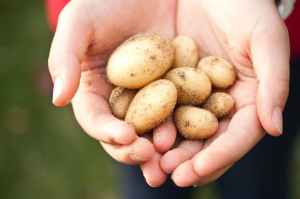
handful of potatoes
Photo by R Khalil on Pexels.com

To grow, however, a writer has to write about what they don’t know. This requires research, not just assuming that you do know. For example, Nora Roberts wrote a novel where, in the prologue, a character in Ireland is cultivating potatoes a long time before potatoes arrived in the Old World, being a New World vegetable. It’s natural to assume “Ireland = Potatoes”, but Ireland didn’t have potatoes till 1589. As much as I like Nora Roberts, here’s a historian’s take on what she gets wrong in one book.

Another example was a Jayne Ann Krentz novel (forget the name) whose male protagonist owned a winery. In this case, she got the details right, but the details were so sparse that the book didn’t have to have a winemaker protagonist at all. In this book, he strolled through the winery, and there was a little detail about a room with big barrels. I, as an amateur winemaker, expected at least a bit about him checking in with his chemist and taking a sample from a barrel to check out the taste. I expected my winery owner to be involved with the winery somewhat, for the sake of romance.

The takeaway is that your reader is going to know the details if you don’t. And the inaccuracy is going to take them out of the story.

Back when I was young, I wanted to write a story based on a long dream I had while sick with a kidney infection. My problem was that it took place “in the desert” and doing the level of research I would need just to show the characters’ interaction with the desert (wherever that was) would have been immense. I didn’t have time for immense research because I was trying to finish up a PhD. So I wrote a couple character sketches and segments of scenes and put it away.

Years later, the Internet made it possible for me to do the level of research I needed to finish the book. I chose the Owyhee desert (alternate future with demise of the US makes it no longer Bureau of Land Management land) and studied the flora and fauna as well as what food animals and crops would do well there for small landholders. I could not have researched that, nor could I have researched experimental underground habitats and water recollection. The book is named Whose Hearts are Mountains, and I’m going to publish it someday.

My advice for writing what you don’t know:

  • Look up basic facts, making sure that your sources are reliable. For the sake of writing, Wikipedia is usually concise enough, and its footnotes carry more information that will be helpful.
  • Provide enough detail that your readers are satisfied. This can vary, depending on who your readers are. But assume they want at least some accurate setting and background to feel engaged with your story. In romance, setting and background are one of the ways novels distinguish themselves with their time-honored plots and tropes. In fantasy, believable setting and background help you build a consistent world.
  • Ask yourself “what are my readers going to poke holes through?” Reinforce those areas with more real information.

Right now, I’m struggling to research the logistics of small town fire departments, fighting fires, and combustion in general. Luckily I live in a small town with a volunteer fire department, but I’m having trouble coordinating with the fire chief. I’ve been reading a lot online, especially things about fire trucks, firefighting gear, uniforms, and mutual aid. I have a couple small details I still need to find out. And this is just background to make sure the firefighting feels right. But I don’t want to write the book that people say “That’s not how it works” about. So it’s time to research.

NaNoWriMo

November 1st was the start of the annual National Novel Writing Month, or NaNoWriMo. This is my 9th time writing a novel (50,000 words or a short novel worth) in 30 days. This means 1,667 words a day. It doesn’t seem so hard when I break it down that way.

I have completed my goal in 6 out of the past 8 NaNos, which is not bad. I hadn’t guessed I’d done that well. The other two years I had extenuating circumstances such as depression and Trump’s election (and also depression). Sometimes I was writing a novel and for one of those years, I was a renegade editing another novel.

Photo by Suzy Hazelwood on Pexels.com

I have chosen for the past couple of years to write the consecutive Kringle Chronicles novels. This is ideal because I can write them during the beginning of the holiday season and take advantage of the Christmasy goings-on. (If November seems too early for this, I’m sitting in a Starbucks where they’re putting up Starbucks Red holiday trappings.)

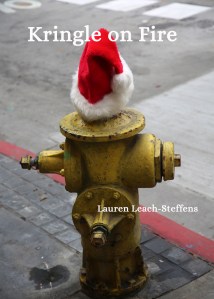
This year’s book, Kringle on Fire, is fighting me tooth and nail. It’s hard because of the characters being foreign to me — a firefighter and a two-year-old are among my characters. They require a lot of research. So the writing is going slowly for someone who’s used to writing 4000 words a day. It’s going to take me the entire month to write this and I’m not sure I’ll finish it.

Time for positive self-talk! I’ve done this before!

Wish me luck!

The Things I Love and the Things I Do Well

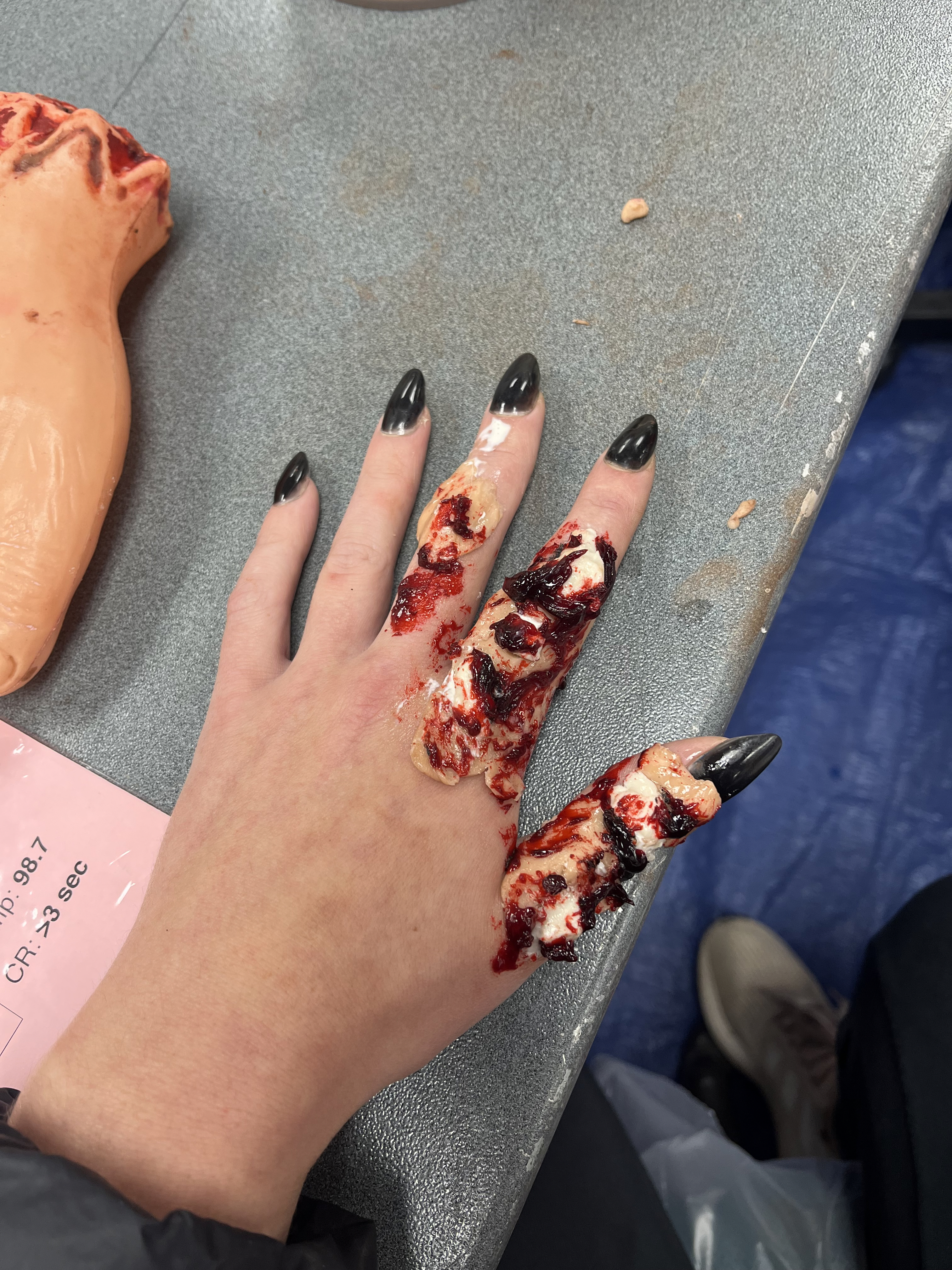
Sorry I haven’t written the past couple of days, but I was setting up for Missouri Hope, our big disaster training exercise. Then I was doing moulage for Missouri Hope, which means making up 185 volunteers in two-hour stretches (with two other moulage artists). Then I was recovering from Missouri Hope. It’s the most intense weekend of my year.

So, it’s Tuesday, and I have a spare few minutes to write my blog in-between grading and an online meeting that shouldn’t go too long. I have time to think. Today, I’m thinking of the things I love and the things I do well, which are not necessarily the same things.

I enjoy doing moulage, and I do it well. I know I do it well because I get a lot of compliments and attention for it. Doing moulage gives me a boost. I get high from the attention.

Trigger warning: Below is a simulation of a crushed hand:

.

.

.

.

.

.

.

.

.

.

.

.

.

.

.

.

Back to writing:

I enjoy writing, too. I’d like to believe I do it well, but I get little feedback from publishing my writing. Few people have read my three Kringle novels, my fantasy romance novel, or my Vella serial. I’m not sure this has to do as much with my writing as the whole struggle to get the word out about my writing. I’m not good at putting myself out there because I feel insecure about my writing in a way I do not about my moulage. A vicious cycle, apparently — no praise means insecurity; insecurity means I don’t push myself forward; not pushing myself forward means no readers; no readers means no praise.

I need to find a way out of the vicious cycle, because I want to have the relationship I have with my moulage with my writing, something that I both enjoy and which feeds my need for recognition (which is a small thing, actually). I’m willing to entertain ideas …

Progress on the Work in Progress

I have been working on preparing the Christmas romance novel Kringle on Fire with Richard, and we are way ahead of our goals. We are adopting a variation of the method I use to plot a book:

  1. Use a Scrivener template (Romancing the Beat or other variants on the Save the Cat method). I do this because I want to make sure the story develops as expected by the reader.
  2. Write character sheets for each character with appreciable dialogue (Scrivener has these).
  3. Use the writing template in 1) to lay out descriptions of action at each plot point.
  4. Write the book using these plot points as guideposts.

This is the writing method known as plantsing — neither as structured as planning, nor as free-form as pantsing (aka flying by the seat of your pants). We’re planning a bit more than usual because I want to make sure that Richard has enough input into the book to justify co-authorship. (In other words, I want to work his butt off.)

Photo by Alexander Zvir on Pexels.com

The goal: a decent plan by November 1st so that I have a foundation to write this book. And an enjoyable November listening to Christmas music and writing.

My New Book Drops Saturday!

Time has flown by so quickly! It seems like just yesterday that I was writing It Takes Two to Kringle! Truthfully, it was last November, but I haven’t kept track of the time.

It’s time, however, for me to release the book into the wild. So, on Saturday, the third book in the Kringle Chronicles, a series of holiday romance novels, will be available for sale on Kindle. This book features enemies to lovers, faculty romance, a quirky small town, a challenge, and Santa Claus. And Krampus. (Let’s not forget Krampus!)

Check out this book and treat yourself to an early Christmas!