My favorite cars

Daily writing prompt
What is your all time favorite automobile?

I have a few favorite automobiles — in fact, every car I’ve ever driven (with the exception of rental cars) has been my favorite.

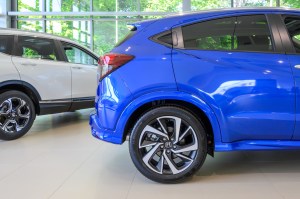
Gdansk, Poland – June 5, 2021: New models of Honda HR-V and CR-V presented in the car showroom of Gdansk

My first car was a gently used Saturn SC-2 in plum. I loved its fiberglass body and its look. It drove well, and it had excellent gas mileage. It got totalled by an airport limo when I was struggling on a snowy overpass. (Note: I didn’t learn how to drive until I was 32, and I didn’t have parents putting limits on my meanderings, so I drove 5 hours away into a snowstorm.)

My second car was a 1994 Honda Civic hatchback in red. That was a darling car. I bought it gently used and drove it for 13 years until the engine blew its head gasket twice. This is a young demise for a Honda, but a student from a mechanic family told me it was a weakness of the 94s.

Third and fourth cars were Honda Fits, which I am still certain are the best compact vehicles ever, even though they were discontinued in the US. With their adorable looks, their flexible space, and good mileage, they’re everything to want in a small car. The white 2007 is no longer with us, but we still have the 2009 red one. I think red is the best color for a Honda Fit.

Our newest (used) car is a Honda HR-V. Not the biggest of the SUVs, it’s like driving a tall Fit. It’s in that serene blue that you saw in SUVs around 2019. Very comfortable to travel in. More padding on the seats than a Fit.

So it seems that I make excellent choices in cars if I like every one of them!

My First Computer

Daily writing prompt
Name the most expensive personal item you’ve ever purchased (not your home or car).

This question is altogether too easy for anyone who has bought a laptop or a smartphone in their lives. Other than a house or a car, these are likely to be the most major expenses, at least in the US.

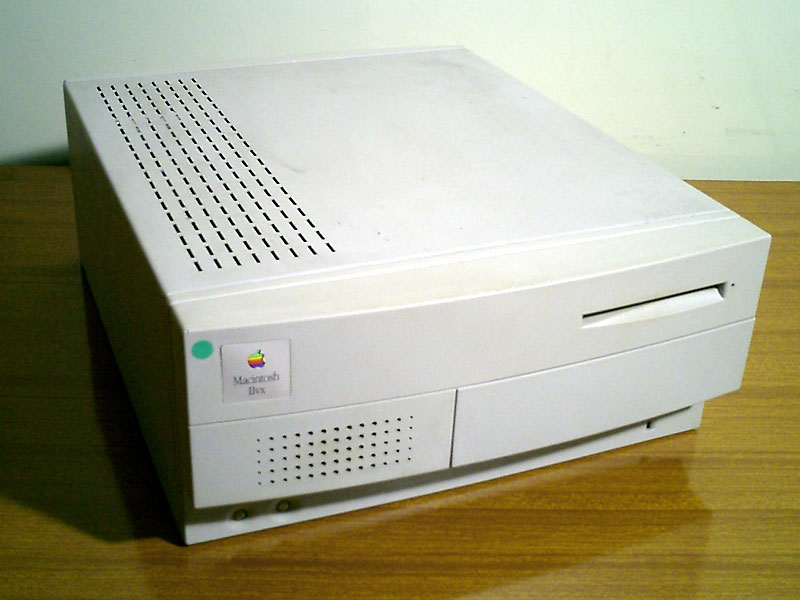
I was relatively late to computer ownership, having gotten my first computer as I was finishing graduate school. As a grad student in the late 80s — early 90s, it was not assumed we would have our own computers. There were computer labs all over campus, and I availed myself of those when typing up my dissertation. Knowing that computer labs would not be part of my future as a professional, I bought my first computer, a Macintosh IIvx. In 1993 the computer cost me $2500, which is almost $5k in today’s dollars. I bought it with part of the proceeds from getting hit by a car, otherwise graduate student me would not have been able to afford it.

CC BY-SA 3.0, https://commons.wikimedia.org/w/index.php?curid=31318

Technology has gotten more powerful and less expensive. I could buy a Mac Mini today for $500, and this little puck of a computer is much more powerful than the IIvx I bought in 1993. The only reason I haven’t bought it is because the form factor isn’t convenient, and I already have a powerful laptop that cost me $1300.

Even today, my computers are the most expensive purchases I make outside of a car or house, even though they have gone down in price. But their utility makes them worth the price.

Get Off My Lawn

My mother once said that ‘growing old was hell.’ I admit, my knees and hip are giving me trouble, and I’m not as flexible as I used to be, and I would welcome a good nap right now, but hell? It’s too interesting to be hell.

I find myself saying and doing all the things I said I wouldn’t when I was younger. Reminisce about old technologies and the music I loved as a child? Check. Complain that things aren’t like they used to be? Check. Complain about aches and pains? Check. I have, to my credit, never said “Get off my lawn” except in jest.

There are things I wanted to do when I was younger that I would not be caught dead doing today: skydiving, going on a rollercoaster, looking down great heights. Now I can’t bring myself to do these.

I’m less spontaneous than I used to be, more deliberate. More patient, which surprises me, because I’ve never been a patient person. Maybe it’s because I have survived everything.

Having survived everything, I have advice for the younger generation, something else I never thought I’d have: Don’t worry about aging. It’s not that bad.

A Chance of Tornadoes

Today is going to be a bad weather day in Maryville, according to the weather forecast. We are at a 10% chance for bad weather, and there may even be tornadoes in the mix. Tornadoes? It’s almost November!

Photo by Ralph W. lambrecht on Pexels.com

I guess some people call tornadoes ‘cyclones’; pretty much the same thing. A severely hazardous storm typified by a wind vortex. The standard operating procedure for a tornado is to go to the basement, for presumably the walls in the basement don’t collapse on you. There’s also less danger of being hit by flying glass. If you don’t have a basement, choose an internal room on the first floor without windows, which is often a bathroom.

I remember life before extremely accurate weather forecasting. We generally didn’t know a tornado was passing by until the tornado showed up, and then the civil defense warning would be broadcast on our tv. Then the siren would go off (this was usually the siren summoning our volunteer firefighters to an incident.)

Today, we have a fire siren in town to warn us if a tornado is imminent. But we also have our weather forecasts, our phones and the watch/warning system. We can prepare a day in advance; I know the expected time for severe storms and I can plan accordingly.

It’s interesting to look at today and reminisce about how life has changed. I guess that makes me an old person (*sigh*).

Coffee in the Morning

Photo by Andrew Neel on Pexels.com

I wake up to the best coffee in town. We buy green (unroasted) beans, and my husband roasts them. Today’s are fresh-roasted, having been roasted the previous afternoon. We have a fancy coffee machine that we bought used (because we’re cheap) and so our coffee is better than any cup we could get in town.

This is not to mean all of our coffee is excellent. Sometimes a bad bean gets through, and the coffee for the morning tastes like potatoes or wet swamp. (This happens so very seldom, only once or twice in my recollection, and we’ve been doing this for over 10 years). Sometimes we don’t roast dark enough, and the coffee tastes green (again, this happens very seldom). More often, we find that a coffee, although good, not quite to our tastes. For this, we have invented our coffee rating system:

  1. Grandma has rejected this coffee.
  2. Grandma drinks this kind of coffee.
  3. Grandma should be drinking this coffee.
  4. Grandma called, and she wants you to bring a dime bag so she can groove over this coffee.

In other words, 3 is a high recommendation and four is a really high recommendation, if you know what I mean.

We like big flavorful coffees over here. Not the kind you get at the grocery store, and seldom the kind you get at a coffeehouse (coffeehouses’ coffee often tastes sour because of overextracting or being held too long). Today’s coffee has a lingering sweet aftertaste, like rice syrup and molasses. No complaints here.

So I’m done with my coffee and rather caffeinated for the day. Which I really need, because it’s a Monday.

Basic Personal Finance

Daily writing prompt
What’s something you believe everyone should know.

I believe everyone should take a basic personal finance course.

What topics should the personal finance class cover? Budgeting, decision-making, banking choices, the earning of interest, credit use, and consumer insurance. Investing can wait, although a basic class in that might also be welcome.

The sellers of financial services don’t have our best interests in mind. Banks can offer accounts with quickly compounding penalties for overdrawn accounts, and other hidden fees. Lenders can be predatory, with high interest rates and other fine print. Insurance agents sometimes offer life insurance policies that are more suited to make money for the company than serving the consumer.

Every consumer should be an informed consumer. It’s the only way to navigate the financial services market and win.

A NaNo Alternative?

I am looking forward to starting the new book. There is hope for me and writing.

Photo by Pixabay on Pexels.com

I’m trying to find a substitute for NaNo, as I will not be doing it this year because of their stance on AI. So far, the only thing I have found is in French, which will not happen, as my French is negligible. I need to find a word count motivator that doesn’t cost me any money.

I did a search on the Internet and found a few. The one I decided to use was MyWriteClub, which is a simple word count tracker. It doesn’t have the bells and whistles and community of NaNo, but it is a word count tracker. The one problem with it is that, when I made my account and goal, it made me start it today instead of November 1. So I guess I’m writing today.

Me and Automobiles

Daily writing prompt
What’s something most people don’t know about you?

One thing that people don’t know about me is my relationship to cars and driving. I learned how to drive rather late in my life (age 32). This is not usual for the US where a driver’s license at sixteen is a rite of passage.

I was different. Behind the wheel of a car, I was a hazard. Among the things I managed in driver’s ed: stopping in the middle of the railroad tracks to check for trains, butting the car into a snow drift in an otherwise empty parking lot, and making a 180-degree turn into a parking lot when all I intended was to turn the corner. Needless to say, I did not get my driver’s license in high school.

I took drivers’ ed again, and that time got through it. I didn’t, however, get my driver’s license because my parents were too scared to take me to the testing facility to get tested. I didn’t blame them. Eventually, when I had taken a break from college, I got the license but never drove on it, and my skills extincted. It didn’t help that I got hit by a car in my late 20’s, breaking my leg and resulting in a bar in my left tibia to hold it together.

When I was in college and grad school, I lived in a city with excellent public transit, so I didn’t miss having a car. It wasn’t until I lived in Oneonta, New York, my first teaching job, that I felt the pinch of not being able to drive. Oneonta was a rural town in the foothills of the Catskill Mountains, and there was an arts scene in the area — all spread out from Oneonta to West Kortright to Delhi to Franklin. Only accessible with a car.

I took driver’s ed with the best person I could have found, a laid-back man named Lee Fisher. He taught adults how to drive, and thus he knew how to deal with people who struggled to drive. It turned out that, when I drove, all the little pieces of driving wanted to happen in my head all at once. Think of all the actions needed for a right-hand turn: slowing down, activating the turn signal, braking at the stop sign, looking both way, accelerating slowly while turning the wheel, straightening the wheel … my mind couldn’t sort them in order. I learned to drive by reciting all the moves in order just before doing them. When I no longer needed to say them out loud, I went to get my driver’s license, and succeeded.

I didn’t let those skills extinct, instead getting myself a car to drive. I made a lot of mistakes, had a couple accidents, and spent a couple years in the assigned risk pool with expensive insurance coverage. But I got used to driving.

I have never become an excellent driver. I balk at interstate driving, although I can and will do it if necessary. But driving is a part of my life now.

Not Brands, but Reference Groups

Daily writing prompt
What brands do you associate with?

I don’t associate with any commercial brands, but I do associate with what this question is getting at.

I don’t believe people associate directly with brands, except perhaps with trucks — there are “Chevy people” and “Ford people” in the US, and a few deranged “Tesla bros”. People associate with reference groups, which they use to identify themselves as a part of. This is something I learned in a consumer behavior class many, MANY years ago.

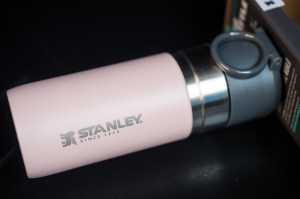
Bangkok, Thailand – April 16, 2022 : Stanley of pink stainless steel thermos travel mug to keep the drink warm or cold. Stanley Go Vacuum Bottle 12.5 OZ

Reference groups can be associative — “I am a member of this group”. For example, one of my reference groups is “college professor”, which makes me prone to buying gas-efficient vehicles and Starbucks coffee. Reference groups can be dissociative — “I would not be caught dead being a member of this group”. I am vehemently not a member of the reference group that listens to Kid Rock and drinks Budweiser beer. Last, they can be aspirational — “I would like to be a member of that group.” I would like to be a member of the upscale ecologically conscious consumer who has a home composter and a butterfly garden landscaped by someone else.

We buy brands because of their association with reference groups, because we want to be a member of that reference group. We refuse to buy certain things from our dissociative reference groups. We don’t so much say “I’m a Ford person” — unless we’re talking about trucks, and even then, we buy them largely based on our perceptions of who’s in that group. I will excuse myself to drink my home-roasted coffee, which marks me as part of the aspirational group “coffee snobs” now.

Testing my Theory

I have a theory that posting at 8 AM on a Tuesday morning (Central Daylight Time, UTC +5) will yield very few hits. I’m testing it here.

Photo by Anni Roenkae on Pexels.com

In the app Loomly, the app can tell you which times are optimal for posting to each platform. It’s a strategy I use for determining when to post. Not always, but often. Loomly does not connect to WordPress, so it’s not useful for determining times.

Another thing is that WordPress has a more world-wide spread. I have readers on occasion from India, Cameroon, the UK, many other African nations, Bangladesh … This is not the case on other platforms. What is the optimal time for these places?

So consider this a test. Let’s see if I get even my normal amount of visitors.