The Night I Cooked on Ambien

Daily writing prompt
Write about your most epic baking or cooking fail.

I saw the above prompt on my WordPress page and couldn’t resist telling the story on how I cooked myself a snack while asleep on Ambien. Ambien is a prescription sleep aid notorious for inducing sleepwalking.
I was having trouble sleeping at the time this story happened, and the doctor was trying many sleeping medications to get me a good night’s sleep. He prescribed me Ambien, which many people have had much success with.

The first night I tried it, it worked magnificently. I slept soundly and didn’t wake up in the middle of the night. Night two, however …

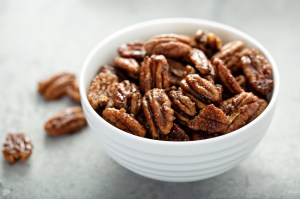
My husband was working a night shift, and I was hungry. I went to bed craving something very specific. We had all the ingredients for the recipe: candied pecans. It’s a very simple recipe with butter, pecans, sugar, and cinnamon. It cooks up in a skillet until the pecans toast and the sugar/butter mixture has caramelized. I decided it was too late to cook, and so I went to bed.

The next morning, I woke up to the smell of burnt pecans and sugar in the kitchen. I wondered about that, until I looked in the garbage and saw a mass of burnt pecans and sugar. I then remembered the dream where I had made myself the pecans I had craved the night before.

Apparently I had gone sleepwalking and made myself a batch of candied pecans, which I had managed to burn on the stove. I looked on the stove and saw the cast iron frying pan, freshly cleaned and seasoned. Not only had I made myself candied pecans in my sleep, but I had cleaned up after myself like a good home economist (which I am).

So that’s the story of my greatest cooking disaster. It wasn’t even that disastrous, except I couldn’t eat the results. It’s a wonder I didn’t set the house on fire. The doctor took me off Ambien the next day.
Working out a Rhythm

At the end of week 2 of classes, I am still trying to get a rhythm to my days so I can write.

Three out of four Monday afternoons I will have meetings. Fifty percent of Tuesday afternoons I will have meetings as well. Unless I start writing in the evenings, and I’m often too tired by then, I will not be writing on those days. That gives me late afternoons Wednesday-Friday most of the time.

I have a Saturday routine that’s working. That’s a start.

I’ll keep you posted. I miss my flow activity!

How I Relax

Daily writing prompt
How do you relax?

I don’t feel I do a good job of relaxing. I don’t do nothing well, as I’ve said before, so relaxing is something I don’t do well. When I do relax, I often complain because I’m doing, well, nothing.

I should read more, but I rarely feel like tackling a new book when I’m tired and need to relax. So I read the Internet. I read Quora and look at Instagram and speed through Facebook. I used to read Am I the Asshole and the like on Reddit, but those take away my faith in humanity, so I quit reading them.

I don’t watch TV and seldom watch streaming services or DVDs. When I do, I tend to favor stuff I’ve watched before as soothing. Apparently, my mind is so tired of processing new input that, as with reading, I don’t want any new input.

I meditate occasionally, and I think that’s a positive way to relax, except that so much of the time I fall asleep. That’s a hazard for me when I relax, the sleeping.

I’d like to find a better way to relax, one which doesn’t seem like such a waste of time. But then, would it be relaxing?

5000 Views on my Blog? 2000 Blog Posts? How Did I Do That?

Yesterday, WordPress announced to me that my blog has had over 5000 views. That seems like a really big number. Then again, I’m a little over a week away from my 2000th post. I don’t feel like I have written two thousand posts. (Note: I believe this number counts the blog posts I transferred over from Blogger when I first moved here.)

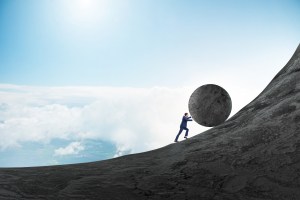
The man pushing large stone to the top

How did I do this? A little at a time, without thinking of the number at the end. I didn’t think “Oh, I only have 256 more posts to write before I hit 1000!” I just wrote daily, and they all added up. I think the same happens when I write a novel. I don’t set out to write 80,000 words. I write the story until I’m done, and then count the words.

I’m sure this is a metaphor for life. Don’t count the steps; just go where you need to and check your progress later. This contradicts everything I know about resource management, however. Numerical goals (like 2000 blog posts or 80,000 words or 10,000 steps) are easy to track, far better than “when it’s done”. The goal has to be set so that one can tell whether they’re on track or not. But they’re tedious.

When there’s a great distance to the goal, the numbers can be daunting. This is where time management advice for procrastinators comes into play: Break the task up into smaller chunks. So the 2000 blog posts can be 20 chunks of 100 posts. That’s more manageable. Or the 80,000 words can be several chapters of 3000 words (which is the length of a chapter in my writing).

So there’s my advice. Don’t let the big numbers scare you — focus on the little numbers. Keep repeating. And then, eventually, they add up to 80,000 or 5000 or 10,000.

NaNoWriMo and Generative AI

The controversy in the writing world currently is that the NaNoWriMo organization has issued a statement not only supporting use of generative AI in its events, but dismissing opposing viewpoints as ‘ableist’ and ‘classist’.

To understand the impact of this, let me start with NaNoWriMo. This organization sponsors a world-wide writing festival every November which encourages people to write a 50,000 word novel in one month. Admittedly, 50k is somewhat short for today’s expectations of a novel, but it’s 50k more than most people feel they can write. In 2020, 383,064 people participated in NaNoWriMo, the latest statistic available (Wikiwrimo, 2024). For full disclosure, I have participated in NaNoWriMo for several years.

The issue with generative AI is more complicated. Not all AI is generative AI; that is, not all AI is used to generate or create content. The fear of writers is that generative AI creates content, and it creates it from the materials it’s been trained on, which are existing works. This goes beyond analyzing patterns in grammar use and spelling (which I would argue are acceptable) into creative aspects. In other words, training generative AI is mass plagiarism of ideas without crediting sources. An entity like NaNoWriMo supporting mass plagiarism of ideas seems antithetical to its principles.

In addition, artists and writers fear being replaced by the much cheaper generative AI. The quality of generative AI is not as good as the actual creations of human beings; but if generative AI takes over in commercial outlets, the public will become inured to lower quality. The loss of revenue to real live writers will become the loss of creativity to the wider world.

To address NaNoWriMo’s charge that opposing their approval of generative AI is classist and ableist, it is classist and ableist to assume that people with disabilities or of underrepresented social classes would need to use generative AI to compete in the marketplace of ideas. I suspect that the issue here is a lack of distinction between AI used to proofread and suggest grammar (such as in ProWritingAid, one of their sponsors) and the AI that creates entire segments or whole stories. I see a big difference between supporting a tool for improving form and a system for writing content. If this is NaNoWriMo’s dilemma, then they need to do some soul-searching and make a clear ethical statement as to where the line gets drawn between composition tools and content creation.

This is where I am in my ethical processing of the issue, that use of AI for translation, proofreading, or grammar correction is not at the same level as AI to generate ideas and content. The former is predicated on objective rules; the other on skimming subjective creative works. My struggle to define what is permissable is the struggle of the entire society in dealing with AI.


Wikiwrimo (2024). NaNoWriMo statistics. Available: https://www.wikiwrimo.org/wiki/NaNoWriMo_statistics#cite_note-3 [September 3, 2024].

My Ideal Home

Daily writing prompt
What does your ideal home look like?

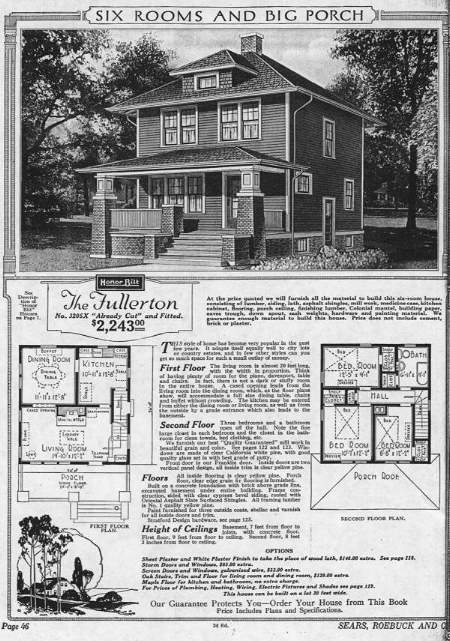
I currently live in a two story home from the early 1900s, probably a kit home, as it fits some of the patterns one sees in kit homes. I grew up in an architect-designed version of that type of home, only with three stories (a walk-up attic where the daughter had the whole floor to herself, rumor had it). I have an affinity for old houses, and my ideal house would be the one I grew up with, except …

  1. I would want it extensively restored. I would get the wood floors and trim refinished, and the walls repainted or wallpapered (depending on what the original version looked like). I would consign all the paneling to the deepest circle of Hell.
  2. I would get new windows.
  3. I would never have gotten rid of the butler’s cabinets or the parlor cabinet. (This would require me to turn back time, but this is my ideal house.)
  4. It would be much less cluttered. We keep a lot of small objects in the kitchen ‘we may need someday’. We also own a few ‘well, we have an extra of this just in case the original breaks down.’ Skip the Marie Kondo treatment — I want a dumpster and two brawny men to start on the basement and not finish till they run out of rooms.
  5. There would be a bigger circuit box and enough outlets.
  6. It would have a two-car garage and a decent driveway. The garage where I grew up was a death trap we did not use, and the driveway was a grass strip that was impassible in the winter when we needed it the most.
  7. We’d put an elevator in. I’m getting old and I might get to where I can’t use stairs.

If I couldn’t put an elevator in, I would have to settle for a one-story house. I do not love ranch-style houses because of their ‘garage-forward’ design, so I’d have to put the garage on the side. I would like it to have universal design front and center. If I have to live in a one-story house, I want to be sure it’s accessible to my elderly self.

Beware of the Happy Cry

Daily writing prompt
What brings a tear of joy to your eye?

I don’t cry for joy often. It’s just not in my repertoire. When I feel joy, it’s generally a buoyant feeling, not complicated by any touch of sadness.

Except when I encounter (with my unwilling participation) inspirational and sentimental moments. Let me explain. I get weepy at the Olympics, cat food commercials, and human interest stories. It’s like a button any manipulative marketer can push, and tears come out. Graduation ceremonies? Hallmark commercials? Songs from my childhood? There I am, getting weepy.

Photo by Pixabay on Pexels.com

I actually use my happy crying as a sign of whether my medication is working. If I get too weepy, it’s time to talk to the doctor.

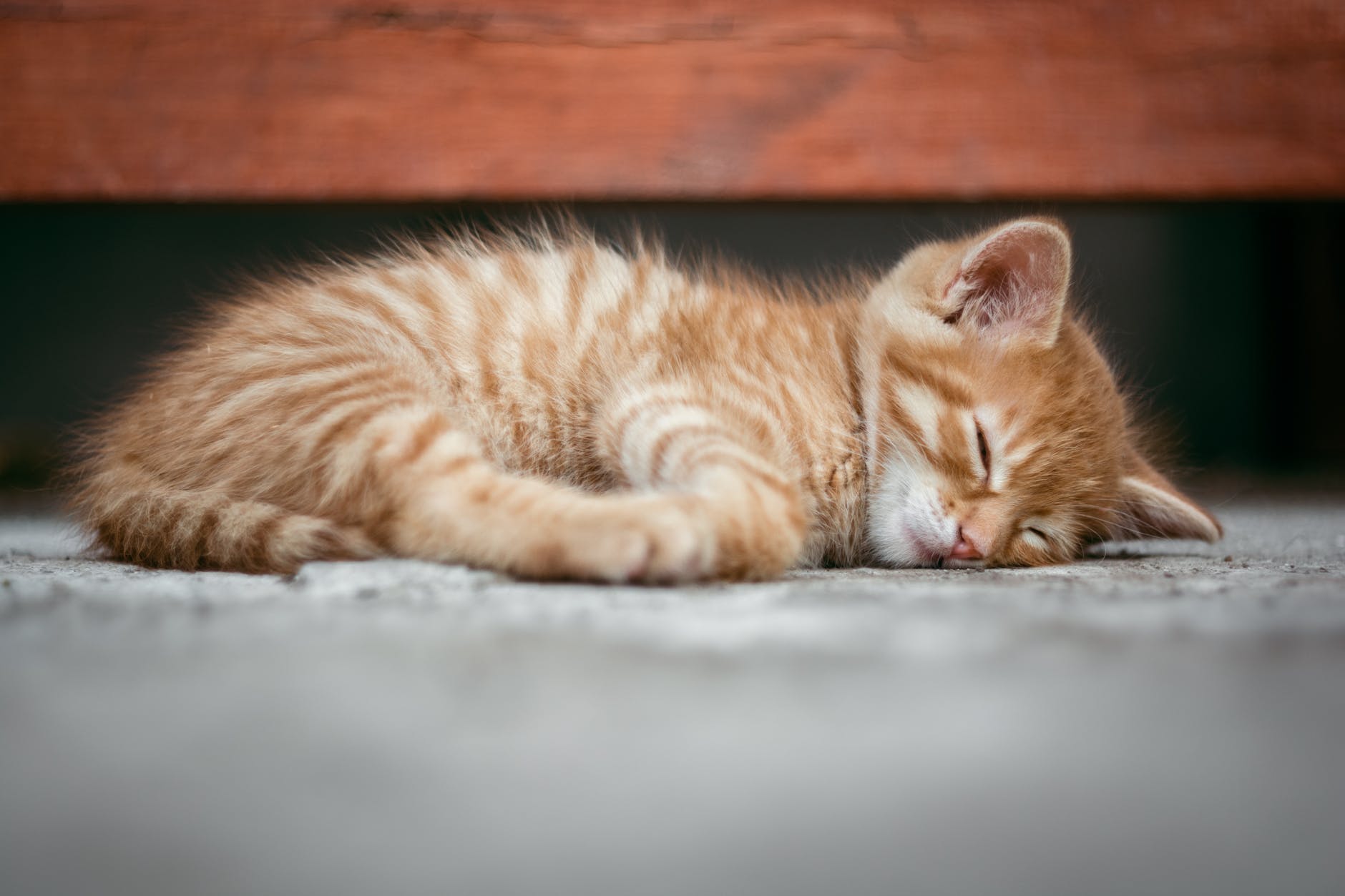
My cynicism is what saves me from melting into an easily-manipulated goo every time I read inspiration porn. Is this story designed to make me happy cry? If so, I dry my tears and take a deep breath. Except at cat food commercials, because they’re just so sweet.

Giving up ‘Should’

Daily writing prompt
If you had to give up one word that you use regularly, what would it be?

If I had to give up one word that I use regularly, it would be ‘should’.

‘Should’ is a word full of judgment. Someone else is judging us or we are judging ourselves against some unspoken standards that we are not ourselves claiming. “I should do my homework.” The word ‘should’ always sounds like “I’d really like to do something else, but X says I should do my homework.”

Admittedly, there are things we need to do. But ‘need to’, although it’s two words, is a perfectly good phrase to use here. “I need to do my homework” implies an internal locus of control rather than the external ‘should’. The speaker has a need which they can fulfill. It’s also a positive statement: “I take care of my needs.”

I would feel a lot stronger if I didn’t use ‘should’.

Learning Curve

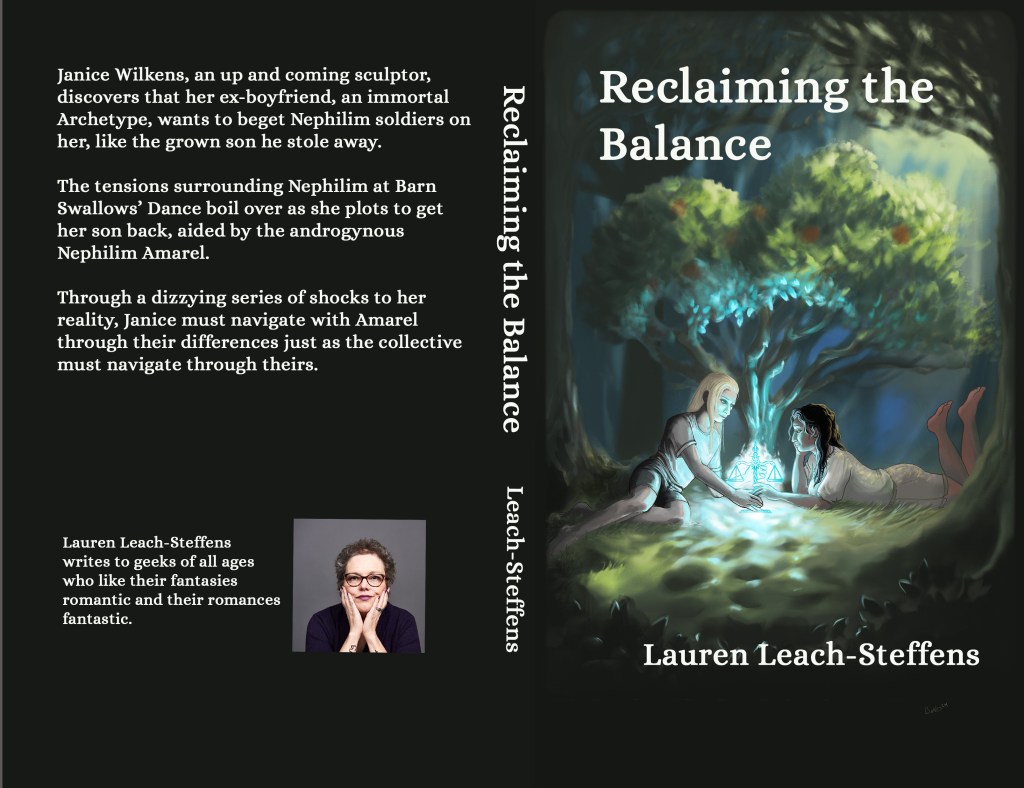
Yesterday, I put together the cover for Reclaiming the Balance, and it only took me an hour.

This used to be the hardest part of putting out a book. That was back when I didn’t know a thing about Photoshop (the program where I lay out my book covers). There were various parts of the process which stymied me: Highlighting text, working with layers, making some of the writing go down the spine.

Now I remember how to do those, and I made quick work of the cover. I will tweak the cover to make sure that the bleed (the overrun on the edges) doesn’t take out any important parts of the illustration and to align the spine. But it’s mostly completed.

It’s reassuring to know that the hard tasks will not always remain difficult and that I can learn new tricks. I am, after all, an old dog.

Avoiding Plagiarism

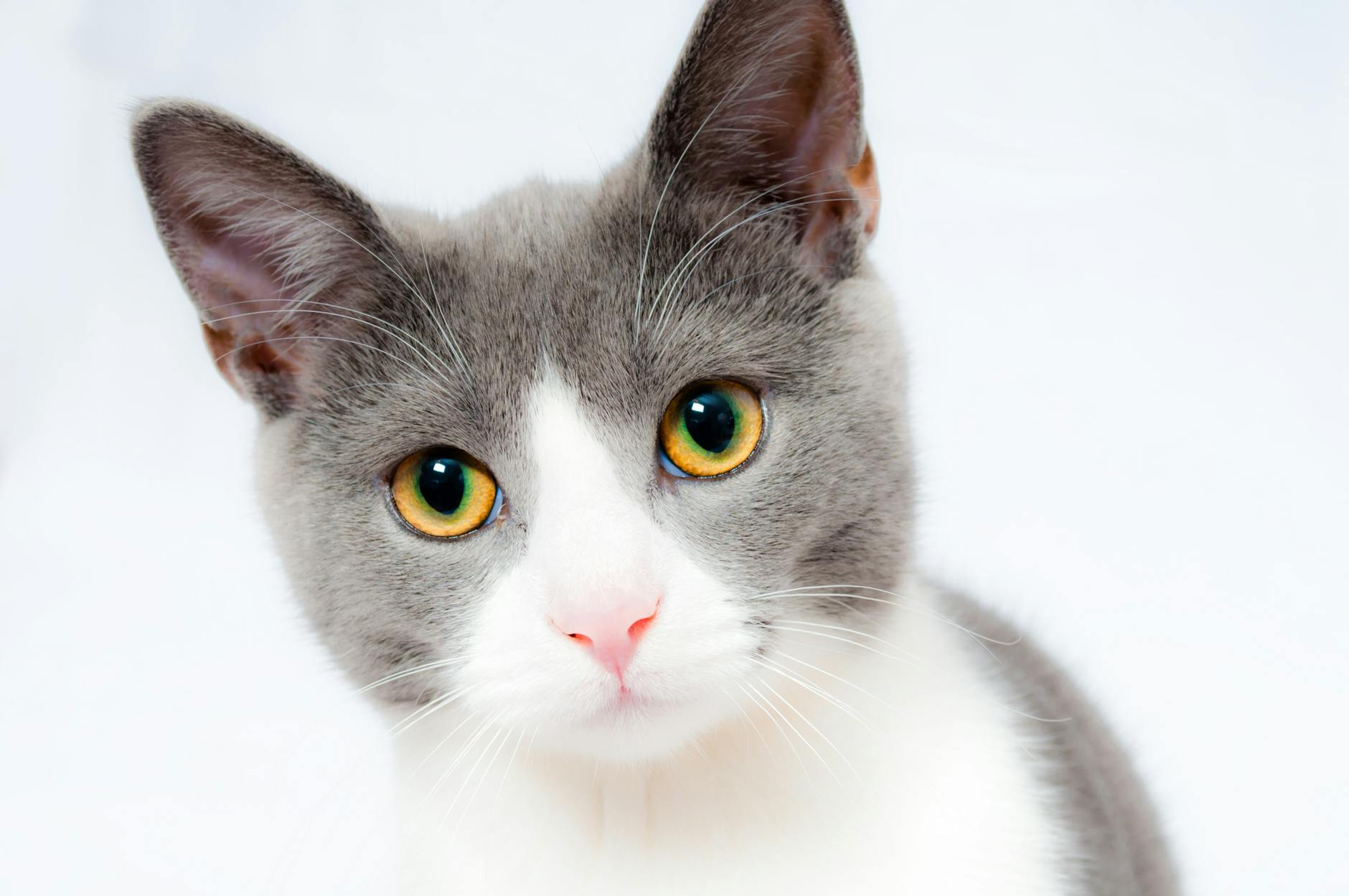
I was joking about the concept of Chekhov’s gun the other day, with the example of a cat that showed up early in the action and then turns around to save the day. That, in a phrase, is Chekhov’s cat.

Looking up Chekhov’s cat, I discovered that someone had gotten to the joke before me, a writer on Tumblr named The Bibliomancer, on a blog by the same name (The Bibliomancer, 2023, Nov. 10). They define Chekhov’s cat as when a cat appears in the story, it will play an important role later.

Photo by Pixabay on Pexels.com

It’s important that we credit the original thought of others with citations, such as what I’ve done above. I use American Psychological Association citation style here in addition to a linkback to the original site. Blogs generally use the linkback, but I want to make sure the originator gets the full credit, so I use academic citation style. The full citation will be at the bottom of this page.

I have been the victim of plagiarism. Once, I gave a colleague an assignment of mine as a guideline for structuring her own homework in a class; she published it as her own without giving me any credit. I still seethe over it, twenty-eight years later, because she stole an idea from me by not crediting me.

I think we on the Internet need to credit the sources we use to make our content. That way, maybe people will cite us.

The Bibliomancer (2023, Nov. 10). Chekhov’s Cat. Available on Tumblr: https://thebibliomancer.tumblr.com/post/733615519135039489. [August 28, 2024].