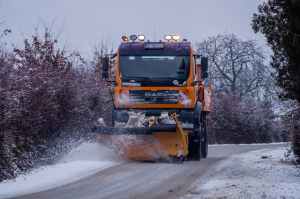
Plowing through Writing

Photo by Anton Kudryashov on Pexels.com

I’ve been — not exactly plowing through writing as much as shoveling through it with a teaspoon. Adding words to the too-short Kringle on Fire has been a task, but I am finally almost at the 50k point. The Kringle books run short, mostly because they have light plots and I am an economical writer. And because I can write them short as I self-publish. But shorter than 45k and they’re a novella, and I don’t want to write novellas. So I’m at the editing stage now, hoping to add 300 words to the mix.

The books that I have in my writing pile have been slow as well. I need to do some soul-searching about what I need as a writer. I don’t think it’s time to give up writing yet, but it’s time to understand why my drive to write has tanked.

One possibility is that writing is no longer a new and shiny thing. I’ve published, I’ve held a book of mine in my hands, I’ve commandeered time for writing retreats. The immediate reward is not as bright and awesome as it was. Another is that I haven’t reached as many people as I thought I would. I had a fantasy that I would have a small but devoted readership, and that hasn’t happened. A third possibility is that I have doubts about how good a writer I am because of item #2. My husband assures me I’m a talented writer, and I think I should take that to heart. Finally, I take more time promoting myself than writing. It’s necessary unless you get a lucky break, but it’s not what writers want to do.

So there are some things I have to contend with if I want to keep writing. It’s going to require more soul-searching than this. In the meantime, I write, even if I feel like I’m shoveling through a snowdrift with a teaspoon.

Today I Realized (with quote)

“May you live all the days of your life.”—Unknown

When I was young, my reaction to this quote was something like “well, DUH. How would you not live all the days of your life? If you’re dead, you’re not living your life.”

Photo by Pixabay on Pexels.com

Later (embarrassingly later) I had a different understanding, and I was really slow in getting it. The key is “what does the word ‘live’ mean?” I had originally interpreted it as the physical act of living, including breathing, cognition, awareness, things like that. Then I realized that it’s the existential definition of ‘live’. Implied by this is the pursuit of happiness, work, etc.

Today I realized that by ‘living’, the quote means ‘living well’, and could involve happiness, engagement, relationships, meaning, and achievement — the hallmarks of Martin Seligman’s PERMA model of flourishing. Living all the days of your life fully, which is what I believe the quote means.

I teach PERMA in my positive psychology class. Although I think the quote is a little trite, it seems like something I could introduce to my class at the beginning of the semester as a motto. That it sounds nonsensical at first, yet has a deeper meaning might be the most important attribute of the quote.

COVID Anniversary

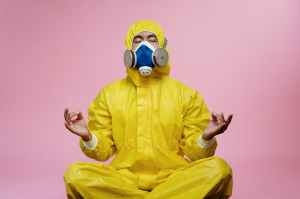
Three years ago today is when the Centers for Disease Control declared COVID to be a pandemic. I was on Spring Break and the big question was whether the university was going to shut its doors and deliver its classes online. The CDC hadn’t declared shelter in place yet, but other universities had closed. It took two more days for our university to follow the others. An extra week of break for the students and for faculty to put together online classes, and then the new class format to get used to.

I spent a lot of that first couple of weeks frightened when I was not sitting at my computer frantically moving classes online. Luckily, one of my classes was online; another — the internship was a mess with students not being able to finish it. Some creative grading got them through and closer to graduation. The fear was widespread; after I had a meltdown in the middle of the kitchen, I called my psychiatrist and got through to his nurse. She reassured me that what I was going through was normal.

Photo by cottonbro studio on Pexels.com

Richard worked on library tasks at home; I spent a lot of time on the computer supervising my online classes. I also spent a lot of that time baking bread. I fed three sourdough starters, one of which I captured myself. The experiments made me feel more grounded, and we had the best bread in town. I also wrote a lot when the initial shock dissipated. The longer-lasting feeling was isolation as I sat on the porch swing, seeing nobody outside.

Eventually, the restaurants and less necessary stores opened up with precautions of distancing and masks. By some miracle — or more likely masking — Richard and I missed getting COVID (until a month ago, and the vaccine made it bearable). Activities like concerts and vacations were still on the forbidden list, and we missed Christmas with my family that year.

Finally, we came back to a new normal, one with the remnants of distancing signs on grocery store floors, masks at the hospital, wariness about crowds, and memories of a disruption of life unknown since World War II. One million dead in the US made those disruptions necessary until we had the vaccines in place.

Our memories fade. We take for granted our freedom to move, to go places, to shop, to congregate with friends. It wasn’t that long ago that we lost all those, if only for a while. And it could happen again. A mutation of COVID into a harsher bug could send us back into isolation. There are other organisms that we haven’t seen in humans before that could be the next COVID or worse. We have to remember how COVID made us adapt and survive.

“Is there one question you hate to be asked? Explain.”

(Note: I am using the Day One question for today because I do not know what to write about.)

I consider myself an open person, and I have answered many questions about my past (rocky), my bipolar disorder (not as dramatic as the media would have it), my current life (could use a little more excitement), and small talk (“I’m fine, enjoying Spring Break, how are you?”) But there is one question I can’t stand being asked:

“Are you sure?”

Photo by Pixabay on Pexels.com

Listen, if I wasn’t sure, I would say ‘I think’ or ‘I’m not sure, but’. Otherwise, if I say it, I’m sure of it. This doesn’t mean that I’m right, but that I believe I’m right. Just like the other person believes they’re right. We will not resolve this argument by assuming I’m wrong. Or assuming they’re wrong. When I’m sure I’m right and you’re sure you’re right, that’s the time to do research, not get into a battle.

There are probably some circumstances where “Are you sure?” is not a passive-aggressive gambit. As an exclamation of disbelief — Ok, that’s a passive-aggressive gambit; never mind. But this gives me insight. The reason I don’t like “Are you sure?” is that to me it basically says “I don’t believe you” dressed up in Granny’s polka-dotted dress1. Oh, so nice and dismissive.

What do I prescribe instead?

“I understand differently. Let’s find out.”


  1. Think of Mrs. Beasley (a doll) in Family Affair (1966). If this is before your time, search for “Mrs. Beasley”.

But First, Rest

I’m on Spring Break, and my brain’s on vacation. What I should do today — writing. Writing something deep on this blog and editing my book. What I am doing — writing something fluffy on this blog and falling asleep sitting up. Quite a feat, yet I keep managing it.

My body’s dropping a subtle hint that I need rest. I posted an article the other day about the different kinds of rest, but I don’t recall it pointing out how to tell when one needs rest. I suppose falling asleep sitting up might be a sign.

Photo by Ihsan Adityawarman on Pexels.com

It’s Spring Break. If I don’t rest now, when will I?

It’s my vacation. If I don’t have fun now, when will I?

I have to write this book. If I don’t do it now, when will I?

It occurs to me that rest trumps writing and fun because I will not enjoy either if I’m tired. This excellent deduction makes me grouchy because I want to have fun (even though we can’t go anywhere for Break because Richard has to work). I want to make progress in my writing. However, my body wants a nap.

I think it’s time to take a nap and promise myself I will do something more lively when I get up. There’s an additional chapter I have to add to the book, and I have a bunch of JD Robb to read for fun. But first, rest.

What Can I Give You?

I write this blog every other day, and I hope you enjoy it. My topics are a variety of musings, memories, and meaning. I write from the perspective of an almost-sixty-year-old writer, professor, and fellow human being. And one with a very insistent inner child. Not very sexy, I know.

Photo by Polina Tankilevitch on Pexels.com

I wonder what my readers are looking for when they read this blog. Should I pick one topic and write about that? Should I continue writing about what’s on my mind? Maybe I should write more about my books, or less. Do my wellness (mostly positive psychology) posts grab people? What about my melancholy tableaux?

If you’re reading this, let me know what you enjoy. What you want to see more of. Alternatively, let me know what you want to see less of. Because I want to be interesting on these pages, and I’m not an expert judge of myself (I’m convinced my lectures are interesting, after all.)

Let me know — what can I give you in this blog?

Reclaiming Joy

I have lost some of the joy of writing in the distractions of trying to get books sold. I am a writer, not a marketer. Understanding that I have to be a marketer to get people to read what I’ve written helps me focus on those activities, but the activities themselves do not bring me joy.

Photo by Bekka Mongeau on Pexels.com

Although I wouldn’t say that recognition is unimportant (I dream of excellent reviews and lots of readers), it’s not the important thing. In fact, the problem with recognition is that it never seems to be enough (until it’s too much, and I don’t expect to get to that point).

I need to get my mind off of how well (or poorly) my writing is doing in getting recognition. That kills my joy. Joy comes from immersing myself in writing, whether it be my novels, this blog, or any short stories I come up with.


What brings you joy? Have you been in contact with it lately? Do you miss it? How can you build a little time for it in your life?

Looking Back at the Contagion

I look out my living room window at grey skies, a little slice of the day. I think I can feel Spring coming in, although we’re supposed to get a trace of snow tomorrow.

Three years ago, COVID hadn’t quite started, although I think we were hearing rumors from Europe. Many weren’t concerned because we thought American exceptionalism protected us from contagion. Not that big a deal anyhow, no worse than the flu (as if the flu were a trivial infection). That slice of sun from my window was my world under COVID, emblematic of my isolation, which I spent baking and waiting for the news to change.

Photo by Anna Shvets on Pexels.com

That spring semester changed the way I looked at things. People who disagreed with the government’s masking mandate and, later, vaccination push, took a malevolent cast, while those who complied I saw as more trustworthy. I became more of an introvert, having lost the habit of congregating with co-workers. Talking to people over Zoom became natural. The office became the loveseat with its view of the world.

After summer came fall, and the school year was what we called ‘hybrid’ — classroom plus synchronous distance for people who couldn’t come in because of COVID or other malady. That structure was very convenient for students, and very inconvenient for faculty who were basically teaching two classes. We sprayed disinfectant on student desks and tables after each class and kept masked distance during office hours.

COVID has now become, for people, like the flu — a disease that we get vaccines for, which mutates past the reach of the vaccine occasionally, and gives most unlucky people a respiratory illness which knocks them out, but from which they will recover. There are enough cases of debilitation and death, like with the flu, that many people will always take it seriously, as they do the flu. But we won’t forget the year when the contagion changed our lives, scared us, and perhaps scarred us.

There’s Some Life Left

A few things converge in my life to make me dwell upon death: 1) my father’s death in December; 2) the fact that my 60th birthday is coming soon. I suppose we can count 3) my contemplations about my spirituality, which by the nature of the topic includes death.

What I’ve decided so far:

  • I’m going to die eventually, probably sooner than I’d like.
  • There probably is no Heaven, although I wish there were.
  • Others will forget me.

There is nothing self-pitying about this. It does, however, make me sad, because I don’t want my life to end. It’s been too interesting so far.

And that’s the thing: It’s not over yet. I’m not dead. If I live as long as my mom, I’ll live 16 more years, and if I live as long as my dad, I’ll have 26 years. And if I do it right, I’ll live them as quirkily as I’ve lived the first 60.

I have some life left. Time for me to figure out what to do with it.

Rest

Rest gets a bad name in American society. Work culture demands long hours, and there is a push to work more hours without paying attention to the diminishing returns of productivity with overwork. We go places on weekends to shop or be entertained. We go on vacation and come back wishing we had a vacation from our vacations.

Sometimes we just need to rest. According to this article, there are seven types of rest:

  • Creative rest
  • Mental rest
  • Physical rest
  • Social rest
  • Emotional rest
  • Sensory rest
  • Spiritual rest

Sleeping and doing nothing are not the solutions to most of these needs for rest. For example, creative rest involves resting your drive for creativity by exposure to other people’s creativity and walking in nature, while social rest means restricting your time with people. Spiritual rest doesn’t seem to involve a break from spirituality, so there’s inconsistency in the model.

I am going to find some time to rest this afternoon. Right now I’m listening to classicalelectronica (not joking; that’s the playlist name) and taking a break from the novel (although we’ll see how long that lasts). I’ll spend the day with just Richard and not embroil myself in anything overly emotional; maybe practice mindfulness. But the idea of these types of rest is that we distribute them throughout our day, with brief breaks for each. This will take me a bit of thought.

How can I do that and subvert the time paradigm mentioned above? One way is to take my free time seriously and not let work encroach upon it. Some employers have the nerve to call this “quiet quitting”, when in actuality it’s “not working for free”. I’m lucky; my boss is a professor of recreation and wants me to preserve my free time; others are not so lucky. The second is to look at what types of rest I neglect and plan for those. I have focused a lot on physical rest; I have neglected spiritual rest for a while because of my struggles with spirituality and religion.

I’ve written enough about resting; I think it’s time for me to rest.