Death

I think about death sometimes

I don’t consider myself a morbid person, but I have come to realize my life will not go on forever. I think about my death — mostly my own death.

What is dying like? Will I be in pain? Will I know I’m dying? Will I die alone, or will there be people there with me? Will I die before my husband?

I don’t wonder so much about the afterlife

Religiously, I tend to be an agnostic universalist. If there’s a heaven, I imagine, all of us will find it eventually under our own gods. (Those who believe in reincarnation may take a while.) Sometimes I believe our souls become part of the universe in a great gestalt, and maybe someday we get reincarnated. I don’t believe in “my god’s better than your god” that passes for much of Christianity today. Why would ours be better?

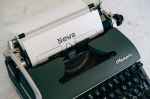
Photo by Mike on Pexels.com

But what I mostly believe is that once I’m dead, I’m dead. I believe there will be a white light and a life review as my brain cells die. But after that, permanent loss of consciousness. No new life, no reward for having been good or punishment for being bad. I, in other words, won’t know I’m dead because I won’t know anything.

But I will live on

I have come to find that our lives live on in stories told about us, in the legacy we have left to our workplaces, our families, our hobbies. Someone will have an idea for a class that I have seeded. My friends will tell my stories. My books might finally be read. It’s really comforting, and that’s what we look for when we think of death, comfort in the face of a gaping maw of the unknown.

Newsletter

I have a newsletter

Photo by Markus Winkler on Pexels.com

I keep a newsletter for people who are interested in my writing. This may or may not be you, reader. The newsletter highlights my writing in the fantasy romance/romantic fantasy genres (which are everything I write that’s not short stories or poetry (and even those tend to be fantasy).

So if you’re interested in reading what I’m up to in the poetry area, hit me up with your email and I will get you on the newsletter list.

Have fun!

Excerpt from Prodigies

Here’s a section of the WIP I’m editing:

I peered in at the window of the restaurant and breathed a sigh of relief. The restaurant appeared both large and informal, two pluses when it came to secluding ourselves, I hoped. Golden hearth tiles accented the white walls, and pale, warm wood covered the floor, giving the place a rustic look. A small uproar greeted us at the door, its source the lively customers who took up two-thirds of the tables. Did Poles ever sleep? I wondered, realizing there would be no need for 24-hour pierogi places if they did.


Ichirou murmured anxiously, “Do you think they could find us here?” With those few words, Ichirou reminded me of the gunshots, the escape, the danger we were in.


Just then, we heard the sirens, playing a distinctly different tune than American sirens, heading in the direction of Palac Pugetow.


The hostess, middle-aged and plump with that pale Polish skin, seated us in the dining room — a large one with probably forty-some tables — toward the back as we requested. She looked at us with a brittle smile. “Do your parents know you’re out, young man?” she piped. If only she knew the reason of our outing.


“No, ma’am,” Ichirou piped up. “But it’s okay. She’s my babysitter.”

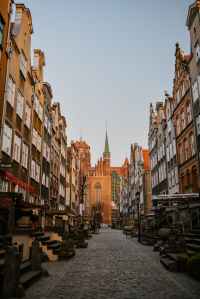
Photo by Julia Volk on Pexels.com


I felt my face go red, because now the waitress was scrutinizing the both of us. “That’s good,” she said brightly.


As she exited, I scowled at the menu. “This menu is all in Polish, and I think it would take forever to translate it all.”


“Just translate the names,” Ichirou shrugged. “I translate English to Japanese and back all the time.” And with that, he had shifted from a child to the wise for his years twelve-year-old.


I picked a random item and pulled out my cell phone. “Krakow Misalliance,” I sighed. “Wasn’t that the turning point in World War I?”


“Did you just make a joke?” Ichirou scrutinized me with widened eyes.


“I think so. It’s the stress.” And the fact that, facing the front of the restaurant, I found myself watching every moment for Second World muscle.


Some fifteen minutes later, a waiter, older with reddish hair pulled in a ponytail and the grace of a ballet dancer, stepped up to our table to take our order. Ichirou muttered at me, “Wait. We don’t have any money.”


“Yes we do. Don’t worry about it,” I hissed back. “I’d like the venison pierogi,” I addressed the waiter.


“I highly recommend the Krakow Misalliance,” the waiter nodded, his English charmingly accented. Unlike the people on the street, he seemed unfazed by the Asian boy in the presence of a black woman at an impossible time in the morning.


“If you know English, why didn’t you bring English menus?” I groused.
The man shot me an angelic grin. “Because you didn’t ask.”


I almost laughed despite my banked terror. “I’ll have venison pierogi. And water to drink,” I told the obliging server.


“Still or sparkling?” the waiter smiled.


“I get a choice? I’ll have sparkling,” I replied.


“I’d like cabbage pierogi with tea,” Ichirou decided.


The waiter strolled away, and I hoped he wouldn’t chat about the obvious foreigners at the back table.


Ichirou interrogated me after the waiter had left. “How did you come up with money?” He studied me through his steel-framed glasses.


“I’m 17. I’ve been handling my own finances since last year. I have a credit card.”


“As a high school student?” Ichirou peered over his nerd glasses at me.


“As a trust fund baby.” I peered back at the youngster.


Ichirou pulled out his phone and tapped on the screen. “Trust fund baby?” He scrutinized the screen, then nodded.


“My parents died and left me money. I’m an emancipated minor. By all definitions an adult. I sued to get control of my money and won.” I could taste the bitterness of that fact on my tongue.


“I’m sorry to hear that,” Ichirou murmured.


“It’s complicated. I spent most of my life at residential schools. Music schools. I never really knew my parents as Mom and Dad.” I caught myself remembering Ichirou’s animation that made me cry, that feeling of being loved.


“That’s strange,” Ichirou replied. He paused for a moment, then spoke slowly, as if trying to piece things together. “I spent time in a boarding school, too. I knew almost nobody but Ayana. That’s why I made that animation; I needed unconditional love in my life.”


Before I could reply, the waiter came back with our drinks. Ichirou scrutinized his cup of hot water with a teabag beside it, frowning. My water came in a bottle with bubbles.


“Are you sure you don’t want the Krakow Misalliance?” the waiter smiled, reaching toward an invisible lock of hair and then stopping. “It takes a while to cook, though. Your pierogis will be out in a minute.” He wandered off, and I noted that he glanced over his shoulder at the door.


I glanced at the door again, and thankfully I didn’t see any beefy men striding through. “Do you think they’re going to find us here?”


“Hard to tell.” Ichirou took a sip of the tea brewing in his cup. “This is tea?”
“The rest of the world drinks tea just like this, Ichirou,” I smirked, then sobered.


Ichirou took a deep breath. “What happened back there? At the Palace?”
“I think they want people with talents. Not talents like mine, but talents like yours. Like what you knew would happen when I watched your video.” I remembered the feeling of peace, of unconditional love, and thought about how it could manipulate people in the wrong hands, like hypnotists could do by inducing relaxation. Only much more so. I felt angry again.


“I didn’t know for sure my program could do that,” Ichirou responded. “I thought it might. But I had to know, because it was important.”


“You tested that on me without knowing what it would do?” I hissed just as the waiter came by with our plates. Ichirou gave me a warning look.


“Venison pierogis for you,” the waiter handed me my plate with a dancer’s grace, “and cabbage pierogis for the vegetarian. Let me know if you need anything.” The waiter walked off, glancing over his shoulder again.


“So you think they’re after me because of my animation skills,” Ichirou conjectured between bites.


“Not your skills,” I whispered to him. “Whatever it is you do that makes people want to smile. Or whatever you want them to do.”


“Oh. What do they want with the others, then? With you?”


Good question, and not one I’d been able to answer. “Nastka — Anastasja — I overheard her talking to Matusiak about practicing something. Did you notice that Dominika did not mention her talent in the introductions? And the twins acted like they had contact with this bunch before, and they looked terrified.” I remembered the white faces of the children and their mother, and I remembered the gunshots as we fled the building, and wondered what their resistance had cost them. “As for me, my only talent is music; I don’t have a talent like they’re looking for.”


“We’ll see,” Ichirou responded, rubbing his chin. “You’re here.”

Re-editing

I’m re-editing my past catalogue of works to tighten them up a little. I feel like that artist my mother talked about: “It takes two people to paint a painting: the artist to paint it, and the other to slap the artist when they’re done.

I wish someone would slap me.

One Month

Am I ready for the school year?

Photo by cottonbro on Pexels.com

One month until the school year starts. That means the rhythm of my life completely changes from working at home to working in my office and in classrooms. This fall I have three face-to-face days with students and two days working from home.

I have my course sites for fall ready, which means my classes are all organized. They’re all in a easy-to-use form for students after some tweaking. I should be ready.

But there’s that transition.

The hardest part for me when it comes to preparing for fall is the transition. I don’t transition well (which makes me think of a diagnosis of ADHD, but I have never been diagnosed). I groove in whatever mode I’m in, but getting into that mode is difficult. So going from very flexible time to giving six lectures a week and sitting office hours will be a bit difficult.

The good thing about fall semester

One of the things that gets me through transitions is ritual. There’s enough ritual built into the beginning of the semester — greeting of students, Convocation, the faculty-staff picnic. Rituals make transitions easier by giving a celebration and a clear demarcation to it.

We missed the rituals last year, and that made everything harder for me. We canceled the picnic. I only met with half my students at any given time. I conducted office hours via Zoom. I had no real transition and it added to my stress level and sense of isolation.

This fall should be a real transition to the school year. I will clean my office to welcome students. I will go to the faculty-staff picnic and cheer on football season and meet with my whole classes and say hello to my fellow faculty members in the hallway. I will once again have a transition with rituals to make the change in routine easier — or, at least, celebratory.

Impostor Syndrome (again?)

I didn’t write yesterday

I didn’t write yesterday because I didn’t have a lot to say and I had a lot to do. I broke my 80-day writing streak, but it turned out I didn’t feel that bad about it.

The real reason I didn’t write

I’m suffering from a serious case of impostor syndrome. I feel like I’m doing everything wrong in writing, editing, and promoting my books. Ironically, I think this is happening because of a group of other writers that I’m hanging out with on the Internet.

Photo by Monstera on Pexels.com

They seem so motivated. They write 10 books in a year, they post regularly on Tik Tok. They participate in anthologies. They know which genres they fit into easily. I can’t keep up with them; I’m still trying to figure things out despite having written seven books.

I don’t want to be like them — I want to be like me, but I wonder if that’s good enough.

Impostor syndrome

Impostor syndrome is that feeling that, if someone knew who I really was, they would decide I was a fraud.

I hear that impostor syndrome is entirely too common. Ubiquitous, even. That everyone has the same dialogue in their head that says that they’re not good enough. That everyone who looks like they’ve got it all together feels the same way.

I don’t know the cure for impostor syndrome. I don’t know that anyone does, or else we wouldn’t be suffering it. I think even my fellow writers with all their enthusiasm feel it.

I may just have to live with it and do all the things anyhow.

Preparing for Cataract Surgery

My Cataracts

Yesterday was my pre-cataract evaluation at the eye doctor’s. I’m only 57, but the story of my eyes is that I have cataracts. This is probably because of mood stabilizers I have to take for my bipolar disorder; lithium and other stabilizers have been linked to early cataracts.

The doctor and nurses explained to me that my cataracts were not typical. They do not have the yellowish, thickened nature that age-related cataracts have; rather, they were more like looking through a frosted window. “You know that there are three different types of cataracts. You have all three,” a nurse informed me as we discussed the surgical procedure. The third type, I found out later, grew quickly and could overwhelm one’s vision center in months. This is what happened to me.

“You know that there are three different types of cataracts. You have all three.”

Nurse at eye clinic

How the procedure works

I went through many tests, most of them familiar to me as part of typical eye exams.Then I got the orientation on what my cataract surgery would be like. It will be very quick, sometime between 10 and 20 minutes. I will get some oral medication that will make me very dopey — “Like Thursday night at the college,” I’m told. I will look at pretty lights like a kaleidoscope while they do the surgery. (Now this sounds promising — tripping out with a light show. Count me in.) When I’m paying attention to the light show, they’re going to pulverize the lens with (I believe) ultrasound and suck it out a slit they make in the side of my eye, then slip a new lens in.

It doesn’t sound like a whole lot of fuss, actually. I will go home with sunglasses, be careful about washing my hair, and wear an eyepatch at night. I won’t be able to do heavy lifting or lots of bending, but I can return to the computer immediately.

I’m feeling good about it.

I’m feeling reassured about the surgery — it doesn’t sound like a big deal, there doesn’t sound like there’s a lot of pain, and I’ll be back to good in no time. I can’t wait to get my eye taken care of.

Ennui

A lovely word for boredom

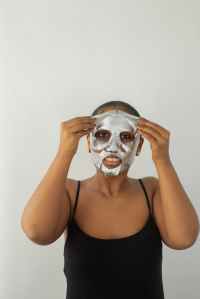
Photo by SHVETS production on Pexels.com

That’s not quite right. Ennui is boredom and so much more! It’s being bored and tired at once!

What more could I ask for?

As it turns out, I could ask for a whole lot more, because ennui results from a lack of excitement. And, it turns out, that’s where I am right now. I’m bored with editing. There’s nothing really happening in my life except an upcoming cataract surgery, and even my writing isn’t piquing my interest.

Whatever will I do?

There’s lots of things I can do. Change my scenery, whether local or out-of-town. Find novel experiences. Find something new to write. Find something gripping to read.

It’s just so hard getting up to do something.

Of the Proselytizers

Beneath the shimmer of russet leaves,
lies a cunning rabbit snare, and
entwining the trees, poison ivy 
blushes crimson. 

Beware the idyllic seeming of the tavern
nearby; the innkeeper steals souls
with a goblet of mead. 
The customers
hold knives, hiding them with smiles.
They invite you to the kirk in the grove
where they flay you with words, oaths,
and ancient spars of wood.

Best to avoid this land, despite the
enticing invitation, the siren song
pitched to the maw of your heart.
Instead, step with sure feet to your destination,
holding yourself in your thoughts. 
Make peace with the wound
in your heart. Know there are many paths
to find blessings.
Photo by Jill Burrow on Pexels.com