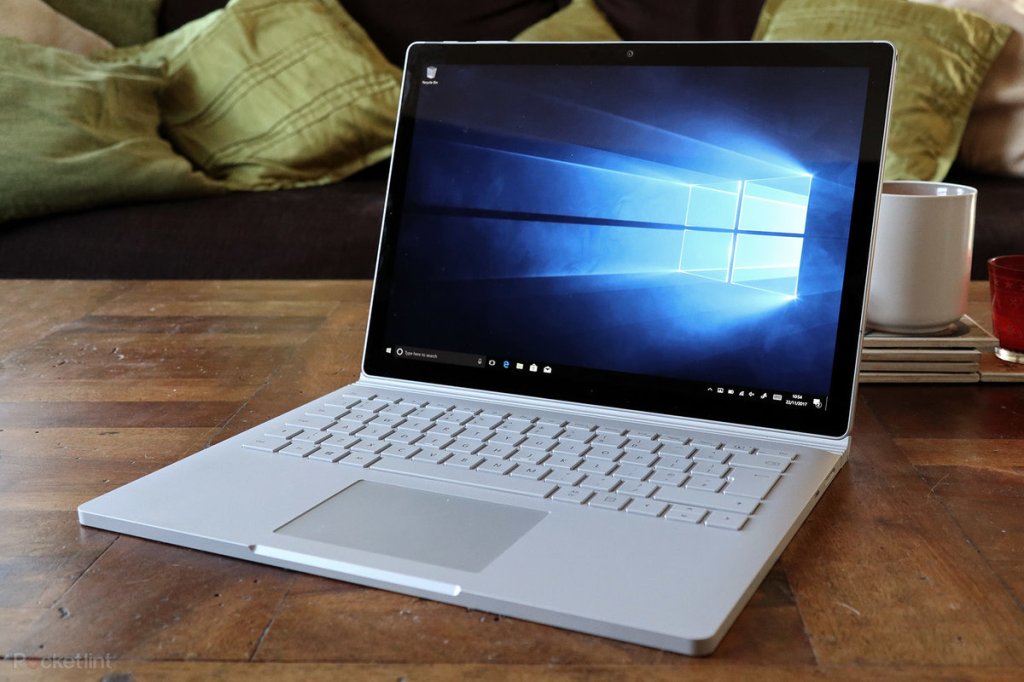
I’m getting a new (to me) computer today. It’s used, it’s a Surface Book 2 like mine is, but it is close to the top-of-the-line for a Book 2 and it cost about $700. I’m going to be happy to have a graphics card (for using Sketchup for making maps of areas in my books. And an i7 processor instead of an i5. And twice the hard drive space. and 16 GB RAM.
This will result in a whole afternoon porting things from one computer to the other, which will kill a lot of time. But it will be worth it.
We’re pretty frugal here, choosing to buy the slightly less recent models rather than the newest. Ok, admittedly, if I could afford a top-of-the-line Book 3 — I still wouldn’t get it. So much of the price of the newest model is that it’s new. I would have had to get a more modest computer (like my current computer at i5, 256 mb ssd drive, no video card.
So this is my new (to me) computer, which I should get a lot of use out of.
I didn’t have to deal with failure in my childhood (except for those crushes that were never requited). I wasn’t quite a child genius, but I was gifted. I managed to get to college almost entirely on scholarships including a National Merit Scholarship. I got on the honor roll despite the most perfunctory study habits.
I came to failure late and hard. Particularly in submitting my writing, particularly novels. I have received enough rejection to paper my room.
Don’t take it personally. If I have given my best, after reading guides on how to write, writing, editing, beta-reading, revising, and the like, it’s probably that my writing doesn’t fit the agent’s list or the journal’s theme I have learned, for example, that my poetry is not High Concept, as it doesn’t get published in high concept journals. This doesn’t surprise me because my Ph.D. is not in English/Creative Writing. My short stories are also not High Concept, being firmly lodged in the category of fantasy, romantic fantasy, and space opera. There are some places I’m more likely to get published in than others.
See what you can learn from it. I have had to grow as a writer by asking myself, “What is the takeaway from this?” I had to get rid of my perfunctory habits once I realized that one didn’t turn in one’s first draft (in my defense, it had very few grammatical or spelling errors). I read a lot of material on writing because of rejection.
Sorry I’ve been gone for almost a week, but I’ve been busy with Camp NaNo. I’ve been putting 3 hours a day in editing Reclaiming the Balance, which means almost no free time to journal. Today I will make my 30k goal for camp, but I will likely continue editing once I’m done with the goal, because I haven’t yet gotten Reclaiming the Balance where I think it can be.
I’ve done a lot of editing lately between Gaia’s Hands and Reclaiming the Balance, but these are a couple of my first books, so it’s expected.* I’ve learned much about writing novels from editing previous novels and don’t want these past novels to go to waste because their characters deserve to see the light of day.
So what have I learned about writing from editing? Let me think …
Structure really helps guide the reader and satisfies their expectations. I use two systems now:
And some things I’ve learned about editing from editing***:
Sometimes I have to cut one of my favorite scenes or chapter because it didn’t fit the flow of the book. This happens more if I didn’t use a structuring scheme
Sometimes a sentence that made perfect sense to me when I wrote it makes no sense when I read it later
I need help — developmental editors, sensitivity readers, beta readers.****
* I’ll admit that both novels are basically romances with somewhat “non-standard-reality” plots. I really don’t know how to classify the fantasy version. Contemporary fantasy? Magical realism? I certainly don’t write elves, sword and sorcery, or vampires. I like to think of my stuff as anthropological fantasy.
** The collective featured in Apocalypse, Gaia’s Hands, and Reclaiming the Balance has 60-70 members given the time period. Apocalypse was a third-person omniscient point of view. I had to pare point of view characters to about 9.
*** I’ve learned more than I’ve written here (action verbs, some description, because vs since, transitions) but those are more about words than writing
**** I proofread really well after the second or third pass, so copy editors and proofreaders are not on my list. They might be on yours.
PS: If anyone can help me with the footnote add-in (Easy Footnotes), I would greatly appreciate it!
I didn’t write yesterday, because I am seriously involved in Camp NaNo. I’ve been averaging 3 hours a day, which is a lot when juggling work and other good things. But I have a problem:
I’m running out of NaNo work to do.
My goal was to edit Reclaiming the Balance into a more workable story (it’s my second problem child after Gaia’s Hands). Which I’ve done. Then I decided to add editing Kringle in the Night after getting one of my beta readers’ stuff back. I’ve edited that.
I guess I’m going to edit Reclaiming the Balance again. It could be better; it’s something to do even if I think it’s going to sit in a drawer for the rest of its life. (I must stay optimistic!)
First thing: How can someone like your blog post without visiting your blog post? I’ve noticed this a couple times, where I get an announcement that someone “likes” my post, yet doesn’t show up in the visitor count? Have they even read the post?
Second thing: How do I get more followers that aren’t trying to sell me something? I am growing skeptical as I peruse the blogs of the people who follow me and find information on questionable investment schemes and promotion services. I don’t believe that these people are really reading my blog, but they like it every couple of days so I don’t forget about them. Luckily, not all of my followers are so content-free.
Third thing: Is there a book with hints for how to do all the cool things I don’t know how to do? Or aren’t there any cool things? Or are those things that are only possible if you have the paid version?
I’m having trouble waking up this morning, probably because this is my long-awaited Spring Break. Yes, my long-awaited one day of Spring Break.
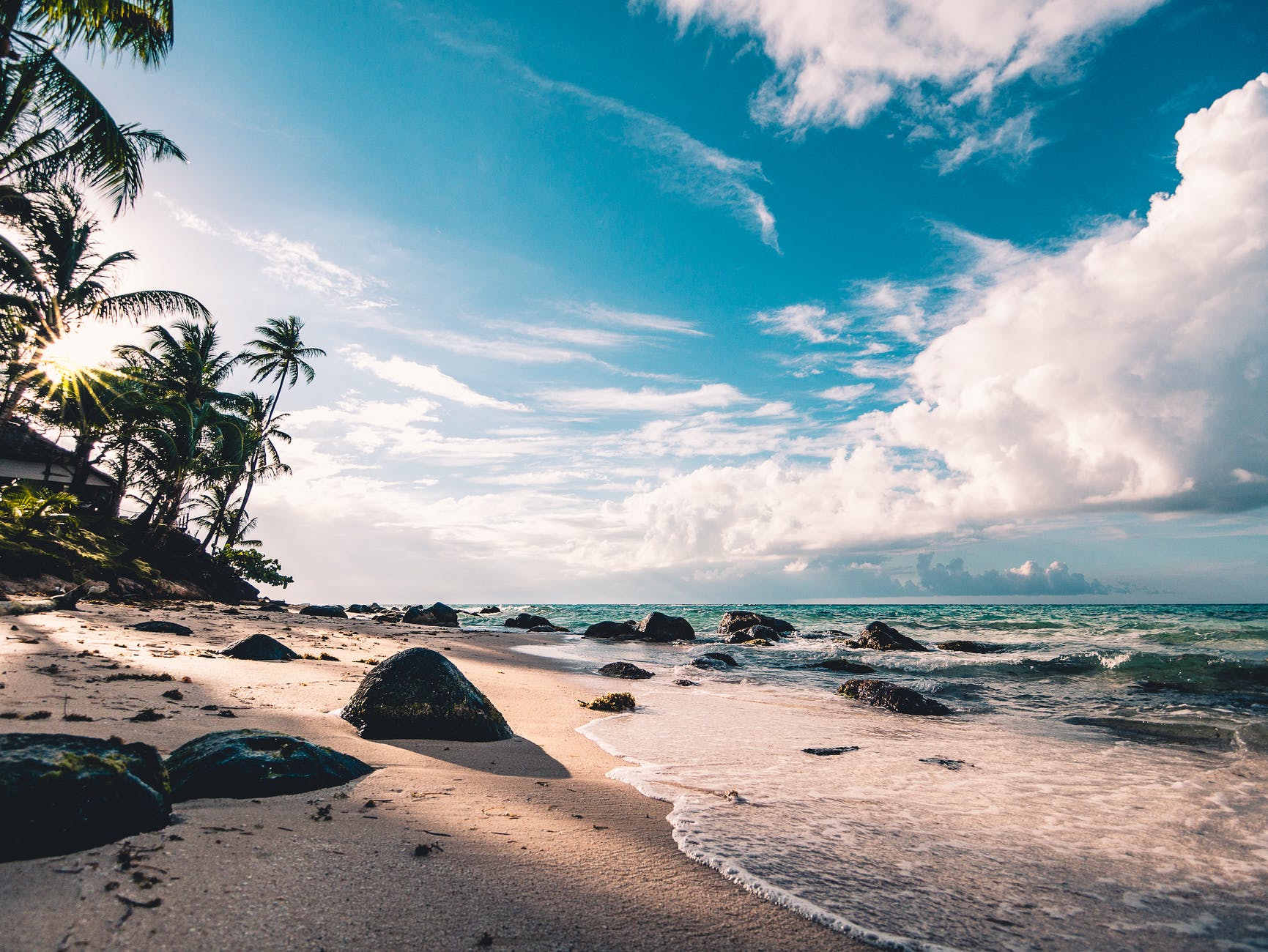
What am I going to do with it? Edit Reclaiming the Balance. Look longingly at a picture of the beach. Nap, apparently. Drink coffee. Possibly make another couple submissions of short story stuff on Submittable. Take a nice long bath and put on a face mask.
But I will not work.
I will not answer a single student email all weekend.
This is my Spring break, and if I cannot have a spa weekend/writing retreat, I will make it a retreat at home.
It’s April first, and (jokes aside) today is the beginning of the first session of Camp NaNo. This is the training wheels version of NaNoWriMo (National Novel Writing Month), which is an international movement to help people come up with 50k words toward a novel.
In Camp NaNo, the writer sets a goal — hours revising, words, etc . The minimum goal is 10k words or 10 hours, although most people set higher goals than that. Then the writer fulfills that goal. There is accountability in the daily timer where the daily word/time count go.
My goal is to revise Reclaiming the Balance for 30 hours. That’s reasonable at 1 hour a day, although I think I will probably edit more than that most days. The story desperately needs editing, may even be unredeemable, but I’ll never know until I try.
Every morning (well, almost every morning) I sit in front of my computer staring at the WordPress site and its little white button that says “Write”. And I write.
In a way, this blog is the warmup exercise for everything else I do in a day, whether it be writing or work. This blog loosens my fingers up and loosens my mind up. There is a full day ahead of me to make of it what I will.
Sometimes that is merely existing, moving myself toward the door with my computer case for a day of work. Sometimes it’s gleefully playing with my cats. Sometimes it’s a productive day at home writing or at work teaching.
But the blogging in the morning is essential, framing my inspirations for the day.
Today’s tasks are monitoring and answering email from students and prepping for Camp NaNo. I have already answered five at 6:20 AM. (This is rare because my students generally abhor mornings.)
It feels like a good day, although one that would benefit from coffee. (Lots of coffee).
I want to remake myself. This is the reason I think I try so hard to get published, because I want to think of myself as an author. It would give me an identity beyond the one I have currently (professor) that I will lose when I retire.
It’s not a good reason to write, but I think it’s a fine reason to try to get published. I think remaking oneself is a noble pursuit, unless one is trying to remake oneself as Harley Quinn (As opposed to Harley Quin, for all you Agatha Christie fans).
I admire people who make themselves and remake themselves, flowing with the changes in the world. On the other hand, I believe that my writing is good and worthy of publishing, but I’m not apparently writing what agents want. Changes to flow with. Do I learn how to promote myself better and self-publish? Do I try to tailor my writing to the market — no. Then it would not by my writing. I will not remake myself by becoming someone else.
Have I already remade myself? I have written five or so books — Kringle in the Night, The Kringle Conspiracy, Apocalypse, Gaia’s Hands, Reclaiming the Balance, Whose Hearts are Mountains, and Prodigies. Ok, that’s seven, not five. I have put them through developmental editors and (most of them) through beta/alpha readers. One of them (The Kringle Conspiracy) has been self-published. Maybe I am already an author. Maybe I have remade myself.
I’ve been binge-watching Monsters Inside Me, a show that ran on Discovery Channel from 2009-2017. It’s a documentary about parasites. And rare bacterial infections. And freak accidents involving foreign bodies. It’s grossology with a scientific background.
I have an interest in medical stuff, especially in what could go wrong. I think it’s because I’m a little bit of a hypochrondriac — the more I know about medical stuff, the less likely I am to diagnose myself with something. I understand that for most people it’s the opposite, but for me knowledge is power.
Here’s what I’ve learned from Monsters Inside Me:
If you have a parasite, your doctors will think it’s the flu until you’re almost in a coma. Unless the parasite is in your eye — then they’ll think it’s eyestrain.
Wives with Google save husbands’ lives.
“Flesh-eating bacteria” is a very bad thing.
Babies/Infants/Toddlers put things in their mouth to “feel them”. And then they swallow them, causing big trouble.
If you use tap water to clean your contacts, you’ll get acanthamoeba. And then you will get blind.
Your spouse thinks you’re exaggerating your symptoms.
What you have is extremely rare, unless you visited Belize. Or Asia. Or Africa. It’s really common there
.Don’t eat raw crawdads. Apparently guys do that.
“Brain eating amoeba” is a very bad thing.
You can have a parasite (lots of parasites) and not know it. Have a nice day.


 Words Like Me