In the US, the right-wing has laid claim to the word “patriotic”. It has become associated with a culture obsessed with guns and taking away others’ rights. I have a knee-jerk reaction to the word now.
But America has had a long history of civil rights, and until this administration has been making steady progress on civil rights. Not fast enough, but in its absence definitely missed. If I am willing to fight for the days of civil rights, does this make me patriotic?
I think so. I think I can call myself a patriot wanting to bring back America’s days of being that shining light on the hill rather than the shitscape it currently is.
This will not be an exciting story. I haven’t broken any major laws accidentally (or on purpose), but I did once leave my vehicle registration for too long, and I was driving on expired stickers. I didn’t get stopped by the cops, so no drama. I discovered the problem some two months after they expired, however, so I could have gotten stopped by the cops at any given time.
I realized I was waiting for a postcard reminding me that my registration was due, and I had never gotten one. This is not an excuse, according to the license bureau.
Fixing it was as simple as going to the license facility and standing in line, all the time hoping that a cop wouldn’t find my car parked out front with an expired sticker. They did not, but I had to pay a fine for waiting too long to get the sticker. I found out that someone had transcribed my license number wrong on a form and that was why I didn’t get a postcard.
This is definitely not one of my more exciting stories.
Daily writing prompt
If there was a biography about you, what would the title be?
I can’t imagine why anyone would want to write a biography about me, much less buy one. I live an ordinary life, one where too many things came easily to me, and one in which I found my niche and settled there. All the adversity was in my childhood (and there was enough there for one lifetime). All the interesting times in my life were in my twenties, and they weren’t that interesting. I suppose one could write about how I’ve managed to live with bipolar disorder. Even that has been easy for me; my medications for the most part have been effective. I live a blessed life, one which does not lend itself well to biography. I like it this way; I’m much too old for drama these days.
My favorite candy is toffee, chocolate covered or not. I like the caramelized sugar and butter flavor and the brittle texture (although I like soft toffee, I prefer the hard kind). I find it hard to resist toffee, and I have to be careful not to eat the whole tin.
I can remember the last time I had toffee. It was a Heath Bar blizzard from Dairy Queen some weeks ago. Heath bars aren’t even the best toffee, but it satisfied my urges. I prefer homemade toffee, but I get that so seldom.
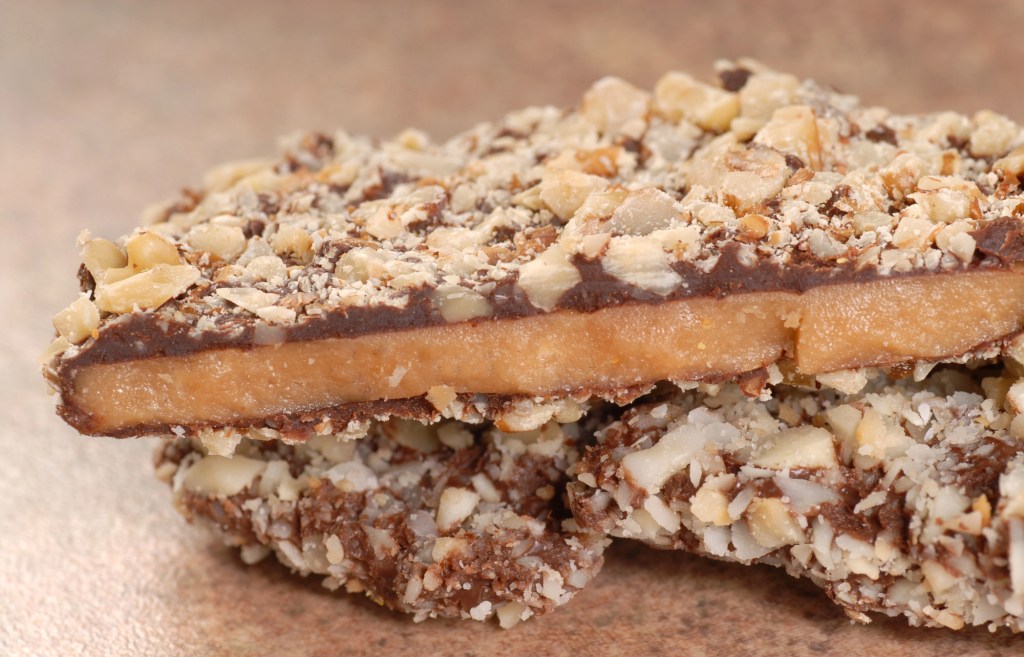
This post is making me hungry for toffee, especially the toffee in the picture above, which looks homemade. There’s no place to get it around here, so I will have to imagine it.
As I get older, I get less stressed about the outside world. Maybe this is a bad thing these days with all the chaos in our government, but I feel like I’ve survived everything that life has thrown at me so far, including some things that should very well have killed me (like getting in the car with an impaired driver).
If I can’t do anything about life throws at me, then there’s nothing to gain by panic. I will survive, or I will not, and if I do not, then I won’t know what happened. It’s a fatalistic stance, I guess. But I think it’s a natural consequence of getting older.
I haven’t had great, amazingly fantastic news in so long, I have to use my imagination to think about what I would do if I got it. Luckily I have a great imagination. Maybe this is a factor in getting older, but I’ve gotten more bad news (like people dying) than good news these last several years.
Wow paper background with colorful geometric confetti. Vector illustration.
What would be great, amazingly fantastic news? Winning the lottery or snagging an agent, winning an award at work or selling a lot of books. Maybe I expect more from great news than I did when I was younger; I’m not sure.
The first thing I would do if I got great, amazingly fantastic news is let my husband know. Probably by text, because I’m not a big one for phone calls. It’s not a terribly exciting answer, but there it is. His response would be “Yay!” because he’s not an excitable person.
We’d probably celebrate later at a local restaurant, and we would discuss what to do with this great, amazingly fantastic (I love that phrase) thing that befell us, because even great, amazingly fantastic things have consequences.
I’m going to sit here and think of great, amazingly fantastic news. I’ll let you know if anything comes my way. After I tell my husband.
No, really, I do not. I just got off a long break three weeks ago, and I don’t need a break this soon. But I’d really like a break.
I don’t get another break till late March. I used to teach at a college that believed students needed a three-day weekend every six weeks, so that they didn’t tear down the residence halls or do something else stupid. They might have had a point — maybe we all need a three-day weekend every few weeks so that we don’t do something stupid.
I think, if I had a break, I would rest all day. I feel like I could sleep a few hours right now. That’s how winter affects me (although it’s 40 degrees out at the moment). So my break would be me reclined on the couch sleeping. That actually sounds good right now.
I don’t ask for much, and this includes ideal days.
My ideal day usually happens on a Saturday or Sunday. The best of these days happens in Kansas City while on a mini-vacation. My husband and I wake up in a hotel room and stretch and yawn, then get dressed up for a day of wandering.
My favorite breakfast is at Eggtc, which is a breakfast restaurant in the KC area. I usually order something bad for me, although sometimes I eat the avocado toast. From there, we go to Broadway Cafe, with the goal of some writing time. I like the Cafe’s coffee, and so I drink less coffee at Eggtc to make sure I don’t get over-caffeinated.
We stay at the Cafe for a while. Part of the reason we’re in KC is for a writing retreat. We probably stay there till lunch, and then go to lunch at Choga in Overland Park. we don’t get to eat Korean food often. We usually order dolsot bibimbap, which is a sizzling rice bowl with Korean vegetables and bulgogi.
After this, we go to Whiskers Cat Cafe and play with the cats there. Mind you, we have three cats at home, but it’s fun playing with the cat residents there, especially the kittens in their enclosures. After Whiskers, we may go back to the room to rest, or maybe to the Cafe again. Dinner is likely to be ordered in through Door Dash.
It’s not an exciting day, but it’s ideal as far as this old lady is concerned.
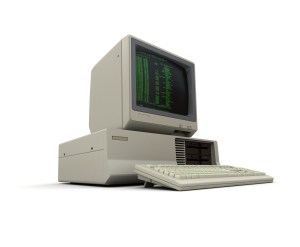
I didn’t own a computer until I graduated with my Ph.D.. The University of Illinois had an abundance of computer labs, and I didn’t have money for a computer, being a student. I should talk about the computers I used then, of course. I was a student before Windows came out, and that meant I used DOS operating system with its glowing green cursor on a black background. Soon after, I took a class with Apple IIes, and decided I liked Apple computers better.
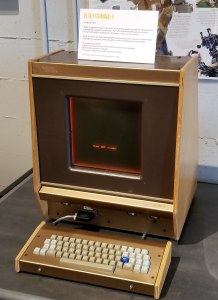
I was also active on the PLATO system. PLATO was an educational system at several universities and other sites; its hub was at University of Illinois. In addition to educational lessons, PLATO offered several features that are part of today’s Internet: messaging, email, discussion forums, and group chats. PLATO became a social network for the people who had access to it, including things like online dating and group meets. It was a haven for a geek girl like me.
The first computer I had access to at home was a classic Mac. It was not mine; I borrowed it when I was laid up at home with a broken leg. Those machines were cute, almost portable.
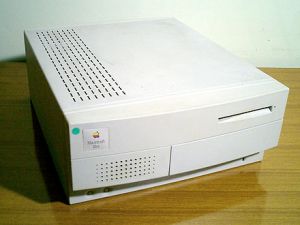
The first computer I bought myself was an Apple IIvx, a desktop computer that cost me $2300. That is in 1993 dollars; the computer would cost $4,992.97 today. It was an exorbitant price, however PC machines had not started running Windows yet and I preferred the WYSIWYG operating system. Not long after I bought this computer, Apple came out with a cheaper and faster computer called Quadra. I was one of the people angry that we had paid so much for an inferior computer, but I had my computer for several years.
Computers today are so much faster, so much more powerful, so much more graphically inclined, that talking about a 1993 computer seems quaint. My computer today (A Samsung Galaxy Ultra 4) is so far beyond what I had back then.
I am not a complainer, or at least I hope I’m not. I make an exception for my aching bones.
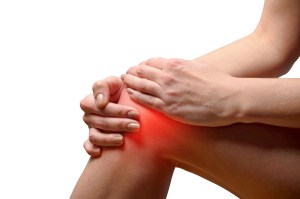
I’m over sixty, and that means my body has seen a lot of wear and tear. My knees are misaligned, causing a lifetime of wear on my cartilage. A car hit me when I was in my late twenties, and I have a bar and screws in my left leg; this has also caused some lasting problems in my hip.
I ache. I can’t take any of the NSAID drugs because of kidney disease, which leaves me treating all the pain for this with acetaminophen (paracetamol). It is only slightly effective, leaving me with the rest of the pain as part of my daily routine.
This is my life now. I’m told it’s part of getting older, but I don’t feel that old. Sixty is not that old, is it?