Positive Emotions Then and Now

Daily writing prompt
What positive emotion do you feel most often?

Fifteen years ago, I would have answered the question, “What positive emotion do you feel most often?” with elation. A perpetual high doesn’t make for a sustainable life, and in fact, I wavered between elation and despair (often in the same day). This was life with untreated bipolar disorder, fast cycling version.

Photo by Jonathan Cooper on Pexels.com

Maybe because of the medication, and maybe because of getting older, my most common positive emotion is contentment. When I was younger, I thought of contentment as something inferior, as a curse that the fairy who didn’t get invited to the christening would cast on the poor baby*.

Now I prefer contentment. It’s nice to not have to feel the extremes all the time. I do not get exhausted with my contentment as I did with my elation. The opposite of contentment on the spectrum is discontent, which is not a crippling feeling like despair.

I would not trade contentment for the overdose of elation ever again. I like small doses of elation, but I treasure the anchor of calm, peaceful emotion that is contentment.


* This is a common trope in Western fairy tales in which a family presents a royal baby to the court at large in a christening (baptism) ceremony. The family invites all the witches/fairies/aunts save one. The uninvited one shows up anyhow and curses the baby. Sometimes the curse seems innocuous but causes a lot of harm, at times hilarious, to the child (for example, the child who could not tell a lie).

How Do I Plan? How Do You Plan?

Daily writing prompt
How do you plan your goals?

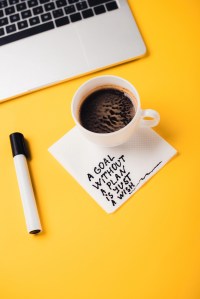
I teach this topic in my resource management class. So when someone asks “How”, I’m going to have a complex and textbook answer.

The way people in general plan goals is to:

  • Derive a goal from their values
  • Clarify the goal (in terms of who, what, where, how, when, etc.)
  • Assess the resources needed (and whether they’re enough)
  • Make an auxiliary plan of where to get more resources (sometimes)
  • Develop standards (in terms of what success looks like)
  • Set a sequence of actions to guide the actions needed to carry out the implementation of the goal.

Do people really follow these steps? Unless we do everything without thinking, we do. The more complex and important the goal, the more obviously it looks like this. But these steps are more or less happening even if the goal is fixing a quick dinner. Think of following a recipe; the steps in the recipe follow this pattern. The person lays out standards — I need to add these ingredients in the right types and amounts. I have to follow a specific sequence of combining them — there’s my sequence of actions.

Plans at the spur of the moment may go through these steps quickly — think of deciding on the fly to go out to eat at a restaurant you’re passing by. You look at the menu costs; you check your pocket. Then you go in, knowing that the wait person will ask you if you want something to drink as they hand you a menu, then you will look over the menu and decide what you want, then you will tell the waitress. Standards and sequences.

Look at the step where resources are assessed. Not everyone looks at finding the resources if they don’t have them ready. Only people who are comfortable with change do that because it creates a new goal they perhaps haven’t counted on. People who are not comfortable with change stick with the goals they’ve always set, which we could call maintenance goals because they maintain a current way of life.

This is not the answer the prompt asked for. I was supposed to write how I personally set goals. But it answers the question. Other than this, what do you need to know?

It’s a Weird Thing

What brings you peace?

I have a certain amount of anxiety that keeps me from getting peace. It particularly manifests itself when I’m in a car or when I lose something or my boss calls me to a meeting. It’s worse than it used to be because of a medication change.

I often pray to induce a sense of peace. The weird thing is that I consider myself at best nominally Christian. I don’t specify what God I’m praying to. I don’t believe in Hell or Heaven, I think intercessary prayer is actually confirmation bias; yet I pray to find the object or not get into a car accident. Yes, that makes me a hypocrite.

Or does it? As I said, I know if that item is not in the house, praying doesn’t bring it back there. It also doesn’t change the laws of physics. But it calms me down. It has a beneficial effect, even if only temporarily.

Every now and then I throw a “thank you” in God’s direction as well. But the good Christians do not believe I am a good Christian and I’m okay with that. Praying brings me peace when I’m in a panic.

The Shop I Would Open

If you were going to open up a shop, what would you sell?

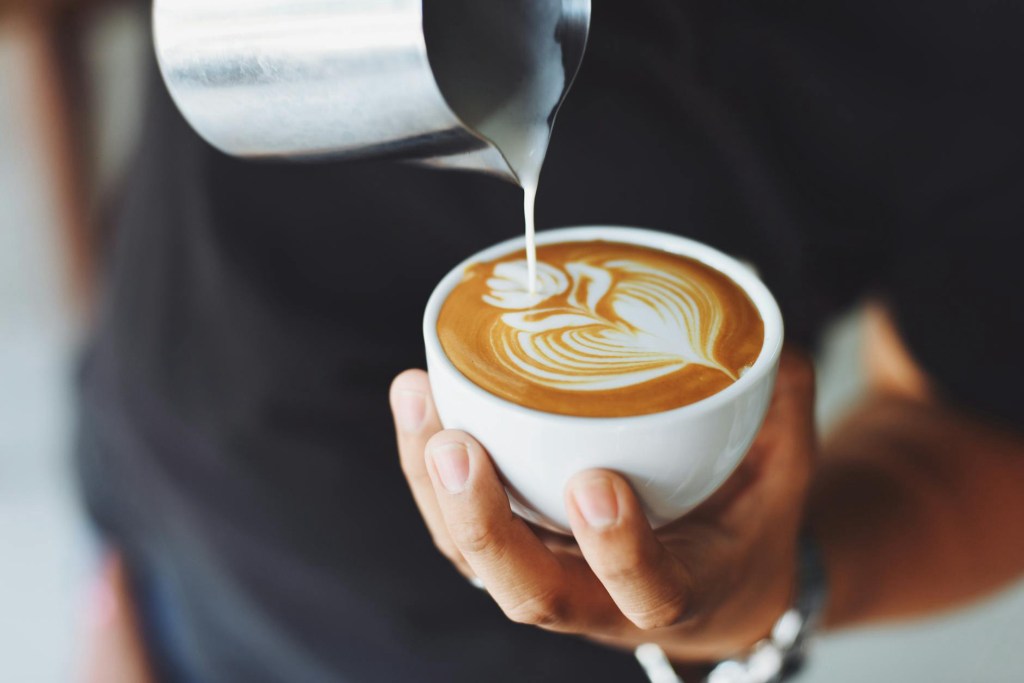
I have always had the desire to open a cafe. I would serve coffee and coffee drinks, pastries, and a light lunch like sandwiches and soup (I am in the US, so this is what people would ask for.)

In a cafe, one sells more than coffee or food. One sells atmosphere, coffee culture, thirdspace. One provides a place where people meet and find community. I would make sure I provided a welcoming atmosphere, from seating to decor to staff.

My idea is creativity and comfort. Two opposing tensions, but a dynamic mix. I hope to have different modes of coffee making available, and maybe even coffee flights for the curious. But there’s also a coffee of the day or an Americano.

In a perfect world, I would have the capital to put into this, and it would be my retirement job. I don’t. But I can dream, can’t I?

The Most Important Thing I Carry

Daily writing prompt
What is the most important thing to carry with you all the time?

NOTE: This answer is coming from someone from a highly technological culture.

I considered at first answering this question metaphorically, with something like “your attitude”, but dismissed that as coy. I decided I would answer this prosaically, with the one item I never leave the house without โ€” my smartphone.

Smartphones have become so ubiquitous that grammar guides have shortened the name to just “phones” as if landline phones no longer exist. As a typical member of Generation Jones, I was a relative latecomer to the cutting the cord and ditching the landline. Today, one’s smartphone is just “the phone”.

Photo by PhotoMIX Company on Pexels.com

A smartphone is necessary for quick action during emergencies, and a way to share last words in a shooter situation. It serves as a resource during travel, to find food and lodging in the middle of a road trip. I was in a van for a long ride home this week when our engine had trouble. We located a town with a repair service near us in minutes and a hotel down the road that night when our plans changed. What a change from drifting through towns looking for service.

A smartphone also answers questions with a rapidity not seen in the reference library days. There is still a purpose to reference libraries, who filter out questionable sources (scams, lies, slanted coverage) as a matter of course. But to someone trained to judge information, the Internet is a speedy source of information to answer questions like “What bird did I just see?” or “Who won the World Series in 2016?” (for the latter, it was the Chicago Cubs.) The smartphone is a tiny but mighty Internet portal.

I haven’t addressed the use of a smartphone to access music or books. With a subscription, one has access to whole eras of music. Whether a private library on Kindle or a public one on Libby, one has access to an entire library. That alone may be enough for me to keep my phone handy.

If I left my keys at home, I wouldn’t be able to drive. If I left my smartphone at home, I would be stranded in an info stream without a boat.

My Blog and Small Changes

Daily writing prompt
What change, big or small, would you like your blog to make in the world?

I don’t expect my blog to change the world. It’s not that kind of blog. I don’t discuss politics or movements in health, relationships, or social issues. I do occasionally post on those, but from a very personal viewpoint.

What slight changes can my blog make? I have two in mind. The first is that I am, unashamedly, a flow evangelist. I talk about the difference a flow activity makes in people’s lives. Flow is a stage of mind where an activity absorbs all one’s consciousness, at optimal levels of competency and challenge. Time flies by when doing the activity. I get my flow from writing, and is a major reason I continue to write. I want everyone to find their flow activities, because they contribute to happiness through engagement, the E in the PERMA model of happiness.

The other change I think my blog fosters is to demystify writing and writers. Many people don’t think they can write, or write and don’t think they deserve to be called a writer. I share my struggles with writer’s block, impostor syndrome, and marketing my books. I also talk about the challenges of scheduling time around a busy and shifting schedule. Every time I write, I hope writers and would-be writers find some of my joy contagious and my struggles identifiable.

My blog is not earth-shaking. But I hope it provides a day in the life of a relatable writer.

Writing as a Habit

Describe one habit that brings you joy.

I try to write, or at least do something that pertains to writing, every day. Writing, like any flow activity, gives me joy.

I love playing with words, finding the right words, using my skills to eliminate extraneous words. I love using special words, exact words. Creating worlds, making characters realistic, building conversations โ€” all of these are parts of writing.

Sometimes itโ€™s challenging to build in writing time. In the summer, where I have responsibilities but freedom in scheduling them, I have written daily after my daily โ€œday jobโ€ tasks. So after I have worked on my new class for the day, and after grading for my internship class, I have time to write. This fall (which starts in a couple of weeks for me), I will not have that early afternoon time. So most days, I can write after work; other times it will have to be early evening. But itโ€™s important that I write, because I need a little joy every day.

Curiosity Embarassed the Cat

What are you curious about?

I was born with an exceptional amount of curiosity. An inconvenient amount, in fact. When I was a child, I had to be shamed into not asking personal questions or snooping in drawers. Luckily, I have grown up to constrain myself from my urge to know.

And I do have an urge to know everything. Curiosity is just one of the tools we have to learn about the world, and itโ€™s a great thing for scientific inquiry. But my curiosity about the minutiae of daily life could get annoying quickly, particularly when it comes to medical stuff.

Medical stuff.

For example, I read the obituaries trying to find out how people died. Memorials provide this information, unless the family of the deceased want memorials to be given to the Humane Society or the decedentโ€™s Alma mater, in which case my inquisitiveness is frustrated.

I am a frequent victim of clickbait. A headline like โ€œHollywood Star Falls Victim to Rare Diseaseโ€? I donโ€™t know who the Hollywood star is, nor care, but I want to know all about the disease. I admit that ordinary gossip does little for me, but that rare disease? Iโ€™m there. (Note: itโ€™s usually something like diabetes, not a rare disease.)

I resist the more rude parts of my curiosity, like asking someone why they went to the hospital. But I am forever, embarrassingly curious.


Sometimes my curiosity has its benefits. I am on my first day of moulage for New York Hope, making people up to look like human casualties of an inland hurricane. It helps to know what an open fracture, a bruised spleen, or a case of cholera look like from the outside. Iโ€™d show you a picture, but weโ€™d have some people getting ill.

How would I describe myself?

How would you describe yourself to someone who can’t see you?

How would I describe myself to someone who can’t see me? I assume they never had eyesight. I would have to rely on other senses, wouldn’t I?

I am round. Plenty round. Here’s a hug. My nose slopes slightly, but it’s pretty average. I wear glasses; I almost never take them off. My hair is fine and somewhat unruly.

I am not considered beautiful. It’s not a big concern of mine. I’m sixty; I have aged out of beauty.

My voice is a pretty good indicator of how I look; sweet, like a sticky bun. You have all you need about me.

The Story Behind My Nickname

Daily writing prompt
What’s the story behind your nickname?

My name is Lauren Leach-Steffens; the Steffens got added when I got married. With a last name like “Leach”, it is only natural that one gets the nickname “Leachie”. This nickname annoyed me all throughout grade school, but I eventually accepted it.

The picture, by the way, is of Leach’s giant gecko (the gecko is not related to me.)So tha The nickname for it is the Leachie gecko. See how natural that is?

Then, in college, I became a denizen of the interactive computer habitat PLATO. PLATO was an educational system, but in addition to lessons, it had chats (called TERM-talk), topical threads (known as notesfiles), and email (called PNotes) — it was a lot like the Internet, only it had been around since the mid-70s. We had signons (what you’d call usernames, but they doubled as email addresses. Mine was lleach@pasrf (as in friend of a PASR programmer).

With a username of lleach, it was only natural to turn it into lleachie.

The name is pronounced in the typical English way: just like ‘leachie’, but spelled with two Ls. In Spanish, I guess it’s pronounced ‘yeachie’. A Polish friend of mine pronounces it ‘ell-ee-otch-ee’. I can’t say that’s wrong.

So that’s it. I have never run into a lleachie on the Internet who wasn’t me.