Major catastrophic failure

My Scrivener files are a mess. Something happened with syncing that they are no longer opening on my iPad, and I’m afraid that if I open them up on my computer, the same thing will happen and all the versions will be corrupted (through a sync).

Photo by Polina Zimmerman on Pexels.com

So I’m going to have to make and move copies before I open Scrivener and see if I can transfer the moved files back in. Otherwise I’m not sure what I can do to de-corrupt too many files.

Wish me luck.

ProWritingAid — the downside

I love using ProWritingAid. If you don’t know, it’s a program that helps with grammar, spelling, and word choice. It has done a lot to refine my language when writing. However, I don’t always take its advice, and this is why:

ProWritingAid asks me if I “could use a more vivid verb than this adverb.” Is ‘preternaturally’ not vivid enough? Really?

ProWritingAid consistently corrects ‘not even’ as ‘lopsided’. I’m lopsided kidding.

It just suggested replacing ‘happen to be’ with ‘are’ Here’s the sentence: “I happen to be interested in Sierra, not a nerd.” ‘I are interested?’

Artificial intelligence has a long way to go.

Thinking About the Fear of Failure

Sorry, I’m running a bit late today

Photo by Liza Summer on Pexels.com

It’s been a busy morning. I’ve prepped four signed copies of The Kringle Conspiracy for the mail today — I have friends that want my signature. It took extra coffee to get me on task today, because I had nightmares about getting the wrong signed book in the right envelope. I swore, with that, I would complete the task first thing before I psyched myself out. Task completed; now to mail them.

Which brings me to my topic

How is it we let fear of failure get in the way of our dreams? It’s common enough that Harvard Business Review has an article on how to overcome fear of failure. So do others, but I like HBR’s version because it fits with my world view. (wise words or confirmation bias? You decide.)

Here’s their list with my musings:

  • Refine failure. This fits in with the SMART model of goal-setting. I covered the other day — goals should be attainable. I set a goal of “getting traditionally published”, and given the market, that might have been aiming too high for a first-time author. I still have that goal, but I set other goals like “self-publish one book”, and I feel satisfied with self-publishing The Kringle Conspiracy and its sequel coming out in November, Kringle in the Night.
  • Set approach rather than avoidance goals. This is the difference between “avoiding rejection” and “get published”. Or, for another dichotomy, “losing weight” vs “making healthy habits. If I accentuate failure, I start the journey to success cranky and hopeless.
  • Make a “fear list“. This is one I hadn’t heard of, and I’m going to start doing it. The technique is: 1) write what you’re afraid of, 2) write what you’ll do to keep it from happening; 3) write down what you’ll do if it happens. I’m thinking about how I might use this in my life.
  • Focus on learning. This one I love the most — because I believe my purpose in life is to always be learning. Those messy first drafts became polished novels with the help of experience. I managed to stumble through self-publishing. I’ve gotten tons of rejections, but it’s okay because I’ve learned. Success or failure, we will hopefully always learn.

The question

Drop me a line — how do you deal with favor? And which of these pieces of advice do you think will work in your life?

A Glimmer of Success

Yesterday, an agent asked to see my full manuscript for the first time. Mind you, I have sent out hundreds of queries for my five novels. 

Let me be honest — I have sent out queries for books that I hadn’t sent through developmental edit or beta reading. I have sent out queries not knowing how to write a query letter. I have, rightly, gotten rejections.

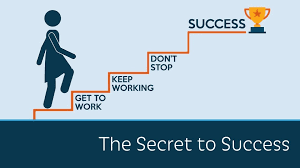
I have learned a lot from my failures. The visual above doesn’t really show the road to success because it doesn’t incorporate learning from failure. One can work hard but wrong, and all that effort means nothing. 

This is not to say that I will get an agent out of this. I could get rejected by the other 27 agents I have queries out to. The agent who has my manuscript might pass. Hard work and learning from failures may not be enough. The book might just be “not what we’re looking for”.

But it’s a glimmer of hope, a glimmer of success. I’ll take it.

The Woman Syndrome

Note: To the Ukrainian bot that hit this blog 18 times from three different operating systems and without hitting a single post, I have one thing to say: I have no information about Joe Biden.

That said, I continue to write and to try to get published. Writing has become part of who I am, even if I started at it late. Let me correct that — I never took myself seriously before. If someone liked what I wrote, I said, “Oh, that little thing? It’s nothing.” 

This sort of self-deprecation disguised as modesty is part of the baggage women are taught from an early age. We’re told — at least women in my generation were told — that we shouldn’t upstage the men in our life, so if we excelled at something, we should play it down. We should deny it. Women were taught not to brag; “to brag” meaning “to assert any talent, quality, or achievement; to tell the truth about their accomplishments”. 

Inwardly, however, women were taught to castigate themselves for not being perfect. The grades are never high enough, the job performance never good enough, the house never clean enough. 

What a dilemma — women must be inwardly perfect while preserving the illusion of mediocrity. So women hide the 98% they got on the exam while beating themselves up about the other 2%. In this schema, women not only can’t win but shouldn’t win.

I don’t know if women are still brought up this way, but when I discuss this with my students, the women nod knowingly. I’ve had several female students say, “I don’t want to brag”.

I wonder if this gets in the way of my getting published. I send things out to journals and publishers with the thought “I don’t know if this is good enough,” and when I get rejected, I think “It probably wasn’t good enough.” I wonder if this attitude of mine is reflected in my cover letters and pitches. I wonder if my attitude causes good things to be reflected from me in some sort of reverse “The Secret” (a new-agey book about how we can attract good to us; a lot of bunk).

But that is part of the syndrome. Not only do I hold myself responsible for rejections, but I hold myself responsible for not attracting success to myself. 

I really think I should cure myself of the syndrome.


Still I write

This is one of those days I have to force myself to write.

It’s Friday, I don’t have anything I have to leave the house for today, it’s going to be 94 degrees (F; 34.5 degrees C) out, I’m wrestling with Gaia’s Hands, have no ideas for a new short story …

And I’m feeling a little down. I’m wondering if there’s such a thing as micromood swings, or if it’s just the heat getting to me. I’m not depressed or anything; just not feeling like I’m on the verge of something wonderful happening. 

But still I write. And that’s the important thing, to write even when it feels like the last thing I want to do. Just a small amount will do — just a blog post, just an hour. Just a submission. Just a moment of creation.

Neither my feelings of defeat nor my feelings of impending success actually presage the future; they are simply extrapolations of feelings that may be influenced by my strange chemistry. My actions, however, are what’s important. Without stepping forward, I have no chance of success.


Day 8 Reflection: Mistakes

When I was in college long ago, I dated an engineering student. I remember telling my mother at the end of the semester that he had gotten a D in his differential equations class. 

“Does he know what he did wrong?” she asked.

I told her he had no idea why he’d gotten the grade.

“That’s too bad,” she noted. “He won’t be able to fix it if he doesn’t know.” 

People don’t like admitting their mistakes. It’s easy to assign an external factor to failure — the teacher hates me, the instructions were too difficult. But without admitting mistakes, one can’t work out the solution.

Sometimes mistakes can be catastrophic. A few days ago, something caused a deadly crash of a Boeing 737 MAX 8 aircraft in Ethiopia, the second such crash with a 737 MAX 8 in six months. Several countries’ airlines have quit flying the model in the belief that a mechanical failure took down the craft. One of the holdouts, and the country that flies the most 737 MAX 8 aircraft, is the US. One hopes that the US isn’t trying to cover up a catastrophic mistake by an American company with false confidence.

We have a crisis of responsibility in leadership because of the inability of people to admit making mistakes. Politicians pass blame to others or make equivocal statements: “Mistakes were made.” They fear that taking responsibility for mistakes will alarm the electorate, who don’t like admitting their own mistakes. This leads to the crisis — taking responsibility for mistakes is the sign of a true leader, one who is willing to learn for the sake of her constituents, yet leaders present themselves with a flawless facade for the sake of electability.

We need to admit our mistakes to learn from them, to fix them, to grow and to become wise.


The Rituals of a New Year

Tomorrow is the first day of my 25th fall semester as a professor.

I could say it doesn’t seem like it’s been that long, but I’ve been doing this long enough that I don’t remember not going through the rituals of the beginning of the semester — writing syllabi, preparing course sites, figuring out what I need to say on the first day of the semester to keep from sounding like an idiot.
I don’t remember a fall semester where I haven’t had the nightmares born of the fear that things will not go well on the first day — the A/V equipment fails, the classroom is made up of walls and nooks such that some of the students can’t see or hear the lecture, I’m late for class, the students get frustrated and leave, I’m standing in front of the class in my underwear … dealing with the fear spawns its own ritual, that of re-preparing in the last minute so that nothing goes wrong.
What I wear to my first day of classes each year is its own ritual. It’s one of the few days I wear a suit, to remind myself that I’m not going into class naked like in my dreams. 
Twenty-five years teaching, and in some ways it’s like my first day, when I stood in front of my class in a navy blue suit. One of my students, in a thick Long Island accent, asked “Are you lost?” (It sounded to my midwestern ears as “Awwe yew Lawst?”)
“No, I’m the professor for this class,” I said.
“Ohh, I thought you were a student,” she proclaimed.

A happy note about bad things

Sometimes the things I need are not the things I thought I needed.

I needed the bad yearly evaluation, because without it, I would not have been able to talk honestly with my boss about what I had been going through for the last two years illness-wise. I would not have gotten the kick in the butt to do better, nor would I have realized that my boss cared about how I was doing.

I needed to have my writing rejected, because I would never have been pushed to get beta-readers on the job. Not only do they help me improve, but they are reading my stuff and that feels good.

I needed to feel like I was the most uninteresting person on earth (isn’t depression grand?) so I would see the places where I am geekily interesting — edible plants and herb garden, persistence in fishing even though I catch nothing, wanting to learn everything, moulage, the ability to talk to anyone about anything, addiction to coffee, dedication to writing …

I needed to have that terrible school year — two terrible school years filled with depression and illness. Even though I have a lot of work (writing, disaster mental health class, redesigning a class) this summer I feel relaxed because I can take a day to go off to St. Joseph and drink at a quirky old coffeehouse.

I needed to break my heart on that crush, because it showed me how understanding my husband is about my periodic idiosyncracies in looking for the muse, a person who subtly infuses my creative soul with energy. (Crushes would lose their power if one did anything about them, so they’re supposed to go nowhere. Dear muse, if you are reading this, thank you.)

I needed to feel alone, because if I hadn’t, I wouldn’t have realized how much it means to me that I have readers. I love you all!