Christmas Vacation

We’re on our way to Christmas vacation tomorrow!

I’ve spoken of this before — I’ll be going to Starved Rock State Park in Illinois, to spend five days in a cabin celebrating the season. The holiday comes with nearby Utica (‘North Utica’ according to the maps) and Ottawa, towns that have managed to not be too touristy despite their existence as a day trip out of Chicago. I often call Ottawa a great campus town without the campus.
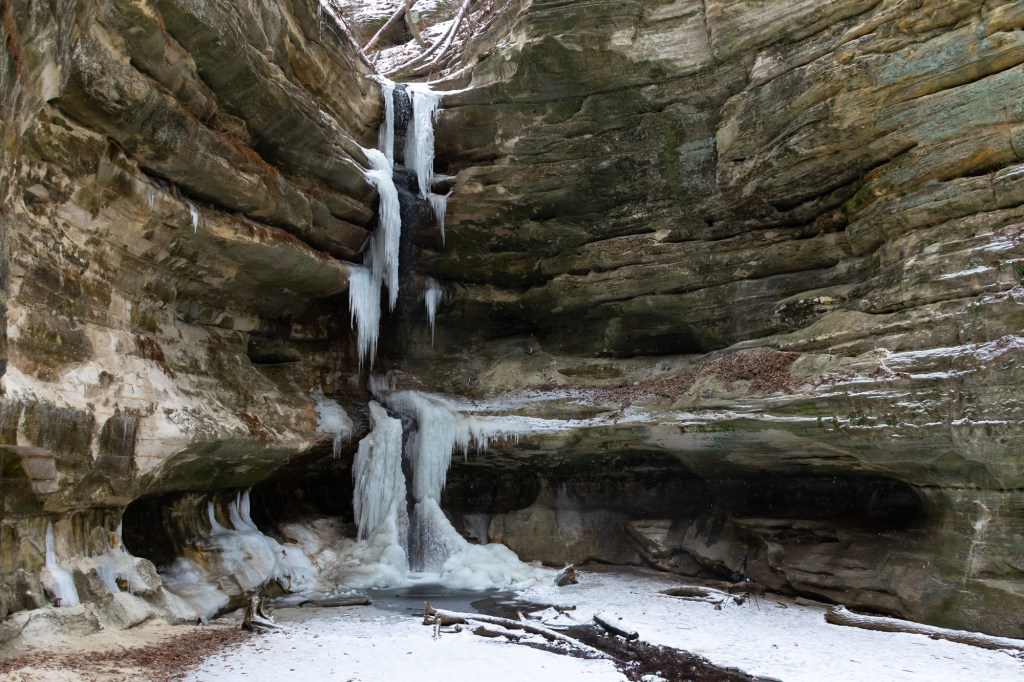
The park (as you can see here) is scenic in the winter, with frozen waterfalls and canyons throughout. Hiking is a little hazardous without good boots, however, because sandstone bluffs are bad to fall off of.

The area has a good Christmas feel. The downtowns don’t have a lot of missing businesses, the streets are decked with lights, and last time we were there there were ice sculptures melting on each corner. They might have snow when we arrive there Saturday.

Ottawa is a great place to eat. Among our favorites are Lone Buffalo (a brewpub), B.A.S.H. (Upscale casual fusion — the name stands for Burger and Sushi House), and Sunfield Restaurant (breakfast). There’s also an indie coffeehouse called Jeremiah Joe’s. There should be more, but there are not.

One place we’re going to discover while we’re in Ottawa is the Cheese Shop. Yes, that is its name. It is, not surprisingly, a cheese shop and deli. I encountered it many years ago on a hike on the Illinois-Michigan canal path. I dropped off the path and ended up right at the Cheese Shop. But it’s hard to find, tucked over in obscure Ottawa side streets. I haven’t been there in, say, 20 years but it’s still there. They might have the famous Polancic tenderloin sandwiches (a local delicacy) for lunch.

There’s also decent window shopping in Ottawa and Utica. I’m not much of a shopper, but I love window shopping. There’s a decent bookstore in Ottawa; a winery in Utica, various little shops.

We’re going to visit my sister and her husband while we’re there. Not a lot, because my sister is more of an introvert than I am.

It should be a busy few days, but I expect some time in the cabin to watch the fire in the fireplace, or in the Great Hall to enjoy a bigger fire and people-watching. Hopefully some time to write, as my next Kringle adventure will take place there.

Happy holidays!

Special Foods

Daily writing prompt
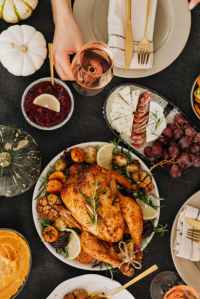
Do you or your family make any special dishes for the holidays?
Photo by Photo By: Kaboompics.com on Pexels.com

I taught a lesson in my classes that covered the question “what shapes our tastes and preferences?” The questions asked of my students were as follows:

  • What did you have for dinner last night?
  • What did your family typically have for dinner?
  • What were special holiday foods?
  • What was the most unusual food you’ve eaten?

The first and second questions covered items like availability and ease of use. Sometimes dinner reflected the cultural exchange of foods into our society (if they said, for example, pizza and spaghetti). The third question, though, hit upon the idea of food as cultural expression.

Holiday foods were typically traditional cultural foods — the typical Thanksgiving dinner for example. US Thanksgiving turkey and stuffing come from the near-legendary first Thanksgiving, but run through a British colonial filter. (The original Thanksgiving dinner featured venison and fish, not turkey. The turkey is the American bird version of the goose served at Christmas in Britain.)

Sometimes students’ special holiday foods included cultural celebrations. Often they weren’t aware until they learned not everyone eats ollebollen (fried round raisin dumplings) at New Year’s. Others were aware that their German or Swedish heritage meant special Christmas cookies.

That being said, what were my holiday foods? I think of my dad’s side of the family, who descended from people who hunted and trapped and fished as their livelihood. Holiday meals had to include foods that could have been procured by my ancestors. For example, my grandfather smoked trout and that would go on the Thanksgiving table. We would have duck or goose — storebought, but something my ancestors would possibly serve. My mother’s family would make the more traditional thanksgiving, but oil and vinegar coleslaw would be on the table. (I don’t know if this was because we had German ancestry or because mom made really good oil and vinegar coleslaw. I have her recipe because it was straight out of the Betty Crocker cookbook.)

This year I’m eating at a restaurant for Thanksgiving because there’s only two of us. This is what happens in the US as the oldest generations die; the grandparents become the nucleus with their children and grandchildren as satellites. We have no children or grandchildren, so my husband and I are a unit of two. This works fine for me.

Not Brands, but Reference Groups

Daily writing prompt
What brands do you associate with?

I don’t associate with any commercial brands, but I do associate with what this question is getting at.

I don’t believe people associate directly with brands, except perhaps with trucks — there are “Chevy people” and “Ford people” in the US, and a few deranged “Tesla bros”. People associate with reference groups, which they use to identify themselves as a part of. This is something I learned in a consumer behavior class many, MANY years ago.

Bangkok, Thailand – April 16, 2022 : Stanley of pink stainless steel thermos travel mug to keep the drink warm or cold. Stanley Go Vacuum Bottle 12.5 OZ

Reference groups can be associative — “I am a member of this group”. For example, one of my reference groups is “college professor”, which makes me prone to buying gas-efficient vehicles and Starbucks coffee. Reference groups can be dissociative — “I would not be caught dead being a member of this group”. I am vehemently not a member of the reference group that listens to Kid Rock and drinks Budweiser beer. Last, they can be aspirational — “I would like to be a member of that group.” I would like to be a member of the upscale ecologically conscious consumer who has a home composter and a butterfly garden landscaped by someone else.

We buy brands because of their association with reference groups, because we want to be a member of that reference group. We refuse to buy certain things from our dissociative reference groups. We don’t so much say “I’m a Ford person” — unless we’re talking about trucks, and even then, we buy them largely based on our perceptions of who’s in that group. I will excuse myself to drink my home-roasted coffee, which marks me as part of the aspirational group “coffee snobs” now.

Go-to Comfort Food

Daily writing prompt
What’s your go-to comfort food?

My go-to comfort food is somewhat unusual for a Midwestern US resident, I’ll admit. Typical comfort foods for my region of the US are things like chicken alfredo, cheeseburgers, and tomato soup with a grilled cheese.

My go-to comfort food is Thai namya, a light curried sauce over thin rice noodles with lots of cilantro. It’s spicy and mellow, warm and soothing, and easy to make, especially if one buys a premade curry paste.

I learned the recipe from my boss at the Thai/Italian cafeteria where I worked as an undergrad/grad student. I was the second cook, which was a rarity as I am very Caucasian. We would eat a family-style lunch most Friday afternoons that we prepared for ourselves. One of the dishes was namya, which we made with leftover flaked fish or ground turkey. This quickly became my favorite food, featuring both curry and comfort.

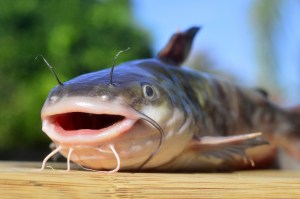
I had a lot of rough times back then, given that I had untreated bipolar disorder. I needed a lot of comfort. I lived a block from an Asian food store, so all I had to do is keep some sort of fish stocked and I could get the rest of the ingredients at a moment’s notice. I often used tuna, which was a little heavy for the recipe but was easy enough to stock. (An ideal fish would be a white fish like catfish.)

Even now, sometimes I have to have namya, especially on a cold day. I usually make it with ground turkey or catfish as I have been taught. Once I made it with a half-dozen bluegill I caught at the lake, and once (when I was feeling rich) crawfish tails. Just some coconut milk and water, green chili paste, fish sauce, and cilantro and that fish becomes my comfort food.

In Remembrance of Shrimp Creole

Which food, when you eat it, instantly transports you to childhood?

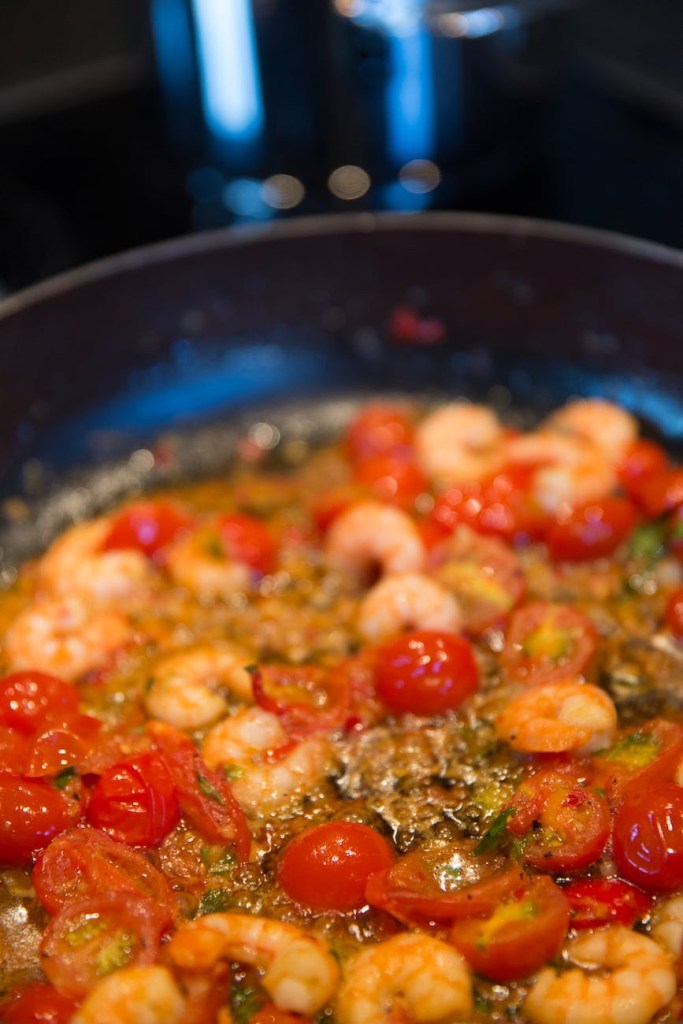
Shrimp Creole, out of the Betty Crocker cookbook. Shrimp with minute rice, tomato, green peppers and a touch of Tabasco sauce. Now and again I run into the recipe, and I am carried back to …

My most hated dinner meal.

I’ll admit I was a picky eater. I went through a “white” period in my tastes and preferences. Cottage cheese, mashed potatoes, and tater tots. I did not like vegetables. But I hated green peppers, overcooked green peppers, olive drab-colored peppers, the most.

Add to that the overcooked, rubbery shrimp and the minute rice. The Sixties and Seventies were an area of kitchen sacrilege. My mother was a good cook, but that recipe … that recipe was evil.

There is a Tiktoker who makes vintage recipes and critiques them, B. Dylan Hollis. I would like to see him make some shrimp creole and commiserate with me. I think he’d stop at the chewy, tasteless shrimp and exclaim loudly about the bitterness of it all

I know there are good things my mother cooked, but I can’t remember any of them. All I can remember is the bane of my existence, shrimp creole.

Food: A Blessing and a Curse

I have lost and gained so much weight in my life I could be triplets. Obese triplets. I’m not sure what the problem is, except that if I start eating sweets, I crave sweets to the exception of anything else, even when not hungry. It’s something I have little control over unless I do something drastic: eat responsibly. And keep eating responsibly even when the sugar cravings scream at me.

I’ve chosen to eat responsibly again. The type of responsible where half the plate consists of fruits and vegetables and, most importantly, the sweets are kept to a minimum. Greasy foods are kept to a minimum as well, but the real focus is on what health nuts call “eating clean”. (Vegans use the phrase slightly differently to mean “not eating animal products.” Although I don’t each much meat, I don’t shun it entirely.) I eat one small sweet thing a day — usually dark chocolate.

This situation is stressing me after only two weeks of lifestyle change. Not that I have trouble following the new dietary rules — I do follow them and follow them well. But the eventual arrival of sweets in the house for Christmas is putting me into a panic. I know how to deal with it — only eat one sweet thing a day. Focus on healthier food. Get variety. Love vegetables. But I’m still irrationally panicking. How can I just not care so much about sweet food?

Photo by Elli on Pexels.com

Some people find it easy to stay thin. Some people struggle to lose weight. Once I start, I can lose weight as well as anyone else my age (which is to say slowly). But my addiction to sweets takes over again and I say “the hell with moderation” again.

I can’t let sugar take over my life again. My doctor says I’m hurting my body with this weight gain. I can do it. I just have to keep it up.

Gardens in my Dreams

It’s January, and time for planning my garden.

What does this have to do with writing? A writer writes what they know and what they love, and I love plants. Particularly plants I can eat, because I like food as well. And if they also smell good, that’s a bonus because I like things that smell good. As you might expect, my best friend is named Basil, and he grows in my garden every year.

One of my favorite characters in my books was a garden. Or a Garden, perhaps, because it had begun as a food forest, a planting of perennial edibles modeled after the layers of a forest. The picture below will be worth 1000 words:

from: Permaculture, a Beginner’s Guide, by Graham Burnett

The Garden in question incorporated fifty of these units in a three-dimensional pattern: one canopy tree, surrounded by three dwarf trees, and clumps of the other units as needed. It had been commissioned by a eco-collective (a coop based on ecological principles and striving toward self-sufficiency). Little did the collective know that they had called on an acolyte of the earth-soul Gaia to design the project and direct the work crews. Overnight, the garden grew a foot, and in a few short weeks offered up its first crops. The residents felt unsettled for a long time, because it’s one thing to call something a “force of nature”, and another to meet it face-to-face.

There are other stories about the Garden, but I will not tell them here.

My Work-in-Progress has a collective with greenhouse domes in an ecologically efficient desert habitat. Below each greenhouse is an underground living unit with tunnels to the central unit, where the Great Room/kitchen and workrooms reside. The dome above the main unit holds a grafted tree bearing two different colored apples that came from the central trees of the original Garden. These two gardens, the original food forest and the desert domes, are connected by more than the scion from the mother Trees, but that truth is scattered across several books.

*****
I received another rejection today.

My novels don’t grab agents within a synopsis and three chapter (or less) form, and I have no idea why. I’ve edited, and I’ve polished, and I’ve improved my query letter and etc., but I don’t know if I can write what they want. My ideas are speculative, utopic, ecological, egalitarian, and not very dominant culture. The ideas themselves may not sell — pacifism instead of war? Ecologically sane utopias that struggle with prejudice and discord?

I seem to get better at dealing with rejections. I’m quite calmly considering whether my goal of getting published is worth the time investment. Writing itself is rewarding and enjoyable, but as a hobby it takes about 14 hours per week.  The gardening, at least, yields food; the writing has not yielded readers or income. I know hobbies don’t yield income in most instances, but I don’t get the return in writing alone — I want to share ideas. I want to be read.

Writing is another garden I’ve been tending — and at moments like this, all I can think of is that my back aches and I’m weary, and as is true in all kinds of gardening, I will not know if the effort is worth it until it sets fruit.

Food Part 2: Ichirou and Grace Discuss Vegetarianism

This post goes out to Lanetta, who gives me many things to think about in the comments. (Yes, you too, dear readers, can use the comments section to ask questions, make observations, or even just say hi!)
Yesterday Lanetta observed that Ichirou (a vegetarian) and Grace (the protagonist and omnivore) would inevitably have a discussion about Ichirou’s vegetarianism, and that we could develop the two’s personalities (and their friendship) through the conversation. I’m going to give this conversation a try:

We sat crosslegged on the floor of the cabin — rather, I sat crosslegged, while Ichirou sat seiza, I think just to show off.  Ayana handed us each a bowl of steaming ramen soup. I noticed flat green pieces of what I suspected was seaweed and bits of soft white tofu. Ayana had also put a handful of snow peas and one of spinach, a much more elaborate ramen than I’d had before.

“Do Japanese people really eat ramen?” I asked as I took the spoon and tried to capture the noodles.

“Cut the noodles,” Ayana instructed. “I didn’t think to ask my accomplice to get chopsticks when he outfitted this place for me.” Ayana moved to the couch and put her bowl on the coffee table.

I didn’t tell her the secret Greg had asked me to keep, that I had met him when she hadn’t. “So how would I eat this with chopsticks?”

Ichirou took his spoon and held it parallel to the bowl he held in his other hand. With a smile, he pantomimed bringing noodles up to his mouth using chopsticks — and slurped loudly and long.

“That’s so impolite!” I shouted, slopping a little broth on my lap. “That’s your fault, you know.”

Ayana hid what I expected to be a smirk behind her hand. “It’s not impolite if you’re Japanese.”

I turned my attention back to Ichirou, who grimaced at his spoon. “Ichirou, why are you a vegetarian?”

“Lacto-ovo-vegetarian,” he shot back.

“Ok, then. Why are you a lacto-ovo-vegetarian?” I turned to my bowl and fished out a piece of silky, mild tofu.

“Well …” He set his bowl down, unfolded his now lanky body and wandered back into the tiny kitchen area. He returned with three forks, and handed one to each of us. He sat back on the floor, this time crosslegged. “I’m vegetarian because animals’ fates shouldn’t be decided by whether they’re cute, majestic, or malevolent. They just are, and they have just as much right to be as I do.”

“Oh,” I said, at a loss for words. “But we’re higher on the food chain, aren’t they?”

 “We decided we were at the top of the food chain.”  I saw Ichirou’s jaw set, which changed his face from darling to — interesting.

“But — what would you do if there was nothing to eat but meat and you were starving?” I blurted out.

“I would eat the meat because I had no choice.” He set down his half-empty bowl; I had abandoned mine a few minutes before.

“But you wouldn’t be a veg — a lacto-ovo-vegetarian — anymore,” I prodded.

“Vegetarianism has nothing to do with what I can’t do, only what I am willing to do.” He picked up his bowl and began to eat again. His deep brown eyes glanced up at me and in that moment I couldn’t remember why I thought him so young.

Food and your Story

Seasoned writers often recommend that, if you want to enrich the scene you’re writing, you include food, What can food do for a story?

Sometimes food drives the plot — the poisoned glass of elderberry wine in “Arsenic and Old Lace”, for example, or the cookbook in the Twilight Zone episode “To Serve Man”.

Sometimes the food drives the theme — for example, the lavish descriptions of food in “The Hunger Games”, or the lavish presentations of chocolate in the movie “Chocolat”.

Sometimes the food develops the characters — the residents of the ecocollective “Barn Swallows’ Dance” in my Gaia series eat mostly vegetarian diets they’ve grown and raised themselves.

Sometimes the food sets the mood — if a character picks at his food, we know him to be upset or distracted; if he gobbles the food, he’s rushed or famished.

Sometimes the food simply engages the senses in its descriptions. A character eats freshly fried, breaded cheddar cheese curds — are you hungry yet?

So let’s play with this: You have a character, female, college age. She hasn’t been able to eat for several hours, because she has been involved in a clandestine operation to stop the bad guys who wish to hijack a large political event. The action she and her group have taken has been marginally successful, and the group chooses a restaurant to eat at.  She feels ambivalent about what she has done, because she has had to exercise the secret power she dislikes having. What will she eat, and how will she eat it? Will she gobble the food? Savor it? Eat it mechanically, not really tasting it?

How will this differ from her co-conspirator, a college-age Japanese man who practices vegetarianism and feels compelled to use his secret power to fix the world?