We Get Older

Not who he used to be

I had a dream last night that I hadn’t really met an old friend after years and not recognized him, that it was all a joke someone pulled on me and he was still the same compact, bearded young man I remembered when he was nineteen.

Photo by Pixabay on Pexels.com

Back then, he had a dark charisma (like a good English major should) despite his straw-blond hair and blue-grey eyes. I had a little bit of a crush on him back then, although he certainly wasn’t good for me.

When I met him last, all that had changed. He was no longer the attractor of my shadow-self, but was taller, paunchy, and affable. He had given up writing. Not that this is a problem — all these are signs of a happy marriage, which he had managed to find. It was just — different.

My shadow self, the part of me that likes things that are wrong for me, the me that I have sublimated into stories, was disappointed.

Of course we all change

It’s not like I haven’t changed. I weigh more or less the same as I did when I left college, but that’s because I’ve always been overweight. My hair is almost completely grey and has gotten thinner. My moods have been changed with the medication I take, so I don’t waver between despondency and elation. My shadow-self isn’t running the show and making mistakes.

How does this look like on the outside? I’m probably not as interesting as before, especially to those persons looking for dark and complicated. I probably don’t have the erratic energy, attractive energy, that I had before. In effect, I have changed in the way my friend has changed, but haven’t noticed because I changed so slowly.

Angst, perhaps, is the thing we leave behind in order to grow. I know it’s for the best, but my shadow-self is a little disappointed in me.

The Shortest Hiatus

Twenty minutes

That’s how long it took for me to get back into writing yesterday.

So much for my “I think I’m going to take a break from writing” spell. I guess I’ve become a writer after all.

A strange hobby

Writing is a strange hobby. It doesn’t cost much at first, only the cost of paper and writing implements, or the cost of a computer. It’s not as expensive as woodworking or sewing, and one can get results with very little practice. The writer can even show the results to friends, neighbors, or the entire Internet,

Photo by Karolina Grabowska on Pexels.com

Then, the writer gets the notion in their head that they’re going to get published. After failing at that, there’s one of two places to go: give up on being published, or hone one’s craft. Writing is addictive, however, and the writer gets drunk on possibility. The writer gets pulled down the path of honing one’s craft.

Honing one’s craft is not cheap. Workshops on structuring the story, software that helps edit, developmental editors — all cost money, and quite a bit of money. But the writer gets better, and tries to publish again, because it’s become part of the hobby. A lot of rejections follow. Sometimes the writer decides to self-publish, but sharpening one’s skills and improving one’s writing still takes priority because writers want to be recognized for their best work.

However, writing intoxicates — an elixir of possibility bubbles up whenever one takes up the pen. Writing mesmerizes its practitioners — they feel the quality of the words, the patterns they make as the words are read. Writing tantalizes — visions of the pinnacle of their art as they finish the last word of a document.

It’s a hell of a hobby.

Years of growth

The background

Photo by Kulbir on Pexels.com

Three years ago, I sent a manuscript to a major publisher who took direct submissions (as opposed to only agent-pitched works). I was optimistic about the manuscript, as I am always optimistic while sending manuscripts off.

I shouldn’t have been, I guess. Three years later, I received an email from the editor, form letter, that said they rejected the manuscript.

Three years later! I forgot I had written them. I don’t remember what manuscript I sent them!

Gratitude

I am grateful for the rejection. It wasn’t the nicest or most personal rejection I’ve gotten, but it is by far one of the best. Three years ago I wasn’t as good a writer as I am now. I have learned much in those three years and improved my manuscripts with the help of developmental editors and re-edits. Looking back, I wouldn’t have been proud of that document if it had been accepted.

So I will try again with another book (if I can figure out which book) and a new cover letter and send them another, if I can bear the three-year wait time. Ok, maybe not.

Catch me in the comments

What’s the best rejection you’ve ever had?

Growth Mindset in Our Endeavors

 Today I’m just waiting for straggling exams to come in. This means it’s time for some creativity.

My first reader (aka my husband) says the second half of my latest book goes too fast. He’s right, of course. So the task du jour is to work on adding a little more substance into the second half. This is not, I repeat not, an easy thing to do without disrupting flow. So my work is cut out for me.

This is a reminder of what I learned a long time ago in writing books, but it may be a good piece of advice in general: Never fall in love with your results so much that you can’t hear constructive criticism.

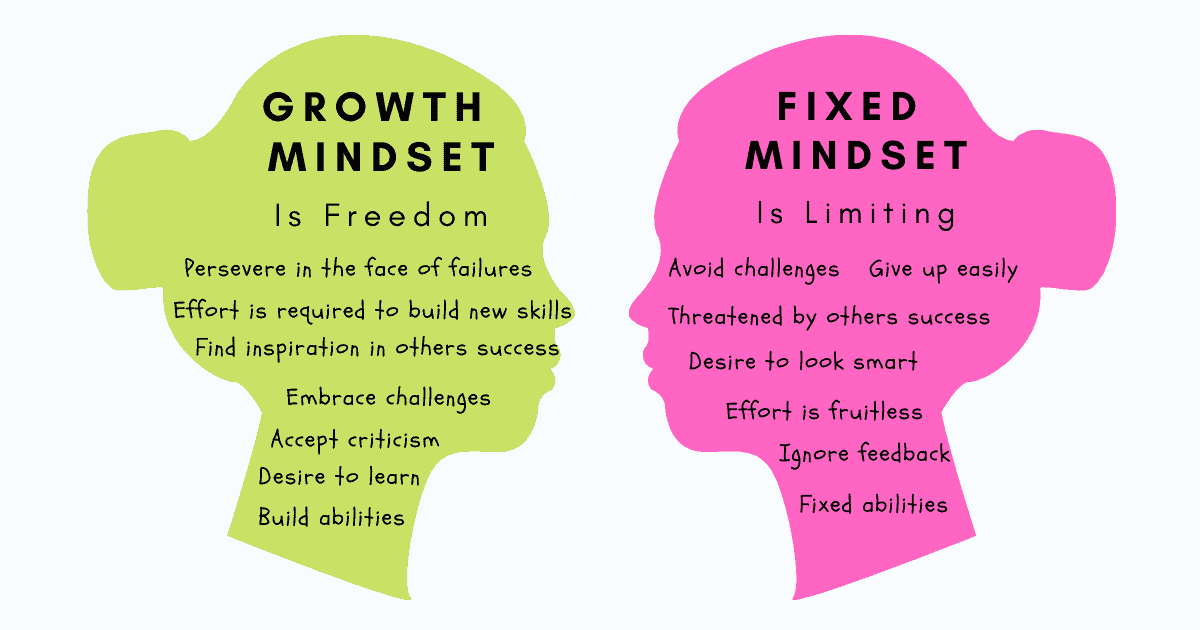
I believe so many things are a process — writing, teaching, any skilled labor or hobby. We can take them just for fun, but those with a growth mindset will always push themselves to improve.

It took a lot for me to get there, in part because I think writers’ immediate response to writing a book is “This is my brainchild! My masterpiece!” Our second response is “This is horrible! I can’t bear to edit it!” Somewhere in-between that is the desire to write the best book possible. That’s where the growth is. 

Growing as a Writer

Gaia’s Hands, the novel I’ve gone back to revise, was my first novel, and it’s been a problem child since its conception. I have amended it, added to it, subtracted from it, tried it as a novella, and still it’s been not quite enough.

It’s always seemed like a small novel, one in which not much happened, even though a lot happened. A novel in which a relationship developed and then, after a few chapters, Jeanne’s getting persecuted by her department, and then … 

Almost like there were two halves of the book — first half relationship and second half disaster.

Why didn’t I figure this out sooner? 

I’ve been growing as a writer. Those rejections from agents and publishers have helped me to seek out improvement. My dev editor, Chelsea Harper, has helped me to see where I can improve. The rewrites have helped me to see what I can become.

I don’t know that I would have gone through this process of improvement if I’d gone straight to self-publishing. I’m glad I have to work hard for my dream.
 

My Sanctum

As I have mentioned before, one of the things that saves me from severe winter blahs (aka Seasonal Affective Disorder) is my planning for the spring garden. 

I should explain that my garden has rules: everything I plant in it should be, at least in part, edible*. This means that I landscape with edible flowers, herbs, and plants that have been gathered and eaten in American or other cultures. Most of these can’t be found in nurseries or are rather expensive if bought as plants, so I grow them from seed myself in my grow room.**

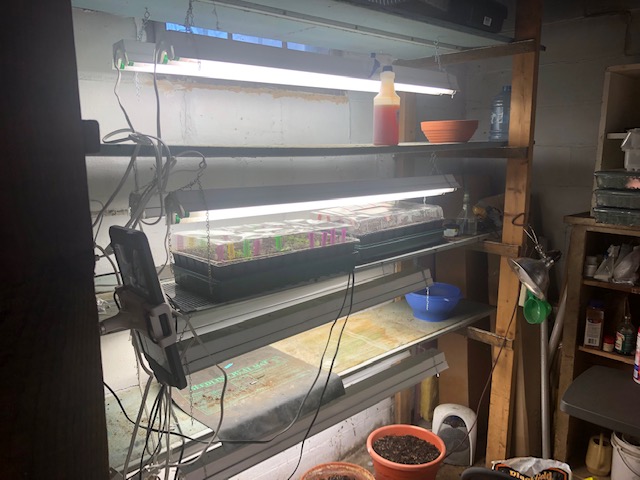
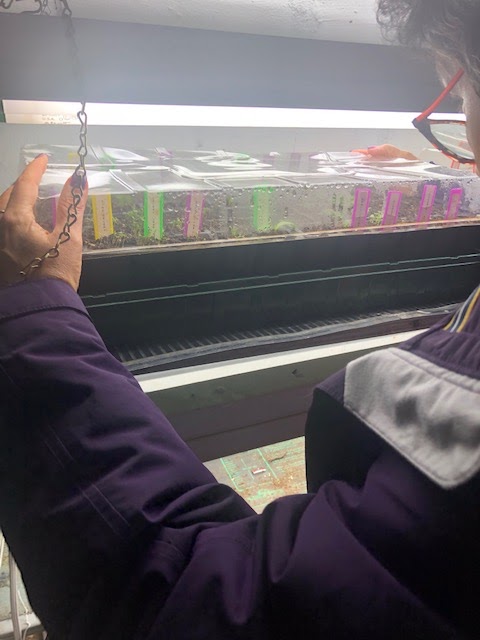
 Here is a view of my grow room, which is a small basement room that used to be the coal room back when my 100-year-old house was a youngster: 

Not very impressive, is it?


The wires are for all the fluorescent fixtures and the heat pads — and the ancient iPad repurposed for record keeping that you see at your left.  The wall that you can’t see is lined with reflective material that was meant to insulate a garage door. Peel and stick — excellent for increasing the light in this room.

The flats you see are for two sets of items I’m growing — the edible nightshades (tomatoes, peppers, eggplant) and a handful of herbs (celery, lovage, yarrow, calamint, perilla, hyssop, alpine basil herb).

Closeup of my first herb flat

I have more to plant — I’m waiting on seeds for my moon garden and more herbs and for some flowers (and for lots of things that will get planted directly in the garden. By the time I’m done, I will have six to eight flats of seedlings to nurture.

Not all of them will survive. Past seedlings have succumbed to damping off disease (which I fight heroically with cinnamon water spray) and watering malfunctions. Some seeds never come up. On the other hand, sometimes they grow faster than I expected, which is why I’m setting the top shelf (that you don’t see) for taller seedlings to reside. I will save the best of the plants that come up for planting come spring.***

Spring comes to me sooner than to most because of my grow room, with its ugly cement floor and worn shelves. Today I sat with my seedlings, thinning them out so that they could grow strong, and feeling, if not happy, a bit less out-of-sorts.

* This year’s exception is the moon garden, which is comprised of white, night-scented flowers, most of which are toxic to deadly if eaten.

** When I say “grow room”, people think I’ve got one of these high-tech setups advertised on eBay where people grow — well, plants that are illegal to possess or use in this state. Mine is not nearly so exciting.

*** This doesn’t count the direct-seeded vegetables. I have to admit that I’m not as good with these because it gets too hot to weed and there are so many weeds. I’m working on using more mulching and earlier morning weeding.

Back in the Swing — oops!

Yesterday, I could finally look at Whose Hearts are Mountains and shape the parts I’d abandoned while answering the developmental edits on Prodigies (which I  need to ship out to other agents at some point).

I think it’s a better story than I thought previously.
Honestly, I’m trying to figure out what to do with all the Archetype universe stuff since the first book, Mythos, is such a royal mess. (Or maybe it’s not — I have an idea …)

****
Just got done rearranging a lot of things. I’m doing serious surgery on Mythos (cutting it drastically back; merging it with Apocalypse) and my developmental editor Chelsea Harper is now editing my first book, which may be the original Lost Cause. That means putting off the end of Whose Hearts are Mountains. Whee.

I have to keep reminding myself that writing is a growing experience.

Besides writing and moulage in my life, there’s gardening.

I dream of the first emerging sprouts speaking to me.

The stretch of the first seedling breaking through the soil with the tiniest pop assures me that change is possible. And each seedling, each plant, has purpose. The lowliest weed has purpose —  dandelion makes a wine whose pale nectar will break your heart. The scrubby lamb’s quarters tastes better than spinach, and purslane is rich in Vitamin A and Omega-3 fatty acids. What is toxic to man may treat your illnesses — the toxic foxglove can be processed into digitalis, a heart medicine that you might have heard of. Even the otherwise useless Cannabis sativa* is a bioaccumulator, pulling heavy metals from the ground and sequestering it in its leaves.

My basement is full of seedlings to go into my summer garden. They live in the former coal room, now a room of grow lights and reflective insulation material on the far wall, with a window that the law enforcement officials can look at and make sure I’m growing tomatoes. This may not be enough.**

Right now, the tomato/eggplant/pepper plants are partying on the top shelf with the cardoon which I thought I wouldn’t get to grow. The perilla seedlings are numerous and vigorous. Hablitzia, yarrow, pinks, and savory are popping up a little more leisurely, and I still can’t get sea kale to grow from seed. The basil — I’m a basil fanatic, but I still may have to give some away. That’s not all the seed flats — I am nearly out of room on my plant shelves, and there’s a dwarf lemon tree I hope gives me lemons for lemonade someday.

At night, when I go to bed, I imagine I hear the plants sighing in their sleep. When I feel down, I contemplate sneaking down to the basement and joining them in the dark. But I am human, and cannot sleep in a garden bed, so I wish them a silent goodnight.

***********
I’ve gardened since I was about five years old, when my second cousin Dale Hollenbeck gave me a plant of his that was dying to see if I could nurse it back to health. I did, and I did the next one he gave me. I had a lot of failures, largely because of my lack of understanding about soils — it turned out that Illinois’ hardpan soil wasn’t a great planting medium for cacti — or much else. It was at that point that I wanted to learn anything I could about plants.

My neighbor Johnny Belletini, who was somewhat of an adopted grandparent (I adopted him), taught me one day that weeds weren’t nameless and had uses people didn’t know about anymore. I was fifteen; he taught my his recipes for dandelion greens and dandelion wine that day, and I made my parents leave the lawn unmowed until I picked all the flowers to make dandelion wine***.  We did everything wrong, but the result (don’t ask me how I know) was a sacrament, sunshine in a glass.

When I was seventeen, my second cousin Francis Koenig**** worked in a state park for a while and had an encyclopedic knowledge of those previously nameless weeds. At the time, I had begun my lifelong interest in edible plants. He would visit me at my parents’ house, and my family would sit mystified as he and I talked about plants — their genus and species names, appearance, habitat, and uses.

Nowadays, I have an odd quest, and that is to landscape my entire yard with edibles. I have raised beds for annual vegetables and for perennials, I will add edible weeds (tastes like spinach) like quinoa and orach and giant lamb’s quarters, and I will add herbs to the rubble-and-dirt hill by the stairs to the backyard.

Many of the edible plants I’ve never eaten before. The moringa thicket in a pot in the basement apparently has excellent nutrition for a green tree, and the scarlet runner beans are a favorite in Britain. But I’m fascinated by vegetables and fruit that can’t be found in a grocery store, just as I am interested in people and places you couldn’t find near a shopping mall.

Later this spring, I’ll give you a virtual tour of my garden (if I can get my SketchUp software running on a four-year-old Mac with no graphics capability to speak of. If you want pictures, let me know.

Thanks for keeping me company.

******************

* I do recognize that C. sativa is not useless; I was just having a little fun. The plant has proven useful for wasting syndrome PTSD, chronic pain, muscle pain, glaucoma, and mental health issues. (Grinspoon, 2018). In addition, it is used as a sacrament in the Rastafari religion.

** There is also a window where any curious law enforcement officer can look into to assure themselves that there is no Cannabis grow operation here. I still feel a certain sense of unease about having a grow room in my basement. I’m not kidding. Not Marijuana

*** I made my first batch of wine at age 15. I did my research first — although there was a law against drinking until age 21, there was no law against making wine at any age unless you made over 200 gallons a year and/or sold it.

**** Francis Koenig died of drowning in 2009. I point this out where I otherwise would have because 1) he was family and 2) he lived lonely because of his neurodiversity. I believe he was on the autism spectrum, as he worked at a sheltered workshop until he retired. I want you all to see that the neurodiverse have lives and feelings and deserve to be members of society to the extent they feel they can. Thank you, Francis, for telling me that hawkweed had edible roots — I look for it often, and I think of you.

************

Grinspoon, P. (2018). Medical marijuana. Available: https://www.health.harvard.edu/blog/medical-marijuana-2018011513085. [March 13. 2018].