Storytelling in my Family

Daily writing prompt
What aspects of your cultural heritage are you most proud of or interested in?

For an American, this is a tough question to answer. In the US, when someone asks this question, the answer often involves cultural heritage of one of our strains of ancestry rather than dominant American culture. We do not see US culture as culture but as the default against which our ancestors’ cultures play.

For example, people in the US talk in terms of hyphenates. They are Greek-American, Polish-American. African-American. Or they say “I have German ancestry”. The people who say this often experience their cultural heritage at holidays or in public festivals, or they live in an enclave where many people with that ancestry live. They notice differences from their classmates growing up; their classmates didn’t eat olebollen or pickled herring on holiday.

Which brings me to what I like about my cultural heritage. I am, like many Americans, a ‘mutt’. I have German, Dutch, Polish and Irish on Mom’s side and French, German, and probably Welsh on Dad’s (among others), according to Ancestry.com. Of these, I’m most cognizant of the German/Polish on Mom’s side and the French on Dad’s. The German/Polish on Mom’s side was a matriarchy of sorts that tried to ignore the Polish ancestry for bewildering reasons. The French on Dad’s side was what is known as ‘trapper French’, or the Canadian French who lived through hunting, trapping, and trading wild animals.

What I really like about my cultural heritage on both sides is the storytelling. The storytelling techniques of each side of the family are totally different, which is why I feel there’s a cultural component. My father’s side of the family told hunting stories with escapades often fueled by alcohol or naivete. Very often the stories started with “Do you remember when …” and end in an absurdity. For example, “Do you remember the time when Ronnie shot the owl up the tree? He ran up to Larry and said, ‘Hey, can you help me get this rabbit out of the tree?’ Larry looked up and saw a dead owl. ‘Ronnie, that’s an owl.’ ‘I wondered how that rabbit got up the tree.'” It’s funnier in person, honestly.

With my mom’s side of the family, the stories often involved word play or other witticisms, and often featured my grandmother as the ‘straight man’ in the joke. My grandmother was confronted with her seventeen-year-old daughter Marie, who said, “I’m going to marry Wayne.” “You can’t marry Wayne,” Grandma said. “Then I’ll elope.” “You can’t elope.” “You watermelon!”

I tell the stories of my family on occasion. I also tell my stories in their ways. One story, as it spread across my peer group, became a friend’s anthropology project in a class. Others can be evoked by their punchlines.

Cultural heritage is a complicated topic in the US, but I can find mine in the stories I have grown up with and the stories I tell.
Talking About the Weather

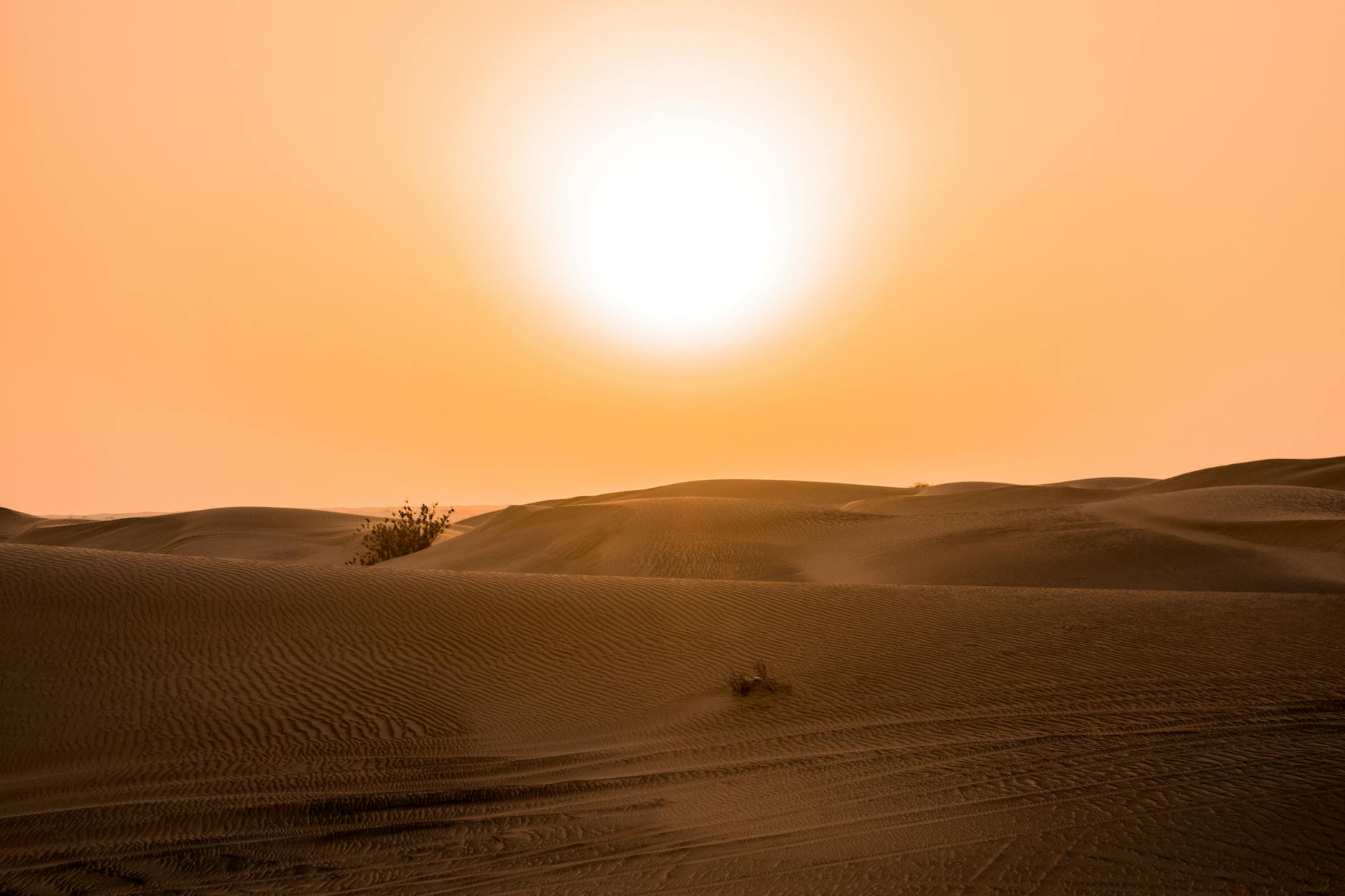
I know that talking about the weather is the smallest of small talk, the type of inoffensive speech that makes it safe to talk to total strangers. I hate small talk, preferring to talk about people’s passions, as I am passionate about mine. But look at the freaking heat index!

We’re under a heat advisory here in Northwest Missouri. The heat index (a measure of how heat and humidity get together to cause misery) is 108 degrees Fahrenheit. The temperature without the heat index will be 98 degrees F. People die of heat stroke at these temperatures. I won’t be going out today because I take medications that make me prone to the consequences of high temperatures. (Of course, human nature being what it is, I desperately want to go to Starbucks to write.)

I think about climate change a lot when the weather gets like this. It’s not just my imagination; scientists note an increase in weather incidents like this. On average, our world is getting hotter. I think about this from the viewpoint of someone sixty years old: I remember when we didn’t worry about this. I don’t want to worry, but I am worried. How will this affect the world’s people?

As a Midwesterner (United States), I’ll be far away from the flooding and some of the extremes as they come. But how will people in poverty fare? People without air conditioning? There are ways of living, but do we still know them? Do we remember how to do them? What will we have to give up of our 21st Century values to enact them?

Photo by Fabio Partenheimer on Pexels.com

I wonder how life will change. I wonder if I cannot change my life enough to make any difference in the slide into turbulent weather. Thinking this as I sit in my writing spot is a lonely moment, because it’s sobering to think about a future I can’t control. To think it all goes downhill from here.

I could be wrong. We are always on the brink of great innovation. Change is always possible. Maybe someday, riches will be measured in how we relate to others. I do not feel optimistic at this moment in 98 degrees F.

Managing a Book Universe

Several of my books (two published, one nearly ready to publish, two needing a good go-over, one currently being written — that many already?) exist in the Hidden in Plain Sight universe — a world just like the one we’re living in, except with preternatural and virtually immortal beings and their half-human offspring. The stories are just as much (if not more) about how the beings deal with what they call Earthside.

The series is very character-driven, with one extended family of Archetypes (the immortals) and Nephilim (the half-humans) prominent in the plots. There are also several humans featured prominently. The books occur over a timeline of 20 years. As a result, I have to manage events in several characters’ lives.

For example, there was the Baby Boom. At one point, Nephilim were sterile, then their Maker decided they weren’t. (There is a reason, but the book hasn’t been written yet.) As many of them were in relationships and accustomed to not using birth control, there were babies. So yesterday I was going to write a story about four characters in Chicago going on a walk through the powder keg of a city pre-collapse. Three were Nephilim, one human, and all have strong personalities so it was going to be fun. Until I realized: Wait, Allan and Celestine have a kid. And later, wait, one of those two is the father to twins. And the original idea collapsed, because I didn’t see these parents taking the kids out for a field trip on volatile streets. Nor did I see them leaving the kids with babysitters while there were riots on corners nearby. I don’t know how to write the story now.

This happens all the time. Are Batarel and Ty in Chicago or at Barn Swallows’ Dance1 right now? (Barn Swallows’ Dance, ever since they completed their field trip.) How do I keep Josh from being held hostage with the English Department during the siege of Illinois? (He has a vision and stays home from work that day. I knew a guy who survived 9/11 because he didn’t feel like going to work that day.) Just where is Hard Promises located? (Cook County IL sold off a lot of its forest preserve property, and the collective’s founders grabbed Beaubien Woods.)

It’s hard to take notes on these twists and turns because I can’t predict what I’ll need for the future. So I search through the previous books (thank goodness Scrivener has a pretty robust search engine) and find the details I need.

I’m sure this will keep happening. When does Barn Swallows’ Dance first connect with Hearts are Mountains?


1: Barn Swallows Dance, Hard Promises, and Hearts are Mountains are all agricultural collectives. They have as residents a mix of humans, Archetypes, and Nephilim.

The Ides of March: Q and A

According to Ken Jennings, there are many misconceptions about the Ides of March, the day that Julius Caesar was assassinated. I’ll try to summarize here.

What is an “ides” anyhow?

An ides was a calendar entry in the Roman calendar used to divide the month into two halves. In most months, it was on the 13th of the month; in others (including March) it was on the 15th. The Roman calendar was odd; all days of the month after the ides were labeled as “x days before the beginning of next month.” Almost as if the second half of the month wasn’t worth much.

What is this “Beware the Ides of March”?

That goes back to Julius Caesar, who was warned by a soothsayer (psychic) to beware the day. Wouldn’t it be convenient to have reliable soothsayers today? “Don’t go to work today.” “Avoid the tuna salad at lunch.” “Beware the Amway Salesman.” I could use someone like that.

Do I have to worry about the Ides of March?

Not unless your name is Julius Caesar.

You also don’t have to worry about the early 70’s American rock band of the same name, famous for the song “Vehicle”.