Autumn

It finally feels like fall, with morning temperatures in the 30s and the sunlight growing softer. It’s not a great year for autumn leaves, with most turning a dull yellow-green instead of fiery red. But I’m here for it, and looking forward to the coccooning that happens in the season.
I’m off today (Friday in the US) because of Walkout Day, a custom at the university during Homecoming week. Homecoming is a tradition in colleges and high schools surrounding an (American) football game, where there is a parade and homecoming floats and other activities. Alumni come back to enjoy the festivities, hence the name. It is the epitome of fall activities for small towns and small universities.

I hope to write today. Mostly organizing my notes, but that, too, is writing. I also may pick the picture for the cover of Kringle All the Way. We shall see how productive I feel.

Another Homecoming and the Words that Come With It

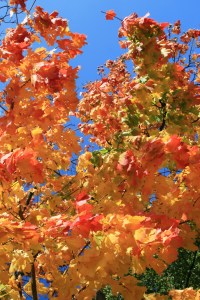
The leaves have finally turned, orange and red and brown, dazzling the campus for Homecoming. I remain convinced that Homecoming is the remnant of a pagan ritual that captures parts of the harvest festivals and part of the sacrificial king (in the guise of a football game.) This would make pumpkin spice latte a sacrament, and I’m not sure I want to go that far.


It’s been a long time since I’ve thought this way, of the seasons of the year yielding a mythology we live by. I had no reason not to think this way, given that both Quakers and Episcopalians can skew romantic about the seasons, and rare individuals of each even call themselves pagan. In fact, the liturgical Christian traditions follow a liturgy of seasons, and mystical Christian traditions offer a glimpse of the movement of the year as well.
When I was younger, I was what I called a kitchen witch, making my own rituals in solitude, following the seasons of the year. This faded with my years as a professor, even though my religious life didn’t give me the hands-on relationship with life that I wanted. (Correction: Membership in the Religious Society of Friends did, but I’ve been 90 miles from Meeting for 21 years. The Episcopal Church put me too far from the feeling of sacredness.)

We need our rituals, whether dressed Wiccan or pagan or Christian (or one of the many other religions we profess). Those who have stripped ourselves of rituals because they’re “pagan” lose our moorings to the seasons and to the earth. Those without rituals that speak to them frantically try to rip rituals from others by brandishing the word “Satanic”, or create a mockery of ritual that worships hatred, bullying, and totalitarianism (MAGA rallies, I’m looking at you.)

I think about what Autumn says to me — golden and bittersweet, rejoicing at the leaves and wrapping up against the chill. Saying goodbye (Les’s death still resonates) and hugging the last of harvest to my arms. Snuggling with cats — always snuggling with cats. 

Hoping it makes for good poetry now that I vow not letting work become everything.

Homecoming Day

These lyrics tell about the ritual that happens across the US this time of year in high schools and colleges to commemorate football and community. They also hint at the dark side of community. I wrote this years ago, but in this #MeToo climate, others might find themselves in this song:

1. Chicken wire and crepe paper
wrapped around a hayrack
towed behind a pickup
in the Homecoming parade
In a town as small as this one
maybe smaller but that was
too long ago
my distant past
my childhood a charade

Chorus  (2x):
I had a dream last night
you turned around and asked me why
I wasn’t coming home again
I couldn’t tell you

2. Traps set in the corners
of the hallways of the high school
memories like serpents
poised and ready there to spring
tried to do my best  to be invisible
but that was impossible
a waste of time
a waste of everything

Chorus (2x)

3. Tried to tell the people
with their eyes glued to the TV sets
to look at something else
outside the color of their hate
I was just a child then but I wasn’t
but that was ’cause
I couldn’t be
it wasn’t fair
you can’t go back and change my fate

Chorus 2x

I couldn’t tell you

Homecoming Day

This is a song I wrote about 20 years ago; I can’t write music; I just sing the tune. This was written years after “Empty Gym” but about the same incident, and it is written from the point of view of an older person to an innocent high schooler who doesn’t know how bad things can get:

#1
Chicken wire and crepe paper
wrapped around a hayrack
towed behind a pickup
in the Homecoming parade
in a town as small as this one,
maybe smaller,
but that was so long ago,
my distant past,
my childhood a charade

Chorus: (2x)
I had a dream last night
you turned around and asked me why
I wasn’t coming home again —
I couldn’t tell you.

#2
Traps set in the corners
of the hallway in the high school
Memories like tigers
crouched and ready there to spring
Always tried my best to be invisible
but that was impossible —
a waste of time,
a waste of everything

Chorus

#3
Tried to tell the people
with their eyes glued to the TV set
to look at something else
outside the color of their hate
I was just a child then,
but I wasn’t —
I couldn’t be —
you can’t go back and change my fate.

Chorus and fade…

Homecoming

I suspect Homecoming, as conducted in high schools and colleges across the US in conjunction with (American) football, is the remainder of ancient pagan fall rituals.

There’s the sense of nostalgia as graduates young and old come back to their alma mater to celebrate their ties to the land as the leaves fall. Two teams vie for the win in a sport than can be barbaric and bloody.  The school crowns a King and Queen, and they preside over the festivities, which include parades and bonfires.

The old year passes, the god is sacrificed in a ritual game, and people celebrate their belongingness to their culture, then drive back home to their new lives, oddly satisfied.

It’s the only way I can understand Homecoming. I took Homecoming for granted until, in high school, I had a conversation with a foreign exchange student named Armin (if you’re reading, Hi Armin!):

“What is this Homecoming?” Armin asked as he searched his preternaturally neat locker for a book.
“Well, it’s a football game.” I rummaged through my less than neat locker.
“Soccer?”
“Football, not soccer. Anyhow, there’s a game, and a king and queen, and we build floats for the parade –“
“Floats are — ?” Armin scrunched up his freckled face.
“Well, you put chicken wire on a hayrack, and then –“
“Hayrack?”

I’m not sure if Armin ever understood, and I’ve been trying to understand Homecoming ever since. As I said before, I can only understand it as the vestiges of a fall pagan ritual. Most of our beloved holidays carry the remnants of the cultures before us, the religions before us, the beliefs of ancient peoples huddling against storms and hoping the crops were enough to feed them. And still, they comfort us against uncertainty today.