



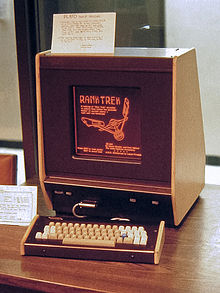
I remember life without computers, because I grew up in the Sixties and Seventies, and the first DOS computers came out just before I went to college. DOS computers didn’t have the Internet or beautiful, intuitive interfaces, and composing a letter on one meant staring at a black screen with green letters. I used a typewriter to type my masters’ thesis because attractive typefaces were a blip in the future and things typed on a computer looked like they had been typed on a computer. And I was one of the more computer literate people I knew.
I would not want to go back there. I didn’t write a novel because it would have taken tens of hours to search for information on desert flora and fauna. I knew American deserts weren’t made of sand, and that’s about it. Years later, after the Internet, I wrote the novel with information I found on the Internet in mere minutes. I use the computer to communicate, to entertain, to research, to compose. My life without it would be difficult and tedious.
On the other hand, expectations of quality and speed were less back then. The one typeface of a computer was acceptable, and the time limitations of snail-mail were tolerable. A writer could get away with fewer books written further apart. My expectations, though, are shaped by the era of fast, aesthetically pleasing, versatile computers that expand the limits of what we produce.
Life without my computer would be tedious and bland. I don’t want to go back there.
 Words Like Me