A Reminder of COVID

In my office today, I found a yellow mailing envelope. Inside I found two masks, cloth with clear plastic windows in the front so people could read my lips. This was a reminder of COVID from almost four years ago, when we spent the semester sending our live lectures over the Internet, disinfecting surfaces, wearing masks, and spacing our students six feet apart in a classroom. All challenges we survived as faculty, although I’m not sure to this day if anyone learned anything.

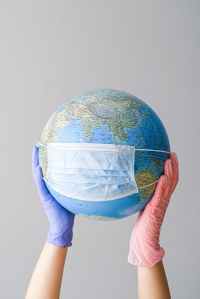
Photo by Anna Shvets on Pexels.com

I wanted these masks because I figured that if I couldn’t hear (I have a noticeable hearing loss and need hearing aids), my students couldn’t. I ended up not liking the masks because they weren’t flexible enough and I couldn’t wear lipstick with them. It took me a while to not wear lipstick while wearing masks, because the habit was so ingrained and I wanted to feel normal.

There was nothing normal about that time. I forget about it for months at a time, and then something reminds me, like a news article, or an old blog, or a mask, or the test kits we still keep around in case the cold feels more severe than others. I remember crying frantically in the kitchen because there was too much to deal with, or becoming obsessed with sourdough bread and catching my own starter, and not going anywhere for a long time. It never completely goes away, and when I sit at Starbucks writing, sometimes I remember when I couldn’t.

COVID Anniversary

Three years ago today is when the Centers for Disease Control declared COVID to be a pandemic. I was on Spring Break and the big question was whether the university was going to shut its doors and deliver its classes online. The CDC hadn’t declared shelter in place yet, but other universities had closed. It took two more days for our university to follow the others. An extra week of break for the students and for faculty to put together online classes, and then the new class format to get used to.

I spent a lot of that first couple of weeks frightened when I was not sitting at my computer frantically moving classes online. Luckily, one of my classes was online; another — the internship was a mess with students not being able to finish it. Some creative grading got them through and closer to graduation. The fear was widespread; after I had a meltdown in the middle of the kitchen, I called my psychiatrist and got through to his nurse. She reassured me that what I was going through was normal.

Photo by cottonbro studio on Pexels.com

Richard worked on library tasks at home; I spent a lot of time on the computer supervising my online classes. I also spent a lot of that time baking bread. I fed three sourdough starters, one of which I captured myself. The experiments made me feel more grounded, and we had the best bread in town. I also wrote a lot when the initial shock dissipated. The longer-lasting feeling was isolation as I sat on the porch swing, seeing nobody outside.

Eventually, the restaurants and less necessary stores opened up with precautions of distancing and masks. By some miracle — or more likely masking — Richard and I missed getting COVID (until a month ago, and the vaccine made it bearable). Activities like concerts and vacations were still on the forbidden list, and we missed Christmas with my family that year.

Finally, we came back to a new normal, one with the remnants of distancing signs on grocery store floors, masks at the hospital, wariness about crowds, and memories of a disruption of life unknown since World War II. One million dead in the US made those disruptions necessary until we had the vaccines in place.

Our memories fade. We take for granted our freedom to move, to go places, to shop, to congregate with friends. It wasn’t that long ago that we lost all those, if only for a while. And it could happen again. A mutation of COVID into a harsher bug could send us back into isolation. There are other organisms that we haven’t seen in humans before that could be the next COVID or worse. We have to remember how COVID made us adapt and survive.

Looking Back at the Contagion

I look out my living room window at grey skies, a little slice of the day. I think I can feel Spring coming in, although we’re supposed to get a trace of snow tomorrow.

Three years ago, COVID hadn’t quite started, although I think we were hearing rumors from Europe. Many weren’t concerned because we thought American exceptionalism protected us from contagion. Not that big a deal anyhow, no worse than the flu (as if the flu were a trivial infection). That slice of sun from my window was my world under COVID, emblematic of my isolation, which I spent baking and waiting for the news to change.

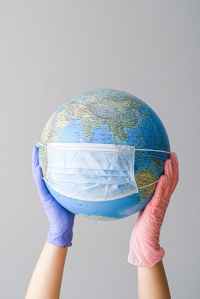
Photo by Anna Shvets on Pexels.com

That spring semester changed the way I looked at things. People who disagreed with the government’s masking mandate and, later, vaccination push, took a malevolent cast, while those who complied I saw as more trustworthy. I became more of an introvert, having lost the habit of congregating with co-workers. Talking to people over Zoom became natural. The office became the loveseat with its view of the world.

After summer came fall, and the school year was what we called ‘hybrid’ — classroom plus synchronous distance for people who couldn’t come in because of COVID or other malady. That structure was very convenient for students, and very inconvenient for faculty who were basically teaching two classes. We sprayed disinfectant on student desks and tables after each class and kept masked distance during office hours.

COVID has now become, for people, like the flu — a disease that we get vaccines for, which mutates past the reach of the vaccine occasionally, and gives most unlucky people a respiratory illness which knocks them out, but from which they will recover. There are enough cases of debilitation and death, like with the flu, that many people will always take it seriously, as they do the flu. But we won’t forget the year when the contagion changed our lives, scared us, and perhaps scarred us.

Odd Things that Make Me Feel Nostalgic

As a writer, it’s good to examine what my personal symbolism is — first, because it may provide universal symbolism for my stories. Second, because sometimes my personal symbolism is so personal that it just confuses my readers.

I feel nostalgic seeing cars driving by in the early morning. It comes from being up very early in the morning as a child when my mom had to drive my dad to a pickup point so he could get to work. Mom would wake my sister and I up early and we would eat cereal in front of the tv watching the hog futures with Orion Samuelson (this is a 1970’s Chicago area TV reference) as it was the only thing on TV. Then Mom would bundle us up for a 20-mile car ride in a blue Buick station wagon, during which we would often fall asleep. The occasional car driving by in the dark reminds me of a moment when I felt the rest of the world was sleeping around me. I don’t know that this image would speak to anyone else.

Another thing that makes me feel nostalgic is antique auctions. I spent several weekends a year in my childhood at junk auctions as my parents searched for treasures. From rain-damp backyards to big, dusty antique barns, drinking small styrofoam cups of hot chocolate and eating hot dogs for lunch. I remember feeling special as very few children got to sit through auctions with their family. I once bought a box of junk for 50 cents and later sold the cookie jar from it (a primitive with blue cobalt glaze) for $9. Is there anyone else out there who would pull up a feeling of boredom and curiosity from the images of a junk auction?

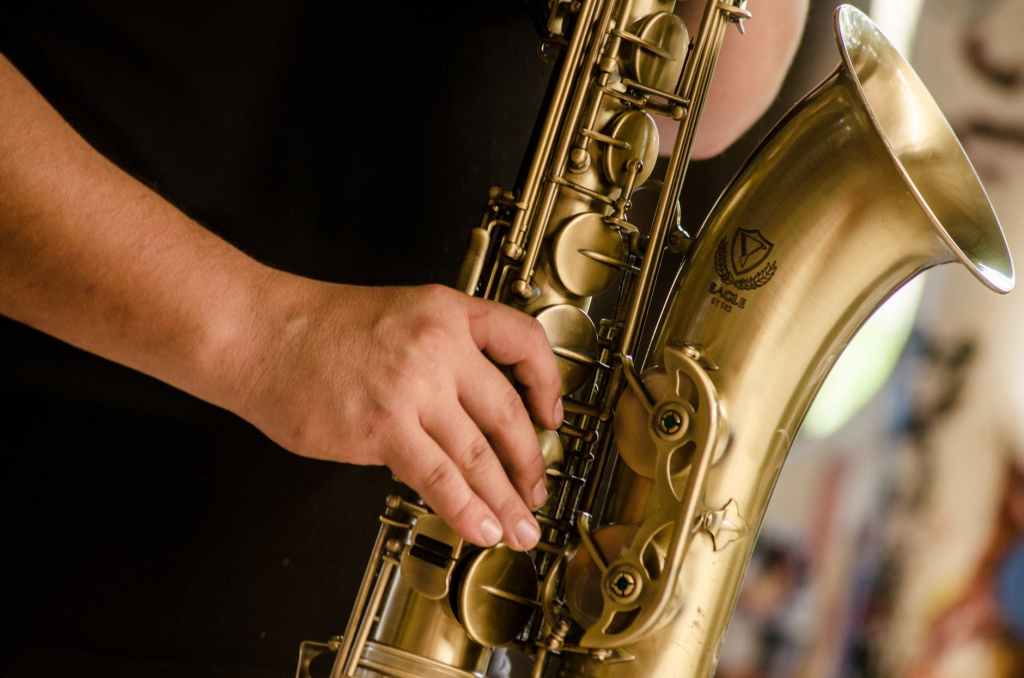
Photo by Ruca Souza on Pexels.com

Then there’s my experience with certain rock songs that use harmonica or sax. Think “Whatever Gets You Through the Night” by John Lennon or “Helpless” by Neil Young. I remember the first time I heard the former on the car radio (AM radio) half asleep in the car on the south side of Ottawa IL as an adolescent. The first time I heard “Helpless” was on an AM radio in my bedroom, and I was a few years younger. Very prosaic memories, yet these songs call up a portentous feeling of the past.

The caution here is that I could build these into my stories and believe I am communicating such things as nostalgia, such feelings as isolation or boredom, such universal moments that the reader will experience, but the truth is that these would speak only to me and maybe a rare reader. This is why I have to be careful as a writer to not depend on instant nostalgia to speak for me.

Struggling with Time

 This morning, I’m listening to Parliament-Funkadelic and drinking my coffee to wake me up. If this doesn’t work, I’m not sure what I’m going to do. The mornings are pretty dark now and getting colder. 

I don’t feel like I’m 57 years old until I remember and then count the years from that point: twenty-nine years from the time I got hit by a car; forty years from my first boyfriend; fifteen years from when I got tenure. Fifty-two years from when I got my tonsils out.


I remember fixtures from my life that changed in the technological revolution. I remember my speech teacher recording me with a reel-to-reel tape recorder. I remember my first transistor radio. I remember the portable tape recorder roughly the size of a package of Chips Ahoy. The computer with the grey screen and the green letters, typing in commands at the prompt. 

Still, I don’t feel 57. The number seems too high; its proximity to senior-citizenhood too close. I’m not resigned to go quietly into my twilight years. Expect me to make waves. Expect me to write. 

The Rosetta Stone of my Memory


The things I remember from my past are little clips of little consequence:


My first memory is sitting on a couch right in front of the window. It’s dark in the room because there are midnight blue blackout curtains on the window. Midnight blue with slubs of red. My dad keeps peering through the window. Only the grey of dawn peaks through the curtains. I think I was two.

After we moved into a house, the neighbor boys gleefully stomp up our attic stairs looking for treasure. My sister and I trudge up after them, having never been in the attic with its 50-plus years of coal dust sifting from the crawl space. My bare feet grow very dirty. I believe I was seven.

Many, many evenings, my parents play bridge in the kitchen with Mom’s cousin Dale and his friend Kenny. My sister and I are on orders not to disturb them, but I don’t listen as well as I should. I liked my cousin Dale and his friend Kenny too much to stay away for long. I could have been six, or seven, or nine.

At the Brookfield Zoo, I really wanted to see the snakes. I had read about them, and I wanted to see if they were as terrible as I thought. My parents decide to wait till last to see the snakes, and by then I am so tired and crabby we end up going home before seeing them. Everyone blames me. I was four at the time.

One glorious afternoon, I swing on a swing at the local park, waiting for my mother. The sunshine enchants me, and although my fellow day campers taunt me for singing at the top of my lungs, it doesn’t bother me, because the sky sparkles. I was ten.

These memories fall out when I tug on one of them. The first memory stays with me without provocation like a stone in my pocket, as if it was a mini Rosetta Stone of my memory. The memory itself is so small, with no particular evocation of its own rather than waiting for something. 

Perhaps I was waiting for the rest of my life.

Music and Memory


Sometimes I feel so old.


Usually it’s when I listen to music from the 1970’s. I was a child then, as I graduated high school in 1981. As a child, I didn’t go out of my way to listen to music; I absorbed it by osmosis from the AM station in our car and clutched my little brick AM radio with its mono earplug at night.

I knew all the songs, however. I knew them as narrative to a time of solitude, of lying in my room crying over the bullies at school, of words not being sufficient, of glimmers of light when someone extended a hand. Of scraps of poetry, words written in pencil on lined paper, fading as pencil often did over the years. 

I do not remember well. My memory is like a pile of Polaroids, instant photos, jumbled on a table, and I pull a random one out. I remember the snippet of memory in the photo and it evokes emotion. The story that goes with the words starts with “I remember when” but has very few words attached. The few stories I remember don’t have video with them, only words. 

The right song pulls the most obscure photo from the bottom of the pile, the one that’s faded, whose colors have reverted to greyish brown. All of the emotions, however are there, and I find myself weeping at something lost that I can’t really see. 

Right now I’m listening to a playlist on the stereo, with luscious rich tones that we didn’t know in the AM radio era, and I travel in the back of a station wagon in 1974, nine years old, trying to make sense of the world. 

Teasing you on Apocalypse

Adam settled himself in his corner of InterSpace, wondering whether it was truly his corner or whether it was the recycled molecules of someone else’s materialization. He pulled the black crystalline walls closely inward, with the only furniture a futon he had materialized. He lay on it, looking at the fathomless ceiling, and reached out with his mind to another Archetype, one who he knew well.

I have taught Laurel how to transport. It did not take much teaching, Adam spoke, feeling the granite and heath of the Archetype he addressed.
 
What does she remember? The other asked.

She doesn’t remember much. She mindspeaks, but she doesn’t remember that she has known my signature before. She transports, but she doesn’t remember where she has transported before. She doesn’t remember me. 
 
She doesn’t remember you, the other repeated. She will not remember us, either. We need to awaken her, but there’s the chance that we damage her if we awaken her too quickly. We can’t afford that. The mindvoice spoke tersely, but Adam understood the carefully concealed swirl of emotions behind it. Emotions could be dangerous if not banked; one of the realizations of the renegade Archetype.

I want her to remember,
Adam admitted. I want her to remember me.

You’re asking for a lot. She doesn’t even remember the last ten years, and you want her to remember her origins. She will, eventually, remember when we bring her back into the fold. But first, she needs to remember her exile, if not the reasons for it.

I know, Adam sighed. It just hasn’t been the same without her.

Take care of her. Adam felt the rugged edge of the Archetype’s warning fade behind his words.

Adam lay on his futon for a while longer, listening to the wooden flute he favored. He paid attention to his breathing, feeling each inhalation and exhalation, turning his attention away from the roiling thoughts.

He had learned the meditation a long time before, as a refugee from InterSpace, hiding from his heritage in a Buddhist temple in the south of China. There he learned to draw upon the unemotionality that was his heritage as an Archetype, to hide the human turmoil that represented the special circumstances of his creation.

Breathe in, breathe out. Let go of the longing, the impatience. Let go of the very human frustration. Let go  …

Six thousand years of existence, bouncing between the monastic cell of InterSpace and the Buddhist temple, and the civil service in a beautifully cultured Luoyang, and the days set laboring on the railroad that eventually stretched across the States. Hiding in plain sight despite his unearthly beauty and his freakish strength. 

Six thousand years of existence, and his mind still wandered back to one day, the day he was created, his first glimpse Earthside. A verdant landscape, with a riot of flowers, an oasis in a dry land.
The only time in his life — moments, it seemed — he felt accepted for himself.

After a long time, Adam awoke from his reverie, and he thought about Laurel.

Laurel looked like she hadn’t aged a day. Of course she did, Adam countered; Archetypes didn’t age unless they committed evil against their charges. She had stayed pure despite her exile, despite the centuries she had spent, as he had, Earthside.

He had kept track of her when he could, staying out of her sight. He realized there was a word for his behavior in the modern day — stalker. He could not help it, however; he had been charged with her safety. And the safest thing for her those millennia was to not remember him.

She had done a fine job of taking care of herself. She had remade herself many times, as he had: as a hedgewitch, as a cloistered nun, as a nanny, a shopkeeper, a manual laborer. She had studied human cultures, much as he had, trying to find a home and never quite finding one. She had never found a partner, just as he never had, because she knew instinctively that sex would result in half-human Nephilim, a taboo for their people.

But he had been instructed to bring her back to herself gently, for reasons he didn’t understand. He felt the ambivalence rise in him, wondering if she should be left alone, wondering if she would remember him and what she would say if she did.