One Dollar Coin

Daily writing prompt
Write about a time when you didn’t take action but wish you had. What would you do differently?

When I was about 11, the music director at the church had put together a children’s choir for Easter. There weren’t many of us, to be sure; it was a small church. We rehearsed in the choir loft on Wednesdays.
On Easter, my friend Kay, who was in the choir, was set in charge of her cousin Denise. Denise was older than us, but she had developmental disabilities and the maturity of a six-year-old. Therefore, she ended up in the choir loft with us. The choir director, Mrs. Rose, said it was okay as long as Kay didn’t let Denise sing because Denise would “ruin the music”.

Denise was crushed. One of her favorite things to do was to sing. As I stood singing, I felt a creeping sense of remorse. This was God’s house, and we were denying Denise an opportunity to worship the one way she knew how. We had decided Denise wasn’t worthy to be heard. This didn’t sound like the God we learned about in Catechism. It didn’t matter to me that Denise would ruin our rehearsed music. I felt the music would be perfect if all our voices were heard.

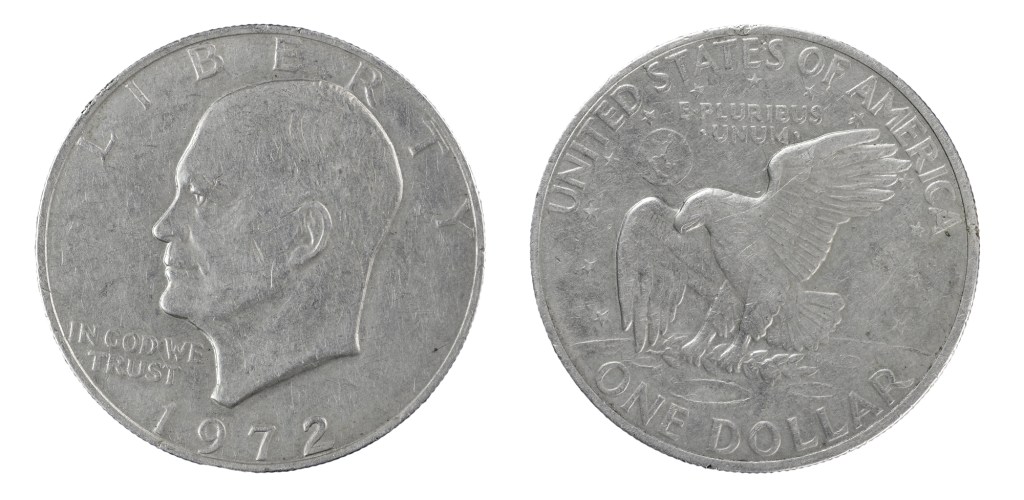
At the end, Mrs. Rose gave each of us a dollar coin. In those days, a dollar coin was an impressive size and was considered special. I took mine, ashamed of myself for having been one that had rejected Denise. This was my fifty pieces of silver. Soon, I left the choir, and it didn’t last for long after that because there weren’t enough of us.

I tell this story, and most people don’t understand what the big deal was. After all, we had rehearsed for the opportunity, we had a specific sound that Mrs. Rose wanted to capture, and Denise would have ruined it. But I believed that God loved everyone, and that everyone was welcome at God’s table.

Later, much later, I became a Quaker because everyone is welcome at their table. And, if liturgy had been part of their services, they would have let Denise sing.

Old Tunes and Nostalgia

Daily writing prompt
What makes you feel nostalgic?

The music of my childhood makes me feel nostalgic. I was born in 1963, and my childhood was the 60s and 70s, with high school graduation in 1981.

To be specific, though, it’s not just any music of my childhood. The Beatles, surprisingly, don’t make me feel nostalgic, nor does hard rock or disco. The Top 40 radio format doesn’t make me sentimental, nor does easy listening. 80s and later music doesn’t make me nostalgic. Specifically, it’s singer-songwriter music from the 60s and 70s, as defined by Apple Music, that makes me nostalgic.

Singer-songwriter music comprises folk music and rock well-known for its lyrics. Its instrumentation often involves acoustic instruments, sometimes augmented by instruments like harmonica. Bob Dylan, Neil Young, Janis Ian, and Judy Collins are examples of the genre. Not all singer-songwriters give me nostalgic vibes — I was not exposed to John Prine or Leonard Cohen as a child, for example.

If I had to pick one song that makes me nostalgic, it would be Helpless by Crosby, Stills, Nash, and Young. The song is about nostalgia, so that makes sense. Neil Young’s voice keens over the fiddle and piano singing about his childhood and how “the chains are locked and tied across the door”, because we can’t go back.

In a way, I literally can’t go back. I have aphantasia, or an inability to visualize in my mind. Visually, my memory is a series of snapshots which I only get to look at for a split-second, and they’re blurry. I remember from a narrative, where I tell myself the story, and by the feelings in my body. Nostalgia is a clutching of my heart, a longing.

Priorities

Photo by Prateek Katyal on Pexels.com

I’m in the busy time of year — grading upon grading; major assignments coming due — and that doesn’t bode well for writing. I am about 1/4 through the re-conceived version of this year’s Kringle novel and stymied because I just don’t have the mental bandwidth to write. I have plenty of time to finish it, as I’m not doing NaNoWriMo. I just don’t have time right now.

The thing I used to teach (and will teach again) in resource management — the importance of a task and the motivation toward the task should match. Nothing more motivating than angry students who need that assignment to be graded. Luckily I’m motivated to do the important task of grading, or at least motivated enough. Some music to motivate should help.

My top priority is to get the assignment graded. From there, other work. Maybe I will get to write this afternoon.

Wish me luck.

Music Looking Forward

I will hit 60 in a couple of months. It’s been hard to listen to music, because I keep gravitating to the music I listened to when I was younger, and I get a flood of memories that distract me from the moment. Sixty is a lot of years to remember, and remembering makes me feel old and dizzy.

I’ve read cocooning in the music one is familiar with is a tendency that starts in middle age. Or maybe it’s a Boomer thing. Today I’ve broken the habit and play music I’m not familiar with, because I have cushioned myself in the familiar. Singer-Songwriter music from the ’10s instead of the ’70s. No more dredging through my childhood.

Photo by cottonbro studio on Pexels.com

Perhaps this is a key to not letting the big milestone crush me. For I feel like it will crush me, like I will wake up the morning of my birthday and the weight of all those memories will obliterate me. I was born before Kennedy was shot, an event my students don’t even recognize, much less identify with. September 11? They don’t identify at all.

I think the key is moving forward, to save the golden oldies for meditative afternoons when I don’t mind dredging through my past. This is not that time. This time is for something new. The playlist is different, but I’m getting into it. Maybe I won’t get crushed by my past when the time comes.

Classical-Adjacent?

I’m listening to what some columnist called “Classical-Adjacent music”.On now is Ludovico Einaudi, with all the melancholy yearnings that his music evokes. I appreciate this music, even as outside, mud and sunshine replace the snowy afternoon it calls forth.

Photo by ready made on Pexels.com

The playlist moves to Sakura by RIOPY. The mood is positive but introspective, hinting of inspirational. This is the feel of much of the music: introspective. I think I like this genre so much because it encourages thought and emotion without taking over my mood.

I listen to modern classical (another name, a little less sardonic) when I’m writing. It distracts me from my inner dialogue and from my surroundings and lets me pay attention to what I’m building in my head.

Who fits into modern classical? Start with its philosophical founders: Erik Satie and Brian Eno (my opinion), then include people like Johan Johannson, Ólafur Arnalds, Max Richter, Ludovico Einaudi, and others. On iTunes, you can find them in playlists like Classical Edge, Classical Concentration, and Contemporary Classical.

I end this blog note with Alexandra Streleski’s Elegia, which is as melancholy as one could get. I look out my window, which seems incongruously cheerful. That’s okay; melancholy is the mood I want to write.

Self-care in the Christmas Season

Chronic stress is not a badge of honor. In fact, it’s a life-shortening problem. Stress is, however, inevitable, because there will always be conflict. Without stress, humans would not survive because they would not recognize danger. It’s just when stress gets chronic that it eats away at the mind and body. Therefore, we need to resolve stress and get past it.

Photo by Pixabay on Pexels.com

I teach human services to students. They move on to case management careers, often transitioning to some sort of counseling after a while in the labor force. One question I ask them in case management class is what their self-care routines are. It’s important to take care of oneself when you work with other people in high-stress situations which sometimes hook into someone’s personal hurts. It’s important for everyone to decompress and let go of stresses.

As for my self-care, I’m off work until early January, the biggest perk of being a faculty member. I’d argue that I need the 3 weeks at Christmas to recuperate from dealing with students day in and day out. It’s a privilege, I know.

Because my fall semester is rough and my spring semester rougher, and because I manage bipolar II (when it doesn’t manage me), I try to cram in my self-care over the Christmas season.

On my self-care list:

  • Muscle soak baths
  • Plenty of water to drink
  • Christmas scent spritzed in the living room
  • All the Christmas lights on
  • Christmas music
  • Occasional naps
  • Hot Chocolate

So far, so good. I think I’m up to writing some on my novel today after a week of recovering (and maybe writing 500 words a day).

I hope you get at least a few moments for self-care this season.

Reminiscing the Blues

Listening to 70’s music

Nothing sets me to reminiscing quite like the 70’s singer/songwriter playlist on Apple Music. It’s almost painful to listen to, because the music cuts through to my childhood, which was not always a pleasant place. I had to deal with isolation, heartbreak, and the day-to-day chaos of living with my mother. Any memories of my childhood evoke sadness, even if they’re happy memories.

Photo by Pixabay on Pexels.com

Listening to “American Pie” by Don McLean or “Helpless” by Neil Young makes me feel like someone is pulling my memories out of my mind and laying them bare for all to see. I feel every bit of loneliness; I want to cry.

Yet I still listen because those are my memories. They are who I am. Remembering them makes me feel more whole, because otherwise I would be drifting through life without an anchor.

Happy memories

It’s fair to wonder if I have good memories of childhood. To be honest, I don’t have many, or at least few that I remember right now. I remember the good Christmases at my grandmother’s, I remember cooking with my parents, I remember sessions with my speech teacher (who was sort of a deputized school psychologist’s aide, I’ve been told), I remember playing in kindergarten, I remember playing outside in the summer.

Strange thing, though, that music doesn’t evoke those moments. I listen to the old music and feel the sadness. Music helps me reminisce the blues.

Music and my past


Music brings my mind back to the past.


The ’80s Singer-Songwriter playlist plays on the stereo, and I realize that it was almost 40 years ago that I was starting college, and Springsteen playing “Hungry Heart” makes me remember that I was curious once, walking into local stores in Campustown and browsing for things I had no money for.

I was hungry for experience. By myself, usually, because I didn’t understand why I needed other people to go explore. I was an introvert even then, but I didn’t understand it. I didn’t seek out music, but it found me in the shops, in the computer lab, in pirated tapes from my friends. I followed my boyfriends to concerts — I remember listening to the Ramones in the most acoustically unsound building on the U of I campus, and Jethro Tull — where did I see Jethro Tull? 

Later, when I gave up on boyfriends and made friends, we listened to local Irish and bluegrass music. A local music “pusher” turned me on to Gaelic pop and Handel’s Water Music. The radio still played on through, and I soaked it up like osmosis.

In a way, I hate reminiscing, because I want my focus to be on the present. I’m not done exploring yet, just because COVID keeps me cooped up. I do intense searches on the Internet for my writing, and for my latest hobby, sourdough bread baking, and for all the little fact-grabbing. I have not studied anyone’s psyche (the intense focus of a crush) lately, and I’m not sure I want another one of those at my age. 

I hate the fact that I just used the phrase “at my age” — I want to be young again, but with the knowledge and the calm with which I meet life now. This is impossible and a waste of time to wish for. So I will let the music tear my heart out, and I will build a heart of calm in its place.

Day 18 Lenten Meditation: Music


A long time ago, a friend told me, “I don’t believe in God, but I do believe in music. Music is a force holding together the universe.”

Even to this day, I can’t say he was wrong. The music of the spheres in the greatness of the universe, a lullaby sung by a mother, the communal experience of a mosh pit or a church service, the sad song on the playlist — all have the sense of the divine in them.

We turn to music for celebration, for comfort, for commemoration, for unity. We praise, we seduce, we tease, we shout for joy, we share our humanity, we lament — all through music. To quote my friend Greg again, “Music is a force holding together the universe.”

Words and Music (Essay)

The Words are Important

I’m listening to Counting Crows to wake me up, immersed in Adam Duritz’ (is that possessive right?) lyrics. He paints images, moods, scenes, describing without telling. I want to write like Adam Duritz, but I have to settle for writing like myself. 

Another band I immerse myself in is Dream Theater, which might be on the opposite pole as Counting Crows, but the words evoke a sharp-focus world where people fight internal battles.

Making Room for the Music
I understand the music is important, also, in communicating the mood of the songs. Counting Crows’ roots rock sensibilities invoke moodiness, while Dream Theater’s wall of intricate metal and dissonance convey the intellectual alienation of their music.

I’m a word person — as a writer, this is expected. When I was an unknown singer-songwriter in my home town (before I divorced my guitarist 25 or so years ago), I wrote lyrics to his guitar compositions. I try to understand the music part, but I don’t really get how music can carry mood. I am willing to learn. 

Tell Me Your Favorite Lyrics
If you have favorite lyrics, tell me about them and why they grab you!