Something Accomplished

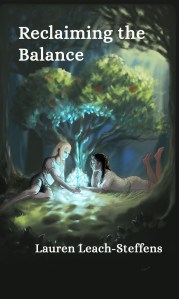
I’m sitting in the controlled chaos of our living room next to a framed poster of the latest book in the Hidden in Plain Sight series, Reclaiming the Balance. It’s due out January 1st, with the usual little fanfare. I am thinking of having an online open house for people to drop in on, but the last time I did that nobody showed up. It is a bad time to expect people to show up, in the US at least.

The posters are a ritual, driven by the fact my cover artist, my niece Rachel, is quite talented and does iconic covers. I give her very little to go on, and it’s like she reads my mind. I have aphantasia, or the inability to picture things in my mind, so it’s very hard for me to imagine how she does this.

I write and I publish. I don’t have too many readers, so I feel discouraged at times. But I know there are so many indie books out there, and I can’t afford expensive marketing that has no guarantee of working. I have to accept things as they are, which is why I print the covers as posters. I want to feel like I’m accomplishing something.

Goals for the New Year

 I don’t make resolutions for the New Year because resolutions are flimsy. They are usually worded vaguely. They’re often worded in results (which may not be realistic), and they’re not worded in a way that suggests the actions that need to be taken.

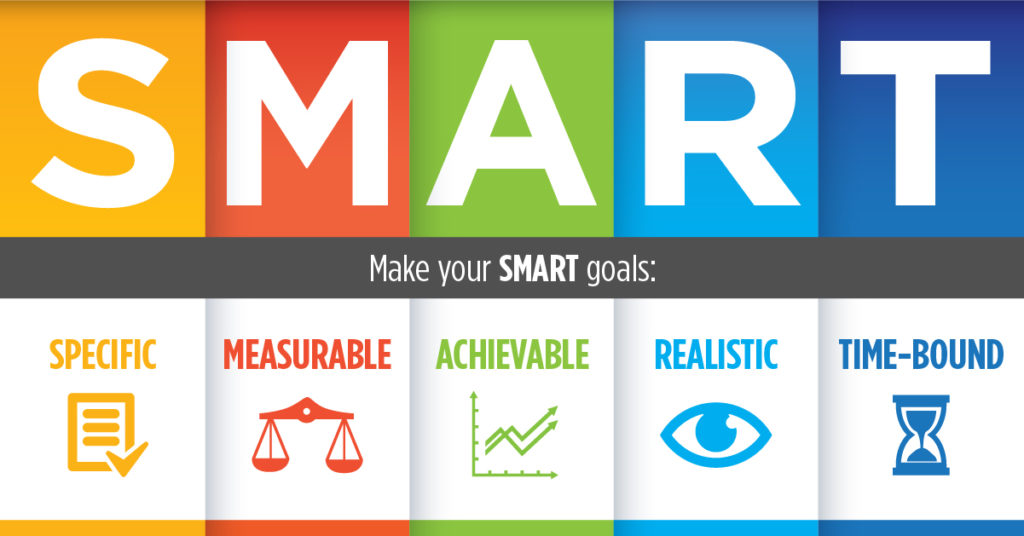
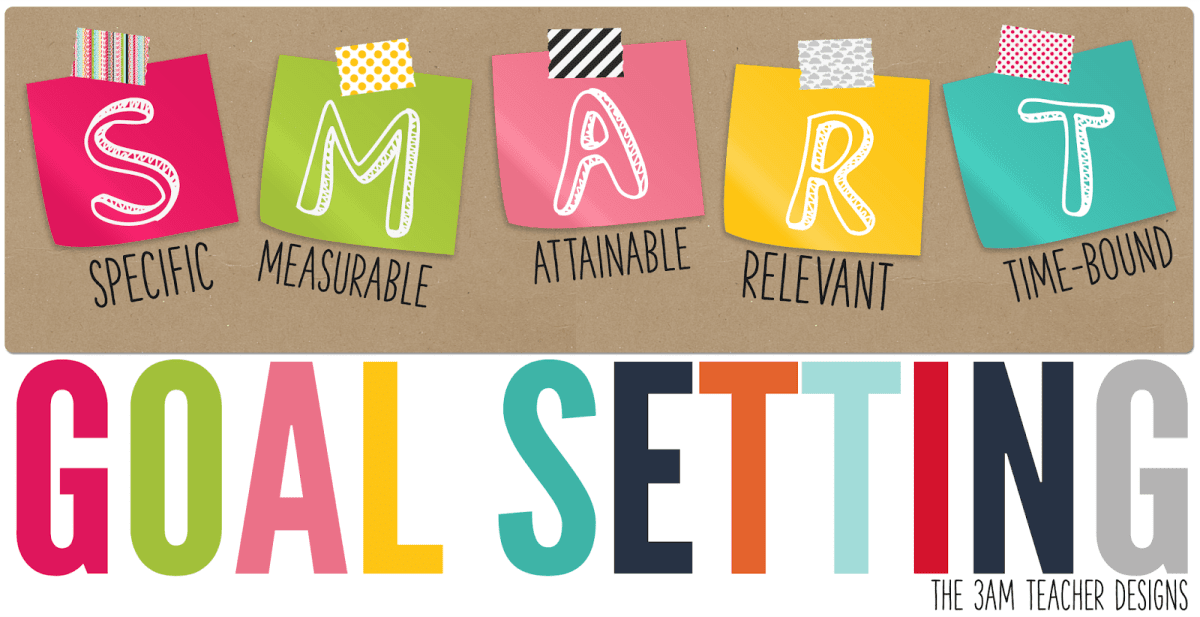
So once again (I think I’ve written about this before), I reach out for SMART goals. SMART stands for:

  • Specific
  • Measurable
  • Attainable
  • Relevant
  • Time-bound.
So let’s take one common resolution (and one of mine, actually): To lose weight in 2016. What’s wrong with it?
There are so many things wrong with it. How many pounds a week? What is the process by which one will do it? What’s the time parameters? Why is this focused on the result (weight loss) and not the action (Changed habits)? Is it realistic? With no real parameters it can set someone up for failure.

We can change the goal to action-oriented: I will eat healthy and exercise. 

Now, it’s not specific enough; let’s change it — I will eat two fruits and two vegetables a day and walk every day, working my time up to half an hour daily by increasing my walk five minutes a week.

 But there’s no time parameters. so let’s add them.: Starting January 1, I will eat two fruits and two vegetables a day and walk every day, working my time up to half an hour daily by increasing my walk five minutes a week for the rest of the year, to be evaluated monthly.

This is a SMART goal. It’s easily followable, easy to see if it’s not working and needs adjusted. 

So my goals for the year (not resolutions): 

  • Starting January 1, I will eat two fruits and two vegetables a day
  • Starting January 1, I will walk every day, working my time up to half an hour daily by increasing my walk five minutes a week, for the rest of the year, to be evaluated monthly.
These are typical resolution goals, but then there’s my writing goals broken down:
  • By March 31, I will send 50 queries out for Apocalypse to science fiction/fantasy agents from Query Tracker. 
  • By October 31, I will send 50 queries out for Prodigies to science fiction/fantasy agents from Query Tracker.
  • By March 1, I will finish the rough draft for Gaia’s Hands.
  • By June 1, I will revise the rough draft of Kringle in the Night
  • By August 1, I will put the final touches on Kringle in the Night
  • By September 30, I will prepare Kringle in the Night for publication — formatting, copyright, and cover production; To be published by November 1.
  • By December 1, I will have three short stories written.
It’s good to have all this written out, because it will be easier to accomplish. Now to get the vision board built, because I will need it by January 1. 

Goals, Not Resolutions


I don’t do resolutions, I do goals.

Resolutions come from a position of weakness: I’m not doing good enough, I need to fix something. Goals come from a position of strength: I want to make something new happen.

Resolutions aren’t backed by planning. Goals are — and in making the parameters of the goal SMART (specific, measurable, appropriate, relevant, time-constrained). The plan follows, and the plan increases the chances of success.

Here are my revised writing goals for the New Year:

Short-term: 

  • ·       Develop a platform plan by March 1, 2020
  • ·       Write/submit 5 short stories/poems/flash fiction by December 31, 2020
  • ·       Revise via developmental edit by March 1, 2020
  • ·       Send 50 queries for Gaia’s Hands by February 1, 2020
  • ·       Send 50 queries for Whose Hearts are Mountains  by October 1, 2020

 Long-Term:  

  • ·       Get an agent
  • ·       Publish my first book
  • ·       Discuss with agent further books
  • ·      Develop personal sales presence
  • ·      Develop idea for next novel

Notice that my long-term goals are not SMART, largely because they depend on things beyond my control. I put them in as motivational, as a way to envision where I’d like to be. As that trajectory becomes clearer, I will be able to make them SMART.

I have other SMART goals for the year — one is to lose 30 pounds by December 31, 2020 through eating a well-balanced 1500 calorie a day diet and exercising (the development of getting physically fit is in another goal). I will evaluate my goal every month or so and adjust accordingly if I’m not losing 2.5 pounds a month. (If I’m losing more, that’s fine!)

Well-laid plans will beat resolutions every time. Unless they gang aft agley, I guess.

The New, Unexpected Year (and where I was wrong yesterday)**

I suspect the reason we need rituals for New Year’s Eve is because possibilities frighten us deep inside.

We know we can survive the daily grind, the status quo. We have survived it up to this point. We’ve even gotten skilled in doing the everyday things, we have done them so often. When faced with the possibility of the unforeseen falling into our lives, we hope the unknowns are positive rather than negative. We hope for the promotion, the agent offer, the lottery win*, or the love interest. We fear illness, death, the recession, and unemployment. Many cultural traditions literally try to tempt Fate by eating lucky foods — black-eyed peas (in Southern US), noodle dishes (in Asia), and pickled herring (Scandinavia). Other cultural traditions have superstitions to attract and keep good luck — making noise on New Years (everywhere), wearing colored underwear (Mexico), making toasts (US, maybe others), and kissing at midnight (US). These customs all have as their basis an attempt to influence the flow of the new year to treat us kindly.

However, seeking out novelty is hardwired into the human brain and make us happy. When we see something new, certain portions of our brain light up and secrete dopamine, which sends us out with an itch (figuratively). If we satisfy that need for something new, our brains reward us. What’s more novel than a new year? This might explain New Years’ parties, where we celebrate, make noise, and make toasts with (usually) alcoholic beverages. The alcoholic beverages also function as a method for relaxing us and toning down our apprehension.

The new year also helps us to recreate ourselves because we’ve been given a clean slate.

Now we come to resolutions. Lanetta, my most faithful reader (and the only one who comments for the most part), suggested yesterday that resolutions are pretty harmless, so I did a little background research this morning. I was wrong about this yesterday.** Dr. John Northrup, psychologist, has found in his research that many more people achieve goals through resolutions than otherwise — 46% vs 4%, by moving us into planning to accomplish the goal (hopefully SMARTly.) The power of the resolution, in fact, is in ritualizing a desire to improve.  At any rate, they help us feel like we have control over our future, which does a lot to reduce the apprehension of New Years.

Again, rituals are important to this very day. For the writers out there, rituals help with world-building. For all of us, they help us understand cultures — and ourselves.

*****
* In actuality, most people who win the lottery spend everything within about 5 years.
** You saw it here. I admitted I was wrong.