Twelve Years of Writing

I’ve been writing for twelve years. I started, strangely, three months after being diagnosed with bipolar 2, which I hadn’t realized till today. I know I didn’t start writing as a coping mechanism or as character insertion (my first characters were not me) and I didn’t write about being bipolar. I think I started writing because being treated for bipolar helped me focus on continuous tasks instead of pouring all my energy on the whim of the moment.

I was not a good writer at first — I wrote each chapter as if they were separate episodes, like short stories strung together. I didn’t feel like I wrote an overarching plot. The novels (I use the term loosely) I wrote then I have had to revise several times such that only the characters are the same. I learned a lot from revising them.

Things I have learned over the past few years:

Photo by Pixabay on Pexels.com
  • My first draft is not my novel. Over the years, the novels have needed less and less rewriting, but there are always things to fix in second and third (and fourth, and …) drafts.
  • Developmental editors are an important part of your writing toolbox. It is worth paying for them.
  • There are three ways to write a novel: Plotting, pantsing, and plantsing.
    • Plotting: an organized outline at the beginning, and following the outline.
    • Pantsing: writing it as one goes along, without the outline.
    • Plantsing: writing with a rough outline but pantsing through the chapters.
    • I am a plantser.
  • Scrivener is a great program for composing my work, especially plantsing.
    • Scrivener arranges itself around a chapter format and a synopsis form that I use to guide my chapters. I use it like pantsing with training wheels.
    • One can get templates for Scrivener novel-writing that incorporate plotting frameworks, such as Save the Cat and Romancing the Plot.
  • ProWritingAid was another investment I don’t regret — my grammar has improved in ways I hadn’t considered before. I have lessened my passive verb structure massively.
  • Writing is the easy and fun part. I still don’t think I have the hang of promotion (and this blog is part of my proof of that.)
  • My favorite novel is always the one I just finished.

The most important thing I learned? That I can write. The second? That there’s a whole lot of luck in being discovered, and luck hasn’t come to me quite yet.

I feel like I could have learned more in 12 years, and maybe I have, but these are the biggest things I can think of. I hope they’re helpful to someone!

Christmas in … May?

It’s already time for me to start planning my next Kringle novel. Why? It’s only May!

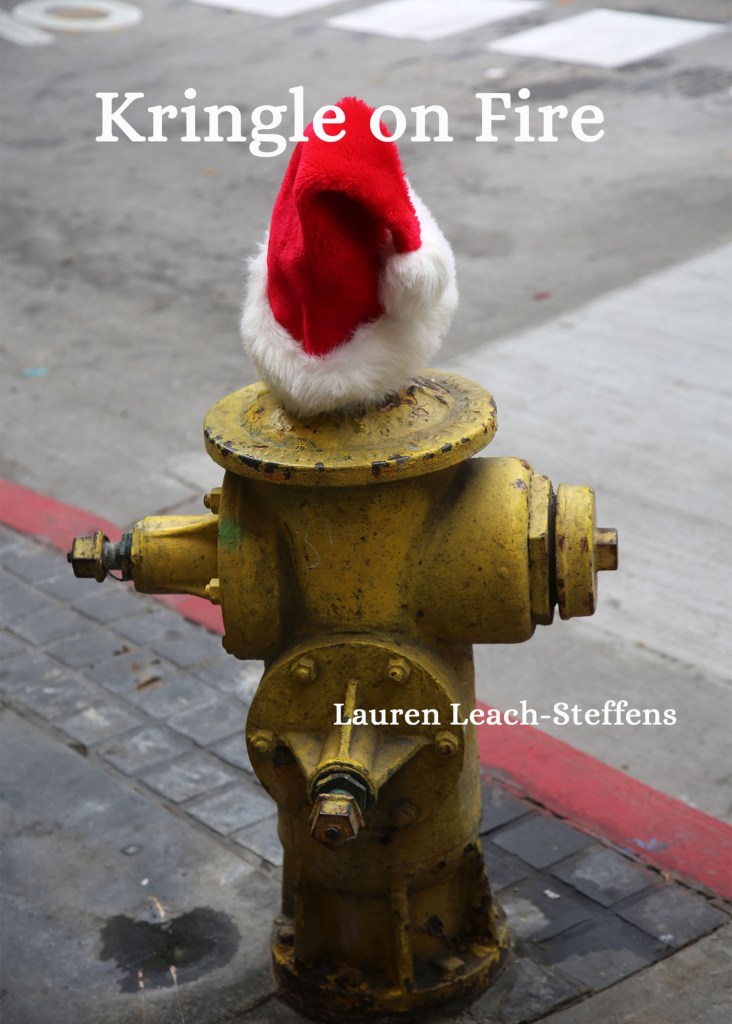
This is my 2023 Kringle novel cover.

The Kringle novel I write for this year will be for Winter 2025, so it’s even more ahead of time. A year and a half for a novel?

The ideas start in May so I have a while to play around with them in my head while I work on other things. Plots often come up on car rides with my husband, and there are more of those in the summer season (which, in my academic calendar, starts about May 1).

There are so many tropes to play with in romance — two of my Kringle books so far have mystery elements, two are enemies to lovers, a couple are friends to lovers, one involves second love, but no boy next door, snowed in at an inn, billionaire, bad boy or mafia yet. (I don’t foresee doing the latter three, to be honest. I like cinnamon roll guys myself.)

Friday, on one of those car rides, we decided that the next novel would be another second love with a touch of snowed in at an inn, where a divorced woman goes for a lone Christmas retreat at a great lodge, only to meet a local bar owner who hasn’t met the right woman in town.

The actual writing doesn’t happen till the Christmas season, November 1st-to be exact. That’s the season for NaNoWriMo, National Novel Writing Month. I won’t get it done then, but I will be well on my way. The benefit of this schedule is that I’m in the mood for Christmas, surrounded by the trappings of Christmas and immersed in Christmas carols, while I’m writing.

January through May is when I’m reworking the story, editing and refining. That needs to be done by October 1, which is publishing time. The cover gets finalized by the end of summer, and August is when I’m doing the mechanics of getting the novel uploaded onto the Kindle Direct Publishing site.

Other things are happening at the same time, of course. Teaching college from August – May, writing on other books and publishing them. I tend to keep busy, and I think it’s a blessing that I cannot be idle for too long. And that I love to write, and that there’s a Starbucks nearby.

My next Kringle-related activity is to go one more round through the 2024 novel, Kringle Through the Snow, which I actually wrote in January of this year because I thought I would never write another Kringle novel. But I can’t quit, because it’s now one of my Christmas rituals.

So Merry Christmas in May, and watch for Kringle Through the Snow on October 1!

My New Book Drops Saturday!

Time has flown by so quickly! It seems like just yesterday that I was writing It Takes Two to Kringle! Truthfully, it was last November, but I haven’t kept track of the time.

It’s time, however, for me to release the book into the wild. So, on Saturday, the third book in the Kringle Chronicles, a series of holiday romance novels, will be available for sale on Kindle. This book features enemies to lovers, faculty romance, a quirky small town, a challenge, and Santa Claus. And Krampus. (Let’s not forget Krampus!)

Check out this book and treat yourself to an early Christmas!

Brainstorming Characters

Oh, did I mention? I’m working on something new …

I’m working on a new novel, based on an idea I had in graduate school.

In it, librarian Nina meets a Prince of Faerie while he is slipping through her backyard naked. A Fae scorned casts a shadow across their dalliance, and Nina must brave the Faerie realms to rescue Prince Dain. If the landscape of Faerie doesn’t tear her apart, her adversary will. It will take all of Nina’s wits and all of her heart to save her lover.

I have the bare bones of plot; now what?

Now all I have to do is everything, starting with developing the characters. That to me is the place to start because I’m very character and relationship oriented. This is going to be today’s task and it’s going to require off-computer time.

Let me explain — I draft and edit on my computer using Scrivener and I proofread using Pro Writing Aid (now that I have it). I use Atticus for formatting and design covers using Photoshop and Canva.

But when it comes to character design, I’m in a different mode. I write and I write until I have the character developed. I interrogate my characters to find out what my subconscious tells me about the character and what I need to work out.

What do I need to know about Prince Dain?

A character sheet for writing tends to center on basic questions:

  • Role in story
  • Appearance
  • Motivation
  • Likes and dislikes
  • Internal and external conflict
  • Habits and gestures
  • Background

Which is necessary but not sufficient when writing a supernatural, alien, or other “other” (sentient dogs, etc.) Other things about the character must include how the character interacts with the other (i.e. our) world, which means figuring out the differences between us and them. Thus, character gets intertwined with worldbuilding.

In this case, there is a large body of folklore and stories, and it’s up to me to design this world borrowing from the stories. I know that I will include the traditional trickery/honesty of the fair folk, so: Irish legend, yes; Laurell K Hamilton, no.

From there, who is Prince Dain? This is what I have to find out. I only know at this time that he’s one of the fair folk, he has some sense of royalty, yet is a dilettante who crafts exquisite things and wanders through the crack between worlds, which is in Nina’s back yard. He is somewhat arrogant but charming, and at the beginning of the story very romantic but a bit fatuous. (I want my audience to question romance vs love.) He’s gorgeous, of course (and a ginger, which is one of my weaknesses when I am looking at pure male beauty). Ahhhh…

I’m back now. I need to have some conversations with my characters now.

P.S.

I looked at depositphotos for a male faerie picture. I saw none. So the realm of Faerie is all female like the Amazons, only with flowing robes?

Getting Back Into Writing

I haven’t done a lot of writing lately

I really haven’t done a lot of writing lately. I’ve been tired and dragging, taking lots of naps, doing a lot of editing of prior works. This means I have about 5 novels that I could submit today if I were in a submission cycle, two needing beta readers, and one that I will finish at Camp NaNo this year. Hopefully.

I feel like I’m losing the knack

It’s been so long since I’ve written a novel start to finish that I don’t know if I can do it again. Of course I can; it’s only been six months. But when I write that down, six months seems like such a stretch. I’ve been editing things for that long, which uses a different set of muscles, as it were.

To be fair, I have almost completed a serial space opera of novella size, so it’s not like I’m not writing. In fact, that whole last paragraph sounds stupid if I take that into account, doesn’t it? It’s not like novels are a whole different beast than novellas, is it?
Ok, never mind

There is a tend to aggrandize novel writing over other forms of writing. I’ve never had anyone ooh and ahh over short stories. Novelists are a rare breed (hint: No, they’re not) and what they do is mysterious. So non-novel writing is, indeed, writing.

I must go write. Bye!

The beginning of a novel

I got an agent rejection for Prodigies the other day (that’s been out for a while; I guess it got backlogged) with a difference: The agent explained what she found wrong with the book.

She loved the setting and the beginning descriptions, but she couldn’t get into the characters.

I looked at the novel and realized the reason she couldn’t get into the characters was that I never gave her a chance to.

The beginning of a book, according to Save the Cat methodology, should accomplish a few things: The character in her original setting before the action begins. A theme to the book. The debate where she goes on her path — but perhaps it’s the wrong path.

My book starts with the action — no chance of getting to understand Grace, no way to see Grace in her original setting, In other words, no way to identify with Grace. 

My beta reader didn’t tell me about this, which is worrisome. On the other hand, I am learning enough about the structure of novels that I can fix this (I’m fixing this right now) and hopefully I will be able to incorporate this into new novels. 

Novel in need of resuscitation.


I’m contemplating scrapping a novel.

Gaia’s Hands, my first book, needs so much help. I can’t even explain why, except that it just isn’t up to my standards. The B story (Jeanne and Josh’s relationship) doesn’t feel quite right. The A story needs a few adjustments. The magic seems intermittent and just wedged in.

All in all, I am frustrated with this story, even though I’ve rewritten it so many times it’s ridiculous.

It’s down to a short novel. Maybe if I cut enough, it can be a novella. I don’t see it getting larger again. 

Wish me luck.

Day 4 Reflection: Dreams

It’s hard to write about dreams these days without sounding trite. Whether dreaming big or following one’s dreams, it’s been said before. 

I want to talk about dreams as the cauldron of our subconscious, where our minds process the bits and pieces of our day into scenarios that twist through our sleep. Luxurious scapes, clandestine relationships, twisted corridors with monsters from our id, these are the denizens of our sleeping hours.

When we dream, sometimes we wake with decadent stretches and a purr, a grin on our face. Other times we sit bolt upright in bed clutching our blankets. Throughout the day, we revisit the dream, mulling it over in our head trying to find meaning in it, to use it to inform our day or to banish the tendrils of nightmare.

Or to harness its power in a story. Many years ago, I suffered through a kidney infection for a few days, spending much of the time asleep. I spent the time in dreams — in one long dream that passed for hours, where I found myself in a desert commune after the experiment called the United States had crumbled into city-states. The contrast between the strife outside and the people who pledged to peace, and the hope that peace lent to those the peaceful folk encountered, stayed with me when I woke, as did the relationship between myself as protagonist and a member of the commune.

I wrote what I could remember, the bare bones of a couple scenes, too long for a short story and too sketchy for a novel. I didn’t write novels back then, feeling overwhelmed by all the words needed.

This spring, after four or five novels under my belt, I revisited that dream with all its dread and promise. I was ready for the dream, for its message, for all its words. 

The book, some seventy-thousand words long, waits for its developmental edit. Sometimes we manifest dreams into reality, one way or another.

Editing into the Future

On my second editing pass through Whose Hearts are Mountains, I realize the story reads better than I thought.

My first edit is for word use, and I mostly eliminate as many of the passive verbs — have, had, has, was, were — with some fixing of awkward sentences as I see them. This gives me at best a choppy feel for the story.

My second edit is a reading edit, where I read to hear the sentences in my head and make sense of them. The book sounds good in my head.

Whose Hearts are Mountains isn’t even the next book I’m sending to developmental edit. I’ll send Apocalypse, which is the merciless edited version of three novels, first.  But I have good feelings about Whose Hearts are Mountains that I didn’t expect I would have.

I still have to start writing a new novel soon. The only novel I have left to edit is Reclaiming the Balance, and that one has some necessary stylistic divergence (use of gender neutral pronouns for an intersex character) that I’m afraid will get in the way of its success.

I’m still wondering what I will write next. I have a few leads but do not feel passionate about any of them, mostly because they’re sequels to things already written but not yet accepted. Perhaps I’m looking for a new idea.


The Beginnings of a Novel

The outline for the new book is going very slowly …

Let me explain the general idea of the book. This is in the Archetype series, none of which has gone to developmental edit yet. A little background: Archetypes are near-immortal beings who are tasked with holding humanity’s cultural memories. If the Archetype for an ethnicity dies, all of the people whose patterns they hold die, so that an entire ethnic group (and, more likely, a large group of people of mixed ethnicity that includes that group) die.  This is why Archetypes have been held apart from humans and each other.

My series covers the interactions between one particular renegade family (unique in that Archetypes don’t generally have family bonds) and humans. The humans have their own uniqueness in that they have been gifted with abilities by (depending on who you ask) Gaia, the Maker of the Archetypes, God, or genetic enhancement.

The story I’m writing, tentatively called Gods’ Seeds, involves two threads that will come together as the story develops. But here’s a first attempt at synopsis:

The Council of the Oldest, the ruling body of the Archetypes, has announced that humans’ genetic and cultural memories will be gradually divested back to their humans, as humans have been found fit to retain them. Meanwhile, a young woman on Earth named Leah Inhofer sees horrific visions of Archetypes battling each other, with thousands of human casualties resulting. The Archetypes grow restless, knowing that their reason for existence is being taken away, and they will take desperate measures to keep this from happening. The conflict draws battle lines between Archetype and Archetype, and Leah must find the strength to stand between the two — or watch the decimation of humanity.

****

There’s a lot of writing in-between this paragraph and a novel. There’s character, there’s subplots, there’s relationships between characters. And there’s a lot of words — about 80,000 words on average. That’s why I’m going to write an outline, to help me find my way through the plot of the novel.

Wish me luck, and let me know if you’d read this novel!