Current Work-In-Progress

I am finally back to writing. The current book, which has the same name as the previous book I was having trouble writing (Hiding in Plain Sight), is flowing nicely so far and is enjoyable to write. No feeling like I’m drifting along killing time. So far.

I am using the usual “plantsing” method for writing this book. I have a rough plot outline in Scrivener that I follow — it tells me what to expect in the chapter. Then I fill in the action from there. I feel more secure in this outline so far. I might get to the point where I wish I was writing a novella, or I beat my head against the wall looking for plot, but it hasn’t happened yet.

I like Alice Johnson as a protagonist. An anthropology grad student, a little absorbed in her folk tales, perhaps a little naive, she seems the perfect protagonist to contrast with the centuries-old yet new to relationships William. I think there’s enough to keep going.

Wish me luck.

Photo by Andrew Neel on Pexels.com

An Update of Sorts

How are things going?

As far as my writing goes, not so well. I don’t know what to do with this book. It starts slow, and is still slow toward the middle. Something is finally going on plotwise, but not fast enough. I am wondering if I have to start it over from scratch. It just isn’t writing right.

Photo by Toni Cuenca on Pexels.com

As far as my garden goes — we scaled it back because of the lack of sunlight in the yard — it’s now herbs and tomatoes. I don’t mind this. Now to keep the weeds out — there’s a lot of marauding wild garlic in there that buries itself so deeply you can’t pull up the roots. That’s a bit of a pain for weeding.

As far as my diet goes, I have lost 10 pounds (I think). I’m not hungry a lot of the time, which is a good thing. I think this will work well.

As far as book sales go, do you know I have a couple of books out? I have written several. They can be found at: Lauren Leach-Steffens Amazon Page.

Trying for Another Book

So I’m writing a new book, or at least I think I am. I’ve gotten past the layout (which I will revise, I’m sure) and into the actual writing. I have gotten one chapter written and already I find myself out of ideas at the moment. It’s the part of the book where the writer sets up the premise and I already feel like I have that sewn up. And there are three more chapters to develop the premise. I hate when that happens.

I use a template when writing because I feel somewhat impaired by linear storytelling. There is an expectation of when things are supposed to happen in a book, and a template helps with that. For example, in the next part of the book, there’s supposed to be a debate over the future action in the plot: “You should not do the thing.” “Why should I not do the thing?” “Bad things will happen if you do the thing.” (And the protagonist does the thing, and everything goes wrong, and the protagonist’s hubris gets them killed. This is known as a tragedy. I don’t write tragedies. Yet.)

By the end of this book, the intrepid protagonists will gather together, fight against the Council of the Oldest who are trying to keep them from congregating, and start a commune in the desert of Nevada. I hope that’s enough plot to keep the book going. The problem with this story is that it’s writing out a historical event I know happens to my protagonists, but I don’t know if there’s enough there to write. Wish me luck; I need to get some writing in.

Photo by Lisa from Pexels on Pexels.com

Torturing a Metaphor

Blank notepad on a wooden surface. Top view

I wanted to write about the blank page I face every morning, but I was afraid it would devolve into some inspiration glurge about how every day is a blank page that we write on, and we have the choice of what to write on it every day. A little cliche for me to start the morning with.

Every day is not a blank page. It’s another page in a never-ending story, complete with themes, plots, and foreshadowing. The theme for this week has been “People at work do nice things”, which has been almost magical. One of the plots has been “Lauren is starting to write again, but slowly.” We often do not see the shape of the story except in retrospect, which makes the metaphor very limited.

I don’t like the page as a metaphor for life, unless it’s one of those “Choose Your Own Adventure” books, where your life branches when you commit to a certain activity. With unlimited choices, there are infinite branches. Sometimes the plot doesn’t make sense, even in retrospect.

I’ve tortured this metaphor enough. Time to write the story of my day.

Knowledge Base and Writing

There is a phrase among writers: ‘Write what you know’. The cop focuses on the precinct, the Parisian on Paris, and the college professor (like me) on college campuses because we have the details in mind.

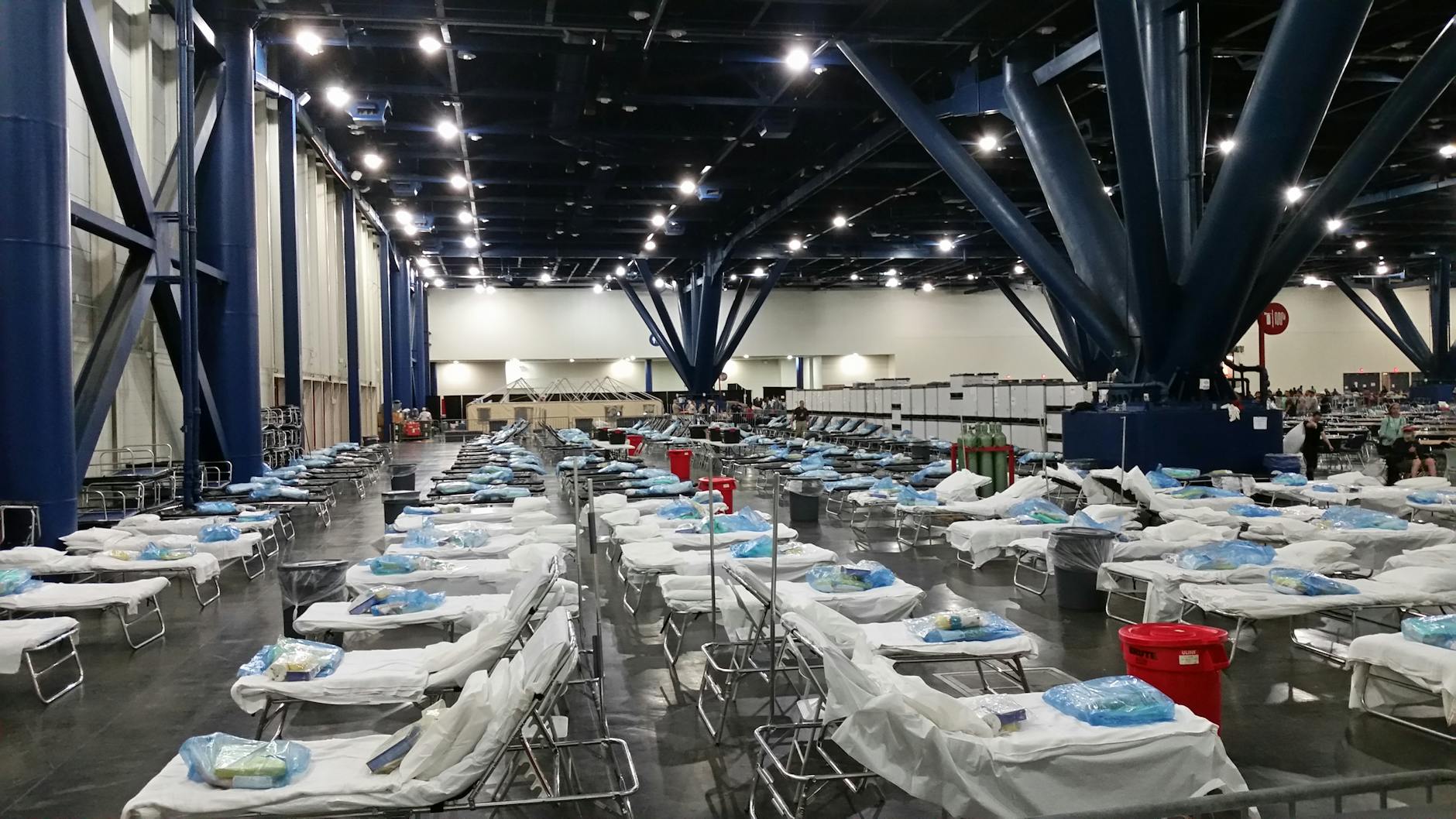
The above examples all focus on settings. I want to focus more on the knowledge base — where plot points and themes are informed by knowledge of a specific area. For example, I have some basic background in disaster management. I teach disaster psychology and case management. I know how people do triage in a mass casualty event because I have had CERT training. Because of my training in disaster mental health, I can spot the psychological symptoms of acute and post-traumatic stress. (I want to emphasize that I am not a therapist or counselor, and that I can’t treat people with these disorders.)

Photo by CDC on Pexels.com

I have written two books where mass casualty events come into play. One is Apocalypse, where an impending battle threatens to cause the loss of all the women of the world. Characters looking at that possibility project how they will react, with both despair and resiliency. In my most recent book, Carrying Light, two mass casualty events happen. Characters have to deal with emergency response, which includes the sobering truth that responders will have to leave some people to die. Acute stress reactions figure in both books.

When I use my knowledge, it provides more than just background knowledge and convincing details. It helps set the plot and the theme of the books. Plot points include recovering from working a mass casualty event; and themes include the toll that extreme circumstances take on those experiencing it. Writing what we know should, in my opinion, shape our stories to add to the realism of what’s presented.

Now, the issue of fantasy needing some basis in reality, or at least a consistent rule book, is an essay for another day.

Losing Steam

I’m losing steam with this book I’m writing, doubtless because I feel like I haven’t enough stuff to write in the remaining chapters. I tried an old motivation trick and went forward to more interesting chapters, having written one chapter where shit hits the fan and the last two chapters. That means I have about 5 chapters where not enough is going to happen unless I figure out how to write them without introducing filler. To advance the story past the “boom”.

This happens when one is pantsing a book. I feel like free-writing without an outline (i.e. pantsing) promotes a chapter-to-chapter view rather than a big picture view. “What am I going to do with this chapter?” is more how I write when pantsing. Although I get continuity by extending themes and plotlines (and I feel there’s a surplus of those), I still feel like the plot is going willy-nilly. Until it’s not going.

The book will probably turn out better than I think. I’ve written books this way before and they haven’t turned out bad once edited. But I prefer my outlines, so I can approach the next chapter and say, “This is what’s supposed to happen in this chapter.”

Wish me luck; I’m about to go back to writing.

I feel like a murderer.

This edit of Apocalypse is a bit harder than I thought. I need to make our unlikely heroes more unlikely, and by that I mean they need to struggle more. They need to be less successful.

More of them, in other words, need to die. 

I don’t like killing characters. Not because of sentiment; I would kill major characters if I didn’t need them for the plot. I’m just bad at writing death. 

But my dev editor is very, very correct. This battle is going to have to be stacked against my protagonists and people are going to have to die. 

Riding the Struggle Bus with my Novel

I’m struggling with Gaia’s Hands again. 

I just don’t get a feeling of cohesiveness. I feel like I’m blobbing paint on a sculpture randomly and it’s not smoothing out. I’m not sure what to do about it.  

If ever a novel needed to be burned in a bonfire, this is the one. Or is it?

Sometimes, my negative notions of a book I’m writing are based more on how I’m feeling at the moment than the book itself.  So I have to ask myself if the book is really as bad as I think it is, or whether I’m just feeling discouraged. Conversely, I have to ask if the book is as good as I think it is, or whether my opinion is being buoyed up by a bubble of optimism. I don’t come up with many answers, which frustrates me.

My husband is not much help. No matter what I write, he says it’s good. First draft, good. Twenty-times edited manuscript, good.  Never great, never bad. 

So I have to go back to that beast of a novel and try to smooth the random lumps:

  • Does the relationship between Jeanne and Josh (given the 25-year age difference) make sense? (This is a fantasy novel; suspend your disbelief.)
  • Are their connections with Gaia developing at a reasonable pace and/or precipitated by plot factors? 
  • Is the plot with Growesta/her department (the bad guys) developing?
  • Does anything feel just “stuck in there” for no reason except to pad out the word count?

I didn’t understand what editing was all about for the longest time. I copy-edited (proofread) and considered it editing. Now that I know what real editing is like, I understand why editing takes longer than writing the book. It’s challenging, and often bereft of hope.

Wish me luck, folks. I’m considering building that bonfire.

How I started writing novels

Well, I finally wrote/revised for three and a half hours yesterday, fueled by copious amounts of coffee. I didn’t accomplish that much word-wise — maybe 1500 words at most. But I think I’m getting closer with Gaia’s Hands. Lots of work to go, though.

Gaia’s Hands is my first novel. It’s always been a problem child of a story. When I wrote it, I had no intention of writing a novel. I had written a short story based on a dream I had about an encounter between myself and a younger man. (If you think the dream had to do with the fact I was approaching my 50th birthday, you’d be right. And the dream was far more bizarre than anything I wrote from it.)

I wanted to know more about the dream, so I started doing a Gestalt dream analysis method where one tells the story from the viewpoint of the different characters, and even the important inanimate objects of the story. (I didn’t go that far). During this set of writing exercises, a story developed. And then another.

After the third story that developed from the dream, my husband Richard looked at me and said, “You’ve got all these stories. Why don’t you write a novel?”

I had never written a novel before because I think in terms of short stories — small plots with big twists, big themes. Novels have big twisty plots, and I wasn’t sure I knew how to plot those. I wrote Gaia’s Hands anyhow. Its original name was Magic and Realism, and it was heavy in theme and extremely light in plot. It was basically a love story, and although I have nothing against love stories, the characters did little more than hang out together.

And then I wrote more novels, some of which collapsed into each other (For example, Magic and Realism became Gaia’s Hands, and then it subsumed another novel during the same time period called Gaia’s Eyes and that’s the novel I’m currently re-editing) and somehow I got better at writing big twisty plots.

It’s been a lot of hard work editing and re-editing, and then getting help editing from a developmental editor and re-editing, but I’ve learned my goal has shifted from getting published to getting good, then getting published. I don’t want to grow to regret anything I’ve published.

I guess now I can call myself not only a writer, but an author, because I have devoted myself to growth. And it literally, cliche notwithstanding, started with a dream.

Dissecting Gaia’s Hands and Learning Nothing Yet.

Maybe Gaia’s Hands wasn’t the best book to enter to Kindle Scout.

I’ve proofread it, demolished it, paired it with another book, trimmed that back so that I have two instead of four main characters, re- and re-proofed it, and still when I look at it I wonder if it’s a solid novel.

I’ve never known what to do with it. I love its plot lines — discovering one’s mystical abilities, a convincingly menacing pattern of harassment to one of the main characters, a taboo May-December romance (taboo because the woman is older than the man). I adore its characters — a talented botany professor, a precocious young poet, his best friend the surly engineer, the refined yet hangdog lab assistant Ernie, enigmatic waitress Annie, and even the smooth dean and hostile department chair Jeanne has to face.

But I’ve never known what to do with the book. The scenes almost come off as vignettes, with the connections between strands unapparent at first. The plot is subtle, not as action-packed. The characters carry it, but I always wonder if the book starts too slowly. I edit it again and feel something’s not quite there, I don’t know what the “something” is. With all the improvement I’ve done in writing for the past six years, there’s something in Gaia’s Hands too quirky for prime time.

Gaia’s Hands strikes me as a YA, except the male protagonist is too old at 20, the female protagonist is way too old at 50, and there’s not enough angst. (For all the harm Twilight did to women’s expectations of men — it’s okay to be a stalker? Really? — it did angst exceedingly well. And it sold.)

I look at Gaia’s Hands and feel like it’s missing something. Despite my greater level of experience, my writing skills, better knowledge of writing dynamics — my writing is missing something, and I can’t tell what. Maybe my style, my “voice” isn’t acceptable. I don’t know, but I wish I could figure it out.