Me and My Romance

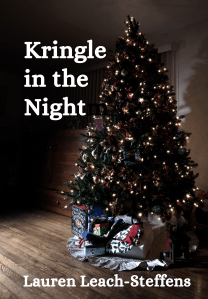
I am almost done with Kringle Through the Snow, which is the Kringle (Christmas romance) book I almost didn’t write. I thought I was done with the Kringle series (this makes six of them) until one of my Facebook friends told me I needed to write more. It took little arm-twisting, but I always wonder if the current book is the last.
I never thought I’d write romance. And, in fact, my romance is clean (only implied sex) and funny. It’s much more relationship based, although it promotes the Instalove trope, which means people getting attached quickly; I think because that’s always been my personal experience. There’s also several friends-to-lovers, enemies-to-lovers, and one age gap. (Two if you count the 100,000-year-old Su and the 6000-year-old Luke.)

Is romance realistic? It’s not supposed to be. It’s grounded in its society (whether that society be modern American, fantasy, science-fiction, etc) and fantastical in its romance elements. Some of the things that happen in romance would not or should not happen in real life (borderline stalkerish behavior, grooming, teacher-student romances) and some only happen in very defined and conscientious contexts in real life (S&M). Some things that happen in romance are just unrealistic. But romance is a type of fantasy — define the rules of the world and you can dream freely on the other parts.

To find my books, click here.

Realism in Fantasy

I write fantasy romances and romantic fantasies. Obviously, fantasy is part of what I write. But does fantasy mean unrealistic?

Not really. Fantasies have their own internal rules so that they don’t stretch realism past incredulity. For example, any magic user will not be invincible — that will make the story unrealistic. The character has to have magic for a reason, which the writer can reveal as simply as “he’s a magic-user” to a long, descriptive back story.

There has to be internal consistency to the magic system. Readers will balk at inconsistencies, especially convenient inconsistencies that favor the hero or villain. If you defy gravity, do so consistently.

I write contemporary fantasy, which means a lot of realism as modern culture, geography, physics and the like. So there’s a lot of reality around the fantasy, but I still have to make sure there’s some internal consistency in the structure. Nephilim fly, Archetypes teleport. Humans don’t get more than one gift from the trees. Archetypes can’t teleport split-second and everyone’s gifts have practical limits. Gaia’s presence does not pass beyond the borders of the Garden.

World-building accomplishes a lot of these rules and boundaries. I do a lot of world-building in conversations with my husband in conversations like: “Do you think Forrest can knit wool if he can knit bones together?” (We decided yes.)

Fantasy is more fantastic when there’s a point of reference, when there are winners and losers (even with the possibility to change in the story), and no power goes completely unchecked.

Photo by Pixabay on Pexels.com

Facing my fears (writing related)

My worst fear about writing is that, after developmental editors and publishing coaches, I will be left with this choice: Write what I love or get published.

I have gotten several rejections by agents. I don’t know if anyone will read me if I self-publish, because I’ve never been good at self-promotion.

There, I said it.

This has been my fear all along, that I will hit a dead end in my writing career — and yes, I think of it as a career, or at least the start of a career.

If that’s the worst thing that can happen, what are the possibilities?

  • I keep trying to find an agent, with the great possibility that revising my query materials will not attract an agent.
  • I self-publish, trying to get a readership on my own, which scares me to bits, because I hate self-promotion. I am convinced there’s a psychological disorder called “Midwestern Female Syndrome” in which sufferers display inward perfection while at the same time striving to look mediocre to others
  • I give up writing novels, because it’s really a waste of time to write novels that nobody reads.

I don’t have more than three possibilities in my mind. My mentor Les says that’s a bad thing, because there are always more than two options. I, however, cannot quit until I’ve exhausted all avenues.

On the flip side, how would I measure success?

  • An agent, and eventually a publisher if going the traditional route
  • At least 1000 copies sold of a self-published book, without having to resort to buying the books myself and reselling them
  • In the short run, at least breaking even on the investments I put into coaching, editing, and other items.
My vision, or where I would like to be:
  • Money to supplement my retirement in 10 or so years
  • A devoted readership
  • A book signing tour 
  • The confidence to say I’m an author
I think my goals are realistic — perhaps too modest, but realistic. 
This is where I am, world.
If you could send encouragement (non-anonymous preferred), prayers, wishes, or advice I’d greatly appreciate it. 

Interrogating Google

I’m not pushing myself for Camp Nano this time. I feel guilty, because I’ve written much more for NaNo and Camp NaNo — 50,000 words in one month is my usual challenge. But most of my novels have been contemporary fantasy, set in enclaves where the rules of the world were a little different. Or else they happened in familiar parts of the United States (“you write what you know”) and I didn’t have to do much research to write them.

Not so this novel. One of the characters comes from Poland and two from Japan. Because of this, I want to get the customs, beliefs, taboos, body language, and natural character correct — not as stereotypes, but as character traits. Big difference. Because our characters are currently in Poland, I want to get the details of Polish rail travel, popular food, even the sound of sirens correct. I read maps in Polish (and mangle the pronounciations badly, because ‘Glowny’ is pronounced ‘Goovneh’ or something like that). I use Google Translate a couple times a day, sometimes to translate whole pages. This is how I discovered that “Krakow Misalliance” is a food item at an all-night pierogi place in Krakow (which is pronounced ‘Krakov’).

I feel like I’m writing a term paper.

People who write historical fiction read the above sentence and have no pity. They do this process every time they write. This is why they’re called ‘historians’. I fantasize. It’s what I do. I had a dream where Ichirou shows Grace a screen saver he had drawn and animated that brings her into an unnatural state of calm. I wanted to explore these characters, Ichirou’s strange talent, why they’re in the same place at the same time, and the ethical considerations of Ichirou’s talent. In other words, I interrogated the dream again.

Little did I know I would be interrogating Google as a result.

Oh well, that which does not kill me makes me stronger.