Writing What You Don’t Know

A common piece of advice given to writers is “write what you know”, which is why there are so many books about writers. (This suggests to me that we need to get more variety in writers, because I’d like to read something with some detail about wait staff or electricians, but that’s off topic.)
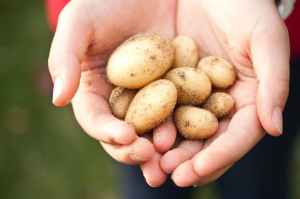
handful of potatoes
Photo by R Khalil on Pexels.com

To grow, however, a writer has to write about what they don’t know. This requires research, not just assuming that you do know. For example, Nora Roberts wrote a novel where, in the prologue, a character in Ireland is cultivating potatoes a long time before potatoes arrived in the Old World, being a New World vegetable. It’s natural to assume “Ireland = Potatoes”, but Ireland didn’t have potatoes till 1589. As much as I like Nora Roberts, here’s a historian’s take on what she gets wrong in one book.

Another example was a Jayne Ann Krentz novel (forget the name) whose male protagonist owned a winery. In this case, she got the details right, but the details were so sparse that the book didn’t have to have a winemaker protagonist at all. In this book, he strolled through the winery, and there was a little detail about a room with big barrels. I, as an amateur winemaker, expected at least a bit about him checking in with his chemist and taking a sample from a barrel to check out the taste. I expected my winery owner to be involved with the winery somewhat, for the sake of romance.

The takeaway is that your reader is going to know the details if you don’t. And the inaccuracy is going to take them out of the story.

Back when I was young, I wanted to write a story based on a long dream I had while sick with a kidney infection. My problem was that it took place “in the desert” and doing the level of research I would need just to show the characters’ interaction with the desert (wherever that was) would have been immense. I didn’t have time for immense research because I was trying to finish up a PhD. So I wrote a couple character sketches and segments of scenes and put it away.

Years later, the Internet made it possible for me to do the level of research I needed to finish the book. I chose the Owyhee desert (alternate future with demise of the US makes it no longer Bureau of Land Management land) and studied the flora and fauna as well as what food animals and crops would do well there for small landholders. I could not have researched that, nor could I have researched experimental underground habitats and water recollection. The book is named Whose Hearts are Mountains, and I’m going to publish it someday.

My advice for writing what you don’t know:

  • Look up basic facts, making sure that your sources are reliable. For the sake of writing, Wikipedia is usually concise enough, and its footnotes carry more information that will be helpful.
  • Provide enough detail that your readers are satisfied. This can vary, depending on who your readers are. But assume they want at least some accurate setting and background to feel engaged with your story. In romance, setting and background are one of the ways novels distinguish themselves with their time-honored plots and tropes. In fantasy, believable setting and background help you build a consistent world.
  • Ask yourself “what are my readers going to poke holes through?” Reinforce those areas with more real information.

Right now, I’m struggling to research the logistics of small town fire departments, fighting fires, and combustion in general. Luckily I live in a small town with a volunteer fire department, but I’m having trouble coordinating with the fire chief. I’ve been reading a lot online, especially things about fire trucks, firefighting gear, uniforms, and mutual aid. I have a couple small details I still need to find out. And this is just background to make sure the firefighting feels right. But I don’t want to write the book that people say “That’s not how it works” about. So it’s time to research.
The Internet Created My Writing Career

I don’t think I would have become a semi-serious writer before the Internet. I like to be correct over details, and before the Internet, I would have had to do much more difficult research to write anything, even a fantasy novel. I would have spent hours in libraries, searching for books and hoping the titles yielded the information I was looking for. I might search through an encyclopedia or two to glean some data about my topic. I would have spent so much time researching that I wouldn’t be able to experience the fun of writing. It would have been a lot like writing my dissertation. Urgk.

For example, in Whose Hearts are Mountains (my favorite book to illustrate the wonders of an Internet search), my online searches included:

Photo by Brooke Lewis on Pexels.com
  • Underground dwellings
  • Owyhee Desert
  • Wilson’s Sink
  • desert flora
  • desert fauna
  • dry land crops
  • water reclaiming
  • biodiesel
  • jatropha diesel
  • castor diesel
  • ricin poisoning symptoms
  • castor pomace
  • sage tea
  • smallpox
  • bubonic plague
  • bioweapons
  • guanacos
  • mules

Imagine having to go to a library for this search. Imagine telling the librarian you need a book on ricin poisoning. Imagine taking notes on all these items (and because we’re talking about the days without the Internet it’s also the days before a laptop) with pen and paper, and trying to arrange all those notes.

Imagine trying to juggle all these notes while writing.

Imagine feeling like writing after all that. I don’t know how anyone did it.

Using the internet, though, creates a responsibility to the writer. I must check the validity of all my sources to make sure the information is correct. Here is a source that explains the process of assessing the quality of information on the Internet. I use a lot of my college training to do this process, but anyone should be able to walk through the process outlined in the website above. (The process is also handy for sounding out claims of mysterious cures, deep state conspiracies, and urban legends.)

Whose Hearts are Mountains is a story I wanted to write about thirty years ago, but I found the research too daunting. It wasn’t “writing what I know” — it had to happen in the middle of a desert, and I knew nothing about deserts. I had that dissertation to write. But I could write it thirty years later simply because of the advent of the Internet.

Google First

A joke among writers is that, if law enforcement officials were to check their Internet search history, they would be booked for suspicion of murder.

There’s truth to that. Writers create all sorts of scenarios in their stories, gruesome as well as delightful, and some things don’t lend themselves well to the old adage “write what you know”. So you don’t need to shoot people or ballistic gelatin to find out how bullet wounds work, nor do you need to slice people to know the difference between arterial and venous bleeding. Thank goodness, because I’m a rather peace-loving person. (Note: I have searched both of the mentioned topics.)

Most of my internet searches don’t appear so gruesome. Google maps has allowed me to map a cross-country trip from Pickle Lake, Ontario (yes, it exists) to Wilson Sink Reservoir, NV (yes, it too exists) and inspect the terrain around the latter for Whose Hearts are Mountains. I have examined rooms in the Grand Hotel in Mackinaw Island and boarded the Strena Spirit in Gdynia, Poland for Prodigies. 

Before the advent of the Internet, I would have had to do all of this research in libraries, by locating experts (without Googling them), or with hands on experience. I quit writing Whose Hearts are Mountains 30 plus years ago, because I couldn’t find good documentation on what a desert was like,. Now the Internet allows me to pick a spot of desert, find out what the flora and fauna are, figure out the temperatures at night in March, and investigate how one can raise food through greenhouses and dry land farming.

The important thing to note about getting details right is that, if the writer doesn’t get the details right, the readers will — and they will not let the writer live this down. “That’s not an AK-47, that’s an AR-15” is a common refrain of gun aficionados on the Internet, and each knowledge base has its experts and fans who will find the mistakes in the writer’s narrative. Usually, of course, by Googling.

So it’s best to Google first.

Extrapolating the Near Future

If I wrote my books to take place in the 25th Century, extrapolating the future would be easy — I could make ships fly, fill them with artificial gravity, and use technobabble —

             “the core elementals are based on FTL nanoprocessor units arranged into twenty-five bilateral              kelilactals with twenty of those units being slaved to the central heisenfram terminal …”

                                  Star Trek: Next Generation, “Rascals”.

To be fair, this passage segment was written purposely as technobabble. Let’s try this:

            “No, sir. My brother’s positronic brain has a Type L phase discriminating amplifier. Mine is a                type R.”

                                 Star Trek: Next Generation, “Time’s Arrow, Part 1”

I write about the near future. Most of my books take place between 2020 and 2065. I’m told I need to describe these better by my new editor — actually what he said was “You’re too f’n smart”. It’s true, because I feel no need to explain “TEM” (tunneling electron microscope) and the like. Bad me.

To write the technology for my stories, I need to do the following:

  1. Think about what technology is needed in the story
  2. Research the current state of technology in that area
  3. Think about how much that technology might have progressed or regressed since now, given the increase in climate change, the eventual collapse of the United States (yes, that’s part of my future scenario) and the scarcity of some materials and plants.
For example, in 2025, we see the beginnings of food scarcity and economy collapse, and the technology will evolve toward low-tech growing techniques such as permaculture and low use of pesticides, and house building methods such as earthbags — building walls of earth-filled bags, and cob (mud and straw hammered into compact units.)
In the year 2035, the US has collapsed due to some of the forces we see in play now — domestic terrorist groups allowed to proliferate as the foreign terrorist threat was trumped up (see what I did there?)  Materials are often scavenged or created in small amounts in low-tech settings. The commune has adopted low-tech techniques from earlier days. They started early — 2020 — and laid down underground dens with above ground greenhouse domes and moisture-reclamation systems. All their technology is currently available or in development. They garden low-water vegetables and keep desert goats. If something breaks, they try to fix it themselves, do without, or materialize the part in InterSpace, but only if they’ve encountered the item before and understand it thoroughly. This is the last resort for these Archetypes, because they’re considered renegades from their own habitat, which is why they’re Earthside. If they get caught, they may be arrested and sent to NoSpace, the sensory deprivation chamber, for many years.
It is necessary to devolve as well as evolve technology. In 2065, the world has fallen into complete disrepair as there is not enough food for anyone. Many have died; the cities have turned to city-states; the rich hoard most of the resources and live in underground bunkers. Most of the cities have been bombed in skirmishes between the desperate and the cops, with the cops having the bulk of the power. There are buses, and electricity and electric burners, but little other technology. 
To develop this understanding of the technology, I have to do a lot of research before I write. Over the last couple of days, my search terms have included: high desert, desert farming, desert goat breeds, jatropha biodiesel (did you know you can make biodiesel from an easy-to-grow tropical nut?), edible jatropha, jatropha meal cakes for animals, atmospheric water generator, DIY shade paint, limestone mining Idaho, limestone to calcium chloride, how to make slaked lime, Navajo-Churro sheep, growing catfish with aquaponics, and underground desert living units. This is why I couldn’t write this book 30 years ago, because I couldn’t get hold of this research easily
Now, according to my editor, all I have to do is actually describe it to other people in my writing. 

Not at all Glamorous

I’m still writing on the new book (trust me, you’ll read that sentence over and over for a while yet) and just finished the scene where a group of prodigies of grade school through high school age experience a delicious dinner menu, poor behavior among the adult dignitaries, and a subtle menacing pitch that they can’t quite piece together. I wanted to write a whole chapter on the menu alone, but there’s no time for that.

Writing in the “plantsing” mode (with general ideas but not a complete outline) means that this next section, like all sections, will require the research I didn’t do earlier, which slows me down despite my amazing Google-fu.  For example, I look forward to looking up: “all-night restaurants in Krakow Old Town”, “trains from Krakow Glowny to airport”, “planes to Stockholm; Interlochen Center for the Arts; how to say “Do you mind? I’m going to the bathroom” in Polish, preferably more politely than that.

And that’s in addition to plotting a grand escape of sorts that includes waiting in a pierogi shop waiting to not be captured.

This is writing. It’s not at all glamorous, but turning the mess above into a novel is worth it.