That Stuff

My confession

“I don’t write THAT stuff.”

I could hear the inflection in the writer’s voice, even though she had typed and not spoken the words.

What stuff was she talking about? Sweet (as opposed to sexual) romance books. This attitude is not uncommon with the romance writers I have encountered, to where I have left a group of writers because of words dripping with disdain.

I don’t write the opposite extreme — Christian romance — either. I want sexuality to be important to my characters, just not necessarily on the page.

I obviously haven’t found my tribe.

Here’s my confession: I don’t write sex scenes. No steam, no lemon, no insertion, no moaning, no dirty talk, no bodily fluids, no humping.

Black and white image of female buttocks on black bacground

Why don’t I write sex scenes?

If you have preconceived notions about me, these might contradict your thoughts:

  • I have a perverse sense of humor and an open mind.
  • I enjoy reading sex scenes, as long as they’re not over-the-top or badly written.
  • I’m fascinated by my characters and wonder how they’d react sexually.

Some data which might explain things but I doubt will:

  • I’m almost sixty, which probably means I’m slowing down. But nah …

Why I write fade to black, closed-door, no explicit sex romance/romantic fantasy:

  • I’ve seen too many sex scenes that have taken me out of the book, i.e. miles of orgasms, heroic stamina, characters whose prowess becomes their dominant character trait. I’d read that for humor, not for a straightforward love affair.
  • I don’t want to get distracted from the relationship piece. I want to focus on the beginning of enduring traits rather than the short-term lust.
  • I don’t want to feel voyeuristic. I know they’re imaginary characters, but I’ve formed a bond with them and I feel this sense of respect toward them.
  • I like to use my imagination and assume my readers like the same.

I stew about this

My dilemma about writing explicit sex scenes may go back to a distinction I ran into a couple weeks ago between escapist romance and literary romance. I want to write compelling fantasy-romances/romantic fantasies about complex people in a world not quite like the one they entered. To do that, I have to write the way I write and hope it catches on.
Time to Face my Existential Crisis

Officially done with Spring semester!

This past week was everything a finals week could be: Students missing finals because I told them the wrong time, students sleeping in, potential academic dishonesty (it wasn’t), a good annual review, a lovely lunch with my colleagues, plants coming into the mail to remind me that there will be gardens … a great finals week.

Now for the existential crisis

I can’t postpone my confrontation with my writing any longer. I make excuses: I have to make a batch of bokashi to raise my compost game. After the semester, I should take a break.

No, it’s going to happen now. I’m going to confront my feelings about writing right here and now.

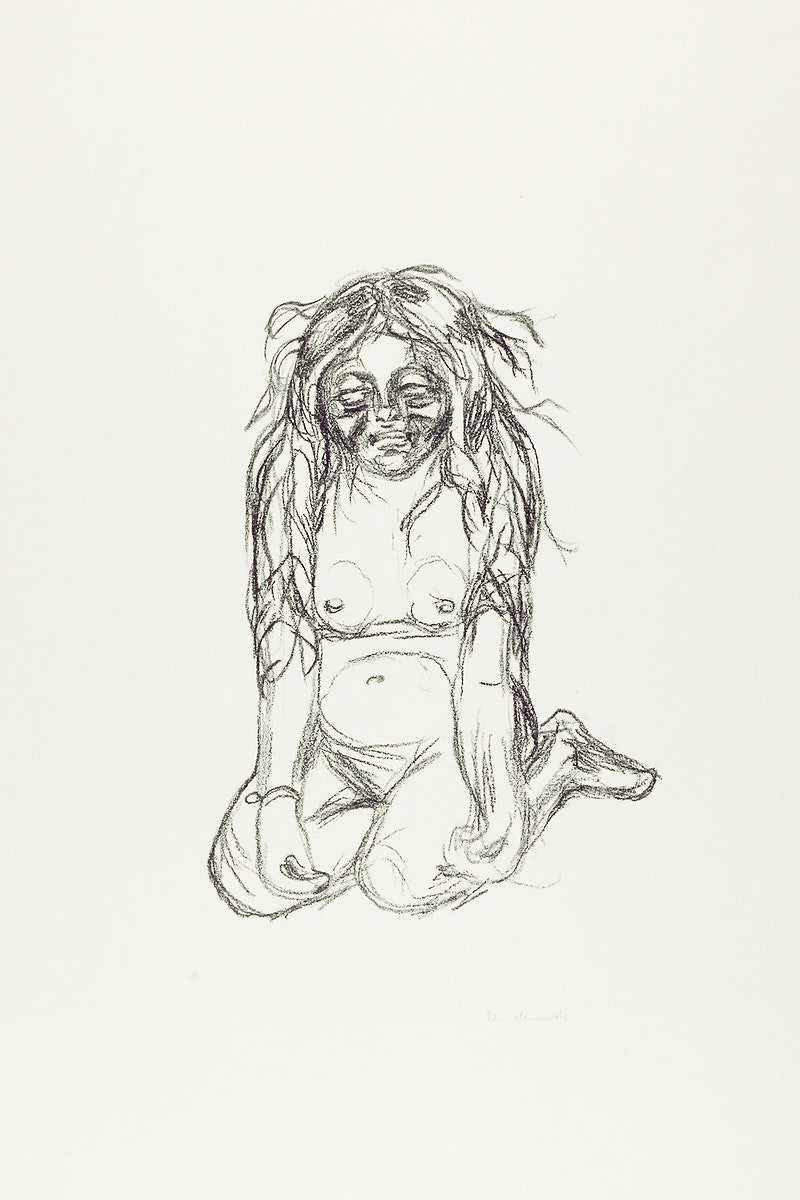
Artwork by Edvard Munch by The Art Institute of Chicago is licensed under CC-CC0 1.0

Who I am as a writer

This is the first issue for me as a writer: who I am. I write fantasy with some relationship elements. I write fantasy romance.

Most of what I have let out to the public, however (as opposed to most of what I’ve written) is the fantasy romance Kringle Chronicles. Those books are fun, relaxing, and put me in the holiday mood.

The problem is that I am not a romance writer. I have hung out with romance writers, and they talk about (in harmony) things I do not at all want to read or write: alpha males, shape-shifters, explicit sex scenes (I’m not anti-sex, I’m anti-unrealistic-sex), BDSM, and just everything over the top.

It’s about fantasies. And I can fantasize a lot about things, to where I’ve had my writing considered very original, but I want my relationships to be reasonably, well, healthy. I want my readers to think about the possible.

And this is where the crisis starts

We writers are told to write from the heart. My heart, whether in fantasy or romance, wants the people to be real and complex. In my fantasies, we have realistic characters thrown into fantastic situations. In my romance, same thing, except that the developing relationship is the primary plot point.

And I’m not sure what I’m doing sells. People apparently want alpha werewolves who are deadly but just and protective toward their mate, who until they showed up was the bullied and rejected waif (this is the synopsis of about 14 novels advertised to me on Facebook).

The crisis is that I can’t write this.

I write with the attitude that the alpha werewolf and the beleaguered waif don’t need a story. They’ve had a story for millennia. If I’m going to write Cinderella, I’m going to write it in a way that someone hasn’t done before — Cinderella is a librarian who has nothing but hard work and her garden, until a mysterious neighbor named Dane Prince sweeps her off her feet — but then she has to save him from the land of Faerie. (Actually, I am writing that story — it’s one story I’ve taken a break from).

But that’s the lingering feeling. I don’t know if the world needs my stories. I don’t know if I care about that, if my stories are good. If I found out that my stories nourished people, but the stories that sold were popcorn stories, I would want to keep writing nourishing stories.

But I don’t even know if my stories are nourishing, because I’ve had trouble selling them.

Which brings me to the other thing: marketing

I don’t sell books because I am terrible at marketing. I am terrible at bringing myself to carry out the strategies of marketing and pretty bad at the strategies themselves. Post on Twitter 12x/day? Write an interesting newsletter? An eye-catching visual on Instagram? Heaven forbid, a video on Tik tok?

Again, I write what my heart tells me to, and I’m afraid it’s boring.

What it boils down to

I know what this boils down to: I think too much, and more than anything, I think I’m boring. If anyone has a solution to that, let me know.

Random Observations About Writing

About poetic language vs realism

I notice that the sunrise this morning is not really pink — maybe more of a salmon color, but that’s not poetic, is it? “The salmon-colored dawn.” No. Just no.

“Rosy”, on the other hand, is poetic. And everyone who reads the poem or prose takes the same poetic leap and accepts the dawn as rosy.

Photo by Sebastian Voortman on Pexels.com

About writers and coffee

I’m in a writer’s group on Discord, and the caffeine addiction there is real. To the point where we talk about how we make coffee and what blend we use. And heaven forbid we skip our coffee in the morning.

I haven’t met any tea drinkers, but it could be a small sample size. Do you drink tea?

About that self-doubt

The same group of writers admitted that they too have self-doubt.

About romance categories

There are many, many romance categories. Superhero, bad boy, playboy, alien. Sweet, steamy, hot, erotica. Friends to lovers, enemies to lovers, boy next door, strangers to lovers. Science fiction, fantasy, contemporary, historical.

And because of my self-doubt, I don’t know if I belong to any of these.

Marketing

Right now, I feel like most of my writing time is spent in marketing, and I don’t even have anything on imminent publication. I’m using The Kringle Conspiracy as my hook for newsletter subscribers, so that’s out. This is all a very strange journey and I don’t know how things are going to work this fall when I’m back to work.

What about you?

Do you have any observations about yourself as a writer, or if you aren’t a writer, other writers? I’d love to see you drop these in the comments!

News Flash: My Newsletter!

Photo by cottonbro on Pexels.com

I have a romance/fantasy newsletter coming out!

I am a writer of fantasy and romance novels, which I’ve talked about in these pages. As a way of developing my marketing presence, I have developed a newsletter for my once and future readers, called Hidden in Plain Sight. It can be found here.

Also, for all of my social media collections, I can be found at: Beacons

Happy Connecting!

Lauren

Ego, or Facing My Prejudice About Romance

I’m adjusting to the fact that I write romantic fantasy or fantasy romance. Fantasy romance is romance with fantasy conventions; romantic fantasy is fantasy with romantic elements. Given this dichotomy, Gaia’s Hands (the bastard child of my works that I’m currently editing) is fantasy romance, while the others are romantic fantasy.

I think I’ve internalized a subgroup’s perception of romance as tacky and trivial. I admit titles like “The Billionaire’s New Secretary” make me cringe because of the obvious and outdated gender roles (but at the same time they’re making more money than I am).

Photo by Trung Nguyen on Pexels.com

Romance sells like popcorn at a movie theater, at the same time that the readership of other genres are decreasing. Because it sells, I might have a better chance at getting my books read. At the same time, there’s part of me (the egotistical part) that thinks my books have to Mean Something. At this point I would best chat with my ego and point out that High Art sitting on my computer isn’t doing any good.

I’m not writing Books That Mean Something. I hopefully am writing books that people care about. That’s where I want to be, and my ego better clear out and let me do it.

Another Sunday Morning and a Little Romance

It’s another Sunday morning, and it’s dark and snowy outside. And cold, let’s not forget cold (1° F, feels like -14°). I didn’t want to get out of bed, but the thought of breakfast — French toast and turkey bacon — made me consider sentience.

So now I’m downstairs in a living room bundled up and drinking coffee and learning new tricks in WordPress (see that impressive drop cap?) while listening to the best of the Baroque.

Today I will write. More like edit the problem child of my years of writing, Gaia’s Hands. I have rewritten and revised this story so many times and have not been happy with it. This is another revision, as a fantasy romance, which I have been told it is.

I wonder how many of you have tuned out because I said the word “romance”?

Romance is the most denigrated genre of books, yet there are romance elements in so many genres. And yes, there are familiar tropes in romance — enemies to lovers, friends to lovers, reverse harem (woo!) — but there are in science fiction as well (cryosleep, generation ships, space pirates, and even interspecies romance!) I’ll admit a lot of romance is like eating popcorn — yummy, addictive snack food — but snack food sells because people eat it.

So, it’s Sunday morning and I’m going to edit a romance novel (and add more to it) today. And stay inside, definitely stay inside.

My male protagonist scares me


Josh Young, my male protagonist in Gaia’s Hands, is my worthy adversary.

He scares me because he is a younger man in love with an older woman (He’s 25, she’s 45). It’s still taboo in this day and age, more so than an older man with a younger woman. In the latter case, people turn their heads away with distaste (and, for older men, envy). For women who would date younger men, the outrage raises to a pitchfork-wielding pitch.

A lot of this is based on outdated gender roles. According to these, men aren’t even marriageable till 30, when they’re well on their way to conquering the world, according to dominant culture and romance novels. Women, on the other hand, can’t be as accomplished as the men and their basic commodity is their youth and childbearing ability. Relationships are based on this exchange, which is hypothesized to result from the biological imperative of reproduction of the species.

But at the same time people adhere to the cynical, commoditized view of the above paragraph, we believe in a true love that transcends all barriers. And people write romance about transcending those barriers. Except for an older woman and a younger man.

The barriers assume that all twenty-something males are the same, that they are at a specific (and one may say arrested) state of development that includes a societally-endorsed mix of partying with the guys, living in apartments crawling in garbage and dirty dishes until their mother comes and cleans up the place, and gaming unbathed for days on their PlayStation. 

I want to assume differently. Josh Young is 25, with a Masters in Fine Arts and a job as instructor at his alma mater. He has a best friend who he met years ago at aikido lessons, and he himself is ranked 2nd Dan in aikido. Because this is a fantasy novel, he keeps a secret — visions that guide his life, and one of his visions brings him to the side of a woman twenty years older. And he resists, not because she’s too old, but because he’s too young.

I’m bathed enough in dominant culture that this is hard to write, but at the same time I’m compelled to write him as significantly younger, if a bit wiser for his age than typical. 

Wish me luck. 


PS: There are apparently older woman/younger man romance novels. Maybe I can pull this off!

PPS: Apparently there is a whole genre of Korean drama that features older women/younger men. Woo hoo!

Romance is not Picture Perfect

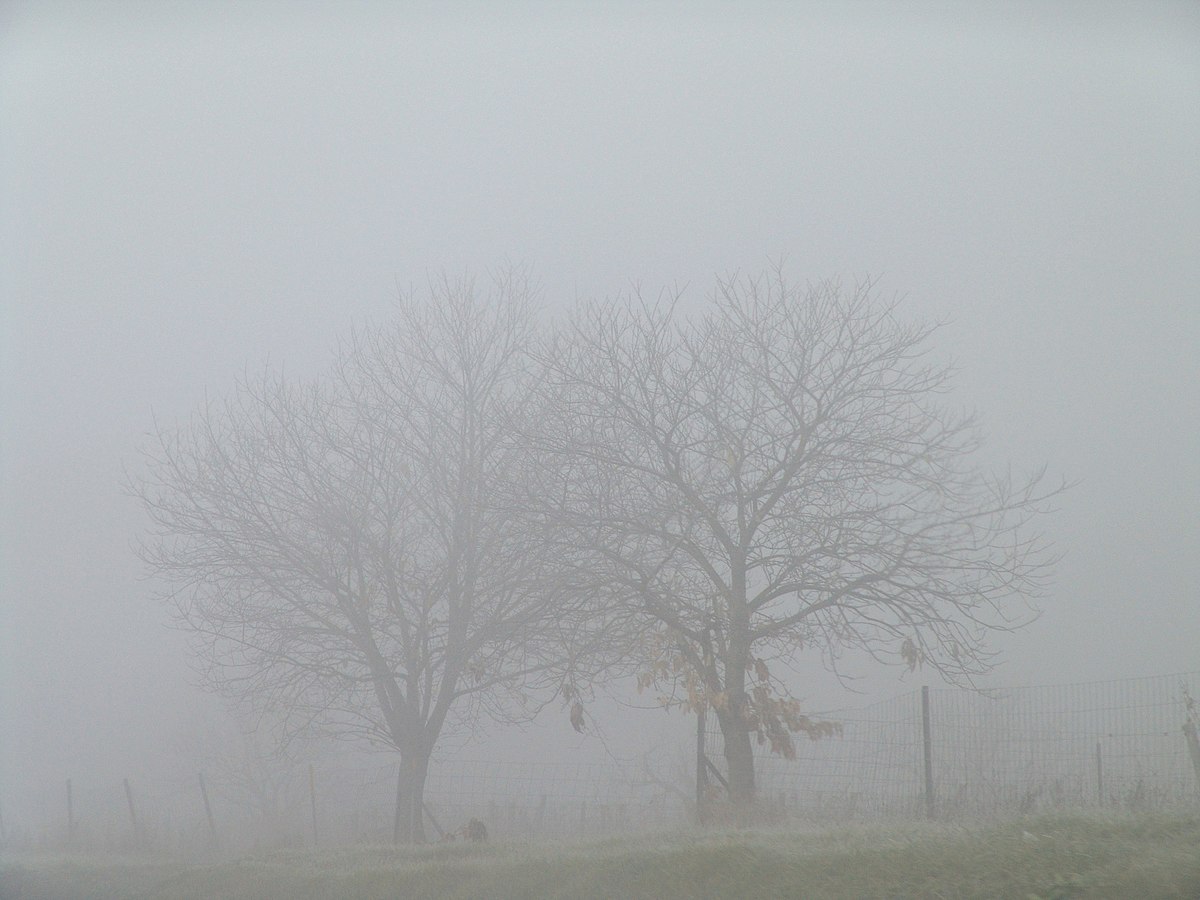
 It’s dark and foggy outside my window, tempting me to set foot on the porch and feel the mist — 

Noooooo! It’s cold out there!

Just one of those moments where a romantic notion is foiled by reality. 

Winter wonderlands filled with frostbite.  Hiking solo and getting lost. The elaborate ring presentation interrupted by the sound of eyes rolling. Sex on the beach with sand getting in very personal places.

Yet we still persist in trying to emulate impossible romantic scenarios as seen on TV (Hallmark Channel, I’m looking at you!) Instead, we should be finding romance in our own lives. Sharing traditions, having tea for two no matter that your tea set is two mismatched coffee cups and a pot you bought at a yard sale, telling stories in front of a fireplace (even if it’s not yours). It’s the presence of people together, or even a solo person and their dreams, that makes it romantic.

The fine moments you think about later are the romantic ones, the moments that gave you joy and connection and shared meaning. They do not need to be made picture-perfect, because pictures are not perfect in real life. 

Look! I might be self-publishing something!


Yesterday, I was trying to figure out what I would write for NaNoWriMo, which is in November, but it’s never too early. Richard, my husband and partner in crime, suggested rewriting a Christmas Romance novel I put aside in despair thinking it wasn’t romancy enough. 

I thought about that, and then looked for a tool to help it be more romancy (it’s now a word, deal with it) and found Jami Gold’s romance beat sheet. Walking through the beat sheet, it seems that there’s not a huge amount of work I need to do — emphasize some points, make sure the timing is right, fix a subplot. This can be done.

Then I stepped into Facebook and asked my friends if I should be fixing a novel that read a bit like a Hallmark Christmas movie. I got a resounding “Yes” with one of my friends, Heather, suggesting I self-publish it. 

And the bubble up giggle of delight broke out. Maybe this, a low-stakes publication, would be my entry into self-publishing! I don’t think of myself as a romance writer, so I don’t have much ego invested in this if it doesn’t do well.

 So guess what I’ll be doing today? Rewriting, daydreaming, and shooting for a mid-October publication date. 


Any of my self-publishing friends out there, please check in with me!

Counting the words

I am trying to extend a 1200 word story into a 7000 word story for a writing contest. I’ve written 300 words so far; so I only have to do this 22 more times. 

I tend to like short, concise writing, even in novels. I wonder if it’s because I’m relatively impatient, or whether I have a short attention span, or whether I really really can get everything I want done in fewer words. I’ve been told the latter by my dev editor, who doesn’t want me to lengthen things. On the other hand, I have a short story that an editor would like to see as a novel. He’s absolutely right, and it would make a great prequel to Prodigies, but I would have to immerse myself in Poland for a couple weeks to get the feel for it. 


So, back to the story. The story is Kami, and it’s about death and afterlife. It also features Jeanne and Josh Beaumont-Young, one of my favorite couples. Jeanne at this point is 80 and has just lost her 55-year-old husband of 27 years. I like the couple because they defyour common notions of love and attraction, and because they have a chemistry despite their bookishness.

I need to take a deep breath and set myself a writing goal, and just write, then edit. Luckily I have a vacation to do it.