Crippling Self-Doubt and the Writer

An occupational hazard
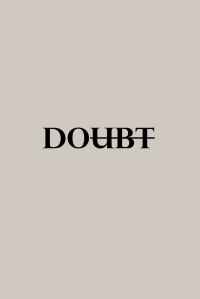
Photo by Olya Kobruseva on Pexels.com

To be a writer is to be afflicted by crippling self-doubt. It takes only a Google search of “crippling self-doubt” to confirm this. It’s not surprising. If a writer writes for an audience, they bring their works out into the daylight.

If they’re showing their friends what they’ve written, they’re afraid of being judged. Because friends often skip over the Facebook post, they’re never quite sure if they’ve been read. Because friends are often afraid to hurt someone’s feelings, they will be wary of compliments.

If the writer submits for publication, they’re afraid of being rejected — and they will often be rejected, because their work is competing against others’ writing.

What to do about self-doubt

There are several articles on the Internet about how to deal with self-doubt. See here and here for examples. I don’t want to hash over these excellent articles, so I’ll write from my experiences and hope the advice is helpful.

  • Keep writing. Being a writer is a calling, even if not a penny is made on it. Write your way through the fear.
  • Keep improving, especially if the goal is to become published. Relish the feeling of improving. Take all criticism as room to improve.
  • Find support. Whether this be a Facebook group or your friends or spouse, find someone to express your frustrations to.
  • Stop negative self-talk. There are apps on iOS and Android that teach a journaling method that contradicts negative self-talk with realistic thoughts.
  • Remind yourself why you’re writing. Reconnect with the joy.

A takeaway

Writers aren’t the only ones with self-doubt; it crops up when we have to speak publicly, at our jobs, and any place where we step outside our comfort zones. What are your solutions for self-doubt?

The gaping maw of self-doubt

While editing, I realized Whose Hearts are Mountains really isn’t a bad book. In fact, it’s pretty good. I could look at it tomorrow and believe the opposite.

I may be the worst critic of my own books.  As well, I may be too enamored of them. On bad mood days, I focus on the errors and despair. On good days, I think my work lyrical and moving. On most days, I wonder how I can get myself published and wonder if anyone will read me.

Apparently, self-doubt is a constant companion of good writers, no matter where they are in their career, even if they have published books, even if they’ve made the bestseller list. So if I get published, I’ll still have the doubt.

I’ve sensed this all along. Insecurity is a gaping maw in the pit of one’s stomach, which requires more and more proof to feed it, and it’s never satisfied. 

My self-doubt doesn’t need more food. It needs to be accepted as a part of me that will always be hungry.


Self-doubt

I am re-editing Apocalypse, which originally was two novels until I realized the first novel would fit into the second one nicely. I intended this to be the next developmental edit until I got swamped with self-doubt during the editing:

Is the premise asking people to suspend disbelief too readily? Is the plot evolving too fast? Did I lose too much in the edit? Should I just give up writing?

Any writers who read this will understand self-doubt, the plague of writers everywhere. Or is it?

If self-doubt becomes the cloud of negative self-talk with generalizations like “I can’t write”, “I’ll never get the hang of it,” and “my work sucks”, self-doubt is a plague that should be banished along with overcooked green beans and day-long meetings. Cognitive distortions (overgeneralization, all or nothing thinking and name-calling in the example presented) provide no real information to help us improve and only serve to make us feel bad.

But there’s healthy self-doubt, the part that helps us edit the self-indulgent pieces out of our writing, the ones that help us bridge gaps in plot, flesh out characters, and make our books better than we thought they could be.

May we only have good self-doubt.

******************
Today’s weather (snow and ice) has left me with an unscheduled writing retreat at home. I’m not complaining at all.

Write as if people want to read you.

I’m okay as a poet. I’m better than I used to be, but I still feel like there’s something I don’t quite understand, maybe how poetry distinguishes itself from lyrics (the latter of which I feel I do well at), or how to show what I want to say instead of telling. 

On the plus side, I write poems better than I used to.

The breakthrough was when I needed to write poetry in the voice of one of my characters in a novel. Josh turned out to be a much better poet than I was. This should not make sense, as Josh existed only in the novel and he couldn’t write any words I didn’t put in his pen. In other words, I was Josh. yet his style held mysteries mine didn’t. It held stylistic experiments I’d never tried.

The biggest thing, though, was that Josh wrote as if people wanted to read him. 

I put that into italics because that just occurred to me. Self-doubt puts limits on our motivation, our daring, even the effort we take to write. And it’s an uphill battle for many, even most of us. It keeps some from writing, and others from seeking publication.

Something I need to think about.