It’s a SMART Goal Now

According to my past posts, I have set a Big Audacious Goal twice already for this year. The first one was to edit and query Apocalypse; the other was the one I came up with yesterday to double my social media presence. I’ve gone with the latter, because it confronts all my lingering reluctance to promote myself:

Photo by Pixabay on Pexels.com
  • My writing isn’t good enough
  • Nobody wants to hear from me
  • I don’t need a media presence
  • Nobody loves me! (Does this sound familiar?)

I’m working on 1) creating the SMART goal and 2) having fun with it.

First, the SMART goal. I will:

  • Post using Loomly twice a week
  • Post to Facebook and Twitter (I already post my blogs there)
  • Only post book news once a week
  • Use as many Loomly suggestions as possible to improve my social media posts

As for having fun, that’s just a natural part of who I am. Funny pictures, word play, bad puns — all come easily to me.

There’s a cynical part of me that says that this will not make any difference in engagement, but I have to take something on faith. Wish me luck.




Trust the Process

I have probably written this before, but it’s something I keep reminding myself. Write my blog, even if it doesn’t have a hundred followers (I do, but they don’t read regularly, I guess). Talk about my books wherever I can, even if it doesn’t yield many readers. Post on TikTok, even though I don’t reach over 250 humans (assuming they’re all human). Write that newsletter every three weeks, although I know that less than half my mailing list reads it.

Why do I keep up with my social media? Because I won’t get more readers if I don’t. I remind myself that 250 TikTokers are greater than zero, and 100 blog readers are greater than zero, and someday I may have more readers and more reviews on my books.

Photo by Pixabay on Pexels.com

It’s hard. Writers want to write, and by writing, I mean works that showcase their talents. We don’t see promotional work as showcasing our talents as much as writing short stories or poetry or novels. In addition, we don’t enjoy promoting ourselves. It seems like bragging, or like annoying people while they’re drinking their morning coffee.

I have to trust the process — write my best, don’t always directly promote the books, be funny but be natural, and hope for the best.

Thank you for reading.

Where Do I Go From Here?

Marketing myself

One of the things that has been happening to me this summer is that I’ve mostly been marketing, but that’s part of the whole writing process. Today I will be revising my cover letters after getting some expert help from a published author (thank you, Sofia Aves!) and checking for more subscribers to my newsletter list. And then maybe outlining the rest of the Kel and Brother Coyote series. And — what am I being called to do?

I haven’t written for a while

I haven’t written on my creative works for a while because I’m discovering the marketing side of things, but I’m itching to get back to the writing part. The selling part still seems to be so far away, but I am contemplating putting “Gaia’s Hands”, a fantasy romance, on Amazon to try to get more people reading my works.

Photo by cottonbro on Pexels.com

But I do need to write. I need to get totally fascinated to write, and I haven’t had a break to do that. I need to fix this.

Taking Myself Seriously

I think that through this process where I’m taking an active role in promoting my works, I am finally taking myself seriously. I don’t need external sales (how many are enough?) to start marketing. I don’t need external validation to start making something of my sales. Deep breath — this is growth for me, and evidence that I am a serious writer no matter how much I dislike flogging myself.

For the curious

My social media are at the following:

This Morning

Gloomy morning

I type this as I look out the window right by my writing area, a corner of the living room. The sky is pretty dark and teases rain. The rain, however, shifts to the south of us, barely sprinkling us.

I want a gullywasher, the sort of rain that, if you’re caught in it, you just give up and stand in it, getting drenched to your skin. The sort that sheets as it hits the pavement, that drums on the roof.

Photo by Chevanon Photography on Pexels.com

I think I’ve written about this before. I am obsessed with rain.

Coffee and love

The coffee has arrived. My husband makes it every morning, because his love language is acts of service. I thank him because my love language is verbal affirmation. Then I spank his butt because another of his love languages is physical affection.

Is coffee itself a love language?

With miles to go

My latest project is laying out the pieces to publish a newsletter. The reason for this is that I’m working on developing a more robust marketing platform for my books. The reason is twofold: it provides reassurance to an agent who’s considering my work, and it provides me a platform for what I self-publish (currently just the Kringle Chronicles books). It was — and continues to be — much work on sometimes buggy platforms.

The whole concept of marketing has taken on a life on its own; I now see a third reason to do it — to connect. I think that online contacts are real connection, although the character is more like seeing people in the café and saying hi than being intimately connected to someone. Social media is more like light flirting, although platonic.

What about you?

What are you doing today? Let me know in the comments.

In Love with Social Media

I’m having two conversations at once — one with a woman I have never met, the other with a man who is 13 hours away. These are the wonders of social media.

It’s because of social media’s ability to transcend place and time that I survive through the COVID era of distance and extreme caution. I am not an extrovert, but I love real conversations, the ones where you get beyond “how are you” and into things like culture, beliefs, and stories.

I was on social media in the 80’s, before there was social media as we know it. In college, I spent time on the PLATO system, which was mostly an educational system with functions that were used as social media as well as instructional communication. We had what we called “notesfiles” (which became Lotus Notes, and influenced later social media) which would be equivalent to Facebook’s Groups and subreddits. We had chat, known as term-talk, group chats — anything familiar to today’s social media user.

What PLATO didn’t have was a beautiful visual interface, instead having a line command interface much like pre-Windows computer; the ability to go to other sites to do research, and access to dating sites (although this is arguable; I had gone on two or three blind PLATO dates before Match.com existed. We didn’t worry about this, because were were a close-knit community, even though some of us were states away.)

Today, social media is so much more amazing than I expected it would be. Beautiful visual web pages, sites and apps that can facilitate sharing lives (Facebook), sharing pictures (Instagram), bond with video clips (TikTok), date (numerous, but I met my husband on Match.com), or become a base and despicable being (4chan).

And today I can open up the world with social media. I become just a little more cosmopolitan, vicariously.

Musings about my social media

 My schedule is going to change drastically this week. Wednesday I start early walking (5:45) to start toward losing some of this COVID weight, and Friday is when I set foot on campus for the first time since March. 

This means I will not be writing this blog in the mornings; yet, morning is the best time to capture readers. I have decided that I will write in the afternoon or evening and post my links (Twitter, Facebook, Instagram) the next morning using Hootsuite. 

Speaking of, do I have any readers out there who have better luck with social media than I do? On one hand, I have 4400 followers on Twitter. On the other hand, I have about 25 readers a day on this blog. What do I need to be doing with this blog?

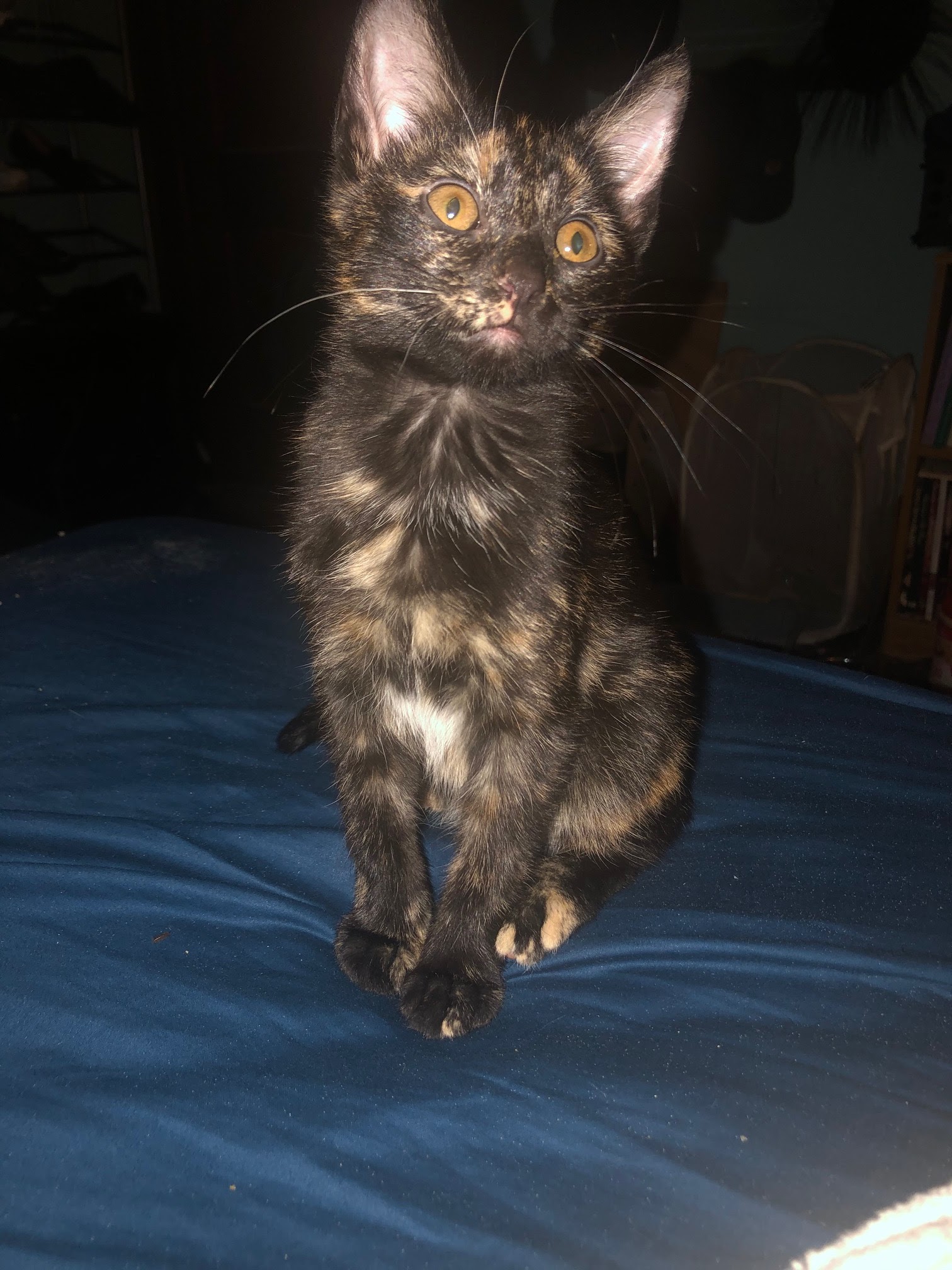
Oh, yes, apropos of nothing, here is the latest picture of Chloe:


Tweetdeck vs Hootsuite — a writing blogger’s take (Social Media)

Social Content Managers
I don’t have the money to have an assistant handling my social media. (And, unless I become the next JK Rowling, I won’t). So I have to depend on social content manager web pages. I use two social content managers — Hootsuite and Tweetdeck. Here’s what you can expect for each and why both can be useful:


Hootsuite: My everyday workhorse
I will be talking about the free version of Hootsuite, as I can’t afford (nor do I need) the full versions, which runs $29/month for the professional (individual) account. The free version does enough for most uses. You can follow your feeds on three different social media sites at once. More importantly, it functions as a launcher for multiple social media sites — three different social media for the free version. I have my Hootsuite working with my Facebook Pages, Twitter, and Instagram, and can send the same post through one, two, or all three sites at once.  Free Hootsuite can be found here.


However, Hootsuite allows for a limited number of scheduled tweets, four in total, in their free version. Sometimes, if there’s a #PitMad or a  #IWSGPit (sessions for pitching a novel on Twitter), I need 12 pitches, one for each hour the contest runs. This is why I turn to Tweetdeck.


TweetDeck: For Targeted Twitter Time
Tweetdeck does more functions than free Hootsuite, but only for Twitter. TweetDeck is free, which makes it tempting if you’re a Twitter-only social media user. 

TweetDeck can follow multiple functions of Twitter at once — home, notifications, messages, trending, and submitted tweets. I think the beauty in TweetDeck is scheduled tweets. As I said above, in the case of a pitch contest, one needs to be posting once an hour. That’s twelve hours with two books I’m pitching, which is 24 posts. Although one has to prepare each post seperately, TweetDeck handled all of them without balking. Free TweetDeck can be found here.

In Conclusion,
Hootsuite is my everyday social media companion. Its free version does everything I need on a given day. But on those special days where I need to tweet a lot throughout the day, there’s TweetDeck. Does anyone use either or both of these? Tell me why at lleachie@gmail.com.

Putting Together my Writing Platform (Social Media for Writers)


Learning something new
I have been reading through Robert Brewer’s Guide to Literary Agents 2020 (publication date 2019), and I discovered a treasure trove of information on building one’s writing platform.

What’s a writing platform?
According to Writers’ Digest, a writing platform represents a writer’s visibility through their identity, their personal and professional connections, and social media (Carpenter, 2012). 

I’m embarrassed to admit that I didn’t know what a writing’ platform was when I was asked by a hybrid (traditional with self-publishing elements) publisher what my platform was. I didn’t get the contract there. 

Thirty Days to a Writers’ Platform
Brewer’s book contains a thirty-day path to your platform, I have to admit I’ve done the beginning steps already not knowing they were part of a platform. My blog, my author account on Twitter. But now I’m stepping it up. 

More about this as I get more established.

References:
Brewer, R. (2019). Guide to Literary Agents 2020. Penguin Random House. 

Carpenter, C. (2012). The Basics of Building a Writer’s Platform. Available: https://www.writersdigest.com/writing-articles/by-writing-goal/build-a-platform-start-blogging/building-a-writers-platform [January 5, 2020).

My Facebook Page has Moved

Dear Readers,

You probably didn’t know I have a Facebook page. I do — and not only that, I have a Twitter and an Instagram account. I’m trying to up my social media game in case I self-publish, and even if I don’t, so I can promote my work (which is hard for me to do).

Feel free to add me:

Twitter: lleachsteffens
Instagram: laurenleachsteffens
Find my page on facebook: @laurenleachsteffens

Dear World and the Transformational Story

  • Reflect on a personal story about who you are, who you were, who you want to be:
    • Write phrases about yourself free-writing
    • Pick a phrase and tell a story about it
    • Tell the story to someone else
    • Review the notes they’ve taken
  • Find a phrase in those notes that tells your story.
  • Have a portrait taken with you “wearing” your story.
  • Share the portrait with others
This is the basic model of how Dear World helps you find your story.
I’ve been thinking about this in terms of storytelling and why we tell stories. Yesterday, I taught about open-ended questions in Case Management class. Open-ended questions do not use words like who, what, where, when, why, how, how many, or how much. Rather, they tend to take a form like “Tell me about …” and variations. In other words, they ask the client to tell their story, which gives the case manager the information they need to help the client and, perhaps more importantly, provide the client the opportunity to tell their story, often traumatic and sometimes sordid, to a nonjudgmental, safe party. It becomes an affirmation of the person, perhaps the first they’ve ever gotten.
I see similarities in the two processes above, case management’s open-ended questions and Dear World’s script for finding stories. The idea in both is for the listener to be a facilitator, and not a shaper, of the story. I see differences in the processes above, mostly dealing with the shape of the final message — one a narrative in a report, one a media-friendly portrait.
How can I get your stories?
You see, I want my readers’ stories. I want to listen to them, to acknowledge them. However, we’re on a social media platform where I write and you read. Most people don’t even comment on blogs (Hi, Chris! Hi, Lanetta! Hi, Lynn! I love you!) because they come here and read quickly, just like everywhere else on the Net. So for me to ask for your stories seems too much to ask.
Tell me who you are in one sentence. 
You don’t even need to tell me your name.
I’m listening.