Odd Things that Make Me Feel Nostalgic

As a writer, it’s good to examine what my personal symbolism is — first, because it may provide universal symbolism for my stories. Second, because sometimes my personal symbolism is so personal that it just confuses my readers.

I feel nostalgic seeing cars driving by in the early morning. It comes from being up very early in the morning as a child when my mom had to drive my dad to a pickup point so he could get to work. Mom would wake my sister and I up early and we would eat cereal in front of the tv watching the hog futures with Orion Samuelson (this is a 1970’s Chicago area TV reference) as it was the only thing on TV. Then Mom would bundle us up for a 20-mile car ride in a blue Buick station wagon, during which we would often fall asleep. The occasional car driving by in the dark reminds me of a moment when I felt the rest of the world was sleeping around me. I don’t know that this image would speak to anyone else.

Another thing that makes me feel nostalgic is antique auctions. I spent several weekends a year in my childhood at junk auctions as my parents searched for treasures. From rain-damp backyards to big, dusty antique barns, drinking small styrofoam cups of hot chocolate and eating hot dogs for lunch. I remember feeling special as very few children got to sit through auctions with their family. I once bought a box of junk for 50 cents and later sold the cookie jar from it (a primitive with blue cobalt glaze) for $9. Is there anyone else out there who would pull up a feeling of boredom and curiosity from the images of a junk auction?
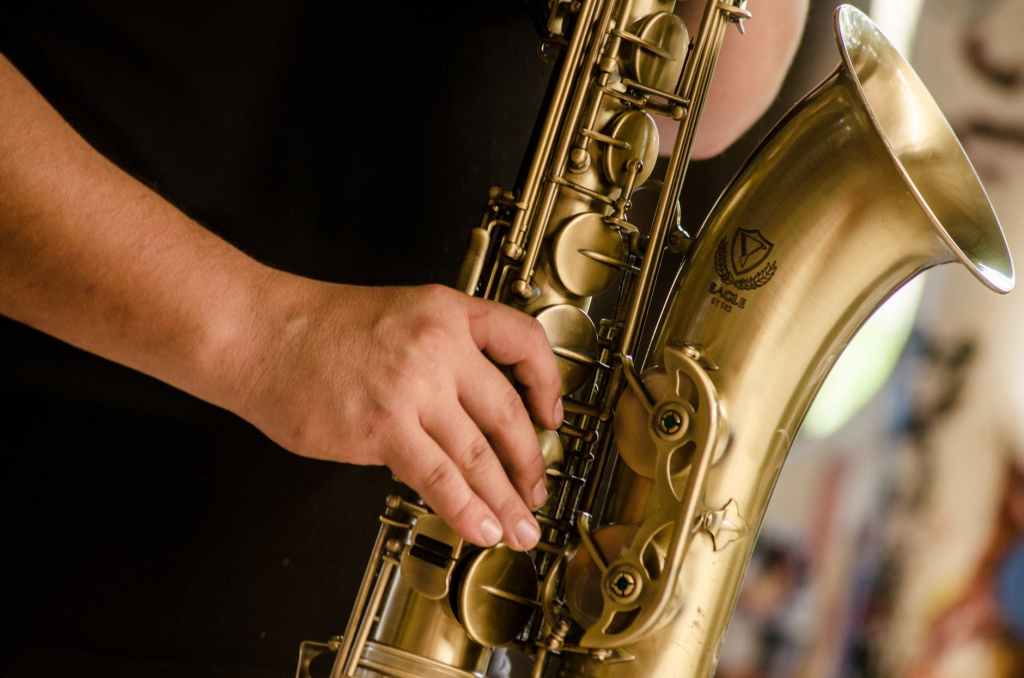
Photo by Ruca Souza on Pexels.com

Then there’s my experience with certain rock songs that use harmonica or sax. Think “Whatever Gets You Through the Night” by John Lennon or “Helpless” by Neil Young. I remember the first time I heard the former on the car radio (AM radio) half asleep in the car on the south side of Ottawa IL as an adolescent. The first time I heard “Helpless” was on an AM radio in my bedroom, and I was a few years younger. Very prosaic memories, yet these songs call up a portentous feeling of the past.

The caution here is that I could build these into my stories and believe I am communicating such things as nostalgia, such feelings as isolation or boredom, such universal moments that the reader will experience, but the truth is that these would speak only to me and maybe a rare reader. This is why I have to be careful as a writer to not depend on instant nostalgia to speak for me.

Hidden stories in a Poem

Sometimes when we write, we reveal our subconscious evaluation of a situation through the imagery we use, and only later do we realize that.

For example, here’s a poem I wrote thirteen years ago:

Three Men     9/27/05
i.
A polished marble obelisk
in a rose garden.
A portly tiger cat
rubs against my ankles
and nips my hand in greeting.
ii.
A lake at midnight,
with harvest moon reflected.
A distant poor-will calls,
and my heart aches.
iii.
At the end of an endless road —
a house, cool white, surrounded by trees.
I sit on the porch, waiting.
A huge white dog runs to me,
and puts his head in my lap.

*********
This was about three men who were casually in my life at the time. I was not dating any one of them, but spending time (face to face or online) with all three. When I wrote, it was based on the imagery I had when  I wrote about them, which is one of the reasons I think this poem became a turning point in my poetry skills.

According to the “end of an endless road”, you’d think guy #3 was someone I might end up with, right? Not if you were my friend and mentor Les. I read him this poem and he said, “I’m putting my money on the cat.”

He was right — #1 was written about my now-husband. We’ve been married for 11 years.

What did my friend see in the symbolism? #2 was never in the running, as he was all about darkness and heartbreak. #2 was great for poetry (I wrote a poem abut him which should be set to music.

#3 — wouldn’t he be the one, the one all about settling down and coming home? Not if you’re me, although I didn’t understand it at the time. The dog here is subservient and tame. I’m a high-spirited person, which my friend knew well.

So that leaves us with #1. What might my friend have found in that verse? The description is more affectionate and playful, with a tiger (orange) cat nipping at me. The polished obelisk represents a sense of mystery. Roses represent romance.  I didn’t get this at the time, so it surprised me.

I owe my friend Les a fifth of premium Scotch whiskey.

Interrogating the Dream Revisited: The Story of Inanimate Objects.

I’ve talked about “interrogating” before — a way to understand characters by asking open-ended questions. In that sense, it’s not truly “interrogating” in the sense of bright lights shining in a captive’s eyes while the interrogator wields a rubber hose.  Open-ended questions (or open questions) help pull a chaaracter’s story from your imagination.

But what about inanimate objects in your dream, or in your subconscious? Gestalt therapy, pioneered by Jung — every writer’s favorite psychologist — suggests that, in interpreting a dream, one must tell the story from every significant object in the dream. Yes, it seems ludicrous to write, “Hello, I’m a footstool. People put their feet on me,” but for a dream, that inquiry provides more insight into the subconscious pressures in your mind — objects become symbols, shorthand for meaning.

For the purpose of writing, you’re not limited to interrogating dream elements. Just as you can interrogate (ask open-ended questions about) your characters, you can interrogate objects you want to put in your story as well, to see if they further the plot or the symbolism or the scene. In terms of Chekhov’s Gun (the object you introduce early to use later), it’s good to know why a gun and not a knife, what kind of gun, who owns the gun, etc. Make your important objects count — not only as functions, but as deliberate items carrying the weight of the mood, the provenance, the scene, the sentimental meaning.

*******

This is a segment from Gaia’s Hands, where Josh has a dream which speaks of his subconscious knowledge of his girlfriend Jeanne’s inner turmoil:

     He and Jeanne stood on a small wooden stage; he wore his gi pants and hakama, but no shirt.               Jeanne wore a white nightgown with a high neck, yet the glaring light shone through it, betraying       her shape. A folding chair stood on stage, his iaito leaning against it. The chair and sword stood           between them, casting shadows.  He walked around to her and tried to touch her, but she turned           and ran. Tripping, she fell to the floor and curled into a fetal position. When he reached her, the           lights went out. “It’s my darkness,” she shrieked. The iaito began to glow like a lightning bolt.

The iaito — the proper name for the type of sword we call a “cheap samurai sword”, was described earlier.  Here is the interrogation:

Me: You’re an iaito, correct? (Yes, I started with a closed-ended question which can only be answered yes or no. This is because I wanted to make sure I was talking to an iaito, and not a wooden bokken 🙂

iaito: Yes, you are correct.

Me: Tell me about your history.

iaito: I have pretty humble origins. I was mass-produced in China, even though I am a Japanese sword, and made to look aggressively Asian. My blade is aluminum, and can neither hold an edge nor cut grass, much less humans. I suppose you could bludgeon someone to death with my blade. I have function, though, if only to hang on someone’s wall as a symbol of what they aspire to. Some people aspire to flashy combat, some to fighting prowess — my owner, a pacifist, aspires to balance his dual nature.

Me: Tell me about your owner’s dual nature.

iaito: Josh has a temper, which he claims comes from his mother. From what I’ve overheard, his father is the origin of the other side of his nature, which is calm and harmonious. Josh wishes not to abolish his temper, but to channel it, which he does through martial arts. I represent both power and beauty — Josh sees me as a reflection of himself.

Me: Could you explain representing power and beauty for me?

iaito: I am just a sword; people define my symbolism.

Me: Explain your phallic symbolism.

iaito: Uhhhh….

*******
In the book, the iaito manifests several times — the first time, Josh hands Jeanne the iaito to examine while they’re alone for the second time in his apartment. The first time in that apartment, they had sex and she pulled back from him. She says she doesn’t trust herself with it (phallic symbolism?)

Then the phallic symbolism accidentally gets exposed when Josh’s best friend Eric asks, “Jeanne, has Josh shown you his sword?”

When Josh leaves for the summer, he leaves the sword with Jeanne so she feels his presence when he’s gone, so its importance changes from phallic symbol to representation of Josh.

Josh’s dream happens over the summer, and the nature of the dream resolves eventually to Jeanne’s long-hidden sexual trauma, so the iaito reflects both Josh’s dual nature and Josh’s sexuality.

Nice destiny for a cheap samurai sword that Josh bought at an import shop.

p.p1 {margin: 0.0px 0.0px 10.0px 0.0px; text-indent: 27.0px; font: 12.0px ‘Times New Roman’}