Starting from Scratch

My husband suggested to me that I might be writing the wrong story.
Photo by Bich Tran on Pexels.com

I have been writing on a novel that has been, simply, lackluster. I don’t like the main character well, it’s writing slow, and the drama comes too late. Everyone’s sitting around talking. There’s no love story. There’s no tension. Writing it is an exercise in tedium.

Richard suggested I’m writing from the view of the wrong main character. And he’s right. Much of the main story, which in the current novel is written as a side story, is the relationship between the human Alice Johnson and the Archetype William Morris. Alice is an anthropology grad student who is persistent in following her suspicions that William is not what he seems. William doesn’t want to be discovered, but he is falling for Alice. And they have a rocky relationship, given William’s trauma and Alice’s persistence. All this in the backdrop of beings that cannot afford to be discovered.

I still don’t know if there’s enough tension in this one other than William and Alice, who eventually have the daughter Anna Johnson, later to be adopted by Arthur Schmidt. She is the main character of Whose Hearts are Mountains, which explores the mystery of her birth. But there is something to hold onto, something that might keep me writing.

The Latest Work in Progress

I’ve been making progress with the book. Slow progress, but progress nonetheless.

Photo by Pixabay on Pexels.com

If I haven’t mentioned, I am working on a book called Hiding in Plain Sight, which is an origin story of Hearts are Mountains, the Archetype commune in Whose Hearts are Mountains. The origin story is not a small thing, because Archetypes are supposed to be solitary beings, so how do they get into a commune together?

The solitary tendency (an inborn taboo) is breaking down among the Earthbound Archetypes, who are exiled from InterSpace by their unsanctioned birth. But Archetypes in gathering are dangerous, in part because they could draw attention to themselves. As practically immortal beings who are stronger than humans, Archetypes’ discovery could end in a war against them. The Council also fears the commune’s numbers because they could go up against the Council of the Oldest. The book is building to a showdown between the commune and the Council of the Oldest.

But first, the main character, anthropologist and Archetype Dr. MariJo Ettner, has been discovered by a human, her research assistant, Alice Johnson. She is in the position of answering Alice’s questions while impressing upon her that she should not tell a soul about Archetypes’ existence. This works great until Alice wants a child by Mari’s adopted son, William. A half-human offspring, born fully adult, may break the secret.

The book is about hiding a culture, a culture that would shake Earth’s foundations were it discovered. And the culture itself, made up of so many ingrained taboos it hardly exists. It’s writing slowly, as I’m largely pantsing it. Wish me luck.

Another Book Already?

Did I mention that I’m working on another book? I don’t remember whether I did.

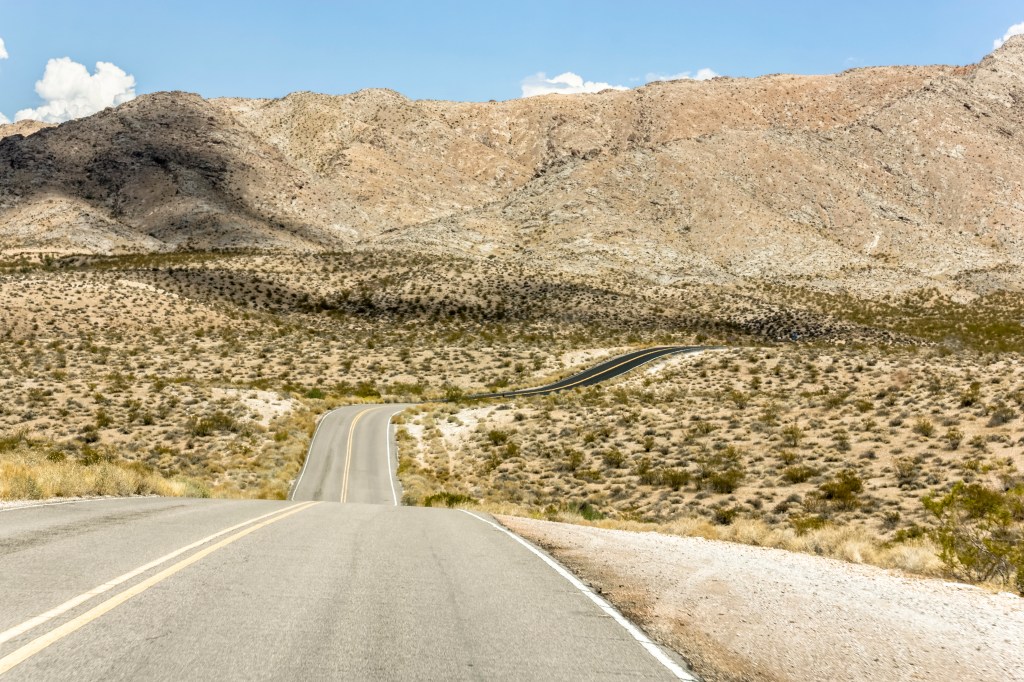
Anyhow, it’s another book in the Hidden in Plain Sight series, which is already full of stories, but I thought I’d write another. This one, which does not have a title yet, happens in 2015, before any of the other books so far. It is the setup for the collective Hearts are Mountains featured in Whose Hearts are Mountains, which has not been released yet. It’s an origin story about how a bunch of Archetypes, beings who are usually solitary, form a commune in the Nevada desert.

It’s going slow, especially as there are necessary conversations that have to drive my main characters to where they actually contemplate such a crazy thing. I feel like I’m doing too much talking as I write, but I’m in the “getting the words down” stage. I’m thinking, though, I’m thinking of how to get more action in the first three chapters.

There’s also a love affair between an archetype and a human, which results in a Nephilim who is not brought up to understand her heritage, who also becomes important to the plot of Whose Hearts are Mountains. So the events of twenty years later have their roots in this story.

I love the process of watching a story take shape, even one that presents a struggle such as this one.

Writing a Prequel

I think I have a new idea for a book.

Photo by Sebastian Palomino on Pexels.com

It’s in the Hidden in Plain Sight universe, and it takes place before any of the other books. It concerns some characters of Whose Hearts are Mountains, the last book in the series. I don’t really have the plot, but here goes: MariJo Ettner is the main character, and she is an eminent anthropologist. She is also an Archetype, an immortal being who has lived for millennia. By the end of the book, she will help to start the collective Hearts are Mountains. She will play matchmaker with Alice Johnson and William Morris, another Archetype, who will have a Nephilim child. That Nephilim child will become the protagonist of Whose Hearts are Mountains.

It’s still in its fledgling stages. One thing the book needs is a plot; another is a theme. I am experimenting with this group of Archetypes and their isolation, fear of being discovered, and status as Archetypes not born in InterSpace. It’s going to take a bit of work.

To prepare, I am rereading/editing Whose Hearts are Mountains. It’s been a while since I’ve looked at it, and as I now have ProWritingAid, I am finding a plethora of grammar quirks. (It’s already been edited for awkward sentences and plot holes).

It’s nice to be writing again, although I’m not really writing yet.

Hanging Around with My Imaginary Friends

man sits as if hugging the person sitting next to him, but no one is visible – one line art vector. concept imaginary friend

In the Hidden in Plain Sight series, I have been writing enough books and short stories that the characters have become my imaginary friends. My husband and I play with questions like “What would Luke say about this?” or “Would Josh do this?” I occasionally ask my characters questions (what I call ‘interrogating’) to see what they tell me about themselves. I have backstories (often written in the short stories) that make the characters more complex.

I have two novels published (Gaia’s Hands and Apocalypse), one about to be published (Reclaiming the Balance), and three to be published in the future (Avatar of the Maker, Carrying Light, and Whose Hearts are Mountains.) There’s also a set of short stories out there and another in the works. There’s one more secret to be revealed, and I’m working out how to make it into a full novel. And then I don’t know if I have any more stories about that world.

I don’t know what I will write about if I feel like I’ve written too much in the Hidden in Plain Sight world. I could invent another world and write a while in it. I do have one novel with a different world (or a different angle on this current world like Hidden in Plain Sight is) and I suppose there may be more stories there. But I don’t want to leave my imaginary friends!

Hidden in Plain Sight Series Plans

I’m three chapters away from finishing the first draft of Carrying Light, after which I am going to put it in a dark drawer (figuratively) for three months or more before I look at it again. To be sure, I don’t need a final copy for at least two years. I have two books that would get published ahead of it, Reclaiming the Balance (hopefully Jan. 1, 2025) and The Avatar of the Maker (hopefully Jan. 1, 2026). I also have one book that would be published after it, Whose Hearts are Mountains (January 1, 2028 if all works well). What will influence the publication dates is my cover artist, because I trust her vision on the books better than anyone else’s (she’s my niece).

Photo by Pixabay on Pexels.com

The next project is going to be a final edit of Reclaiming the Balance. I’m still on the fence about publishing that one. It’s a different novel about the collective known as Barn Swallows’ Dance. It centers on a relationship between a human with a vengeful Archetype ex-boyfriend and a potential, unique partner. The conflict is in her relationship and in the collective trying to prevent her kidnapping. And in the dichotomy between the collective’s progressive attitudes and their very real prejudice. There’s action, kidnapping, a battle, and an attack. I just hope it’s not too “brainy”.

Publishing the Hidden in Plain Sight pieces (all the above-named) is nerve-wracking; I have a lot more invested in those than I do the Christmas romances. The Kringle Chronicles series is fluffy and fun. The Hidden in Plain Sight series is more serious (with glimmers of humor; I can’t go without that) and sometimes even dark. It’s where I ask about the possibilities ahead.

I will publish them eventually, because what’s the good of asking about the possibilities ahead if nobody reads them?

Background Research

We got up early to write this morning, having arrived at Starbucks by 6:15. I’ve written 500 words done in two and a half hours, which is slow, but I’ve had to do several searches on Google in the process. I searched mostly on the nutrition status of several wild greens. I’m happy to say that garlic mustard is high in Vitamin C, so after shipping and imports in the US have broken down, people will still be able to get Vitamin C by eating weeds.

I’m writing about the collapse of the United States, after all. How does one prepare for that? Self-sufficiency (which is impossible, it turns out) and barter arrangements. If one anticipates the worst, one can prepare. A collective with a high number of educated individuals can anticipate, so this is not the tension in the group. Instead, they struggle with the fact that they will weather the catastrophic failure of the economy. Their battle is whether to share with others vs hide within themselves. With preternatural entities and a miraculous garden, this is not a trivial matter. A value conflict, with a side of fear.

I have had to do a lot of searches to write this book. Everything Barn Swallows’ Dance does to adapt to a calamitous change, I have to research. Questions like ‘How much wheat do 65 people eat in a year?’, ‘Dry-wash media for biodiesel’, ‘Nutrition in garlic mustard’, and ‘How much tannerite needed to collapse a building?’. (The latter question is one of those that writers have nightmares about, fearing the FBI will show up on the doorstep.)

It took the Internet to entice me to write. Before, I had the same questions to answer, but no way to do it quickly. Whose Hearts are Mountains was a story I started in graduate school, but never finished because I didn’t know what life in a desert was like. Once the Internet matured to the point where I could ask questions, I could write.

I need to go back to writing, but first, I need to find a recipe for garlic mustard pesto.

A Little Reassurance in Pantsing

Today, I got reassurance about pantsing (aka “flying by the seat of my pants”). A reminder: I’ve been pantsing Carrying Light because I didn’t like the outline I set up for it. I found the outline rather weak and not supportive of any real depth, so I’ve been writing without the outline. As I’ve said before, I hate writing like that because I feel like I’m just making things up as I go along.

I encountered something that made me feel a lot better about this method, though. A book I wrote a few years ago in the Hidden in Plain Sight series (it’s got two books or maybe three ahead of it for publication) is one of my favorites. I had to go back to it because the end of Carrying Light refers to the flashback events in Whose Hearts are Mountains. I needed to know the names of six people killed in the siege on the University of Illinois campus. (Yes, I trashed my alma mater.)

Cat hidden in plain sight.

What I discovered is that I did not empty the trash in the Scrivener program, and that I clearly edited a great deal of the book, to where I found more pages in the trash than in the book. I hadn’t remembered that until looking at all the material in the garbage.

I remember now what happened — I got a developmental editor involved, and she did not make the suggestions that led me to the drastic remodel of the book. I finished her developmental edits (which were excellent) and then realized that the story needed better flow. Then I completely gutted the story and reorganized it.

I will doubtless do the same with Carrying Light once I set it in a drawer for a while. I don’t know if it will require as much attention, because I’ve learned something about plotting from tearing apart Whose Hearts are Mountains.

I got this!

Rebeginning a Project

What a fine time to get inspired

There’s nothing like feeling inspired just as the semester is about to get busy. Tomorrow is the first day of the semester, where I have two classes to teach and office hours and all the little things to take care of, and I want to play with the next book. I hope this goes away, at least for a week, so I feel like I’m beginning work instead of devoting myself to my sideline.

What’s the book about?

The name of the book is Maker’s Seeds, and it concerns the Archetypes that show up in Apocalypse and Whose Hearts are Mountains. The Archetypes are, for intents and purposes, humanoid immortals, and they exist to hold humans’ cultural memories. If the Archetype dies through violence to their hearts or heads, their people will die because of the death of cultural memory.

The above books (none of which I have published) focus more on the human (or half-human) point of view. Maker’s Seeds looks at the Archetype point of view, concerning their Maker’s decision to slowly remove the responsibilities of holding humans’ cultural memories from the Archetypes. The result is a race of powerful immortals choosing sides in a schism, fighting in battle to the death — before the Maker has divested most of their cultural memories, thus endangering much of humanity.

The two central figures of the story are Luke Dunstan, an Archetype and Leah Inhofer, a seventeen-year-old human. The opposing viewpoints between the two — old vs young, Archetype vs human — make for drama as they try to prevent the Battle between Archetypes and the potential annihilation of millions of humans.

That being said …

I’m not ready to write it yet. I’m not willing to let loose my creative mind before the semester starts. Maybe I will this weekend, although I have lost my coffeehouse home because of closure (RIP Board Game Cafe). I hope to reconnect with writing soon.

Photo by Luca Nardone on Pexels.com

A Slap


So these last few weeks have been a great growth time for my writing. I have revised two out of my four novels (Whose Hearts are Mountains and Prodigies) to give more of a development of character at the beginning instead of barreling into the plot immediately. I am working on a third, Apocalypse for the same, and the fourth, Gaia’s Hands, is going to require a lot of work, especially now that I know it’s a romance novel. 

And I would never have known to do this without rejections from agents sending me to developmental editors and beta readers and books about writing. I haven’t been revising just to pay my dues; I really feel like I have a better product because of it. 

My mother once told me it took two people to paint a picture: the artist and the person who slaps the artist when they’re done. At this point, I feel like I need a slap. I need someone to read something and tell me if I’m done. 

And then, in my next set of queries, what if I don’t get accepted by an agent? What’s next? I have really no idea to be honest. I suspect it will feel like a slap in the face.