On the Road

I’m trying to think about writing as I sit in a van barreling down the rural road. I’ll be here for seven hours or more today and tomorrow, so I might as well be productive.

I want to write some stories not relating to my world (the Hidden in Plain Sight stories). They aren’t coming to me. I seem to be on a hiatus writing-wise these past few days.

If life plays as it usually does, I should get an inspired idea just as I’m in a place where I can’t write, like the middle of applying fake blood on people. I’d rather inspiration show up during idle time.

Wish me a brilliant idea!

An Excerpt from Kringle Through the Snow:

Photo by Kristin Vogt on Pexels.com

Wade Nelson stretched his 6‘4“ frame over the back of the chair, feeling the tension of a workday subside. He straightened up, realizing he’d made a spectacle of himself. He shrugged and peered at the laptop in front of him.

Wade wanted to type the notes down so he could keep this scenario with the others he had written over the years. To write a dungeon, he had to juggle the abilities of the players’ characters with the statistics of monsters, magic users, and weapon-wielders. The idea was to create a challenge, not annihilation. Sometimes the party got annihilated anyhow. Foremost, in his opinion, he had to come up with a story.

He looked up, remembered he was in the café. He had lost track of time and place. Looking up at the big clock, he realized he had little time before he had to go home to feed his dog. He still had plenty of time before Saturday, when he would try out this new campaign on his players.

He walked up to the counter, where Geena with her red braids stood at the counter. “I’d like another café au lait,” he said.

“Have you ever considered a London Fog?” Geena suggested, wielding a large coffee mug.

“What’s a London Fog?”

“Earl Gray tea, steamed milk, and vanilla syrup.” Geena smiled. “It’s your new favorite drink.”

“I’ll have that.” He rummaged for his billfold.

“You have a smudge on your nose. Looks like a big pencil smudge -”

“It is kinda like a big pencil smudge.” When his work at the battery factory brought him to the bays, sometimes he was in contact with tons of the graphite mixture that went into the cores of the batteries. He excused himself and went into the men’s room to wash the smudge, which turned out to be considerable, off his nose.

He saw medium light hair, very short, and a beard, closely trimmed. He looked, to his eyes, like an engineer. Which he was, a well-polished geek.

When he returned to the counter, his London Fog was ready, and he liked the smell. Maybe the London Fog would be his favorite drink.

He sat back at his computer and flipped through the pages of the book. “Is it time for the Aspect of Tiamat? I think it’s time for that, right in the next room with lots of tempting treasure. And some minions…” He saw the Chromatic Dragon in all its multi-headed glory and grinned. Hopefully, the party would survive.

He figured his players played Dungeons and Dragons for the strategy or for leveling up. To him, though, the game would always be about the role-playing. About the story-telling.

Satisfied with his progress, he packed away his laptop and books and stood up to leave when a woman in a kelly green suit halted him. “You’re Wade Nelson, right? I remember you from the Grinch auditions.”

“Yes. How did you know I was going to be here?”

“Kris Kringle — I mean Kriegel — at the toy shop. He told me you were a regular here on Thursdays. Can I talk to you?”

“Uh, sure.” They sat back down. Wade wondered how Kris Kringle — Kriegel — knew him.

“I’m Sally Perkins from Rolling Hills Improvement Committee. I wanted to tell you that you’re our Grinch.”

“Great, I think. I’m not sure what a Grinch is supposed to do. I was at the interviews because my boss picked me to represent the factory, so maybe you can help me. How do I grinch?”

“Well,” Sally paused. “Well, you are going to attend several community functions. Like the December Chamber banquet and Thanksgiving at BesMart, the parade, and the Charity Holiday Gala. In a Grinch costume.”

“I think you’re going to have to make me a new Grinch costume, then.”

“Why is that?” Wade hadn’t even noticed the clipboard on which Sally took notes, but there it was.

“I’m 6‘4″, a size 2xl, and I’m betting your Grinch costume won’t fit me.”

“Oh,” Sally said, writing. “I hadn’t thought of that. Let me get on that. I’ll see you later,” and with that, Sally had left as abruptly as she had arrived, and Wade had become the Grinch.

Now all he needed to know was what Rolling Hills expected of their latest Grinch.

Knowledge Base and Writing

There is a phrase among writers: ‘Write what you know’. The cop focuses on the precinct, the Parisian on Paris, and the college professor (like me) on college campuses because we have the details in mind.

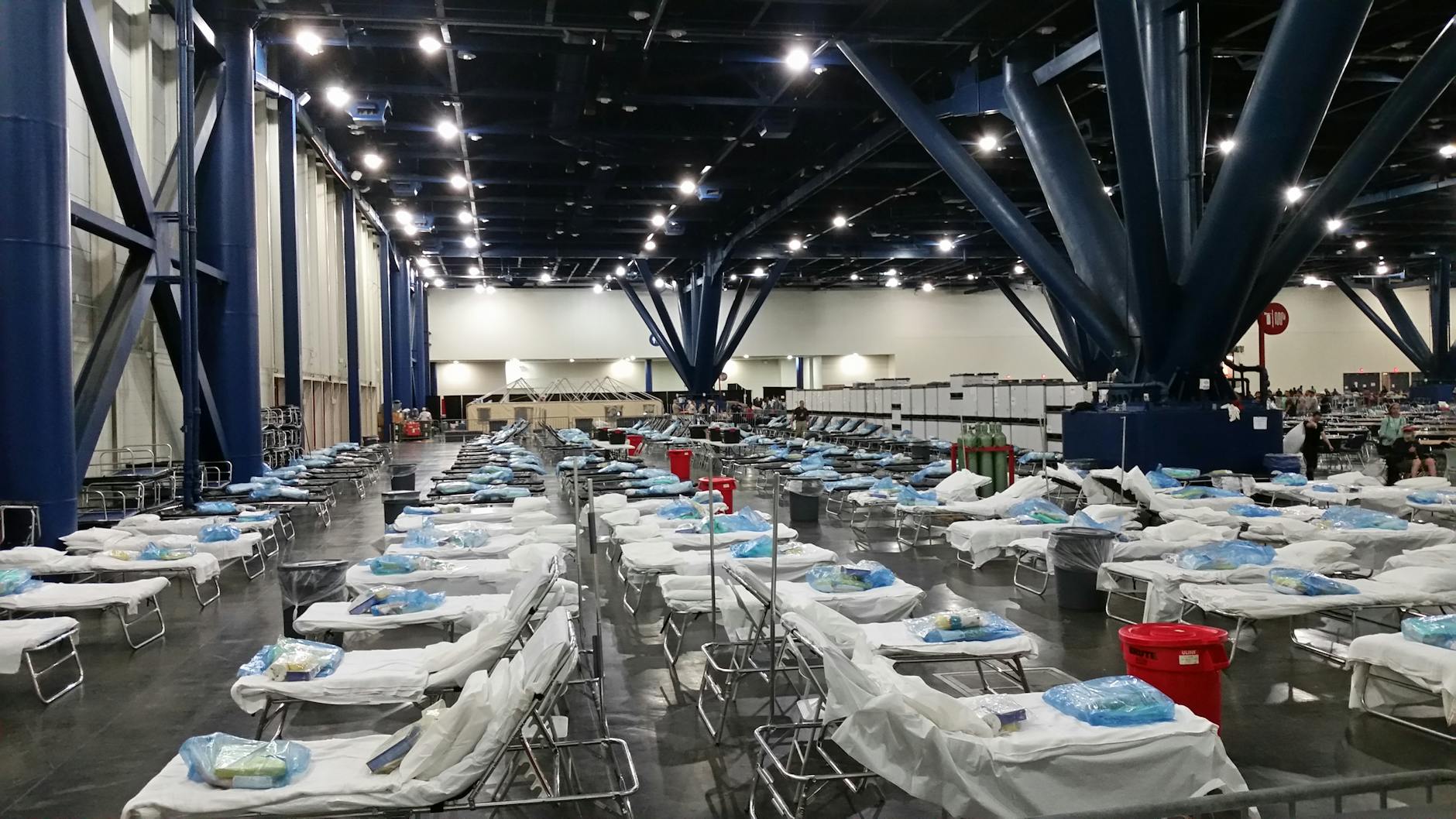
The above examples all focus on settings. I want to focus more on the knowledge base — where plot points and themes are informed by knowledge of a specific area. For example, I have some basic background in disaster management. I teach disaster psychology and case management. I know how people do triage in a mass casualty event because I have had CERT training. Because of my training in disaster mental health, I can spot the psychological symptoms of acute and post-traumatic stress. (I want to emphasize that I am not a therapist or counselor, and that I can’t treat people with these disorders.)

Photo by CDC on Pexels.com

I have written two books where mass casualty events come into play. One is Apocalypse, where an impending battle threatens to cause the loss of all the women of the world. Characters looking at that possibility project how they will react, with both despair and resiliency. In my most recent book, Carrying Light, two mass casualty events happen. Characters have to deal with emergency response, which includes the sobering truth that responders will have to leave some people to die. Acute stress reactions figure in both books.

When I use my knowledge, it provides more than just background knowledge and convincing details. It helps set the plot and the theme of the books. Plot points include recovering from working a mass casualty event; and themes include the toll that extreme circumstances take on those experiencing it. Writing what we know should, in my opinion, shape our stories to add to the realism of what’s presented.

Now, the issue of fantasy needing some basis in reality, or at least a consistent rule book, is an essay for another day.

A Little About Politics

I’m trying not to write a lot about politics in this blog, because it’s a blog about writing. But if you read my works, you will get the idea of my political stances. In my writing, they look like this:

  • Diversity is necessary for a healthy society.
  • Compassion, especially for those not like you, is a virtue
  • People should be free to express their opinions, but we should guard against hate speech.
  • Violence starts with words.
  • Self-defense is the only reason to inflict bodily harm, and even that is a last resort.
  • A society takes care of its vulnerable members.

That many of my stories occur on a pacifist collective (that still struggles with these concepts) might help explain as well.

Photo by Sean Whang on Pexels.com

Some might argue that this list is not about politics at all, but about values. But that’s where our politics come from. The political climate in my country (US) tends to act as if one side has values and the other does not, but this is not the case. In some cases I am a political minority (with my pacifism stance, as I am a Quaker) but in others I’m a pretty average Social Democrat (if we had that party in my country.)

I know it’s controversial for a writer to talk about politics, but how can we not? Even in a genre like fantasy, where supposedly we’re divorced from real world matters, politics can seep into the writing. If you read me, it will be obvious where I sit.

Excerpt from Kringle Through the Snow

This is an excerpt from the latest Kringle romance, which will be published October 1, 2024:

Surprised by the visitor, Sierra DuBois stood up from her desk at the Venue Barn, where she worked as general manager and event planner. Sierra looked neat, from her shiny brown bob to her crisp white blouse and slacks, against the room strewn with fabric samples, receipts, and white tulle. The red-headed woman at her door wore an emerald-green suit and carried a clipboard.

“Sierra DuBois?” she asked. “I’m Sally Perkins, head of the Chamber of Commerce and vice-president of the Rolling Hills Improvement Committee.”

“Yes, please, come in.” Sierra noted Sally had already started walking into the office.

The two sat, and before Sierra could speak, Sally introduced her topic. “You know the city wants to start a fun little initiative with the community for the Christmas season. A Grinch initiative?”

“As in, green guy who doesn’t want the neighbors to celebrate?” Sierra had watched the animated TV special about the Grinch since she was Cindy Lou Who-sized.

“Yes. He’s a favorite among kids and adults alike. Quite the thing.” Sally looked down at her clipboard. “We would like to incorporate him into holiday events. He’ll already be riding the fire truck in the Christmas parade, and -”

“What happened to Santa Claus?”

“They’re on the truck together.”

Sierra couldn’t imagine they could both fit in the truck’s basket, given that Santa’s belly was quite jolly. “What can I help you with?”

Sally took a deep breath, and Sierra felt a bit of apprehension. “We would like it if you could incorporate The Grinch into your gala.”

“Oh.” Sierra said. “The charity gala. You know the gala is an elegant event that raises hundreds of dollars for community philanthropies.”

“Yes, I know. The Chamber donates to the setup every year. As I recall, Ray’s Liquors donates 75 bottles of bubbly every year.”

Seventy-five bottles of Cordon Negro wasn’t Dom Perignon, but it was still a hefty donation. And when someone receives that big a donation, one gives back. “Sally, let’s work together on this. How can we incorporate the Grinch into this gala without losing the panache?”

“That’s your job.” Sally stood. “I would hate to get in your way.” And with that, just as abruptly, she left.

The Tyranny of the 24-day Writing Streak

In WordPress, I click on the purple bell at the right corner of my home page to find the announcement:

You’re on a 24-day streak on Words Like Me!

I never intended to blog for 24 days straight. Normally, I don’t have enough ideas for 24 days in a row of content. But after the first four days of steady content, I found I didn’t want to break my writing streak, and so I kept writing. Now I’m looking at my 25th day, and I feel chained to my laptop for the next update.

I am naturally a competitive person, and the person I vie with is myself. Write a novel? (There was a time when I had never written one, and that was only 12 years ago at age 48.) Walk 60 miles in three days? (I’ve done that too, at age 40.) So that writing streak counter in WordPress makes me want to write another day.

The horrible part is that if I decide to not write one day, my streak goes down to zero. That didn’t bother me when I only wrote every other day. A 1-day writing streak broken doesn’t feel like a tragedy. A 100-day streak? Or even a 20-day streak? Much more impactful.

Oh, no! What if I run out of words?

My husband assures me I will never run out of words, as I have never managed to during long car trips. (He’s correct.) But what more do I have to say about writing?

I haven’t let you read any of my writings lately. That’s certainly one thing I could blog about. I haven’t written down a character interrogation lately, either. Or talked about any one of a dozen other things. I want to stay interesting, though, which is a pressure that almost equals the pressure to write another day. Almost.

I’ll write daily as long as I can stay interesting, and I’ll try to write about writing as much as possible, because I think it’s more interesting than hearing about my very uneventful life.

Hanging Around with My Imaginary Friends

man sits as if hugging the person sitting next to him, but no one is visible – one line art vector. concept imaginary friend

In the Hidden in Plain Sight series, I have been writing enough books and short stories that the characters have become my imaginary friends. My husband and I play with questions like “What would Luke say about this?” or “Would Josh do this?” I occasionally ask my characters questions (what I call ‘interrogating’) to see what they tell me about themselves. I have backstories (often written in the short stories) that make the characters more complex.

I have two novels published (Gaia’s Hands and Apocalypse), one about to be published (Reclaiming the Balance), and three to be published in the future (Avatar of the Maker, Carrying Light, and Whose Hearts are Mountains.) There’s also a set of short stories out there and another in the works. There’s one more secret to be revealed, and I’m working out how to make it into a full novel. And then I don’t know if I have any more stories about that world.

I don’t know what I will write about if I feel like I’ve written too much in the Hidden in Plain Sight world. I could invent another world and write a while in it. I do have one novel with a different world (or a different angle on this current world like Hidden in Plain Sight is) and I suppose there may be more stories there. But I don’t want to leave my imaginary friends!

Submitting to CRAFT’s First Chapter contest

I haven’t used Submittable for quite a long time — three years, according to my list of submissions. Submittable, as I’ve explained it before, links creatives with contests and calls for publication. It’s another of those amazing computer assists that I don’t know how writers did without.

Photo by Pixabay on Pexels.com

I can’t remember why I quit writing short pieces for publication. I think I tired of rejections, even though I got ten publications from it over a couple years. But, given that I’m all noveled out right now, I think it might be time to risk submitting again.

Toward this end, I got an email from CRAFT, whose first chapter contest I entered a couple of years ago. That’s how I got on their mailing list. I didn’t win, which is how my life didn’t change a couple of years ago. I decided I could get back into publishing short pieces with this contest.

I’m publishing the first 5000 words of Whose Hearts are Mountains, a future novel in the Hidden in Plain Sight series. That story has an interesting background, having been the result of a bout with pyelonephritis (kidney infection) in 1984. It took me almost 30 years to write down, after I had worked on at least a couple other novels. It might be my best novel, yet there are other novels to get through before I publish it. Unless a miracle happens.

I have to allow for the possibility of miracles happening.

A Little Bit of Writing: Short Stories

I wrote a little on my short story today, not as much as I would have liked. Combining my 30-year-old fragmented knowledge of Chicago with Google Maps and my near-future dystopic imagination is challenging. The result will hopefully be a background story developing a one sentence aside of the book I just wrote. Many of my short stories begin as character sketches, and this one is no exception.

I would like to write more short stories that don’t tie into characters in my novels. If I do that, I might submit more writing to Submittable contests and publishers. If you don’t know what Submittable is, it is a website that publicizes writing contests and journals and magazines that are looking to publish poetry and short stories. It’s a great way for a writer to get some exposure in those venues. There’s often a small payment for readers or subscription fees, but it’s rewarding to be published even in small venues. The last story I got published was “The Inner Child”, which was published by Flying Ketchup Press last fall.

I feel like I would have trouble publishing my tie-in stories because they are so character driven, but I guess I could always try to see. I have had little luck publishing them in the past, but had one story receive an honorable mention, so there’s that. Although I write as a flow activity, I still have a desire to be read.

Wish me luck!

Addicted to the Flow

I sit in my writing chair (the loveseat near the front window) feeling uninspired. This doesn’t sit well with me, because I am addicted to the flow.

I’ve talked about flow before, but it’s worth mentioning again. Flow is a state in which a person is completely involved in what they’re doing. Time slips by and the person experiences mastery of the task, an optimal level of challenge and competency. Flow contributes to well-being through accomplishment and a state of near-meditation.

I get my flow from writing, and that’s what brings me back to writing again and again. If I never published again, I think I would still write because of the feeling of flow. It took me years to accept that experiencing flow was enough of a reason to continue writing.

I’m looking for my state of flow today, and I don’t know if the current project is captivating enough for me to find it. I’ll be looking for a new project soon, maybe the right short story.