Twelve Years of Writing

I’ve been writing for twelve years. I started, strangely, three months after being diagnosed with bipolar 2, which I hadn’t realized till today. I know I didn’t start writing as a coping mechanism or as character insertion (my first characters were not me) and I didn’t write about being bipolar. I think I started writing because being treated for bipolar helped me focus on continuous tasks instead of pouring all my energy on the whim of the moment.

I was not a good writer at first — I wrote each chapter as if they were separate episodes, like short stories strung together. I didn’t feel like I wrote an overarching plot. The novels (I use the term loosely) I wrote then I have had to revise several times such that only the characters are the same. I learned a lot from revising them.

Things I have learned over the past few years:

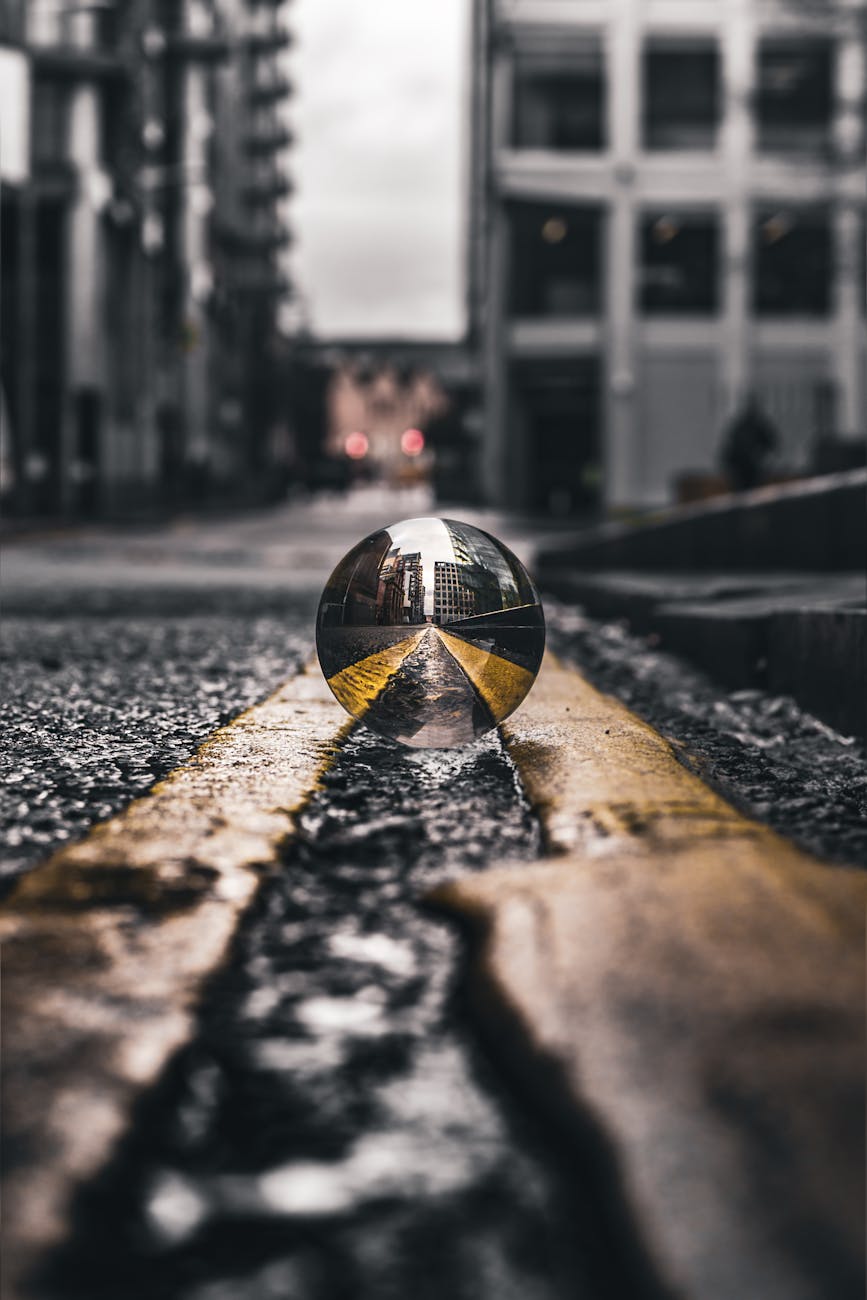
Photo by Pixabay on Pexels.com
  • My first draft is not my novel. Over the years, the novels have needed less and less rewriting, but there are always things to fix in second and third (and fourth, and …) drafts.
  • Developmental editors are an important part of your writing toolbox. It is worth paying for them.
  • There are three ways to write a novel: Plotting, pantsing, and plantsing.
    • Plotting: an organized outline at the beginning, and following the outline.
    • Pantsing: writing it as one goes along, without the outline.
    • Plantsing: writing with a rough outline but pantsing through the chapters.
    • I am a plantser.
  • Scrivener is a great program for composing my work, especially plantsing.
    • Scrivener arranges itself around a chapter format and a synopsis form that I use to guide my chapters. I use it like pantsing with training wheels.
    • One can get templates for Scrivener novel-writing that incorporate plotting frameworks, such as Save the Cat and Romancing the Plot.
  • ProWritingAid was another investment I don’t regret — my grammar has improved in ways I hadn’t considered before. I have lessened my passive verb structure massively.
  • Writing is the easy and fun part. I still don’t think I have the hang of promotion (and this blog is part of my proof of that.)
  • My favorite novel is always the one I just finished.

The most important thing I learned? That I can write. The second? That there’s a whole lot of luck in being discovered, and luck hasn’t come to me quite yet.

I feel like I could have learned more in 12 years, and maybe I have, but these are the biggest things I can think of. I hope they’re helpful to someone!

What gives me direction in life?

Daily writing prompt
What gives you direction in life?

Motivation needs direction, or else people waste their energy. There are several things that give me direction in life, honestly. Some are lofty; some mundane. I need to talk about both.

One thing that gives me direction is love. Love of people becomes an evident focus in my relationships, and it’s the answer people expect when I say “love”. But what loving what I do? That’s at least as strong a guide for direction in my life. I think about two activities I term as “flow” activities in my life, moulage (casualty simulation, otherwise known as making victims for emergency training) and writing. The love of the activity and the stimulation they give me gives me direction.

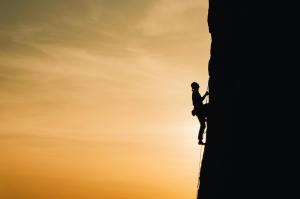
Photo by Mark Arron Smith on Pexels.com

Another thing is striving to be better. This points me toward improvement activities, such as reading about my writing craft and practice, practice, practice. Related to this is the desire for recognition. Although I don’t like to talk about my need for external validation, it’s there. It’s definitely there.

Sometimes, it’s duty that gives me direction. That I get up in the morning on days when I’m depressed, and go to work even when I am hypomanic, is the power of duty. Duty to myself and to my husband and cats. The need to provide food, clothing, and shelter; safety and security, and emotional support. I also do these things because I love all of them, but the daily things fall under the category of duty.

This list is pretty prosaic, more of an essay answer for my positive psychology class than a creative piece. But these are the places and the reasons I focus my energy.

Daily writing prompt
What is your favorite holiday? Why is it your favorite?

Christmas* is my favorite holiday. It’s strange writing about Christmas in April, but then again, I have a Christmas tree still up in my parlor, and I turn the lights on now and then. And I just got done writing a Christmas romance. (It’s my sixth). No other holiday comes close to me.

Christmas lasts an entire season, and that’s one thing I love about it. I get to celebrate from post-Thanksgiving to New Year’s Day. It comes when I need it, toward the end of a very busy Fall semester at the college. It livens things up against the leaden skies and frozen ground waiting for snow that doesn’t come till January.

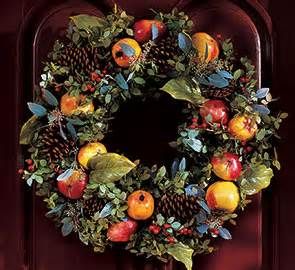
Christmas also has traditions handed down from many cultures (mostly Western) to give it a rich color and flavor. Red and green, silver and gold, touched by Hanukkah blue and white (it is part of the season), ribbons and blown glass ornaments and Della Robbia wreaths (my mother had a particular fondness for them, as do I) and twinkly lights.

We have special Christmas foods from many cultures as well. Pfeffernuse (ginger cookies) and springerle (anise cookies) from Germany, Mexican wedding cakes/Russian tea cakes, sugar cut-out cookies, Christmas goose, plum pudding, KFC (in Japan) …

Christmas remains my favorite holiday, even though I’m too old for Santa. But given I write about a secret society of Santas, am I really too old?


*I am talking about the secular parts of Christmas here. I am of a “spiritual but not religious” bent, best described by “omnist“. Or maybe “panentheist”. I’m not sure. My beliefs are very personal, and I don’t want them hijacked by the “one true religion” crowd.

“… surreal, but not very impressionistic …”

I wish I was better at poetry, lacking the impressionistic bent I need to write the type of poetry that is in fashion right now. I am too involved in telling stories in a more straightforward fashion, even when I am writing dreams:

Photo by Pixabay on Pexels.com

Last night, I dreamed I was walking after dark, late at night, armed with a pair of scissors. Someone approached me and put his hands on me, and I flipped him over my shoulder and then held my scissors at his jugular*. He apologized and ran away. I walked and walked till daylight, and I found myself at my old alma mater** wearing a white blazer and a skirt too tight for me. I ran into a couple of colleagues from my current job as a professor, who were going to a lecture together at a conference. I didn’t get the impression that they wanted me there, and I felt self-conscious because of the clothing and my weight anyhow. I walked out of the conference, which was held in the student union where I went to college. I walked to where my office used to be when I was in graduate school, which ended up being the mailboxes in my former department here where I currently teach. The mailboxes were no longer there, but I walked down the hall to find where they were located back at my alma mater.

This is surreal, but not very impressionistic. I could make it impressionistic, but it would aggravate me. What is happening? What happens next? I love poetry, but I can’t make it happen. My poetry is too concrete.


* By jugular, I meant where I think the jugular is. I’m really not sure where it is.

** for non-English speakers, “alma mater” is a Latin phrase that we use to describe the school we graduated from, usually college.

Easing into Summer Professor/Writer Version

An end-of-semester status report:

  1. All I have left to grade is final essay exams for my Personal Adjustment students.
  2. I’ve successfully weaned myself off the lithium with apparently no difficulties. We shall see.
  3. I am done with Kringle Through the Snow (Kringle Christmas romance); struggling with Carrying Light (Hidden in Plain Sight series; a novel about Barn Swallows’ Dance and societal collapse)
  4. My summer will be spent supervising 10 interns (a smaller amount), putting together two new classes for fall, and writing. I foresee lots of Starbucks time. Starbucks will have to learn to love me.
  5. Summer trips: A conference in San Francisco end of May, New York Hope (disaster training exercise for which I am moulage coordinator) at beginning of August, and hopefully a writing retreat here and there.
  6. My writing/publishing goal list for summer: Finish Carrying Light; prepare Kringle Through the Snow for Oct. 1 release; prepare Reclaiming the Balance (Hidden in Plain Sight series) for Jan. 1st release; Set up my social media posts through December on Loomly.
  7. My wish list: That amazing bit of happenstance that will propel my writing into notice, continued health for my family (one husband, four cats, extended folks), and inspired writing.
Photo by Pixabay on Pexels.com

The Home Stretch

On the professing front, all I have left to grade for the semester are two class assignments and one final. Not a bad thing; Finals run next week. I will make it.

Summer might be a light one — I only have 10 interns so far for summer. Normally I have 20. I could use a light summer, because I still don’t know what’s going to happen with my medication. It hasn’t happened yet, at any rate.

Photo by Alexander Grey on Pexels.com

That means writing. This means finishing Carrying Light, editing Kringle Through the Snow for October 1 publication, and doing a final edit of Reclaiming the Balance, for Jan. 1 publication. If I get the guts to publish the latter. It’s such a unique book. The conflict is personal and internal to Barn Swallows’ Dance and its residents. One of the main characters is non-binary, so I wrote the book with they/them, so I expect reaction from the more bigoted.

I might also write on Walk Through Green Fire, in which the lead female rescues a prince of Faerie. That one is hard because I expect it to have sex scenes, at least one. Unless I chicken out.

We shall see what the summer brings when it gets here, which is a couple weeks from now.

Writing Close to Home

In my romances, I sometimes write about ordinary people who perceive that something about them will get in the way of a happily ever after (or at least a happily for now). Secrets, personal failings, longings, parental disapproval. The couple overcome these and find room for love.

This latest book I wrote (it’s in the editing stage), Kringle through the Snow, has one character whose flaw is that she has bipolar 2, which is something I manage in my own life. She is scared that another hypomanic or depressive state is just around the corner and nobody else should be exposed to it.

This is one of the hazards of being bipolar — the stigma. Someone with complications like bipolar is certainly more daunting than people without, and some potential partners want uncomplicated situations. Some are just scared. It is possible to have bipolar disorder and go years before another attack because of diligent management; how is this different than having diabetes or another chronic disease?

I write to ask these questions. In my writing, I want people to confront their preconceived notions, because I think we are our own worst enemies. I think love, when it’s truly there, finds a way.

Flying By the Seat of My Pants

Photo by picjumbo.com on Pexels.com

So I’m taking a few minutes to write on Carrying Light this morning, having gotten through some work-type work. I am writing a scene where the collective (not a commune but close) takes part in a story-telling circle. This involves passing a stick from person to person so that they further the story. My main character is going to introduce the solution of their problems as a theoretical but impossible possibility. But it could be possible if their local deity takes it on. But why would She take it on? What if the main character is an acolyte of hers and doesn’t know it? If anyone would be, she would be, as she’s been blessed by that deity. WHY DIDN’T I THINK ABOUT THAT SOONER?

Time for foreshadowing. Time to go back into the story and possibly rewrite whole sections? Time to totally wing the next two thirds of the book because I didn’t plan for this? AAAaaack!

Just kidding. It’s moments like this that remind me of why I write.

When I write, I get into a zone and the words flow out of my fingers. My characters sit over my shoulder and tell me where they are and what they’re thinking. They talk to each other while I write. Every now and then I need to take a break to set the next scene.

It’s an odd way to write, I think, because I’m not always aware of what I write until later. Thank goodness for editing, because without it, I don’t think my stuff would be coherent. Sometimes I find myself moving entire pieces of the book because I put them in the wrong place (it took me 20 minutes to do that today.)

Normally I’m a plantser, which means I’m someone who makes a rough outline and works within that. These last two books have required so much rearranging that I’m a pantser, hanging on by the seat of my pants. My characters are really coming out of nowhere: “Hey, let’s talk about the Garden and its Trees now!”

I wrote 4000 words yesterday (or was it 3500? Let me check — oops, it was 4500) so it was an immense day of pantsing. My characters had a lot to say, and I finished Kringle Through the Snow. Another day, and I’m writing Carrying Light. Let’s see where I go.

Me and My Romance

I am almost done with Kringle Through the Snow, which is the Kringle (Christmas romance) book I almost didn’t write. I thought I was done with the Kringle series (this makes six of them) until one of my Facebook friends told me I needed to write more. It took little arm-twisting, but I always wonder if the current book is the last.

I never thought I’d write romance. And, in fact, my romance is clean (only implied sex) and funny. It’s much more relationship based, although it promotes the Instalove trope, which means people getting attached quickly; I think because that’s always been my personal experience. There’s also several friends-to-lovers, enemies-to-lovers, and one age gap. (Two if you count the 100,000-year-old Su and the 6000-year-old Luke.)

Is romance realistic? It’s not supposed to be. It’s grounded in its society (whether that society be modern American, fantasy, science-fiction, etc) and fantastical in its romance elements. Some of the things that happen in romance would not or should not happen in real life (borderline stalkerish behavior, grooming, teacher-student romances) and some only happen in very defined and conscientious contexts in real life (S&M). Some things that happen in romance are just unrealistic. But romance is a type of fantasy — define the rules of the world and you can dream freely on the other parts.

To find my books, click here.