I’m here in KC for a change of scenery and some writing time at my favorite cafe in town. I’m hoping I feel motivated to write on the story, because I’ve been struggling with that lately. I’ve skipped ahead to the last chapter to write on that, and maybe that’s the problem. Not much happens in the last chapter of a book except the tie up the loose ends. And in this case, a baby is definitely front and center.
I don’t really understand babies. I’m childless by choice; I have never been graced with a maternal instinct. But enough of that; I am sitting in the best cafe in Kansas City.
Broadway Cafe is the real thing, with worn chairs and scuffed walls and young baristas. I don’t know if they do latte art because I’m drinking their coffee of the day, Guatemala. The coffee is roasted and brewed so well that it has notes. It doesn’t just taste like dark roast. If we hadn’t just had breakfast at AC Hotel, we would have some pastries
So from here, I write on the book. Damn babies. What do babies do at 3 months old? They eat, poop, cry, burp and squeeze your finger. How hard can that be? They smile, which is how they get away with eating, pooping, crying, and burping all the time.
And people make burbling noises at them.
Ok, back to grounding myself in my surroundings. I have coffee, and I’m about to write. I’m about to write the sappiest chapter in my life. All it needs is a cute dog. (It’s not going to get a cute dog).
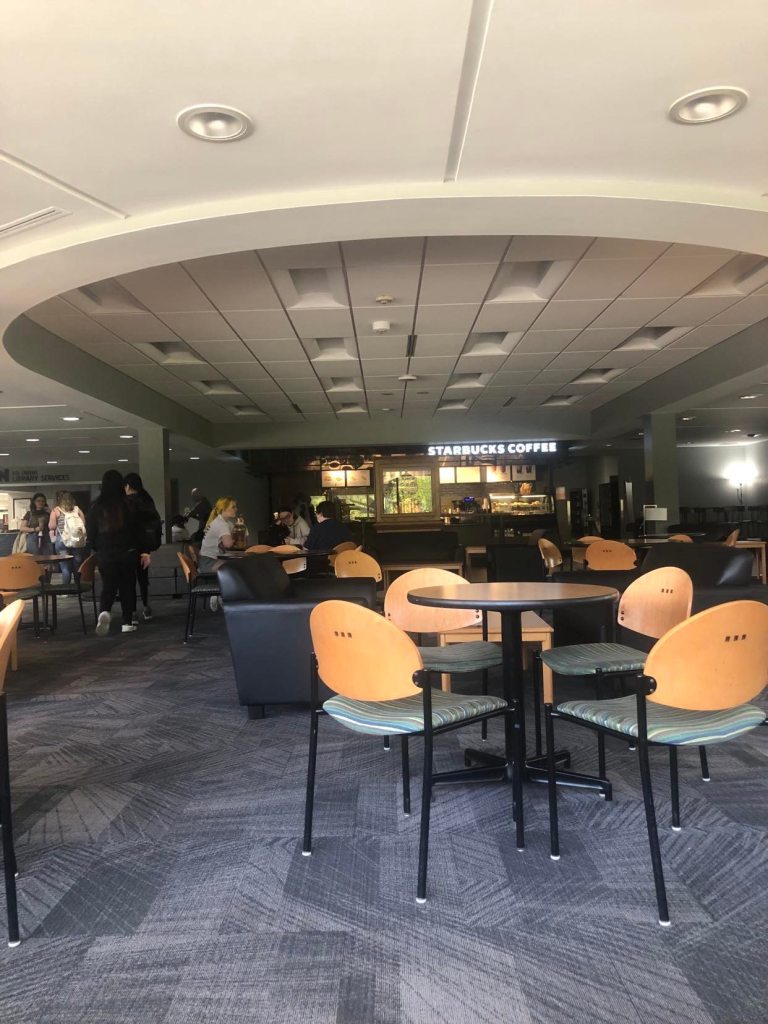
I’m sitting in the campus Starbucks, which is in the library, perhaps the coolest Bux in the US (or the nerdiest). My semester is over, which means flowers and warmer weather and more relaxed schedules are ahead of me.
I’m sitting in one of the coveted low upholstered chairs, which is what the early bird gets to sit in. The short table fits me perfectly, and I’m set up to write. Except I don’t feel motivated to write.
I have a novel to write on, and I’m on the first draft. All I can see is the imperfections — to where I’m reading the first half and putting huge comments on it. I haven’t even written the second half. NaNoWriMo and other guides suggest one gets the first draft written first, then edits.
I look up from my computer where I’ve been staring at the screen, and a tall, slender young woman sits in the chair across from me. Not one of my students, but I know her. She shouldn’t be here; she’s not real —
“Just because you wrote me doesn’t mean I’m not real,” Leah Inhofer points out as she pushes a wayward blond braid back. “I hear you’re having some problems.”
“Not really,” I say. “I just need to motivate myself.”
“Partially true,” Leah comments. “You need to motivate yourself. And you’re having problems.” When your character is a walking lie detector, lying to them is inadvisable.
“I don’t know if I like what I’m writing,” I confess. “I’m not even done writing, but I want to revise it. And I don’t know how.”
“First, you need to develop me and Baird better. Yeah, we’re sneaking around a bit at first, but we end up in love. Make us believable. Make our dilemma hefty enough that my pregnancy puts us in a spin.”
“You can’t be too much in love at first, or else there will not be the tension. You need to doubt the other person, not want to impose. Catch up to yourself before you admit to being in love.”
“I see where you’re coming from.” Leah leans forward to whisper. “It’s not like I know how Baird would be as a father. He seems so — clueless. I suppose that comes from having been born three years ago.”
“Was he really born, though? He’s a Nephilim — it’s more like he showed up fully adult to his birthday. Not like how your baby’s going to show up.”
“Just what I need. Morning sickness.” She takes a deep breath. “Boy or girl?”
“Girl,” I assure her.
Leah pumps her arm. “Sweet. Another generation to break the mold. My mom’s going to be thrilled.” She makes a sour face. “Will my mother ever forgive me for believing in the Maker religion?”
“Let’s just say you’ve given her a lot to think about.”
“Good. I should go find Baird. We’ve got a few minutes before my dad misses us.” And she stands quickly, braid swinging, and disappears.
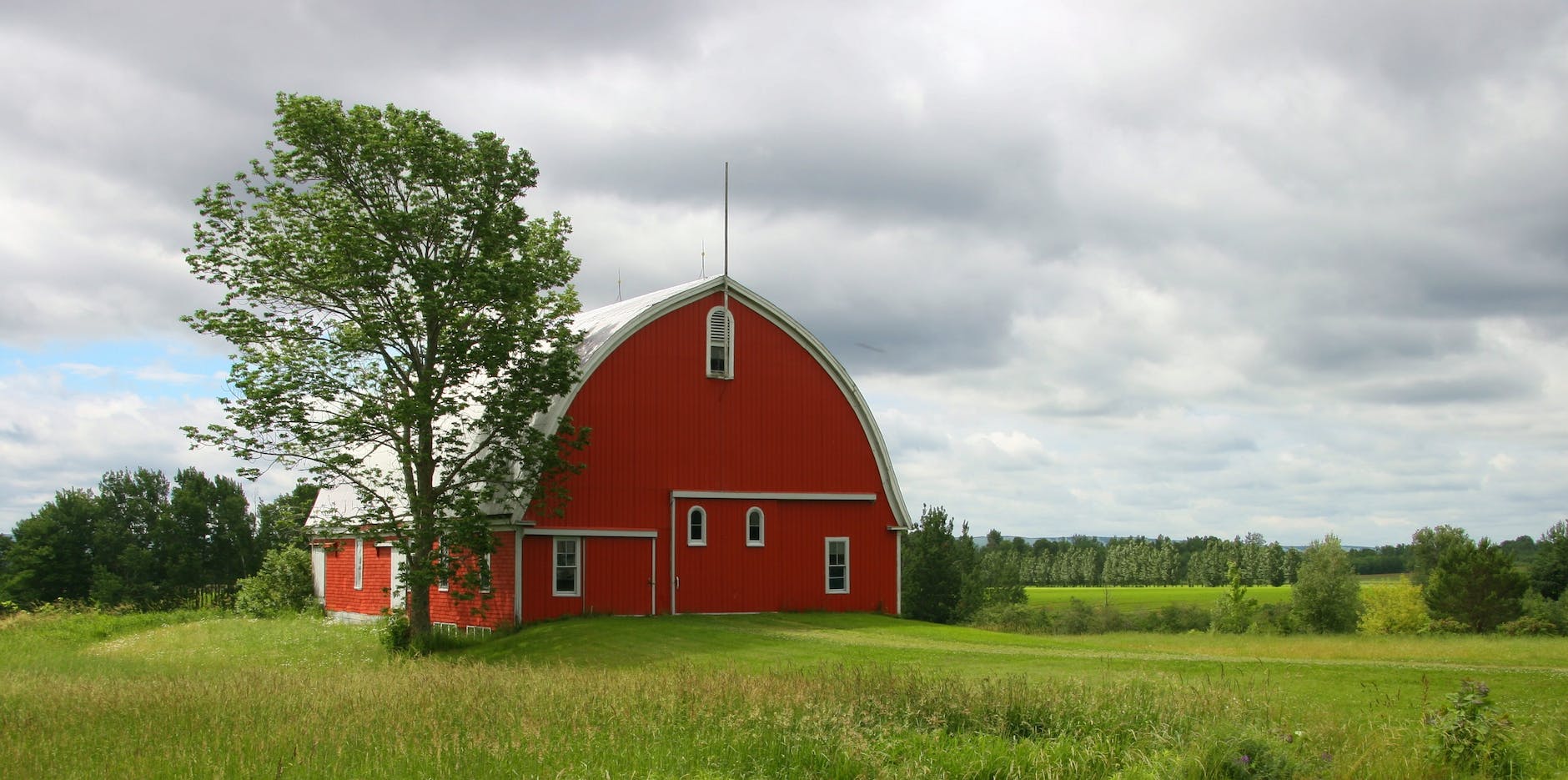
A week later, Brock and Leah sat in the livestock barn, hiding from the rain, which had broken out as they finished trimming the hooves of the Welsh Mountain sheep. The two sat on old folding chairs swiped from the Commons building.
“Leah, are you okay?” Baird asked as the rain hammered the metal roof.
“You keep asking me that!” Leah stood up and peered out the door at the rain. “I’m okay.” She didn’t want to talk about it — the feeling of foreboding that settled in her bones like a chill she couldn’t shake.
“No, you’re not,” Baird observed. “If you were okay, then you’d be able to laugh at me being so clueless.”
“I’m okay!” Leah turned away from Baird.
“Leah!”
“What’s the matter with you, Baird?” Leah turned to him, hands on her hips. “Why are you getting into my business?”
“I’m not getting into your business,” Baird shouted, standing up. He sat just as quickly, burying his head in his hands.
“Baird, what’s wrong with you?” Leah asked, standing and striding over to Baird.
Baird raised his head. “I’m not used to snapping at you. I’m not used to snapping at anyone. But it’s part of my nature, this anger. And I’ve learned to ride herd on it, to become a person instead of the soldier they tried to make me. I’m not the calm, meditative person you think I am.” He paused. “Or I am, but it takes work. Like right now. I know there’s something wrong — you look pale and wiped out. But you won’t talk.”
Leah sat back down, pulled her chair closer to Baird. “I’ve been feeling like something bad is going to happen for days. I’ve not talked about it with you because I’ve not talked about it with anyone. I don’t want anyone to think I’m crazy.”
“You think anyone here would think you’re crazy? We have Trees that give talents, and if I heard correctly, Josh foresaw the Apocalypse, didn’t he?”
“But that’s just it.” Leah fidgeted with her hair, taking it out of its hair scrunchie and pulling it back again. “Josh’s vision quickly made sense because the Triumvirate announced they’d attack us and kill Lilith. But we have nothing to tie my vision or my foreboding to. The vision looks nothing to do with Barn Swallows’ Dance if it means anything at all.”
“You need to tell someone. What if it means something?” Baird reached for her shoulder, then pulled his hand back.
“You don’t understand.” Leah raised her hands in resignation. “My parents grow increasingly uncomfortable about this place. They’re not comfortable with their talents, or with the presence of the Nephilim —“
“You’re telling me.” Baird snorted. “Oh, sorry — go on.”
“I’m afraid —“ Leah paused, staring down at her hands.
“Afraid of what?” Baird prompted.
“I’m afraid they’re going to disown me. For being what they’re afraid of.” The words came out in a rush; their weight lingered.
“They wouldn’t disown you, would they?” Baird asked to break the long pause.
“If they thought I willfully walked away from God, they might,” Leah fretted. “I don’t even know if I believe in their God anymore.” Leah fell silent, waiting for their God to strike her down. Nothing happened.
“Who is your parents’ God?” Baird asked, clasping his hands.
“Well, God.” Leah snorted. “Ok, the Christian God.”
“Do humans believe in other gods?” Baird leaned back in his chair, ready to learn more about humans, a thing he pursued with enthusiasm.
“Well, Aasha Kaur’s Sikh, and she calls her deity Ek-Ongkar. The Hindu have a pantheon of Gods and Goddesses, and Jeanne and Josh believe in nature spirits. But I can’t —” “You can’t believe in another God?” Baird guessed.
“Because our God is — “ Leah sighed. “It was comforting to grow up and feel we had the lock on salvation because we’d been born to the right God. It’s not so easy now, living at Barn Swallows’ Dance with so many beliefs.” Leah turned to Baird. “What do you believe?”
“Many of the Nephilim believe as the Archetypes do — in a creator we call the Maker.”
“Well, that’s original. But then again, we call our God ‘God’”.
“Anyhow,” Baird raised his eyebrows at her, “We don’t worship so much as acknowledge the Maker, who we believe constructed your world with its geography, its climate and weather and seasons, its ecosystems, and the Archetypes, held apart from humans by their immortality and their task to hold humans’ cultural underpinnings safe. And then They left to create another world.”
“So no sitting in judgment?” Leah asked. “That must be nice.”
“No. They’re pretty hands-off.” Baird cocked his head and listened — for the rain? Or for Leah’s father?
“They? I thought there was only one Maker,” Leah groused.
“The Maker has no gender. Or both genders. Nobody really knows.” Baird shrugged. “We haven’t heard from Them in thousands of years. Many thousands of years. We observe no rituals, we don’t pray. We are not the people of a deity.”
“That must be a relief.” Leah put her hands on her hips. “Beats being disowned by your parents for something you have no control over.”
“You need to tell someone. Besides me, that is — “
“I can’t tell Luke. Luke is — well, he looks at me like he knows something he’s not telling. I feel judged by him. It would be as bad as telling my parents.”
“Is there anyone else you can tell?”
“No. It would get back to my parents.” Leah grimaced. It would be so easy to let go her burden were it not for that.
“Okay,” Baird said. “Back to trying to make sense of the vision. Have you seen any visions since the one?”
“No, just the one. I feel like everything’s about to go wrong, however.”
“Back to the vision. What exactly did you see again?”
Leah shifted in her chair and closed her eyes, recalling to herself the vision. “I saw two lines of people facing each other, some in light armor, some with weapons. No guns, and as far as I could tell, no bombs. Just swords, and maces, like this was going to be a big man-to-man fight. They stood there, glaring at each other.”
“Did you recognize anyone in these lines?”
“No, but now I remember a man who commanded one line, pacing along the line, galvanizing them. He stood tall, and he taunted the men and women in line. Let me see — he said, ‘Do you want to be worthless? Do you want to be diminished as — he said some four-digit number — was? Do you want to be walking dead, trying to slit your own throats? We can stop this!’”
“That’s further than we’ve gotten before. What were they wearing?”
“To be honest, they looked like they dressed for a street fight. Or a gladiator ring. Both, kinda. Like I said.” Leah felt the dread like a miasma again. “Can we not talk about it?”
“I don’t know if we have that luxury, Leah.”
Leah tried to read Baird’s face, came up with concern and something she thought was puzzlement. “I just need to quit talking about it now.”
“Ok,” Baird said. “I’ll let it drop for now.” He looked out the door; Leah’s eyes followed his, and she noted the rain had stopped. “Let’s see if we’re needed in the food forest to pick fruit.” They left the barn and walked silently toward the food forest, through browning grass sloppy with rain.
National Today is a website which introduces the reader to the myriad declared days that grace the national and international calendars. Some of these holidays seem directly related to food industries (National Pickle Day is November 13) while others put into the forefront of people’s minds for a good cause (National Crime Victims’ Rights Week, April 23-29). But today I’m here to write about International Pixel-Stained Technopeasant Day and how to celebrate it.
The day started with a Howard V. Hendrix, a member of the Science Fiction and Fantasy Writers of America, who called people who published their work for free on the Internet as ‘pixel-stained technopeasants’ and stated that no writer should do so. Jo Walton, another writer and member of the SFWA, encouraged writers to do exactly what Hendrix disdained. And a holiday was born. (National Today, 2023)
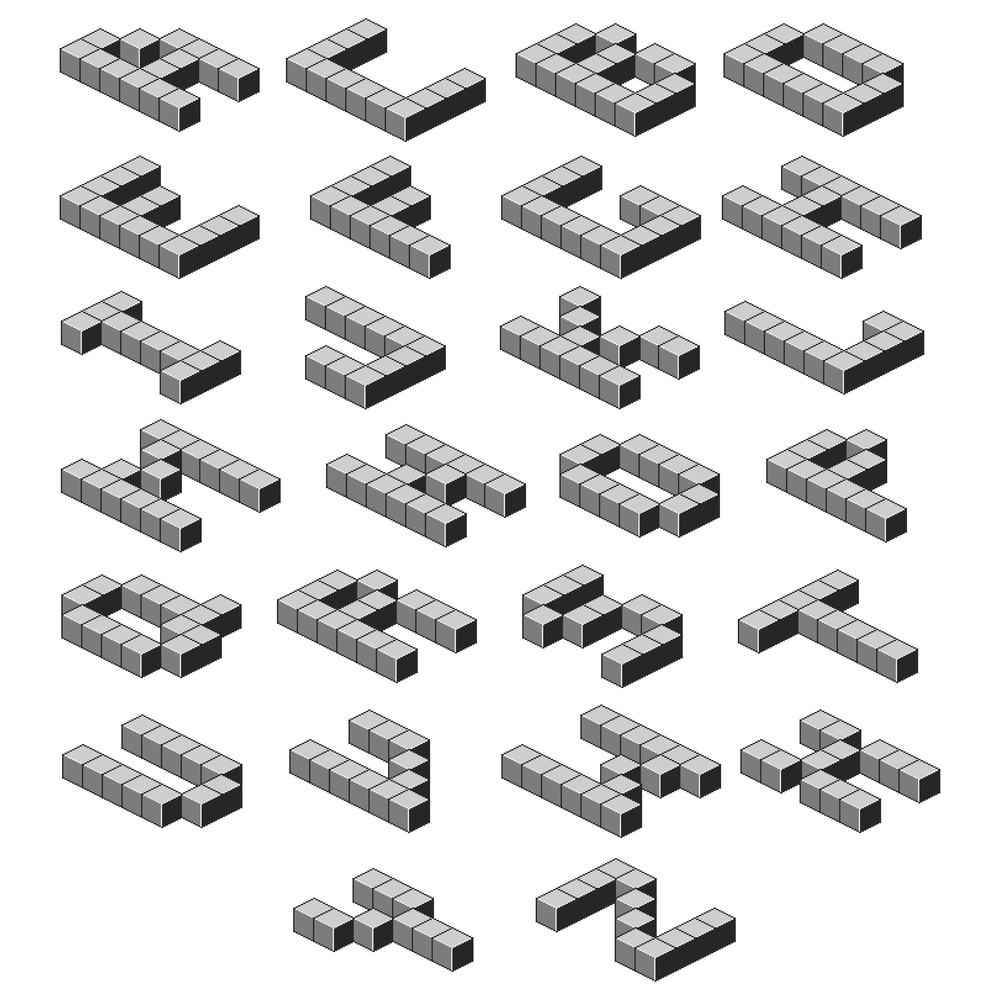
Isometric alphabet. Black and White abc. Volumetric letters. Vector Illustration
I don’t know the details, but this sounds like a more modern debate between self-publishers (which I am) and those traditionally published. The debate seems to be whether self-published works are legit because they don’t have an industry gate-keeping the publication process. But those who have been mistreated by the traditional process look at the issue differently.
Turns out I’m a pixel-stained technopeasant and I didn’t even know it. I even write in the fantasy genre, so I am one of those pixel-stained techopeasants of which Hendrix spoke, although not an original technopeasant. I have published in online contests and journals which, although they had a gatekeeper, did not pay. Most Internet journals, in my experience, do not pay, just as most print journals do not.
How, according to National Today (2023) does one celebrate this day?
Read a blog
Publish for free online
Post a social media post
Here’s the free creative work:
Limerance
There’s a push to ask you for your name,
And a pull ‘cause I have no right to know,
As I stand in the corner of the venue
With nothing in my mind except the color of your eyes.
We’re having a slow thunderstorm here in Maryville, MO. The heavy clouds hang overhead, darkening the sky. From the clouds, an ominous rumble emanates. It’s almost seven-thirty, and morning appears to have fled. A streak of horizontal lightning jolts the neighborhood.
I sit in my writing place, on the loveseat in the living room, near the window, and I want to take a nap. I close my eyes to think about writing this piece and I fall asleep sitting up, just for a moment.
This is the opposite of who I want to be. I want to be awake, dynamic. I want to write beautiful prose. I want to get many things done —
Who am I kidding? I want to take a nap.
It’s the perfect day to crawl back into bed, ignoring coffee and work to do, and turn off the light. I feel like I could sleep for twelve hours and wake up happy, or at least less blah than this weather has made me.
But I have promises to keep (Thank you, Robert Frost) and coffee to drink (Thank you, Richard). I have to meet with my boss and hold office hours and attend a faculty meeting. I might have time to write on my WIP (Work in progress, in author-speak). I’ve already done some grading (I get up very early). Tonight will be soon enough to sleep.
Writing requires a certain amount of editing. I have done a lot of editing in my writing life. I have edited out characters, scenes, and subplots to make books more cohesive and, perhaps, coherent.
Some of my editing I don’t regret. One of my characters, Josh Young, was young and whiny when I first wrote him. He’s older now, somewhat more mature, and a far better and more complex character. You’ll find him in Gaia’s Hands.
Also, in one incarnation of Gaia’s Hands, there was a secondary love affair between two characters. Eric and Annie were interesting characters, but their arc was too much for Gaia’s Hands to handle. Eric remained; Annie did not.
Lilly and Adam’s relationship in what became Apocalypse (which will come out in the next year) was a lot darker, somewhat superficially. There was a lot of sexual obsession, which can be a good thing, just not for that novel. When two books got merged to make Apocalypse, I lost the goth feel but kept some of the edginess. There are some brilliant arguments in Apocalypse. I also lost the (also whiny) character James, and some subplot, but again I ended up with a better result.
As I got to writing more, I have edited out pieces less. Whole characters, subplots — heck, whole chapters — no longer get discarded by the wayside. Extensive editing taught me to write with less editing necessary.
There are pieces I miss, though. The chaste sexual obsession of Lilly and Adam was fun to write, but I don’t see room for that anymore. James dying and turning into a ghost cat (don’t ask) was fun for all the catlike manipulation he added to Apocalypse. Eric and Annie make a good couple, if only for a short story, but Annie’s place in the series has evaporated. Maybe the pieces will end up in a short story somewhere. Or another novel in another world.
I hope that my writing will go somewhere. It’s difficult because the world of books has seen a renaissance of writers with a waning number of readers. The number of writers has exploded because of Amazon KDP and self-publishing. There are good books out there and bad ones, and readers are loath to sort through them all.
As a writer, I could let this discourage me, and sometimes I do. This doesn’t mean I quit promoting my work. I promote and hope I get better at it. I hope my promotions pay off. I hope people read my books.
I won’t tie hope to a specific outcome, however. I hope things go well, not defining what that means. There’s so many ways that positive things happen, some of which I can’t even imagine right now. So no “I hope people read the promotional posts I put on Loomly” but “I hope positive things happen from posting.” Maybe it’s superstitious, but I enjoy keeping my options open.
Emily Dickinson once compared hope to a bird that perches inside us and sings. I find hope to be something more like a rough, homely rock which I need to keep polishing so that I can find the gem underneath. Sometimes it seems the work to reveal it will never end, but I must believe and polish the rock.
I have been unhappy with Kringle on Fire since the first draft. This is not usual for me, as I love my first drafts with the drunken happiness of accomplishment. I have to work to be critical in the edits.
But I didn’t experience that with Kringle on Fire. It felt flat. It felt trivial. It felt wooden. It felt all the things you don’t want to see in a romance novel. I thought I was missing something until I started writing again on Avatar of the Maker and it sparkled. I had characters who responded to each other and action that flowed. I liked the characters. I felt like I wanted to write it (although I had taken a break from it to write the Kringle novel.
I let Richard read through it to see what was wrong, and he picked up on the same thing. The book just didn’t sparkle.
What happened to this book? I think it was a combination of factors that were bound to doom it. First off, the female main character is a 22-year-old single mother to a two-year-old. Given that, she needs to be very cautious about exposing her son to potential male partners so as not to confuse him with father figures. (Staying the night is a definite no-no.) So that part of the relationship has to go slowly. It’s a Christmas season instalove novel, which is the defining factor of the entire series. Instalove is the polar opposite of cautious. This puts me into the situation of either putting the son in an unhealthy place or stretching out the action for longer.
There may be a way out, but I don’t know if I want to take it. I have written four Kringle novels, and I think that may be enough if the muse leads me this badly astray. I would be better served by finishing Avatar of the Maker and the other novel I have started. I feel guilty about abandoning a novel, but the Kringle book does not speak to me.
I’ve been — not exactly plowing through writing as much as shoveling through it with a teaspoon. Adding words to the too-short Kringle on Fire has been a task, but I am finally almost at the 50k point. The Kringle books run short, mostly because they have light plots and I am an economical writer. And because I can write them short as I self-publish. But shorter than 45k and they’re a novella, and I don’t want to write novellas. So I’m at the editing stage now, hoping to add 300 words to the mix.
The books that I have in my writing pile have been slow as well. I need to do some soul-searching about what I need as a writer. I don’t think it’s time to give up writing yet, but it’s time to understand why my drive to write has tanked.
One possibility is that writing is no longer a new and shiny thing. I’ve published, I’ve held a book of mine in my hands, I’ve commandeered time for writing retreats. The immediate reward is not as bright and awesome as it was. Another is that I haven’t reached as many people as I thought I would. I had a fantasy that I would have a small but devoted readership, and that hasn’t happened. A third possibility is that I have doubts about how good a writer I am because of item #2. My husband assures me I’m a talented writer, and I think I should take that to heart. Finally, I take more time promoting myself than writing. It’s necessary unless you get a lucky break, but it’s not what writers want to do.
So there are some things I have to contend with if I want to keep writing. It’s going to require more soul-searching than this. In the meantime, I write, even if I feel like I’m shoveling through a snowdrift with a teaspoon.
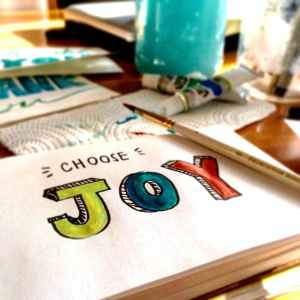
I have lost some of the joy of writing in the distractions of trying to get books sold. I am a writer, not a marketer. Understanding that I have to be a marketer to get people to read what I’ve written helps me focus on those activities, but the activities themselves do not bring me joy.
Although I wouldn’t say that recognition is unimportant (I dream of excellent reviews and lots of readers), it’s not the important thing. In fact, the problem with recognition is that it never seems to be enough (until it’s too much, and I don’t expect to get to that point).
I need to get my mind off of how well (or poorly) my writing is doing in getting recognition. That kills my joy. Joy comes from immersing myself in writing, whether it be my novels, this blog, or any short stories I come up with.
What brings you joy? Have you been in contact with it lately? Do you miss it? How can you build a little time for it in your life?






 Words Like Me