I’ve been suffering through the worst case of writer’s block since I started writing. It started with me trying to write a steamier romance, Walk Through Green Fire, and then stalling out in the first chapters because I was getting antsy about writing sex scenes. It continued through Avatar of the Maker, which stalled out because I couldn’t figure out whether the female main character was pregnant (yes, she is, I finally decided.) Then I failed NaNo for Kringle on Fire because of my dad’s dying.
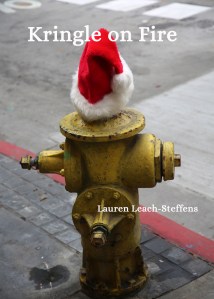
I’ll be done with Kringle on Fire today — sort of. There’s going to be a lot of editing. There’s not enough description, there’s refinement of language that needs to happen, there’s seeing if everyone is in character (but that’s one of my strong points), there’s making sure continuing characters and places from the previous book are correct. I’m thinking another month of editing ahead of me.
I have plenty of time. This book will go live in October as part of the Kringle Chronicles series. Look for it on my Kindle bookshelf,
Three weeks into the new year and I still don’t have a Big Audacious Goal. I have goals, but they’re not new and they’re not big. For example, I want to publish my latest Kringle book in October, after writing (almost done) and brushing up (a lot). Publishing one’s fifth book (or is it sixth?) or writing one’s eighth book is not a Big Audacious Goal. It gives some satisfaction, but not the explosive happiness of accomplishing a new thing, a Big Audacious Goal (B.A.G.)
I have not accomplished all my B.A.G.s. The big one I haven’t accomplished is getting an agent. I tried for years to get one with my best efforts. Supposedly, my books are too short, although I have never been told that. I have done many revisions of my cover letter and synopsis with no luck. Maybe my writing is not marketable. I hope not! This will not be my B.A.G. again; I have become accustomed to self-publishing.
So, I need a B.A.G. One possibility would be writing a different genre than I’ve written before. As I’ve only written Fantasy, Romance, and Romantic Fantasy (and a space opera serial with somewhat romantic leanings), I have some genres I haven’t touched. Women’s Fiction (a self-discovery based genre), straight Fiction, and Horror seem to be the next candidates. I do not feel moved to write those genres, so that’s not likely to be my B.A.G..
There are some I’d love to take up as B.I.G., but I don’t have the resources for them. Build a she-shed in the backyard? I even have a place for it. I just don’t have the $10k plus to get a drop-in retreat, nor do I have the know-how to build it from scratch. (If magazines are to be believed, I can cobble it together from wooden pallets and a reclaimed fuse box. I do not have the skills, or even the pallets, to do it.)
I need something that will take skills and effort, is theoretically achievable, and gives me a thrill when I’ve completed it. A thrill worthy of a celebration at the local Greek steakhouse. If anyone has ideas for a Big Audacious Goal, let me know!
I have been struggling with writer’s block so badly that I have to push myself to write 1000 words a day, which is about half of what I write when I’m not struggling.
But these past three days I have been writing! Up to 2000 words a day with the words flowing through my fingertips and two, maybe three, chapters gone through. Hallelujah, I might even complete this book!
The book I’m working on is the next Kringle Chronicles book, Kringle on Fire. The characters are a single mom and a firefighter, but I’m pretty sure it doesn’t go the way most of those books go. I try not to write stereotyped, overly built firefighters and damsels in distress. Just like I like to include sardonic old ladies, gamers, a group of somewhat clueless frat boys, a sympathetic Karen, and the Kringle Society.
One of my goals for the New Year is to get back into a steady writing discipline. I began three books and finished none in 2022. I have been backing off on writing because I have not felt inspired. Yet writing is a way to open the mind to creativity, and to allow new thoughts to pass through. I have, therefore, dealt with a vicious cycle, where I don’t write because I don’t feel creative and I don’t feel creative because I am not writing.
I need to get the discipline and enjoyment of writing back. To make the goal SMART — specific, measurable, achievable, relevant, and time-bound — I may have to set my daily word goal for less than I do when I’m writing for NaNoWriMo. During NaNo, I write 2000 words a day; that may be too much when I need to take baby steps toward the goal. So my goal, as SMART as possible, is:
I will write 1000 words a day on some sort of fiction work either early morning or in the afternoon after work starting January 3 2023.
Is the goal specific? Yes. I know what, when, and how much.
Is it measurable? Yes. If I don’t write 1000 words by evening, I haven’t done it.
Is it achievable? I think so. 1000 words is a suitable compromise between zero and 2000. (To give you an idea of what 1000 words look like, the bulleted section you are now reading is 82 words.)
Is it relevant? To a writer, it is.
Is it action oriented? Yes, it focuses on writing.
Notice I set the date for today, so I’m going to have to write soon. I will write on the Christmas Kringle book unless one of the other two books — Avatar of the Maker or Walk Through Green Fire — tempts me away from that book.
I’ve said in an earlier post that I make goals, not resolutions. The reason I gave was that resolutions are not actionable (I didn’t put it exactly this way, but that’s it in a nutshell.) A resolution is “I’m going to do this one vague thing”, and without a plan and the ability to revise it, it’s just a wish. A goal is the path to success.
On the other hand, my idea of making plans instead of resolutions isn’t very aspirational. It focuses on the prosaic mind, the part of existence that Gets It Done. How does that prosaic mind know what to get done? Through manipulating dreams into goals. “I would love it if…” becomes “I will do this” and a goal is born. From “How do I make this happen?” the goal becomes the basis for a plan.
I might as well admit I have dreams. I’m superstitious about admitting them, because I’ve been ridiculed over them as a child. But without the dreams, my goals become repetitive, maintenance-based, and dull. So here are my dreams for the year:
I dream of being traditionally published.
I dream of having enough readership of my works that my name is recognized.
I dream of having enough readership to make it worthwhile to have a booth at Gatewaycon.
I dream of getting royalty payments from Amazon.
Lightning hasn’t struck me; I guess it’s okay to admit my dreams.
Taking the first dream as an example, let’s turn it into a goal:
I dream of getting traditionally published > I will submit a query to agents.
(Agents are gatekeepers to the traditional publishing process. Queries are the bundles of materials writers submit for their consideration. That bundle includes a cover letter, excerpts of the work in question, and a synopsis).
I will submit a query to agents > I develop a plan to do so; carry out the plan.
This is how the dream becomes a plan.
The one thing is that the execution of the plan doesn’t always mean success. This could be because of internal factors inside myself that need correction, problems with the plan that need fixing, or external factors that can be controlled for. And, sometimes, external factors beyond my control. The more outside factors beyond one’s control, the more likely the dream will stay at the dream stage. For example, if I dream of winning the lottery, there’s not much I can do to actually win it beyond buying one or more tickets.
New Year’s Day, I will set up goals based on these dreams and develop them into plans as I go through the year. It’s more fun dreaming them, but not as fruitful. Wish me luck.
Christmas is over, and I am back from my holiday trip. New Year’s Eve is coming, and thoughts of the New Year flit through my vaguely ADHD mind.
As I’ve shared on this blog before, I don’t believe in New Year’s resolutions, finding them a setup for failure. In short, a resolution looks like a goal, but it’s lacking the plan. And without the plan, the resolution fails. Plans fail as well, but built into the best of plans is a feedback loop where the planner diagnoses where and how they’ve failed and reworks the plan to take that into account.
I like the ritual part of resolutions and the clean slate of the new year, however. So I have my ritual. I think of all the things I want to accomplish for the year, and I do a little of each on New Year’s Day as a commitment to those things in my life.
These are the things I will be doing a little bit of on New Year’s Day:
Writing
Work
Leisure
Housework
Quality time with my husband
Petting cats
Promoting my writing
Indulging my warped sense of humor
Showing compassion
Socializing (at least on Facebook)
Although I won’t make any resolutions, I have goals I will pursue in 2023. The goals I have for my writing career are:
Revisit Apocalypse and send out queries
Finish Kringle on Fire and Avatar of the Maker
Develop an advertising plan for my existent books
Develop promo for Gaia’s Hands
Find a Big Audacious Goal
2022 was a low-key year for me. I’m willing to ramp up a bit for 2023.
I have been writing on Kringle on Fire for the last couple of days. Slowly; only 500 words a day instead of my usual 2k, but I have been writing something.
I’m still wading in misgivings about the book, which does not feature firefighter heroics, hunks, or grateful victims rescued from conflagrations. I wonder if I should even bother to write romance novels, because I don’t write heroics, hunks, or grateful victims rescued from conflagrations. My books have good-looking but quirky protagonists, a lot of personality, and odd situations. And big misunderstandings.
I’m afraid my books are not fantastic enough to be romance novels, but I want to write romance novels for quirky people who don’t want their stories to manipulate them emotionally, but want to be woven into a story. It might mean they don’t sell, though, because there may not be a market. I have to write at least this book, because I’m almost halfway through it.
A common piece of advice given to writers is “write what you know”, which is why there are so many books about writers. (This suggests to me that we need to get more variety in writers, because I’d like to read something with some detail about wait staff or electricians, but that’s off topic.)
To grow, however, a writer has to write about what they don’t know. This requires research, not just assuming that you do know. For example, Nora Roberts wrote a novel where, in the prologue, a character in Ireland is cultivating potatoes a long time before potatoes arrived in the Old World, being a New World vegetable. It’s natural to assume “Ireland = Potatoes”, but Ireland didn’t have potatoes till 1589. As much as I like Nora Roberts, here’s a historian’s take on what she gets wrong in one book.
Another example was a Jayne Ann Krentz novel (forget the name) whose male protagonist owned a winery. In this case, she got the details right, but the details were so sparse that the book didn’t have to have a winemaker protagonist at all. In this book, he strolled through the winery, and there was a little detail about a room with big barrels. I, as an amateur winemaker, expected at least a bit about him checking in with his chemist and taking a sample from a barrel to check out the taste. I expected my winery owner to be involved with the winery somewhat, for the sake of romance.
The takeaway is that your reader is going to know the details if you don’t. And the inaccuracy is going to take them out of the story.
Back when I was young, I wanted to write a story based on a long dream I had while sick with a kidney infection. My problem was that it took place “in the desert” and doing the level of research I would need just to show the characters’ interaction with the desert (wherever that was) would have been immense. I didn’t have time for immense research because I was trying to finish up a PhD. So I wrote a couple character sketches and segments of scenes and put it away.
Years later, the Internet made it possible for me to do the level of research I needed to finish the book. I chose the Owyhee desert (alternate future with demise of the US makes it no longer Bureau of Land Management land) and studied the flora and fauna as well as what food animals and crops would do well there for small landholders. I could not have researched that, nor could I have researched experimental underground habitats and water recollection. The book is named Whose Hearts are Mountains, and I’m going to publish it someday.
My advice for writing what you don’t know:
Look up basic facts, making sure that your sources are reliable. For the sake of writing, Wikipedia is usually concise enough, and its footnotes carry more information that will be helpful.
Provide enough detail that your readers are satisfied. This can vary, depending on who your readers are. But assume they want at least some accurate setting and background to feel engaged with your story. In romance, setting and background are one of the ways novels distinguish themselves with their time-honored plots and tropes. In fantasy, believable setting and background help you build a consistent world.
Ask yourself “what are my readers going to poke holes through?” Reinforce those areas with more real information.
Right now, I’m struggling to research the logistics of small town fire departments, fighting fires, and combustion in general. Luckily I live in a small town with a volunteer fire department, but I’m having trouble coordinating with the fire chief. I’ve been reading a lot online, especially things about fire trucks, firefighting gear, uniforms, and mutual aid. I have a couple small details I still need to find out. And this is just background to make sure the firefighting feels right. But I don’t want to write the book that people say “That’s not how it works” about. So it’s time to research.
Sometimes I write because I see it as a method of getting an idea out there into the universe, as if the universe will supply me with something I need to deal with it creatively. Part of my belief system holds that, if one listens closely enough, the answers or comfort or solution is out there. I like whoever’s providing the aid to know what I’m asking. It comes from Quakerism and it also comes from the Christian belief of praying for what you need. I don’t know if I believe in what would be called “intercessory prayer” in some circles wholeheartedly, because my spirituality has become a muddle from the time a psychiatrist diagnosed me as bipolar. But I put words out into the universe occasionally, with some witnesses to hear. That’s you.
My life with the muse
Right now, I struggle with creativity. The spark is gone. I am writing without that burning desire to see what comes up next in my work. Everything I write feels pedestrian. I lay my problem on the muse I have had throughout my career. Muses exist to give motivation. For example, my writing life goes like this:
Inspiration>Obsession>Writing
I assume the muse enters at the inspiration part of the equation. I used to get inspiration from my dreams. My dreams haven’t come from a muse lately. They’ve come from the Karen of my subconscious. In my dreams, I forget little things like showing up for class (I’m the professor) and wearing clothing. I’m doing everything wrong, and I am about to be discovered as a fraud. My bad dreams don’t even have the courtesy of being a dystopic plot line, preferring instead pedestrian impostor syndrome.
As muses are notorious for whipping up their subjects into a creative fury, I lay the problems of my obsession stage on the muse I’ve had as well. The obsession is the need to get into the story to interrogate the dream. I want not just to know the story but to be in it. To be it. It’s an exhilarating feeling, like flight. The obsession part is alright, unless it’s not. I know writers go a little crazy when they write, but my obsessions come with hypomania. I get into mood swings that swing between elation and Subconscious Karen, telling me I’m out of control, as if she fears I will skip class and run around naked. (Thank God I have done neither.) So I don’t get wild, but I fear giving creativity any quarter will cause the calamity I dream of.
Go away, muse
So I fired my muse. Those obsession parts were too wild, and I feared sliding down a slippery slope to a bacchanalia in the middle of the University Ballroom and all those other explosions Subconscious Karen feared. I never have experienced the wild elation since I fired my muse. I miss it sometimes, but it’s nice not having Subconscious Karen around all the time (she’s only around sometimes now, usually when I’m under a lot of stress).
Now I wonder if I can hire a new muse. I don’t want an erratic, frenetic, startling muse anymore. But I want a muse to inspire me without the feeling that I’m about to choose to swing naked on that chandelier. There has to be a middle between swinging on a chandelier and Subconscious Karen.
It’s not about a muse, is it?
Writing this article has been alchemy. I discovered, in writing this, that it was about writing with bipolar disorder. Although I am convinced that I am not less creative with the bipolar meds, I don’t know how to grasp my creativity as readily as I would like to. In a hypomanic state, ideas jump at me and I grab onto them and run. I feel touched by the muse and my self-doubts melt. I feel gifted, and this makes writing easy. Subconscious Karen keeps me from veering off the deep end but makes my life uncomfortable and my mood swings worse. I have given up those things which encourage artificial highs (irregular sleep, extended stress, obsessive crushes) and thus have robbed myself of the muse.
My thought going out into the universe: Help me live with Subconscious Karen in a way that doesn’t rob me of joy. Help me find inspiration without obsession, intensity without disruption, creativity without condemnation.
This is how I’m feeling these past few days. The weather is finally trending cooler, and autumn has arrived. A gentle rain fell yesterday, and I traveled in its chill. I love Autumn — even the rain, especially the rain.
Missouri Hope last weekend was successful, and I’ve heard lots of good feedback, which makes me feel like I’m doing something right.
A couple of things have happened this week to make me chuckle. The Interim President of the university missed me at coffee the other day. I never thought I’d be able to say that. An acquaintance of mine ordered a paperback copy of my latest romance. He’s a retired Brigadier General. So, yes, a Brigadier General is reading one of my romance novels. I should offer to autograph it.
I’m (or rather, my husband and I are) making progress on the latest Christmas romance. He’s supposed to do some background research for me and I’m looking over our notes. Things are going well, and I feel a hiccup of happy in my chest.





 Words Like Me