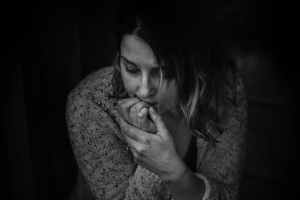
I am just coming out of a depression. I don’t remember going into it, instead easing into it as if it were just a change of season.
I reminded myself that I was not feeling depressed. There was no self-flagellation, no remorse, no desolation. That was the big lie — that my reclusive behavior, my flat affect, and my resignation to being (in my eyes) a failure wasn’t depression.
Telling my colleagues that I was fine if they asked me if anything was wrong (and they asked me at least three times) was another lie. I am known in my workplace as being bipolar, and thus I feel I have to be on my best behavior lest they think I was going to the hospital again. I told my colleagues again and again that I was doing great, and maybe I even believed it because the temporary bubble of positive attention (that I felt I didn’t deserve) buoyed me. But then I fell back into the grey of my life this last winter.
It’s only now that my mood has risen with the Spring that I discovered how low I had fallen. I have depressive tendencies in Winter, but I didn’t expect to have fallen to the place I was this winter. The scale said I’d gained weight; I didn’t pay attention to my looks. I did very little. Too many times, I accepted negative self-talk as the truth about myself.
What could I have done differently? First, I could have caught the mood change sooner. I need to find some signs of the doldrums before they become depression. Second, I could have been more honest with myself and others, and maybe I would have accepted a medication change. Third, I could have been better to myself, but only after the first two were in place.
Bipolar Disorder is a weird disease, seeking balance in a body that wants to go to extremes. In fact, I am watching now to make sure I don’t tip in the other direction toward hypomania with its endless elation and debilitating restlessness. This is my life, and it’s not that bad. Maybe the biggest lie is the stigma I surround myself with that isolates me.
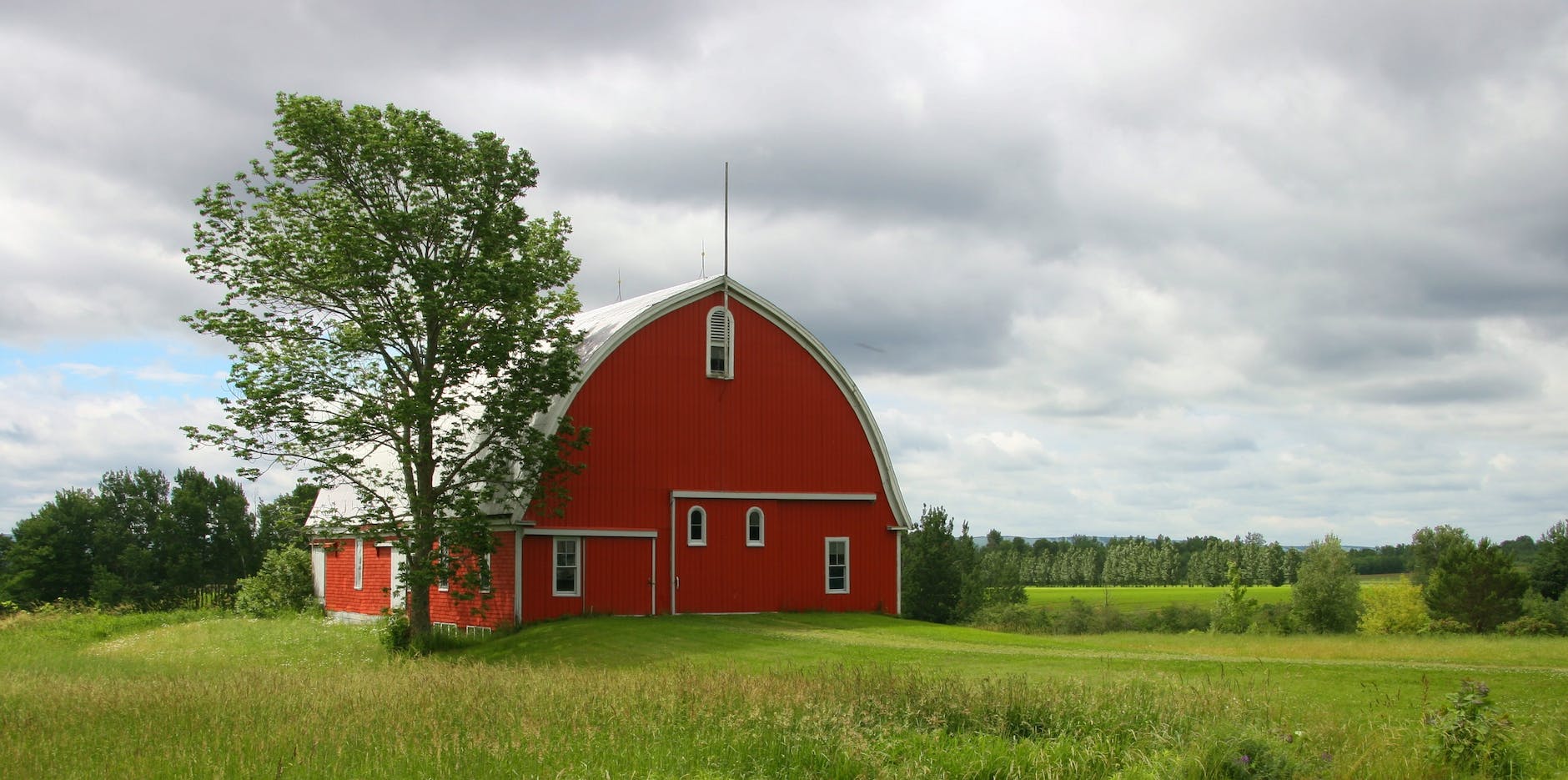
A week later, Brock and Leah sat in the livestock barn, hiding from the rain, which had broken out as they finished trimming the hooves of the Welsh Mountain sheep. The two sat on old folding chairs swiped from the Commons building.
“Leah, are you okay?” Baird asked as the rain hammered the metal roof.
“You keep asking me that!” Leah stood up and peered out the door at the rain. “I’m okay.” She didn’t want to talk about it — the feeling of foreboding that settled in her bones like a chill she couldn’t shake.
“No, you’re not,” Baird observed. “If you were okay, then you’d be able to laugh at me being so clueless.”
“I’m okay!” Leah turned away from Baird.
“Leah!”
“What’s the matter with you, Baird?” Leah turned to him, hands on her hips. “Why are you getting into my business?”
“I’m not getting into your business,” Baird shouted, standing up. He sat just as quickly, burying his head in his hands.
“Baird, what’s wrong with you?” Leah asked, standing and striding over to Baird.
Baird raised his head. “I’m not used to snapping at you. I’m not used to snapping at anyone. But it’s part of my nature, this anger. And I’ve learned to ride herd on it, to become a person instead of the soldier they tried to make me. I’m not the calm, meditative person you think I am.” He paused. “Or I am, but it takes work. Like right now. I know there’s something wrong — you look pale and wiped out. But you won’t talk.”
Leah sat back down, pulled her chair closer to Baird. “I’ve been feeling like something bad is going to happen for days. I’ve not talked about it with you because I’ve not talked about it with anyone. I don’t want anyone to think I’m crazy.”
“You think anyone here would think you’re crazy? We have Trees that give talents, and if I heard correctly, Josh foresaw the Apocalypse, didn’t he?”
“But that’s just it.” Leah fidgeted with her hair, taking it out of its hair scrunchie and pulling it back again. “Josh’s vision quickly made sense because the Triumvirate announced they’d attack us and kill Lilith. But we have nothing to tie my vision or my foreboding to. The vision looks nothing to do with Barn Swallows’ Dance if it means anything at all.”
“You need to tell someone. What if it means something?” Baird reached for her shoulder, then pulled his hand back.
“You don’t understand.” Leah raised her hands in resignation. “My parents grow increasingly uncomfortable about this place. They’re not comfortable with their talents, or with the presence of the Nephilim —“
“You’re telling me.” Baird snorted. “Oh, sorry — go on.”
“I’m afraid —“ Leah paused, staring down at her hands.
“Afraid of what?” Baird prompted.
“I’m afraid they’re going to disown me. For being what they’re afraid of.” The words came out in a rush; their weight lingered.
“They wouldn’t disown you, would they?” Baird asked to break the long pause.
“If they thought I willfully walked away from God, they might,” Leah fretted. “I don’t even know if I believe in their God anymore.” Leah fell silent, waiting for their God to strike her down. Nothing happened.
“Who is your parents’ God?” Baird asked, clasping his hands.
“Well, God.” Leah snorted. “Ok, the Christian God.”
“Do humans believe in other gods?” Baird leaned back in his chair, ready to learn more about humans, a thing he pursued with enthusiasm.
“Well, Aasha Kaur’s Sikh, and she calls her deity Ek-Ongkar. The Hindu have a pantheon of Gods and Goddesses, and Jeanne and Josh believe in nature spirits. But I can’t —” “You can’t believe in another God?” Baird guessed.
“Because our God is — “ Leah sighed. “It was comforting to grow up and feel we had the lock on salvation because we’d been born to the right God. It’s not so easy now, living at Barn Swallows’ Dance with so many beliefs.” Leah turned to Baird. “What do you believe?”
“Many of the Nephilim believe as the Archetypes do — in a creator we call the Maker.”
“Well, that’s original. But then again, we call our God ‘God’”.
“Anyhow,” Baird raised his eyebrows at her, “We don’t worship so much as acknowledge the Maker, who we believe constructed your world with its geography, its climate and weather and seasons, its ecosystems, and the Archetypes, held apart from humans by their immortality and their task to hold humans’ cultural underpinnings safe. And then They left to create another world.”
“So no sitting in judgment?” Leah asked. “That must be nice.”
“No. They’re pretty hands-off.” Baird cocked his head and listened — for the rain? Or for Leah’s father?
“They? I thought there was only one Maker,” Leah groused.
“The Maker has no gender. Or both genders. Nobody really knows.” Baird shrugged. “We haven’t heard from Them in thousands of years. Many thousands of years. We observe no rituals, we don’t pray. We are not the people of a deity.”
“That must be a relief.” Leah put her hands on her hips. “Beats being disowned by your parents for something you have no control over.”
“You need to tell someone. Besides me, that is — “
“I can’t tell Luke. Luke is — well, he looks at me like he knows something he’s not telling. I feel judged by him. It would be as bad as telling my parents.”
“Is there anyone else you can tell?”
“No. It would get back to my parents.” Leah grimaced. It would be so easy to let go her burden were it not for that.
“Okay,” Baird said. “Back to trying to make sense of the vision. Have you seen any visions since the one?”
“No, just the one. I feel like everything’s about to go wrong, however.”
“Back to the vision. What exactly did you see again?”
Leah shifted in her chair and closed her eyes, recalling to herself the vision. “I saw two lines of people facing each other, some in light armor, some with weapons. No guns, and as far as I could tell, no bombs. Just swords, and maces, like this was going to be a big man-to-man fight. They stood there, glaring at each other.”
“Did you recognize anyone in these lines?”
“No, but now I remember a man who commanded one line, pacing along the line, galvanizing them. He stood tall, and he taunted the men and women in line. Let me see — he said, ‘Do you want to be worthless? Do you want to be diminished as — he said some four-digit number — was? Do you want to be walking dead, trying to slit your own throats? We can stop this!’”
“That’s further than we’ve gotten before. What were they wearing?”
“To be honest, they looked like they dressed for a street fight. Or a gladiator ring. Both, kinda. Like I said.” Leah felt the dread like a miasma again. “Can we not talk about it?”
“I don’t know if we have that luxury, Leah.”
Leah tried to read Baird’s face, came up with concern and something she thought was puzzlement. “I just need to quit talking about it now.”
“Ok,” Baird said. “I’ll let it drop for now.” He looked out the door; Leah’s eyes followed his, and she noted the rain had stopped. “Let’s see if we’re needed in the food forest to pick fruit.” They left the barn and walked silently toward the food forest, through browning grass sloppy with rain.
Some people spend years in Zen meditation to reach what the professor has attained at the end of a school year: An empty mind.
My brain is empty. I am no longer looking forward to the end of the year — it’s just there. Next week I will sit in office hours looking at my gradebook and giving exams. I will grade the exams. And then I will be done with the semester and … nothing. My mind will consider “What’s for lunch” an unsolvable calculus. My only emotion will be relief. If I even have an emotion; many times I just sleep for 23 hours straight.
I can’t wait till the school year is over. Have I mentioned that I can’t wait?
The students and I have made this journey for the year, broken into two semesters, and we’re tired. The semesters culminate in final projects and exams, and none of us are at our best. I remind myself of grace and the fact that I was once a student, and not one a teacher would ask for.
I have 75 students in classes and about 6 interns each semester. We all have our issues that weigh on us. Some of my students have issues with depression or anxiety or other mental health concerns. Many work at least part-time besides going to classes. Some have learning differences and need accommodations. A few have family issues that pull at them. People have died in their lives — some too young. All of this at the same time as an educational experience.
This summer, I will supervise somewhere between 14 and 20 students. But it’s a different experience. Summer is more relaxed for me because I lead the internships mostly from home over the computer. I don’t have a lot of exhausting face-to-face time (as an introvert, this is so big) and no meetings. I think it’s more relaxing for my students as well, as their performance anxiety is less in an internship where they’re learning by doing. My students are still working at regular jobs, sometimes even full-time, so they’re still under stress.
I can’t wait till summer, and it turns out I don’t have to wait long. I have the rest of this week, and then next week is finals. I’ll have a bunch of grading, and then I will be done. I will turn in grades Monday the 8th and then start my interns with a presentation on Wednesday.
National Today is a website which introduces the reader to the myriad declared days that grace the national and international calendars. Some of these holidays seem directly related to food industries (National Pickle Day is November 13) while others put into the forefront of people’s minds for a good cause (National Crime Victims’ Rights Week, April 23-29). But today I’m here to write about International Pixel-Stained Technopeasant Day and how to celebrate it.
The day started with a Howard V. Hendrix, a member of the Science Fiction and Fantasy Writers of America, who called people who published their work for free on the Internet as ‘pixel-stained technopeasants’ and stated that no writer should do so. Jo Walton, another writer and member of the SFWA, encouraged writers to do exactly what Hendrix disdained. And a holiday was born. (National Today, 2023)
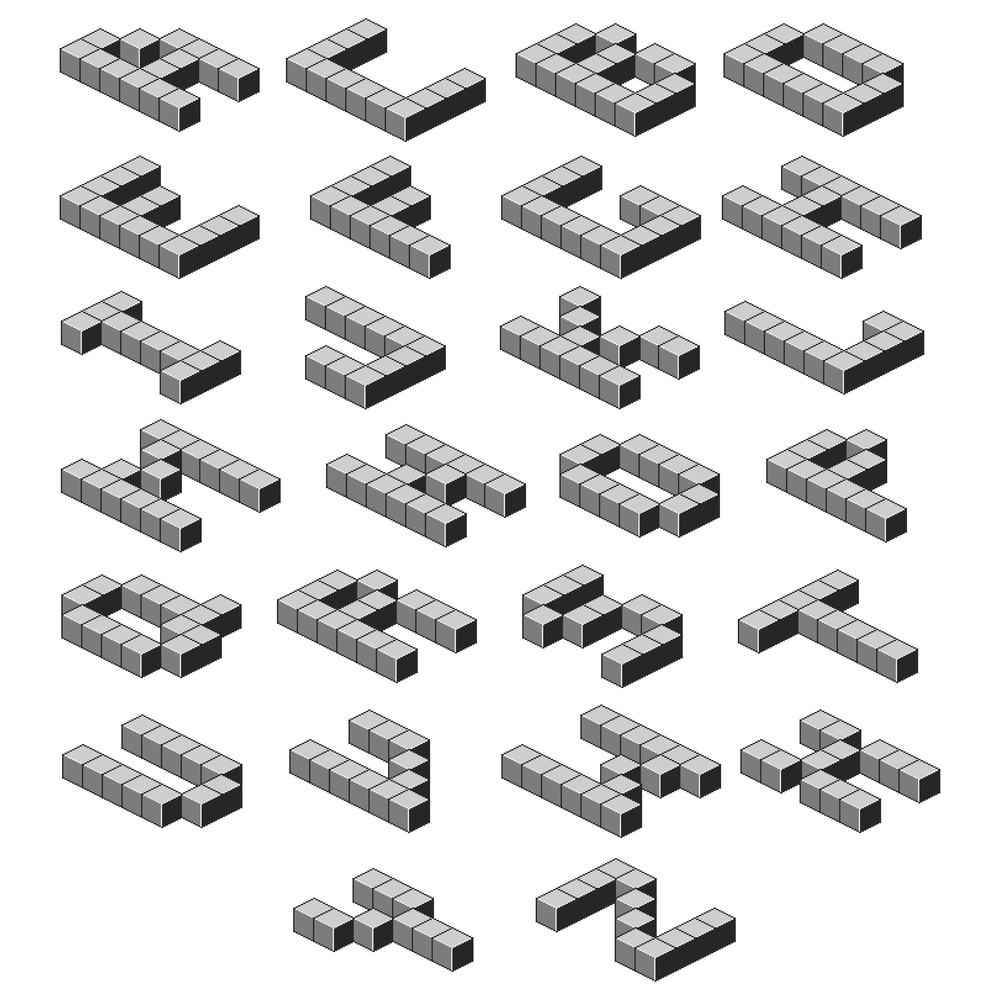
Isometric alphabet. Black and White abc. Volumetric letters. Vector Illustration
I don’t know the details, but this sounds like a more modern debate between self-publishers (which I am) and those traditionally published. The debate seems to be whether self-published works are legit because they don’t have an industry gate-keeping the publication process. But those who have been mistreated by the traditional process look at the issue differently.
Turns out I’m a pixel-stained technopeasant and I didn’t even know it. I even write in the fantasy genre, so I am one of those pixel-stained techopeasants of which Hendrix spoke, although not an original technopeasant. I have published in online contests and journals which, although they had a gatekeeper, did not pay. Most Internet journals, in my experience, do not pay, just as most print journals do not.
How, according to National Today (2023) does one celebrate this day?
Read a blog
Publish for free online
Post a social media post
Here’s the free creative work:
Limerance
There’s a push to ask you for your name,
And a pull ‘cause I have no right to know,
As I stand in the corner of the venue
With nothing in my mind except the color of your eyes.
I want something exciting and positive to happen today. The word ‘positive’ is important here, because I know people who would welcome a disaster as ‘exciting’. I may be involved in emergency and disaster management, but I don’t like that kind of excitement. So, I’m specifying exciting and positive.
I see excitement as something that will come into my life by an external happening. One thing I’ve noticed is that, at age 60 (almost), excitement doesn’t come from hard work. Hard work yields … more work to do. I imagine this revelation at a game show, where the emcee says, “And for your hard work you get … more hard work!” I don’t mind doing hard work, but it’s certainly not adding up to exciting. Or positive1.
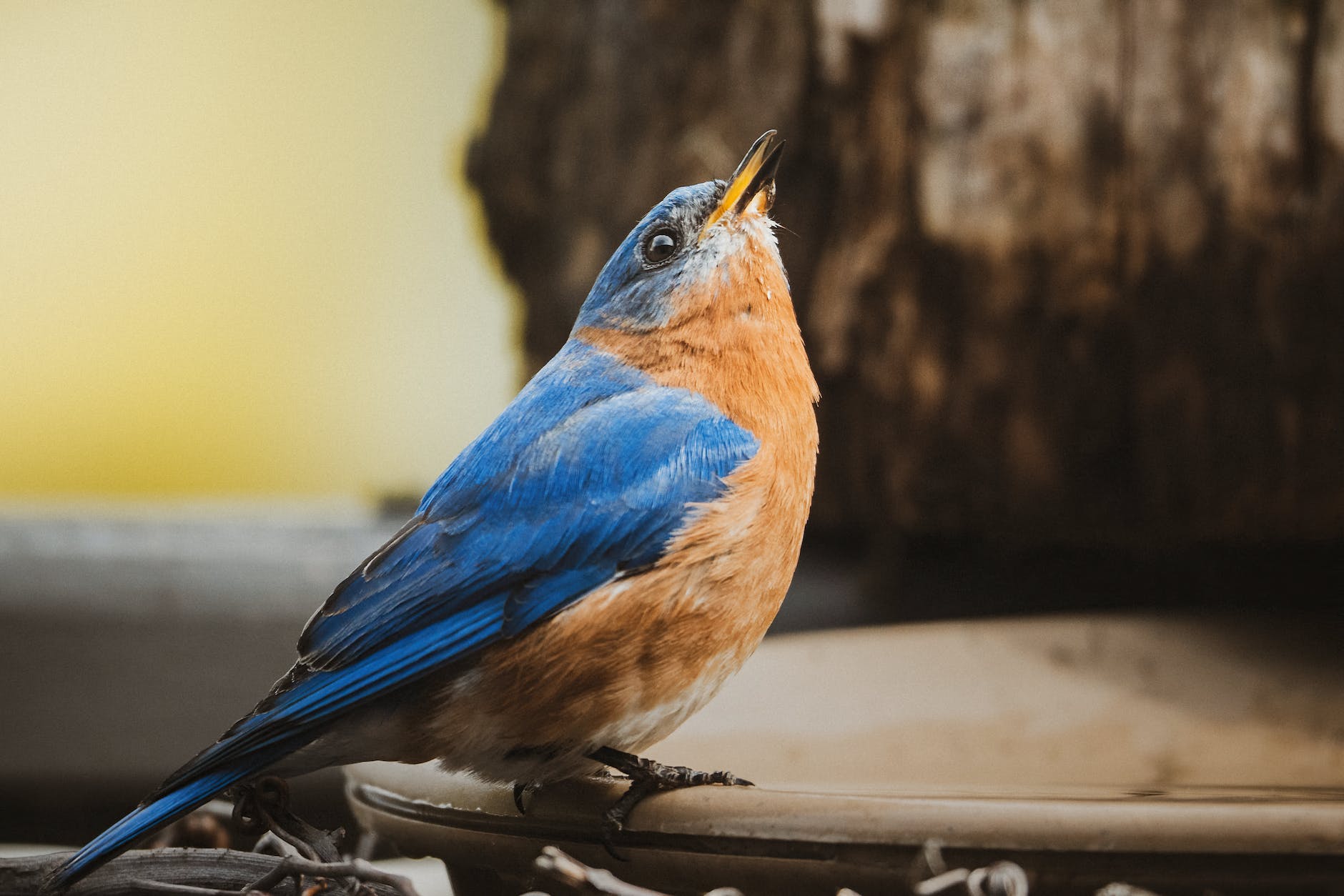
I guess I’m looking for an opportunity. Or the Bluebird of Happiness dropping something good in my lap. Something to break the monotony and turn my emotions into something happier instead of ennui.
Venturing into the attic as my father worked to restore it. The entire neighborhood late for school because my cat is having kittens. A gully washer sending rain cascading down the steps across the street. The hospital with its old wood panels and cordovan leather. The evening when I played in the street with my neighbor and my sister. Fishing in the park with my father, the first time I threaded a worm on a hook. When I finally got a boyfriend.
Going off to college unprepared and coming home again. Going back and staying there even through summers and Thanksgiving breaks. Growing microbes in Petri dishes and cooking pound cake in the food lab. Classes I skipped to sit on the Quad and watch people.
Walking to my graduate classes barefoot and scandalizing my professor. Skinny dipping at the St. Joseph’s Sportsman’s Club on a skinny September night. Watching Star Trek with my friends. Losing Thanksgiving Break to a class project. Walking across the stage to get my PhD.
Exploring my new home across the country, walking everywhere. Being betrayed by a husband and breaking up. Spending a week in an inpatient facility that saved my life. Falling in hopeless, chaste love with a rock band. Moments I felt like the sky was falling down, but I persevered. Driving to the Adirondacks to camp by myself and feeling freedom.
Moving back to the Midwest to be with someone I thought was the one — he wasn’t. Buying a house as an act of solidarity with single professional women. Learning how important laughter was to a relationship. Driving for miles and miles before getting to the next town. Watching coffee shops pop in and out of existence. Finding the right man and marrying on St. Patrick’s Day. Watching my mother die nine months after our wedding.
Appearing in a dunk tank for charity. Traveling to visit interns across Missouri and across state lines. Getting diagnosed with bipolar disorder and spending a few days at the hospital. Recuperating. Being moved into a bigger house. Spending a pleasant day with my father while he was in hospice.
And now I sit in the greying afternoon, having reviewed almost sixty years of life. All these memories are mine. I cling onto them as the things that define me.
I have noticed plants coming up in my front garden. An almost miniature rose, some lavender, and some that surprised me — mitsuba and bee balm and anise hyssop. The front garden needs some more plants, which I will plant in May. The fuki is taking over the side yard, and I’m worried about its prowess. I guess I’m not as oblivious as I thought, although I’m missing such things as kayaks on Colden Pond at the college, driving by student parties on Main Street, and taking a class outside because the classroom’s too hot (never mind, I did that).
It’s also the end of Spring semester — two weeks of classes and half a week of finals. I’m dealing with a flurry of interns and a last hurrah of grading and then finals and then — a much more relaxed summer.
Not that I have nothing to do this summer. I will wrangle somewhere between thirteen and twenty interns, presenting an orientation via Zoom and visiting them at their internship sites. But my home will be my office and there will be plenty of time to write.
It’s been a tiring year. Although it’s nice that Spring is here, I can’t wait until Summer break.
My head feels floaty right now. I spent the morning writing at Starbucks, drinking coffee to keep the ideas coming. One thousand words later, I had met my writing goal and gotten enough caffeine for two days. Now I really want to do something and nothing at the same time.
It’s a rainy day. It would be nice to take a nap. But no, my brain is taking a trip across the universe. It wants to DO something, but it can’t keep still long enough to focus on something. It wants to FURTHER MY CAREER, with no notion of what that would take. My brain wants to make a BIG AUDACIOUS GOAL, but not complete it. It WANTS RESULTS, but is in no shape to plan.
Why do I do this to myself? Because it’s coffee, wonderful coffee. I have a sense of amnesia, not remembering how things went the last time I drank too much coffee. So I drink coffee, drink more coffee, and drink even more coffee until my teeth are humming.
The coffee is wearing off. I know this because I just fell asleep in the middle of writing this. Now I’m staring at my screen, wondering how much time I lost to the unauthorized nap, and I think it’s been about a half hour. The buzz has gone away, yielding to a glimpse of what it’s like to be a zombie: I’m awake, but with no volition.
Not good. I want to make something happen, create something. Spend this rainy evening more productively. Wait! Maybe more coffee?
I suppose it’s a little late to have a mid-life crisis. I didn’t have one at forty — at forty, I barely felt thirty. At fifty, I felt rebellious that anyone would think me old, because I didn’t feel old. Now, at almost 60, I’m horrified that I’m now old enough to be my students’ grandmom (if the generations had babies really early, that is)
A lot of things have changed. I no longer feel that sense of possibility that I felt, even in my fifties. I don’t feel that my life could change for the better at any moment. My life is stable, with no magnificent giddy highs. I don’t know what I think of that, because magnificent giddy highs are fun. Or, at least, they were.
My Big Audacious Goals are not so big or audacious. I miss the ability to dream big. I feel like I don’t have the sweeping vistas in my head to make big goals. My goals are more realistic, more grounded. I achieve them, but with little fanfare.
I will find something of worth at this stage in my life. Maybe my writing will become more grounded and need less editing. I may be less distracted by pretty things. Perhaps I will make deeper goals. It’s just that I’m shocked by the change and wonder where it’s taking me.