We’re having a slow thunderstorm here in Maryville, MO. The heavy clouds hang overhead, darkening the sky. From the clouds, an ominous rumble emanates. It’s almost seven-thirty, and morning appears to have fled. A streak of horizontal lightning jolts the neighborhood.
I sit in my writing place, on the loveseat in the living room, near the window, and I want to take a nap. I close my eyes to think about writing this piece and I fall asleep sitting up, just for a moment.
This is the opposite of who I want to be. I want to be awake, dynamic. I want to write beautiful prose. I want to get many things done —
Who am I kidding? I want to take a nap.
It’s the perfect day to crawl back into bed, ignoring coffee and work to do, and turn off the light. I feel like I could sleep for twelve hours and wake up happy, or at least less blah than this weather has made me.
But I have promises to keep (Thank you, Robert Frost) and coffee to drink (Thank you, Richard). I have to meet with my boss and hold office hours and attend a faculty meeting. I might have time to write on my WIP (Work in progress, in author-speak). I’ve already done some grading (I get up very early). Tonight will be soon enough to sleep.
Writing requires a certain amount of editing. I have done a lot of editing in my writing life. I have edited out characters, scenes, and subplots to make books more cohesive and, perhaps, coherent.
Some of my editing I don’t regret. One of my characters, Josh Young, was young and whiny when I first wrote him. He’s older now, somewhat more mature, and a far better and more complex character. You’ll find him in Gaia’s Hands.
Also, in one incarnation of Gaia’s Hands, there was a secondary love affair between two characters. Eric and Annie were interesting characters, but their arc was too much for Gaia’s Hands to handle. Eric remained; Annie did not.
Lilly and Adam’s relationship in what became Apocalypse (which will come out in the next year) was a lot darker, somewhat superficially. There was a lot of sexual obsession, which can be a good thing, just not for that novel. When two books got merged to make Apocalypse, I lost the goth feel but kept some of the edginess. There are some brilliant arguments in Apocalypse. I also lost the (also whiny) character James, and some subplot, but again I ended up with a better result.
As I got to writing more, I have edited out pieces less. Whole characters, subplots — heck, whole chapters — no longer get discarded by the wayside. Extensive editing taught me to write with less editing necessary.
There are pieces I miss, though. The chaste sexual obsession of Lilly and Adam was fun to write, but I don’t see room for that anymore. James dying and turning into a ghost cat (don’t ask) was fun for all the catlike manipulation he added to Apocalypse. Eric and Annie make a good couple, if only for a short story, but Annie’s place in the series has evaporated. Maybe the pieces will end up in a short story somewhere. Or another novel in another world.
I hope that my writing will go somewhere. It’s difficult because the world of books has seen a renaissance of writers with a waning number of readers. The number of writers has exploded because of Amazon KDP and self-publishing. There are good books out there and bad ones, and readers are loath to sort through them all.
As a writer, I could let this discourage me, and sometimes I do. This doesn’t mean I quit promoting my work. I promote and hope I get better at it. I hope my promotions pay off. I hope people read my books.
I won’t tie hope to a specific outcome, however. I hope things go well, not defining what that means. There’s so many ways that positive things happen, some of which I can’t even imagine right now. So no “I hope people read the promotional posts I put on Loomly” but “I hope positive things happen from posting.” Maybe it’s superstitious, but I enjoy keeping my options open.
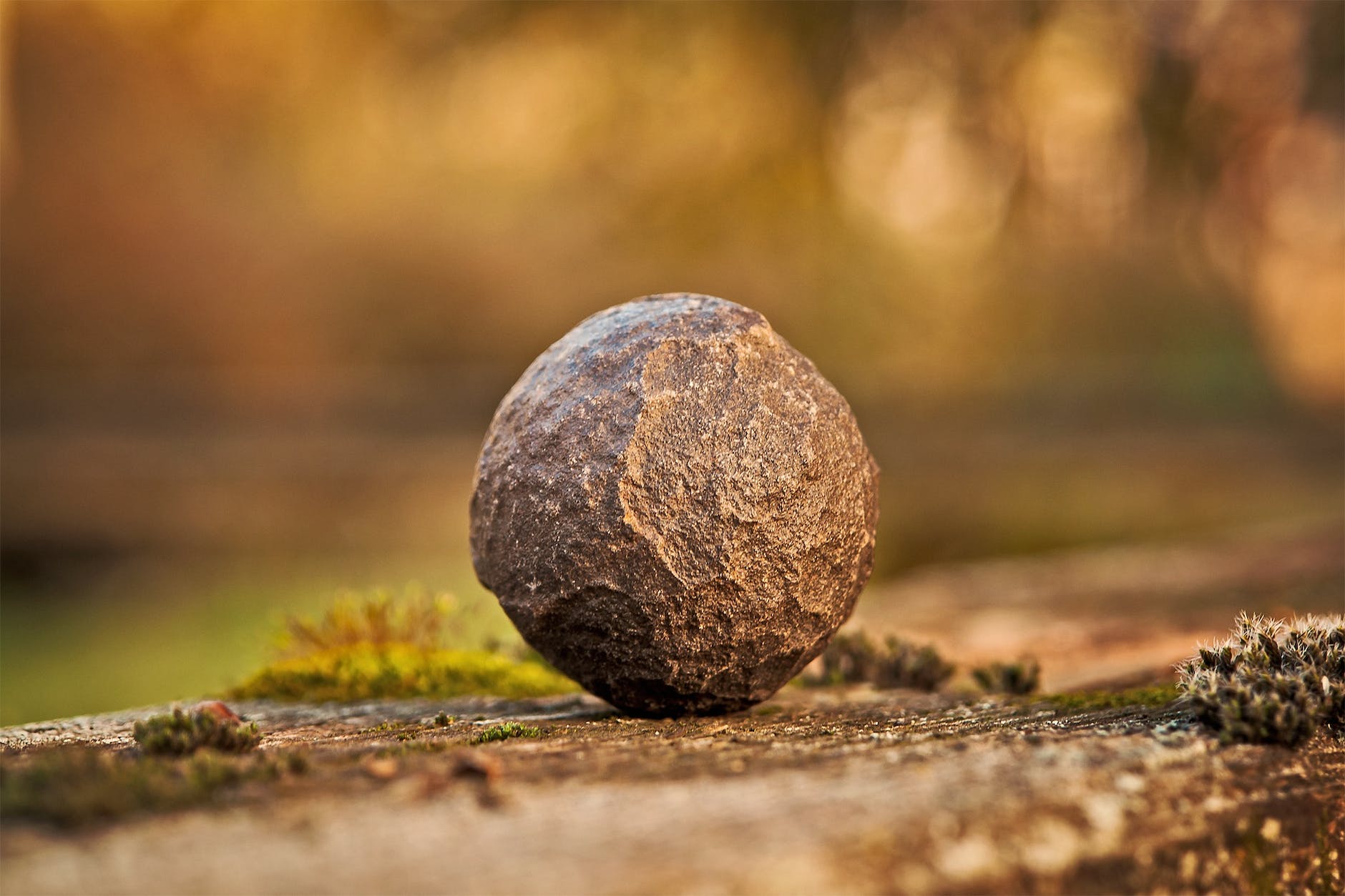
Emily Dickinson once compared hope to a bird that perches inside us and sings. I find hope to be something more like a rough, homely rock which I need to keep polishing so that I can find the gem underneath. Sometimes it seems the work to reveal it will never end, but I must believe and polish the rock.
Abstract landscape of colorful fractal foam, light trails and lights suitable as a backdrop for art, music, fantasy and imagination related projects
It’s not lots of copies sold (in fact, I am giving away copies on BookFunnel right now for newsletter subscriptions.) It’s not a lot of readers per se (although that’s nice to have).
My dream is to have people fall in love with the world I’m writing about. Wanting to know more stories about the characters. Checking out the map to Barn Swallows’ Dance. I would like readers to love my books, even if there aren’t too many readers.
To do that, I need a decent number of people to read my books, because I know my books are not for everyone. They’re not “commercial”. They’re equal parts dreamy and prosaic, because I believe even humans caught in the unexplainable will fall back on their everyday lives. But the unexplainable will win.
Here’s a section from Gaia’s Hands:
Jeanne looked around the efficiency apartment. The futon dominated the space; the uninspired dresser bore a pile of interesting things: a feather, a sheaf of notebook paper, a small box with an ornate pattern, a black fabric belt. He didn’t point out the top shelf with its orange and little pitcher of water, but she guessed it had something to do with Shinto, his adopted religion. On the wall hung a sword with a very slight curve.
Josh walked over to the black sword and pulled it off the wall. He brought it over to her and held it out with both hands. When she hesitated, he nodded. “You have my permission.” She unsheathed the sword partway from its scabbard and looked at the dull-edged blade. “Hey, this looks pretty cool.”
“I know. You can’t even cut the lawn with it, though. It’s not meant to have an edge, but I got it in case I learn iaido someday. I use a wooden bokken at the dojo for Aikido. I also bought it because it looks cool.”
Jeanne sheathed the sword and handed it back to Josh. “Thank you,” she said.
“Good instincts. You didn’t take the sword without my permission. Most people wouldn’t think to do that.” Jeanne had thought to do that, which boded well.
“I’m not so sure,” Jeanne said. “I’ve never had much faith in my instincts.” Jeanne’s instincts at the moment wanted her to indulge her curiosity about the man in front of her. She hoped Josh wouldn’t notice her blushing at her thoughts.
She sat across from him on the bed, cross-legged, and she tried to gather her thoughts, to speak the thing, once spoken, that would change her life irrevocably in her own eyes. “Josh, I’ve known I have this talent for plants my whole life. I can’t deny it anymore.” Jeanne’s skin prickled with goosebumps.
“Okay,” Josh responded, lifting Jeanne’s head up with one finger so that she looked into his brown eyes. “Tell me more about it.”
“As a child…” How could she tell the truth? Quickly, she thought, so that she didn’t think about how crazy she sounded. “Let’s start again. At age seven, I sat one day in the bean tepee my dad planted for my sister and I, and a bean shoot wrapped around my arm. Then a voice spoke to me. It was in my head but it wasn’t.”
“What did it say?” Josh asked.
“It said, ‘Remember this moment.’ That’s it. I put it away for all these years until it happened to me again. With JB.” Jeanne closed her eyes and rubbed her forehead. “Am I crazy?”
Is Jeanne crazy? In this world, she’s not, because the unexplainable hides in plain sight. She has to reconcile this with her life as a scientist, and that won’t be easy. She ends up — I won’t tell you where she ends up, because that would give away the story.
Gaia’s Hands is a love story about two unique people caught in a distinct reality that most people don’t see. I don’t know how romantic fantasy readers will take this two-world existence.
But I’m a writer, and we always have doubts.
I’m sitting in the multipurpose building at MOERA during a lull in the action. The action is Atlantic Hope, a humanitarian training exercise for emergency and disaster management students.
The scenario of Atlantic Hope is an earthquake in a second-world country on the brink of civil war. The setting includes tense relations between northern and southern factions, gunshots, and paramilitary forces.
I’m the moulage coordinator for the exercise, which means I manage and run the casualty simulation with the help of my husband. In other words, I turn volunteers into victims. Gunshot victims, victims of illness, impalement victims, victims with cuts and contusions and bruises. This takes a combination of theater makeup, homemade prosthetics and a bit of know how.
When I do moulage, I’m in the zone. Time flows, and I find I have put makeup on 20 people without really noticing it. Gunshot wounds are new to me, so they present a bit of challenge. The challenge is part of the experience.
The lull will be over soon and more people will come in to be made up. I am in my element.
My husband knows I’ve been cranky. Yesterday was a frustrating day as I prepped for Atlantic Hope, a humanitarian simulation to train students in Emergency and Disaster Management. My job in this simulation is Moulage Coordinator. I make the magic happen, if by magic you mean turning volunteers into casualties using stage makeup and props.
Prep for a major event like this includes making skin-colored gelatin for burn effects, inventorying impalement prosthetics and making new ones, making fake blood from liquid starch and food coloring. Yesterday’s prep, unlike most years, was disastrous. I couldn’t find the impalements. I couldn’t find the sponge applicators I use as a base for new impalements. I couldn’t find the makeup for making the skin-colored gelatin. I couldn’t find the red food coloring, and it turns out that we’d finished the last bottle (a quart) because fake blood takes a lot of food coloring, a cup per half gallon of starch. This made me very cranky.
I made do on making the impalements. I bought cheap makeup to set up the burn gelatin. Then, our event caterers had a 3/4 full bottle of red food color.
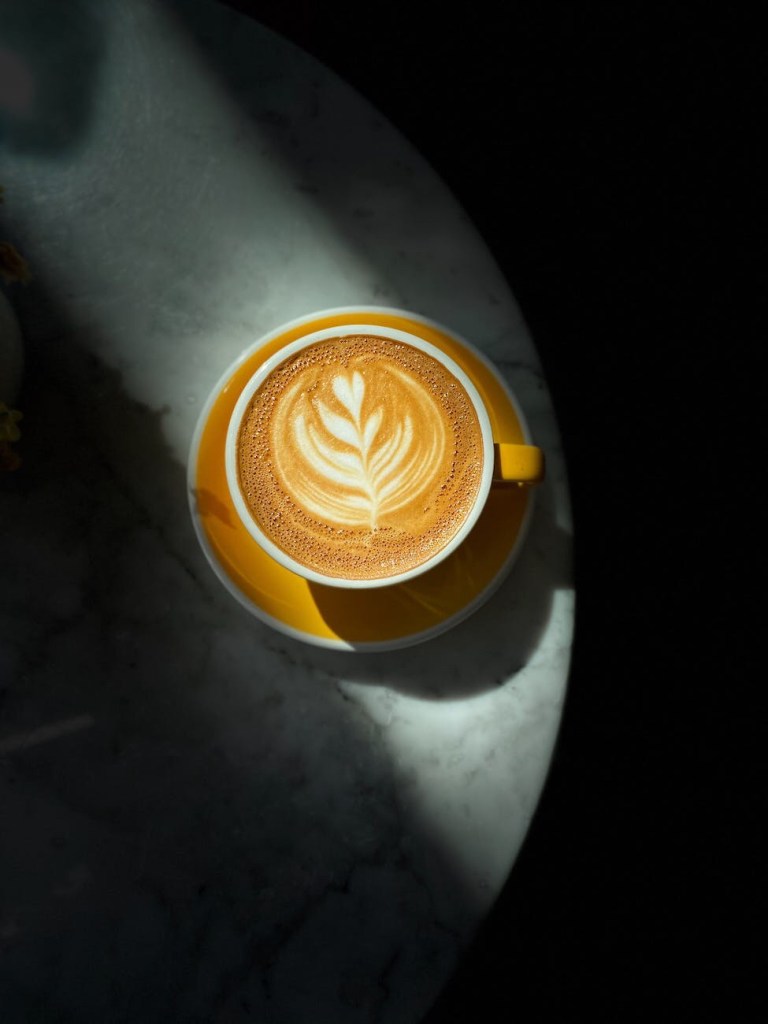
This morning, after packing the car, Richard came back from an early morning errand with “emergency coffee”, which was my favorite: flat white with chocolate malt powder.
I still have the blues, lowkey, wondering when Spring will come. No time to write, no feeling of accomplishment, nothing but dessert. I’m okay, I will survive but without birdsong in my head. I am short of words, short of energy, short of joy.
I have a couple of books out there. You can find all my books here. They’re all in the fantasy romance/romantic fantasy area, although I would recommend Gaia’s Hands to those who aren’t into fantasy as well. I’d recommend Kel and Brother Coyote Save the Universe (Kindle Vella book) to those people as well.
Most potential readers haven’t found this blog, so I can’t promote my novels through here and expect a lot of new readers. Therefore, I have to reach out to my social media accounts and talk about my books.
I know I can’t afford those promoters who keep sending me emails, so I have to promote myself until I’m rich enough1 to afford one. The problem is that I don’t know what I’m doing. I’m a writer, not a promoter.
For a while, I used free Hootsuite to post little ads on multiple platforms — Twitter, Facebook and Instagram. It was convenient, even though I didn’t know what I was doing. Then Hootsuite dropped their free plan, and the cheapest plan for users was the $1188/year2 Professional tier.
I partook (is that the right word?) in free trials for two competitors of Hootsuite: Buffer and Loomly. I chose Loomly because it gave me one feature that the others, including Hootsuite, did not: coaching.
Loomly will give you advice as you are crafting your post to each of the social media outlets that you’re linked to for the post. Loomly tailors the advice to the specific outlet — for example, Facebook favors posts under 50 characters while Twitter readers want longer posts. They suggest better times for posts. They suggest when hashtags or exclamation points/question marks may increase engagement. Little things that are helpful in making a post stand out that amateur social promoters may not know.
In addition, Loomly features possible topics to post on daily, because posting about your project daily gets tiring for readers. Some of these are weekly items like #HappyFriday; others are one day only celebrations like #HappyGirlScoutDay.
I don’t pretend that Loomly is teaching me everything about social marketing, but I have more than I had before. It’s easy enough to use that I actually enjoy using it and my calendar is full through the first of July. It’s relatively painless to learn new strategies, unlike reading dull books on the topic. And it costs $312/year2 for the Basic (about equal to the Professional Hootsuite) tier.
Not going to happen.
These are billed yearly prices. The billed monthly prices are higher.
I am not a coffee addict — I can quit anytime I want to. That’s a joke. I believe I am addicted to coffee, being unable to function in the morning without it. I can dress up my addiction with styles and flavors of coffee — my current favorite is a flat white with chocolate malt powder from Starbucks — but as my day can’t start without it, chances are I’m addicted to coffee.
This morning I fell asleep after my coffee anyhow while sitting upright in a chair, which is what happens when a 12-oz mug is not enough. After waking myself up a few times, I tried to make myself coffee in our old single-serve Nespresso. We’ve buried the Nespresso, like much of the rest of our coffee station, as my husband makes pour overs with our hot water dispenser now because we’re coffee snobs in this house.
I just couldn’t deal with the Nespresso, not with my lack of caffeine. So my husband just ordered me a flat white from Door Dash.
Yes, it’s true. My husband just Door Dashed me Starbucks. I was too busy to go out, so he called in an order for delivery.
Writing this down makes me embarrassed, because I can summarize the entire story as First World Problems. Having Starbucks delivered to my doorstep, however, is the closest to luxury I’m likely to experience, so I might as well enjoy it. That cute little brown bag in front of my doorstep feels like a holiday — and it has caffeine in it. If it doesn’t happen very often …
Today has been relentlessly dreary, with the mist throughout the day finally resolving into gray. I mention this because I have had the afternoon to work, and instead I have been falling asleep sitting up. I suppose this is a sign that I need sleep, that I have been working too hard, or that it’s just too dreary of a day to stay awake. I need something to do besides laundry, which is putting me to sleep as well.
Surveying my more imaginative side, I’ve decided I need a visit from the Bluebird of Happiness, or at least the Robin of Mildly Positive Affect, with wild news or mild news for my life. In my wildest dreams, the Osprey of Capital rescues me from this drudgery with an ostentatiously generous Powerball win. Maybe the Seagull of Exquisite Dinners will bring a menu from Waldo Thai, and somehow I’ll have the time to go there. The Blue Jay of Raucous Laughter? I could use a good laugh right now.
I may have to settle for the Wren of Amusing Email, as the other birds seem not to have found my house. Let me go read my email …